(Item 47)
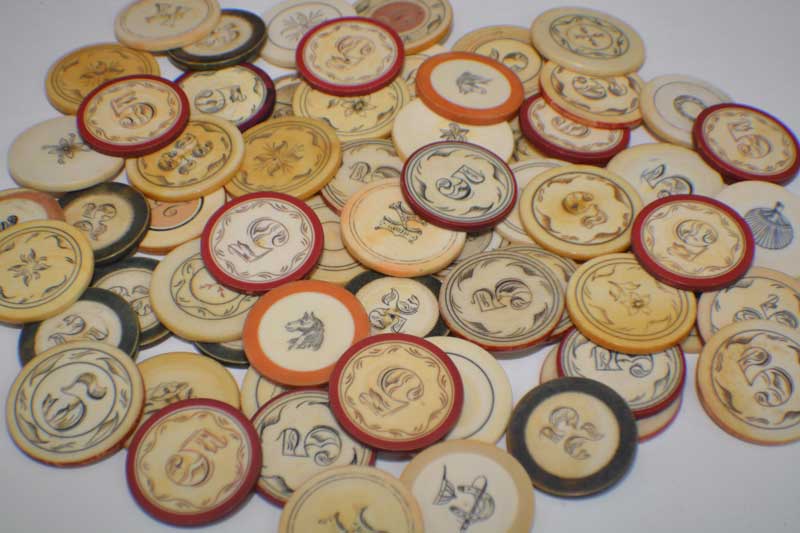
You’re looking at some fascinating pieces of frontier history! These specific items from the late 19th century are highly sought after by collectors of “Old West” or gambling memorabilia because of the craftsmanship involved.
Here is a breakdown of what makes items like these historically significant and what to look for when evaluating them:
Historical Context & Craftsmanship
In the 1880s, high-end saloons often used premium materials for their gaming kits to distinguish themselves from “sawdust joints.”
Scrimshaw Detail: Since these were hand-etched, the value is heavily tied to the subject matter. Scenes involving “faro” banks, specific saloon names, or intricate floral patterns are generally more desirable than simple numerical denominations.
Coloration: Collectors look for a “mellow” patina—that soft, buttery yellowing that occurs naturally over a century. If the color is too white, it may have been bleached; if it’s too dark or blotchy, it might indicate poor storage conditions.
Evaluation Factors
If you are looking at Item 210 or Item 47 as potential additions to a collection, consider these three “S” factors: