Antique Clay – Red Speckled Pool Ball Set
(Item 77) Antique Clay - Red Speckled Pool Ball Set. Early 1900s clay - red speckled pool ball set. Rare! Excellent condition. Size: 2 1/4".

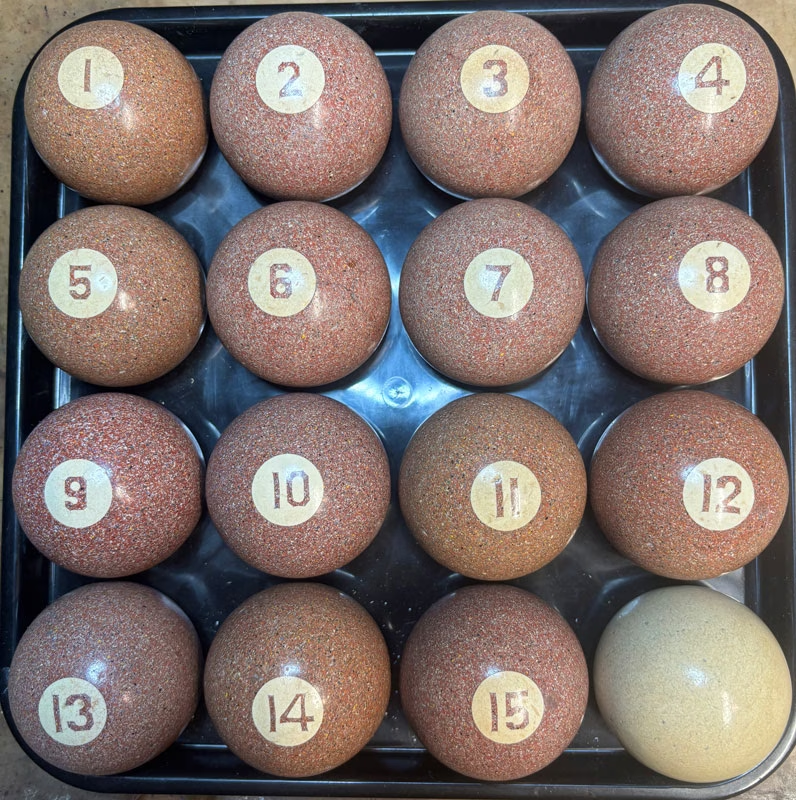
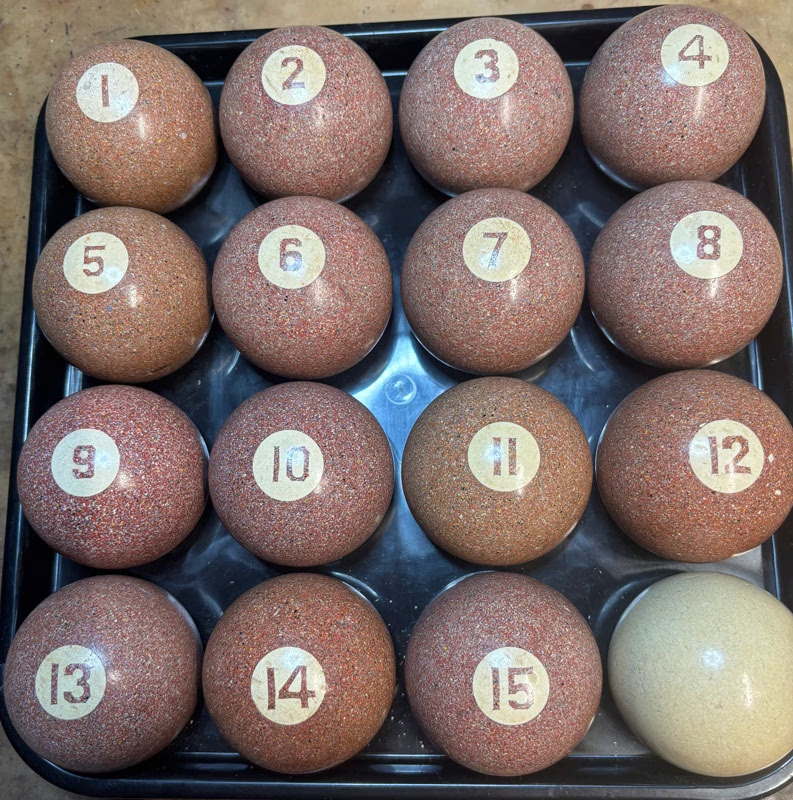
(Item 77) Antique Clay - Red Speckled Pool Ball Set. Early 1900s clay - red speckled pool ball set. Rare! Excellent condition. Size: 2 1/4".
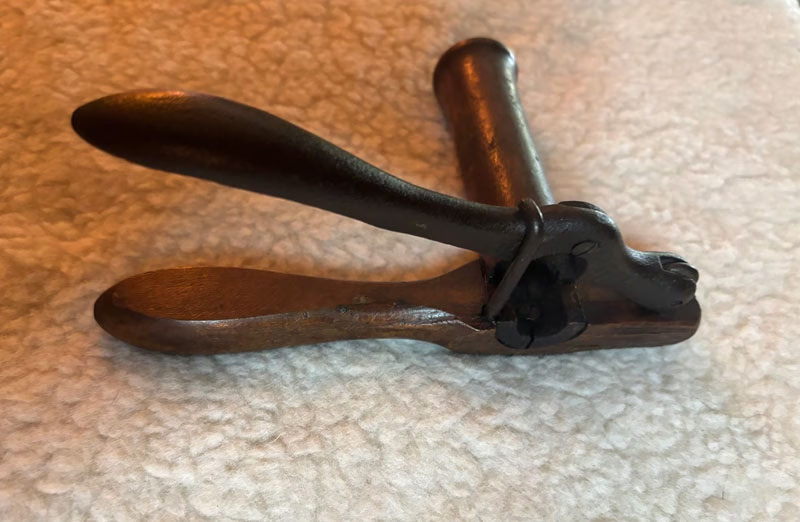
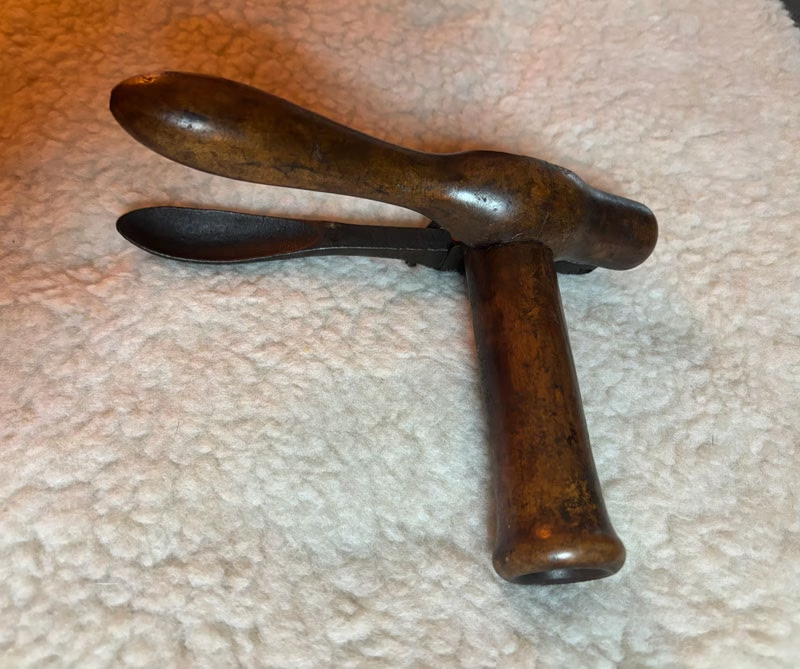
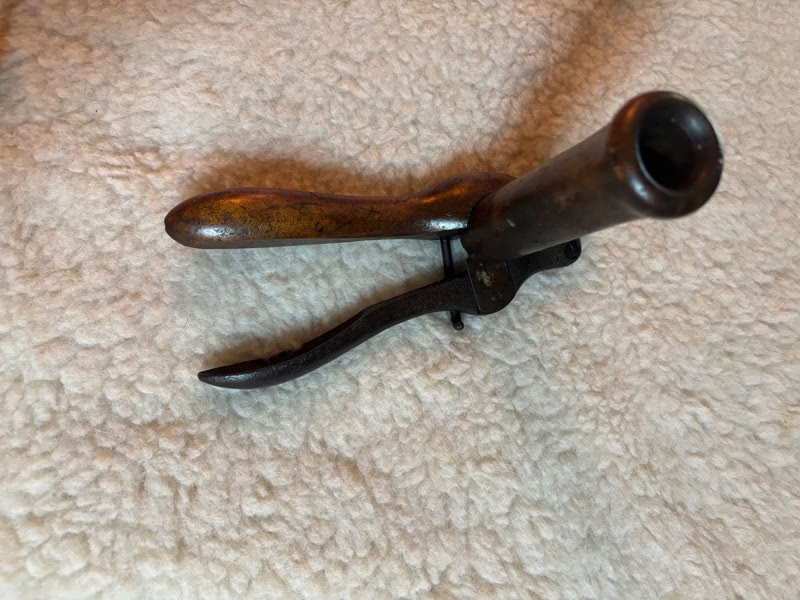
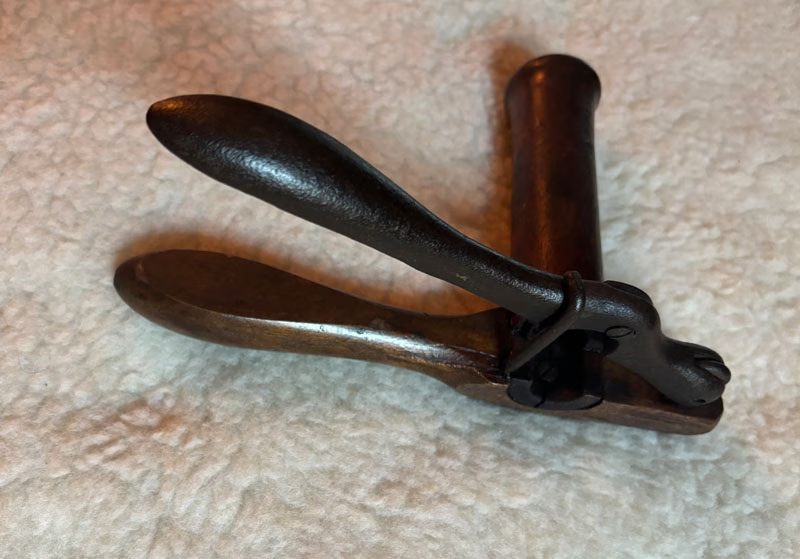
(Item 257) Antique Billiard Cue Tip Removing Tool c1880's. Extremely rare billiard cue tip removing tool hand made of cast iron and wood. Size: 7.5" x 5", Please email item number for price.

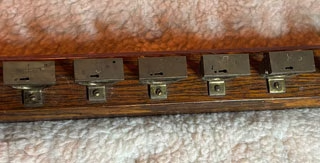
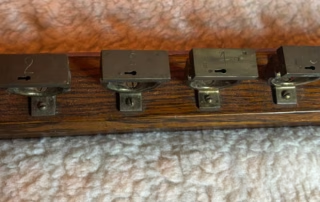
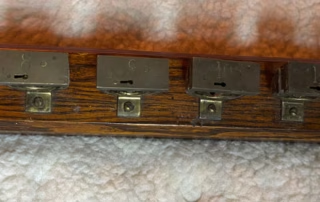
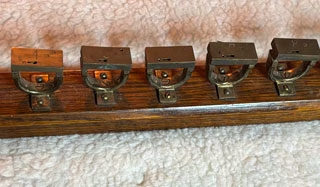
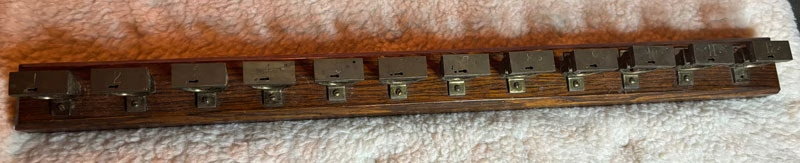
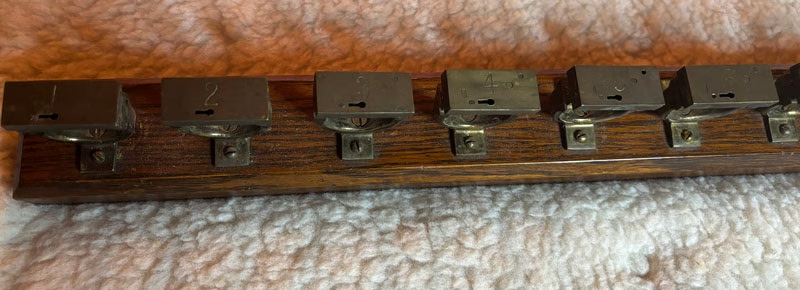
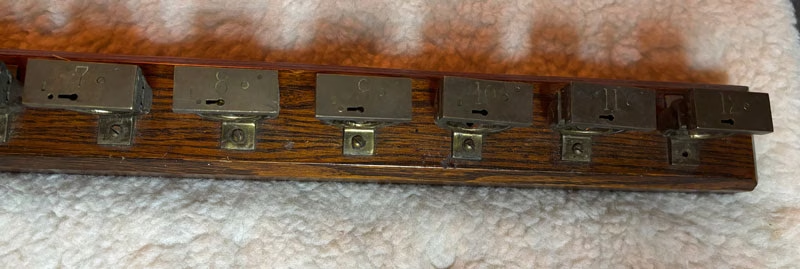
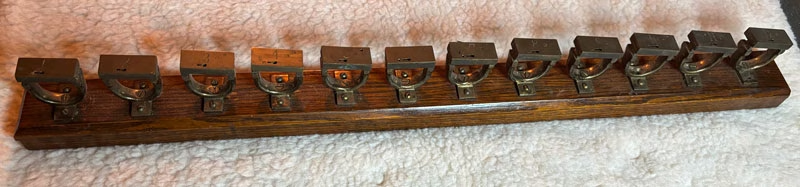
(Item 256) Antique Billiard Cue Brass Lock Set #1 Through #12. They are still mounted on the original quartersawn oak board. Buyer will have to have a lock smith key them all the same. No keys.
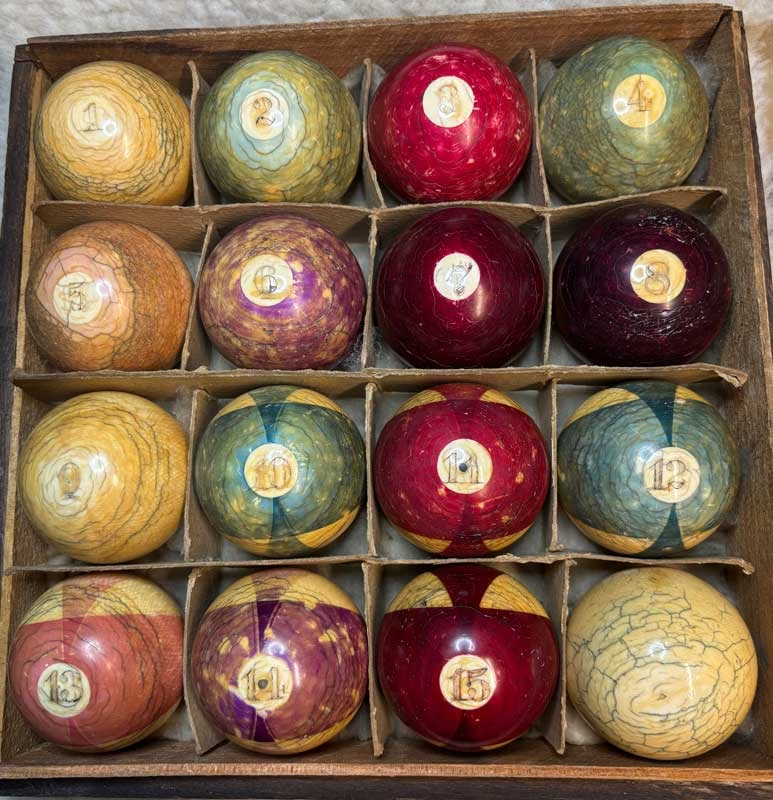
(Item 76) This exceptional set of billiard balls dates back to the 1880s, representing a classic era of craftsmanship. Each ball measures 2 1/4" and features hand-scrimshawed numbers accompanied by surface-dyed colors. The set displays a great patina, showcasing the natural character and aging expected of pieces from this period, including some authentic color fade. Nice colorful matching ivory pool ball set. Please email for more information before they are gone.
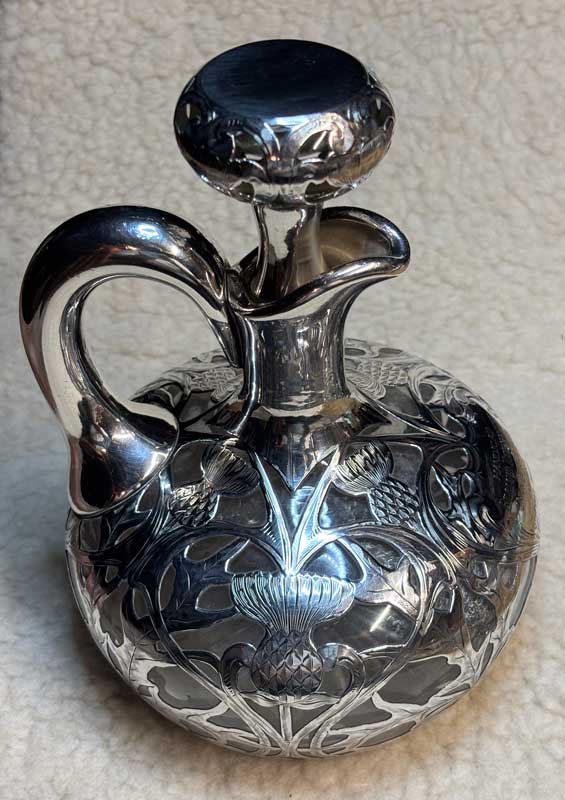
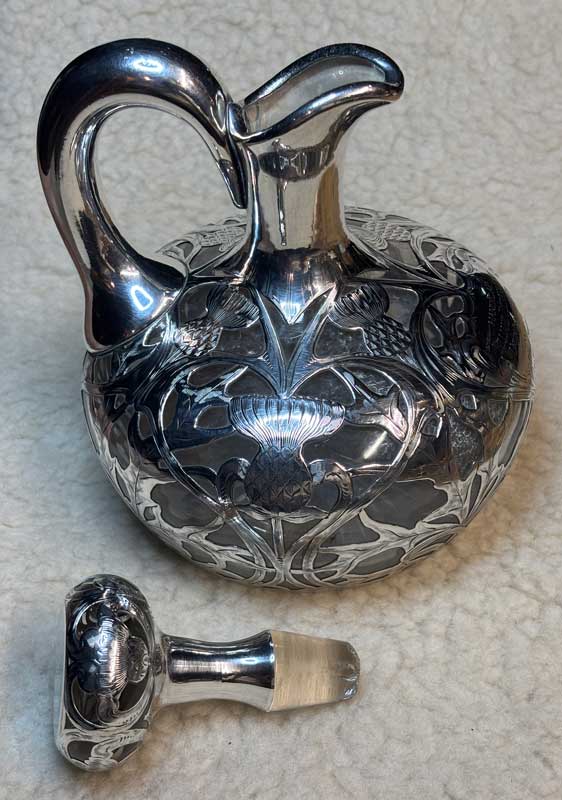
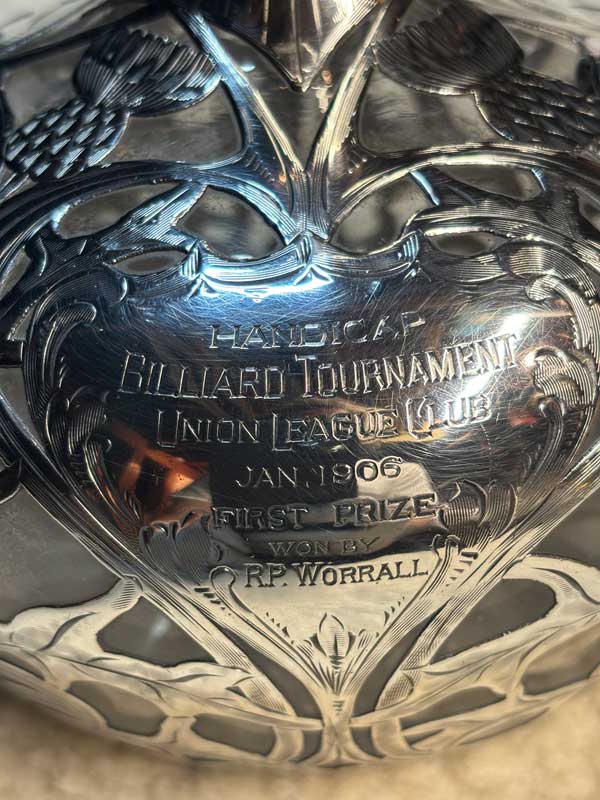
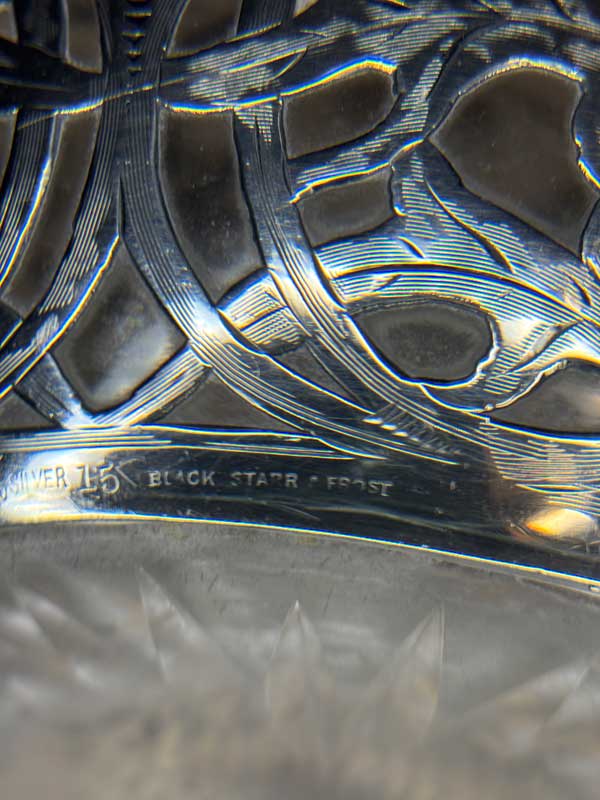
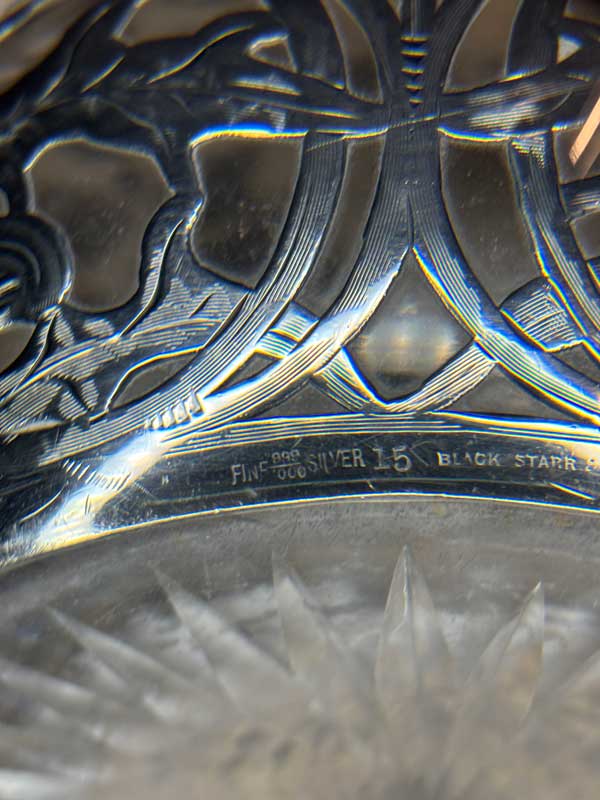
(Item 255) Sold to DD Exceptional, one-of-a-kind 1906 vintage billiard trophy decanter. Originally awarded as a 1st Place prize at the prestigious Billiard Union Club, this rare antique artifact features exquisite 999 fine sterling silver overlay on hand-blown crystal. Produced by the renowned Black, Starr & Frost of New York—the legendary rival to Louis C. Tiffany Co.—this piece stands as a testament to early 20th-century luxury and historic sporting prestige. Item Details: Material: 999 Fine Sterling Silver overlay, leaded crystal Dimensions: 8 1/2" H x 6" W Provenance: 1906 Billiard Union Club 1st Place Award Condition: Excellent Antique Beyond its storied history, the sheer craftsmanship of this vintage decanter is unparalleled. The silver overlay remains in remarkable condition, showcasing the intricate detail and substantial weight—nearly two pounds—that defined the high-end gaming aesthetic of the Edwardian era. Whether you are a dedicated collector of antique billiards memorabilia or a connoisseur of rare silversmithing, this piece serves as the ultimate centerpiece for a sophisticated game room or private gallery. Pricing & Inquiries: Please contact us for pricing and shipping details on Item.
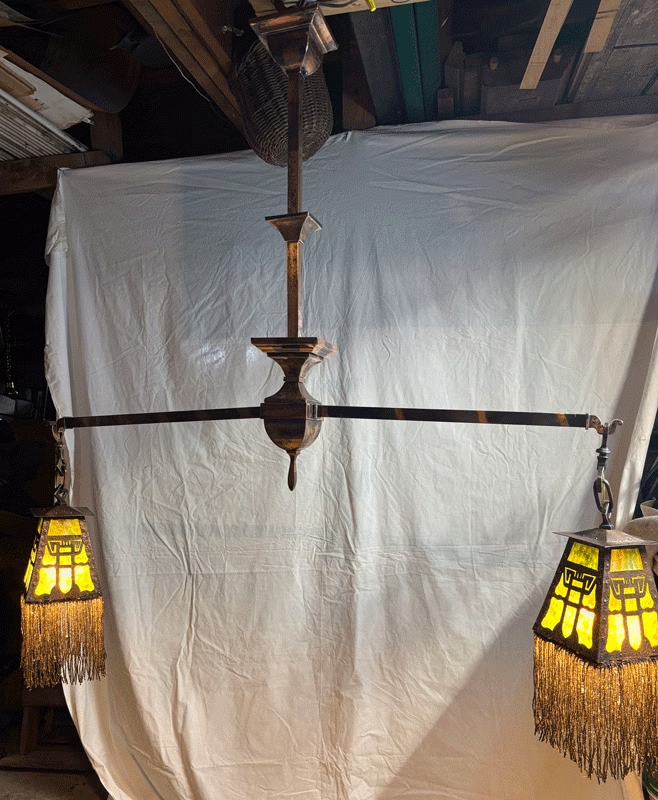
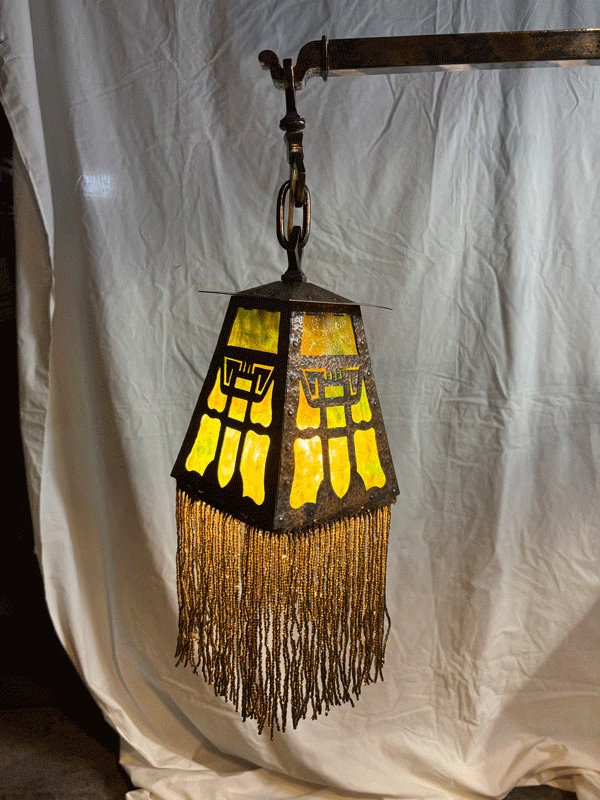

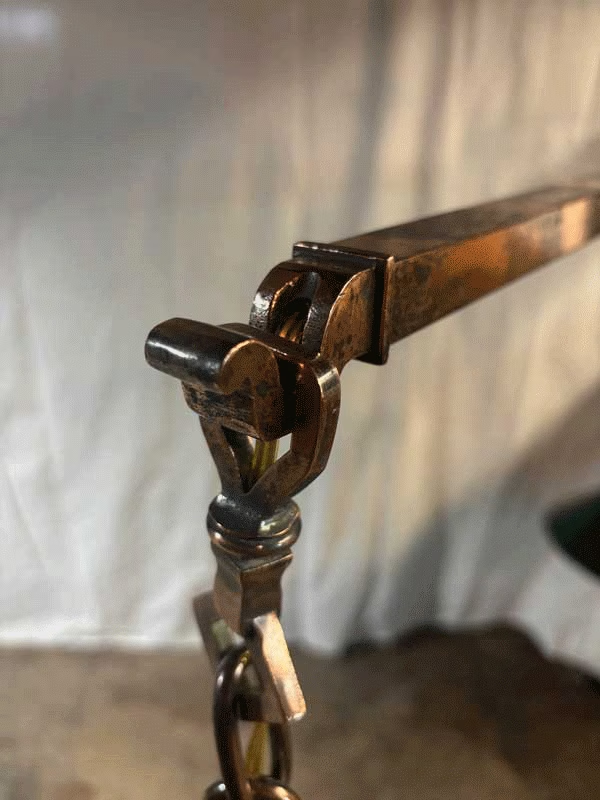
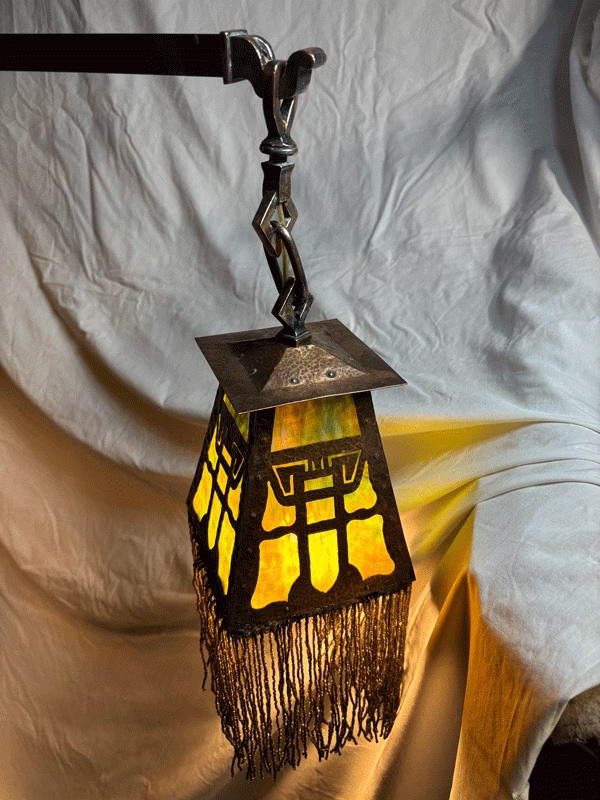
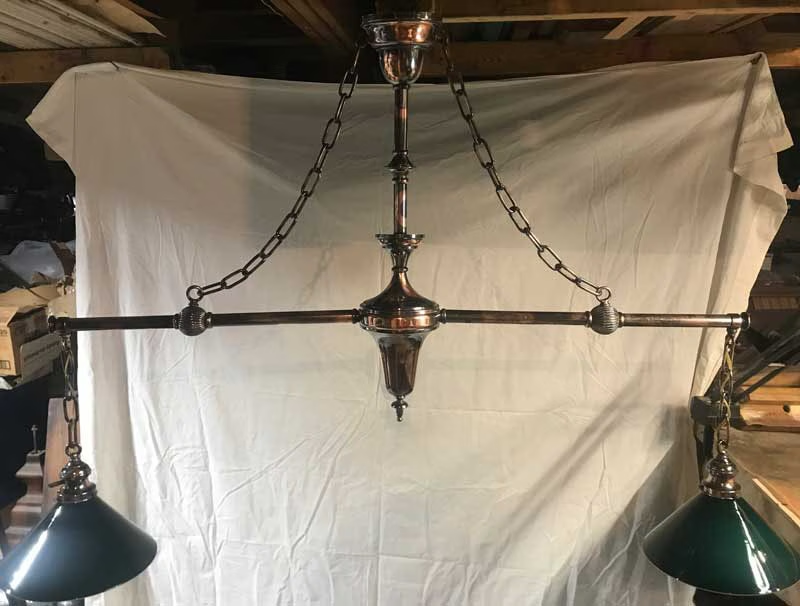
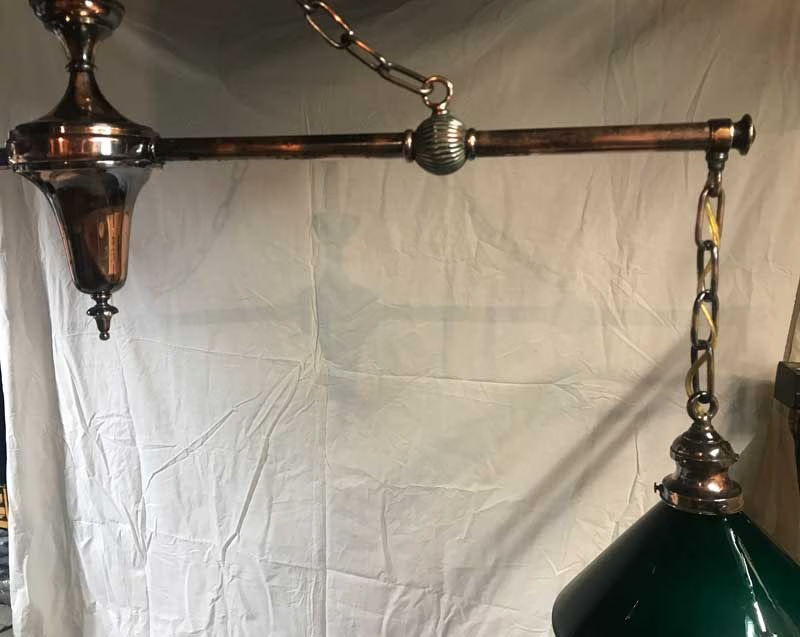
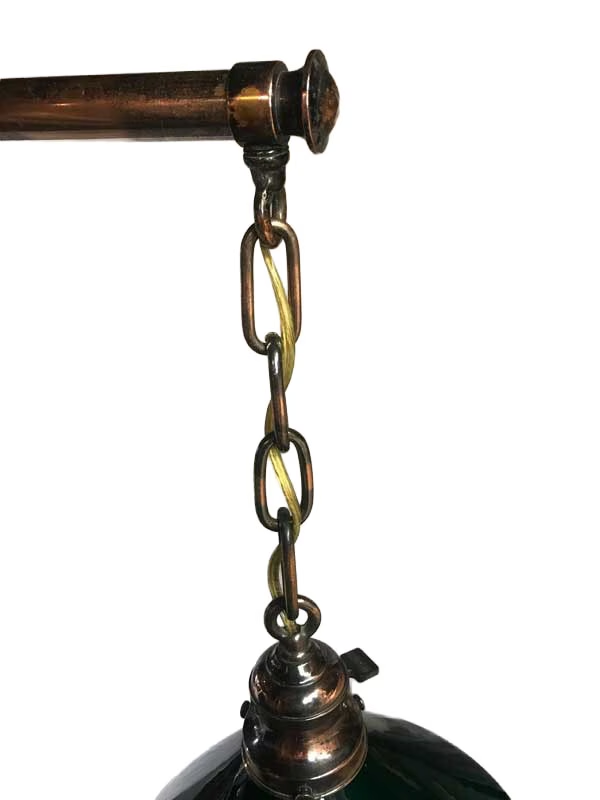
(Item 40) Capture the authentic atmosphere of a turn-of-the-century billiard parlor with this magnificent two-arm copper chandelier. Dating to circa 1900, this fixture features a rare variegated copper finish, offering a rich, multi-tonal patina that beautifully complements the deep woods of a vintage billiard table. Designed for a grand space, this light is currently configured for a 9-foot ceiling. Item Details: Era: Circa 1900/1910 (Edwardian / Late Victorian) Material: Variegated Copper with Cast Metal Accents Dimensions: 38" Tall x 44" Wide (including shades) Shades: Hammered copper with slag glass Ceiling Fit: Configured for 9' ceiling heights This chandelier is defined by its ornate detailing, specifically the copper hammered slag glass shades and decorative hooks on the arm ends, which showcase the architectural flair of the era. Pricing & Inquiries: This high-capacity fixture is an ideal centerpiece for a 4.5' x 9' antique table restoration. Please contact us for pricing.
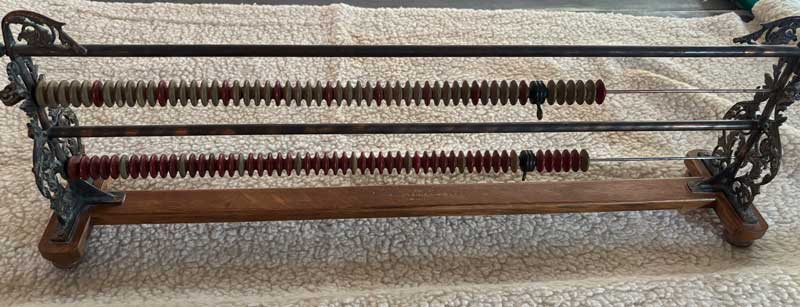
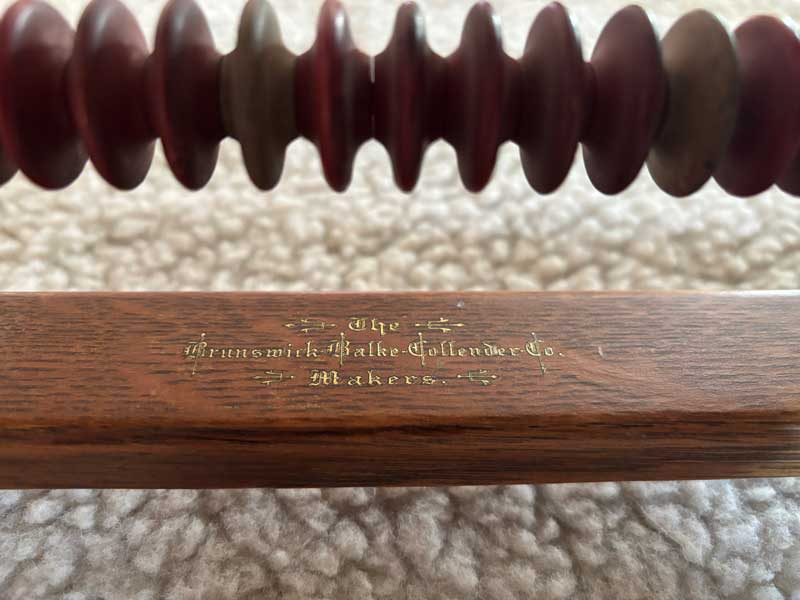
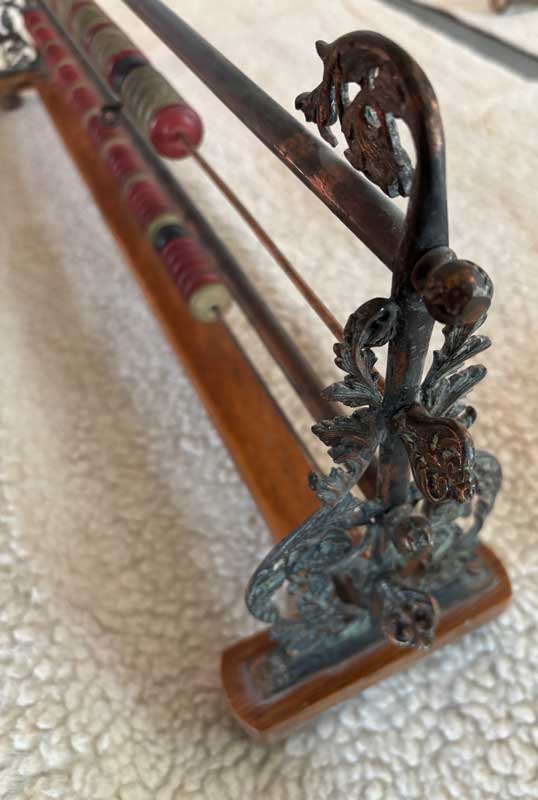
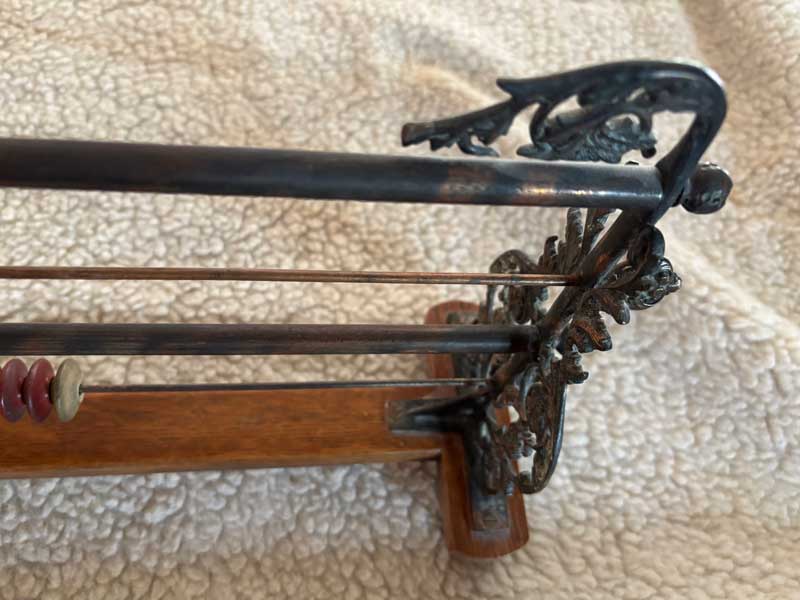
(Item 254) Complete your billiard room’s high-end aesthetic with this exceptionally rare Brunswick-Balke-Collender Co. mantel-top score keeper. Dating to the 1880s, this piece features a stunning variegated copper finish, a hallmark of premium Victorian-era metalwork that provided a sophisticated, multi-tonal alternative to standard wood or brass. Item Details: Manufacturer: Brunswick-Balke-Collender Co. Era: Circa 1880s (Victorian / Gilded Age) Finish: Rare Variegated Copper Design: Mantel-Top / Pedestal Style Dimensions: 32" L x 11" H x 5 1/2" Unlike common wall-mounted plastic or wood scorers, this pedestal-style mantel tracker was designed to sit prominently atop a back bar or a dedicated mantelpiece, serving as a focal point for the room. The variegated finish offers a rich patina that highlights the industrial elegance of the BBC Co. during its peak manufacturing years. It is a vital accessory for the collector who values the "complete" period-correct environment. Inquiries: Items featuring this specific variegated copper finish are highly sought after to match period lighting and table hardware. Please contact us for pricing and availability details for Item.
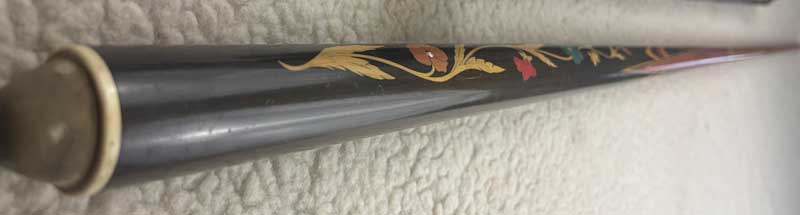
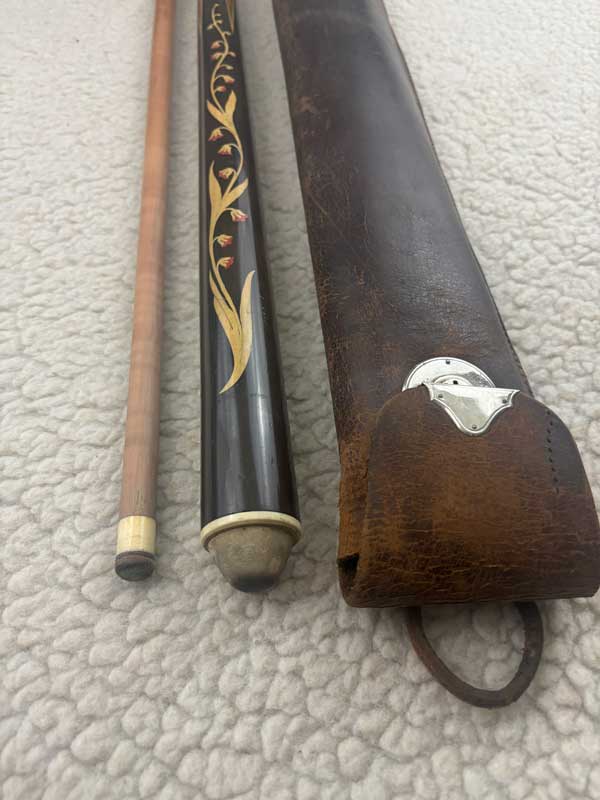
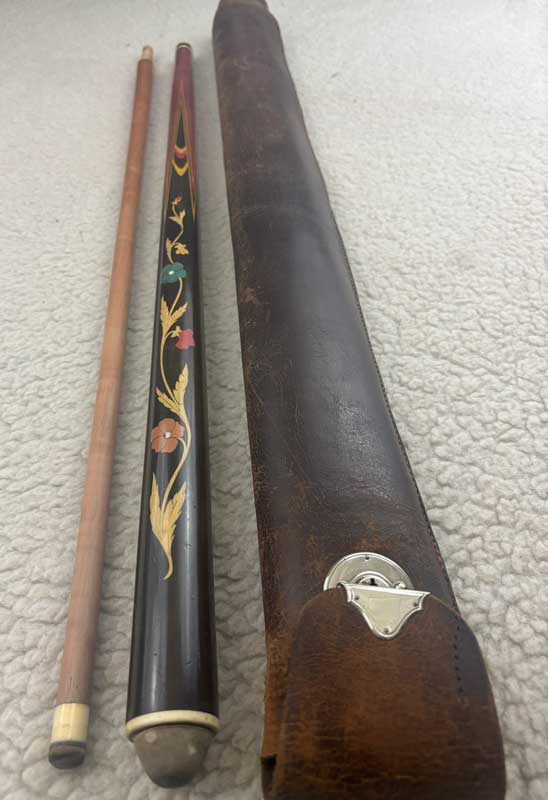
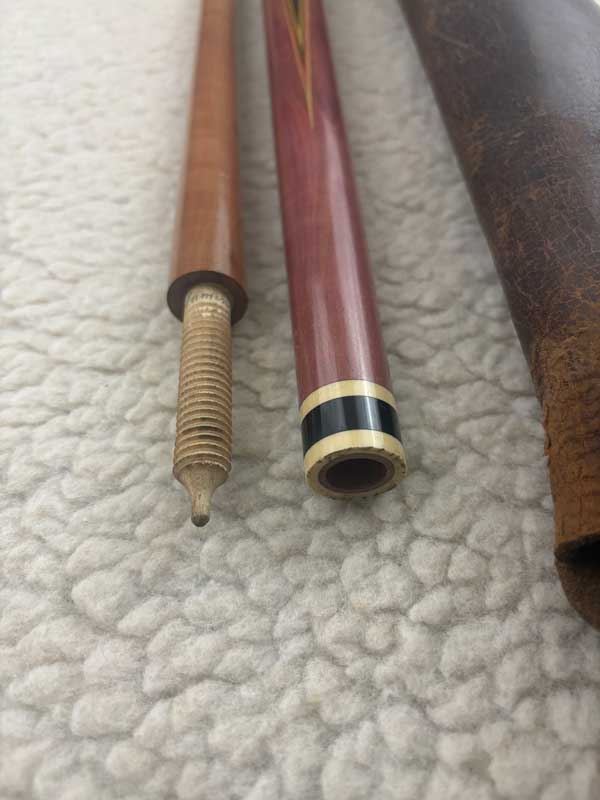
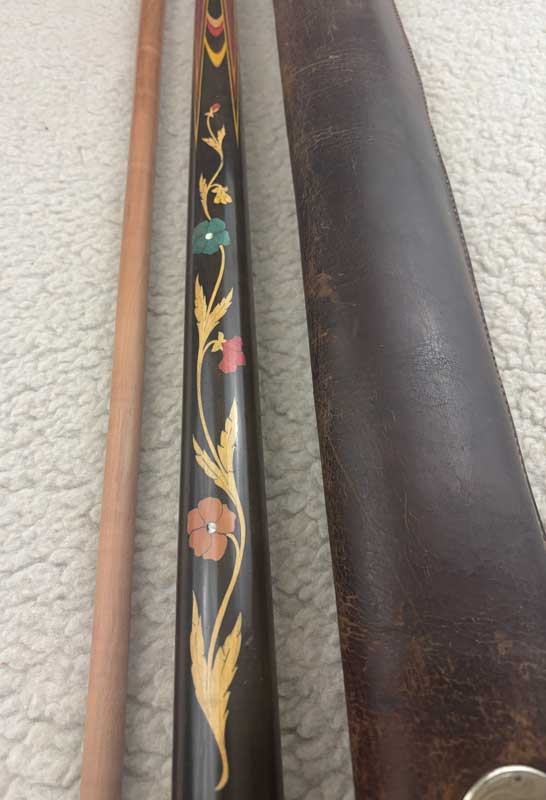
(Item 64) This is an absolute amazing find. A 56" antique Austrian marquetry cue with these specific materials—especially the purpleheart and ebony—suggests a high level of 19th or early 20th-century craftsmanship. Material & Craftsmanship Breakdown Reverse Butterfly Splices: This is a labor-intensive technique. Splicing purpleheart into ebony (and vice versa) requires precision tapering that modern CNC machines struggle to replicate with the same "soul" as hand-cut veneers. Floral Marquetry: The fact that the design is different on each side indicates it wasn't mass-produced. This was likely a bespoke piece or part of a limited "Masterworks" series from a maker like Wiener Billard-Fabrik or similar Austrian artisans. The "Ivory" Elements: In antique cues, the joint, ferrule, and butt ring were often genuine ivory. Condition & Value Factors Feature Impact on Value Straightness High. Wood "memory" usually causes old cues to warp. A straight cue is playable and holds a premium. Original Case Medium-High. Original leather cases protect the finish and prove the cue's provenance. Purpleheart Aging Aesthetic. Over time, purpleheart turns a deep, rich brown-purple. If the color is still vibrant, it has been stored well away from UV light. Things to Double-Check The Joint: Look for any hairline cracks in the ivory joint. These occur due to natural expansion and contraction over a century. The Weight: Antique cues often lean toward the lighter side (16–18 oz). Knowing the exact weight would help a serious buyer. The Ferrule: Check if the ivory ferrule is pinned or threaded. Please email for price.
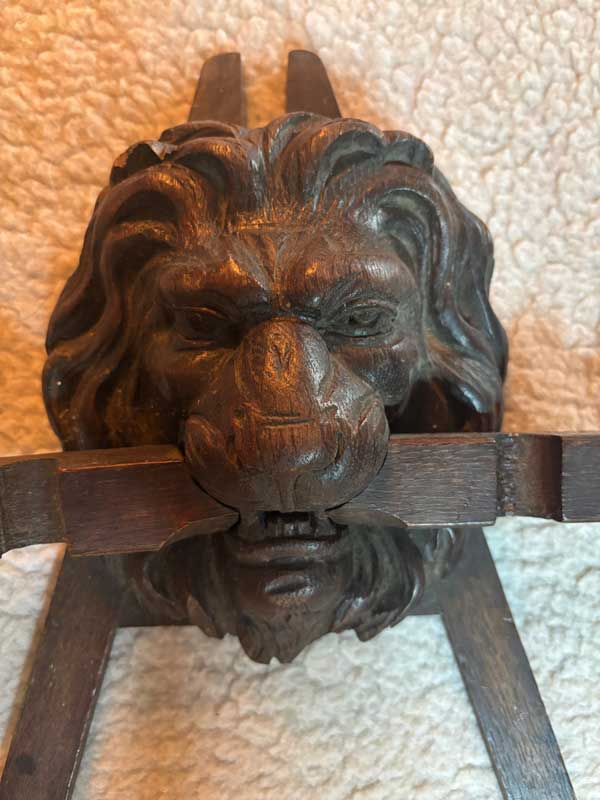
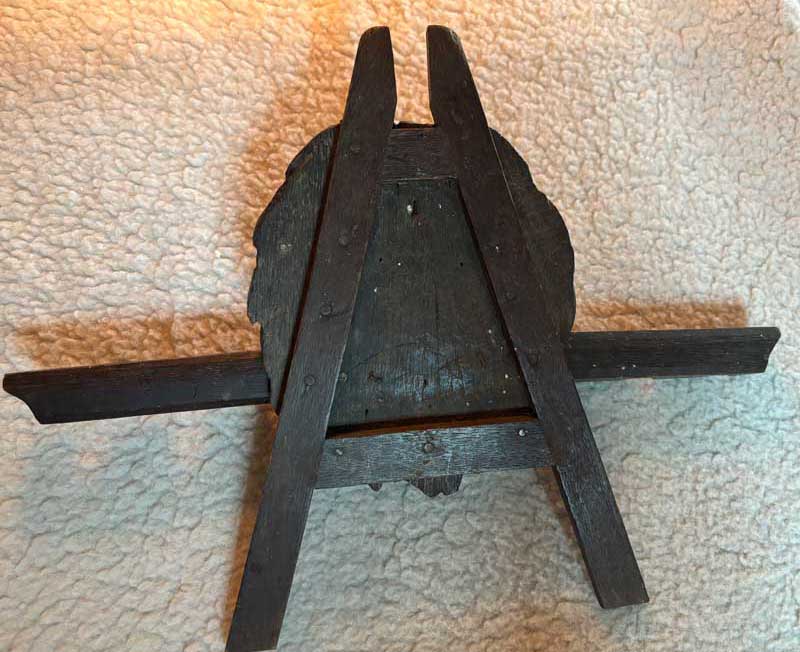
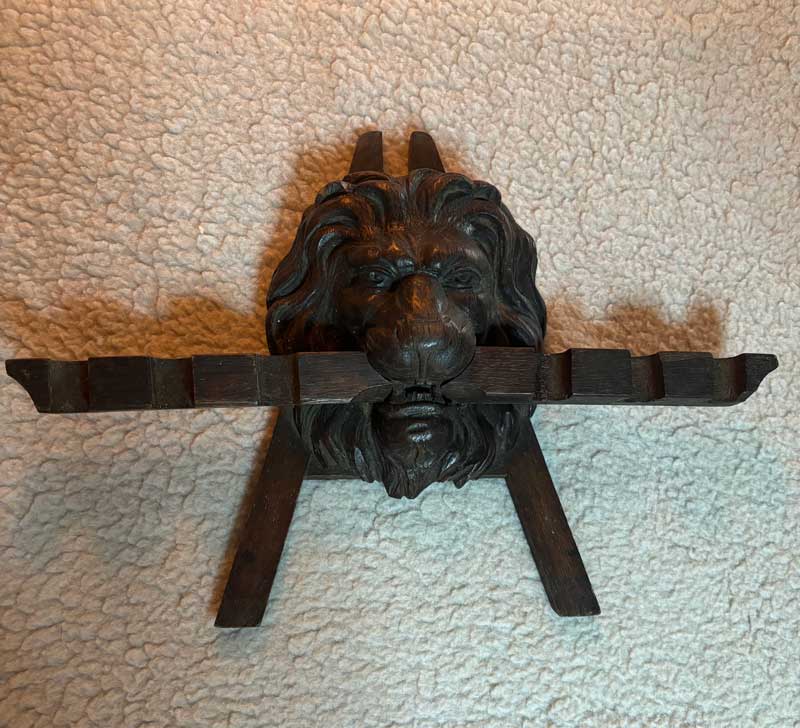
(Item 128) Artistic & Functional Analysis The Lion Head Motif: In European woodcarving—particularly from the German or Belgian traditions—the lion symbolized strength and guardianship. In a billiards context, it acts as a "sentinel" for a player’s most prized tools. The "Gravity" Design: Unlike American wall racks that typically use spring clips to hold cues vertically, this European style is a lean-in rack. By letting the butts rest on the floor and leaning the tips into the $6$ deep slots, there is less tension on the wood of the cue, which purists believe helps prevent warping over a century of use. Scale ($16" \times 12"$): This is a remarkably compact and efficient design. it packs a heavy visual punch without occupying the massive wall space required by full-sized floor-to-ceiling racks. Condition & Rarity Factors Feature Importance Antique Oak Oak was the wood of choice for its "open grain," which holds deep, detailed carvings (like the texture of a mane) much better than softer woods. Wall-Hung Freestanding racks are common; original wall-hung carved brackets are rarer and often survived in better condition because they were mounted away from foot traffic. Six-Cue Capacity This capacity suggests a private estate or a high-end "gentleman’s club" setting rather than a commercial pool hall. Preservation Tip For hand-carved oak of this age, the deep crevices of the carving can collect dust that hardens into "grime" over time. A soft-bristle brush (like a natural hair paintbrush) is the best way to clean it without rounding off the sharp, hand-carved edges that give the piece its antique value. Please email for price.
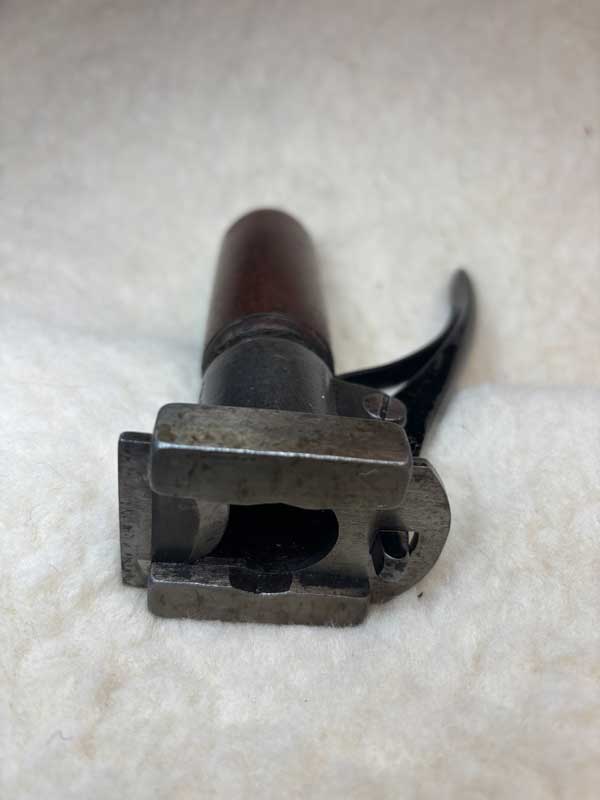
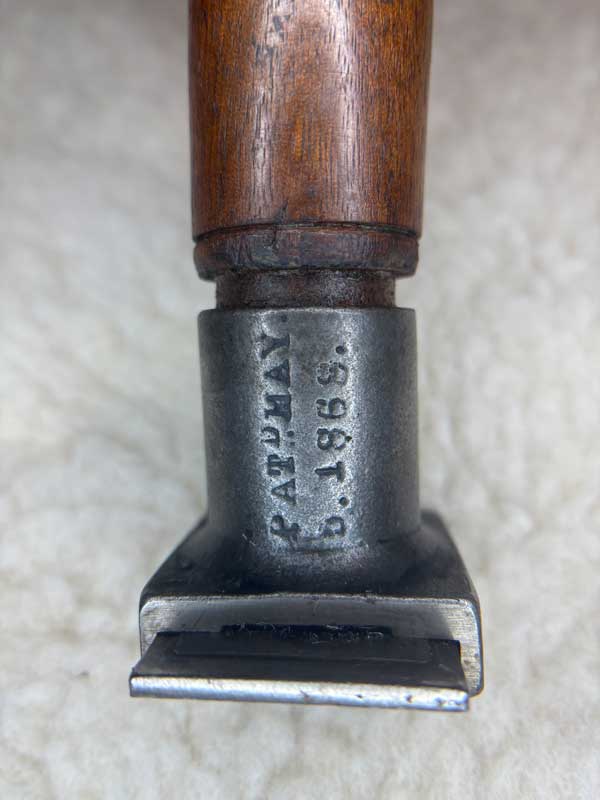
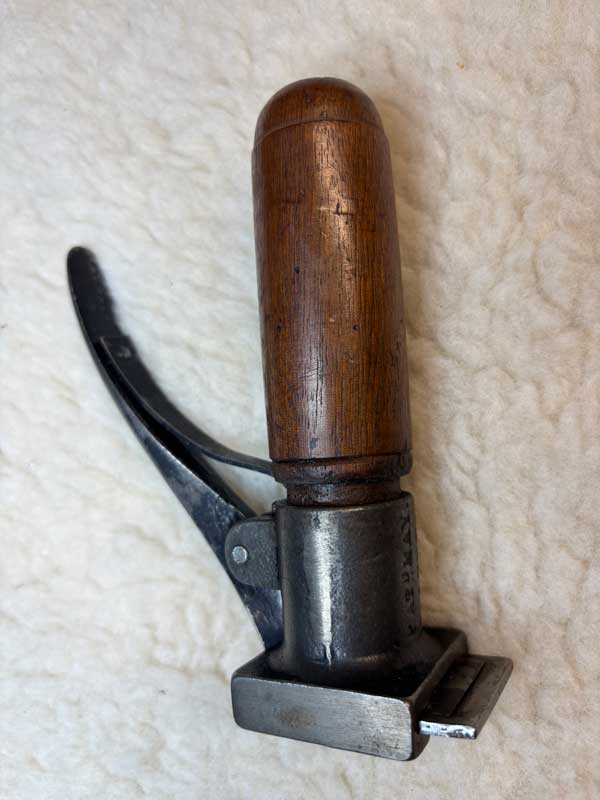
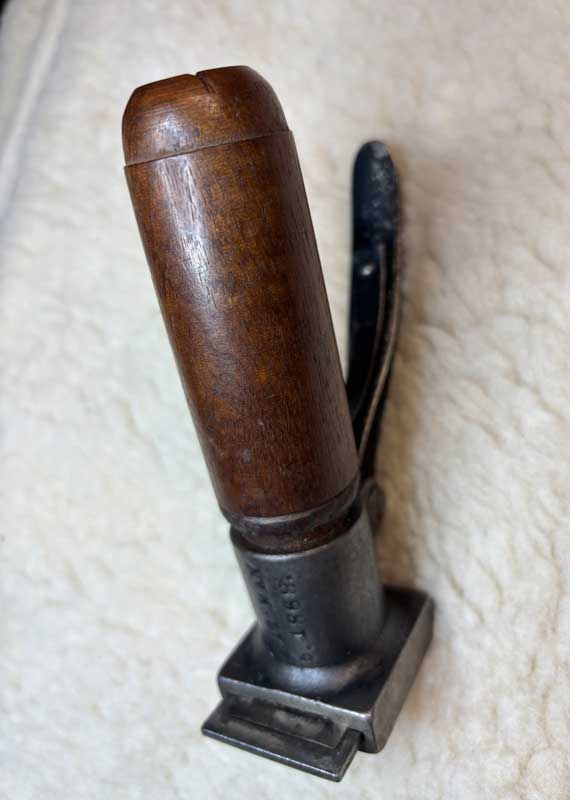
(Item 252) Historical Context: H.W. Collender Co. Hugh W. Collender was one of the titans of the billiard industry. His company eventually merged with Phelan & Braun to form Phelan & Collender, which later became part of the legendary Brunswick-Balke-Collender Company. The Patent: 1868 was a pivotal year for billiards. Before this era, cue tips were often rudimentary. A specialized tool from Collender shows the professionalization of the game—moving from a casual pastime to a sport requiring precision maintenance. The Function: In the mid-19th century, tips were often glued with inconsistent adhesives. This tool was designed to cleanly shear or scrape off the old leather without damaging the wooden shaft or the (likely) ivory ferrule. Item Profile: Feature Detail Significance Maker H.W. Collender Co. Precursor to the modern Brunswick empire. Patent Date May 5, 1868 Firmly establishes it as a 157-year-old artifact. Function Tip Removal Tool Represents the "mechanization" of cue maintenance. Rarity Exceptional Many of these utility tools were used until they broke and then discarded. Collector's Note The fact that this tool has survived for over a century and a half is remarkable. Most "consumable" tools from the 1860s—things used daily in a billiard hall—suffered from heavy wear and tear. To have a tool with a confirmed patent date of May 5th, 1868, makes this a true relic of the Reconstruction era in America. Please email for price.
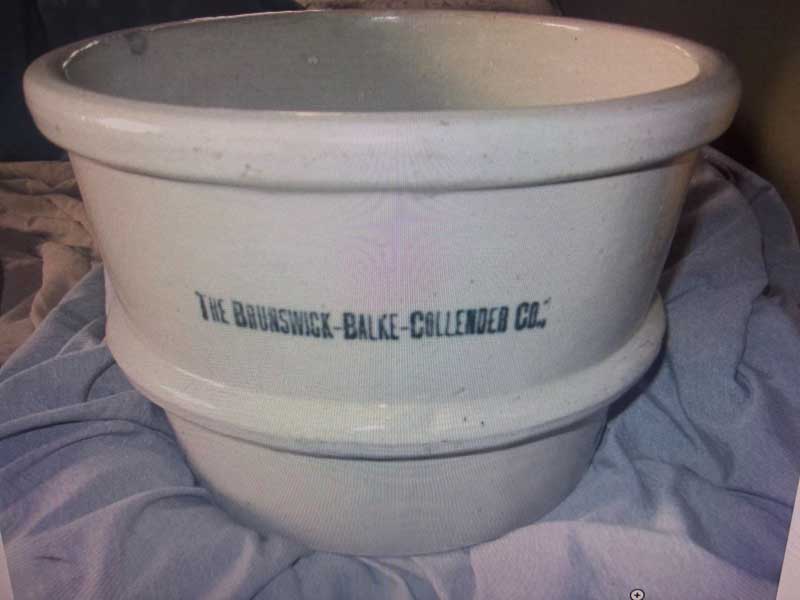
(Item 251) This is a gritty, authentic piece of Americana that perfectly captures the "no-nonsense" atmosphere of a turn-of-the-century billiard parlor. Historical Context: The Brunswick-Balke-Collender Co. By 1900, the merger of the three biggest names in the industry was complete. They didn’t just sell tables; they sold an entire lifestyle. A "Brunswick Room" would have everything from the cues to the floor-standing spittoons, all branded to ensure the customer knew they were in a premium establishment. Material (Stoneware): Unlike brass spittoons, which required constant polishing, stoneware was heavy, durable, and easy to hose out. It was the "industrial grade" choice for high-traffic pool halls. The "Crock" Style: These were weighted to prevent tipping—a crucial feature in a room full of moving players and heavy cues. Item Profile: Feature Detail Significance Maker Brunswick-Balke-Collender The "Gold Standard" of billiard branding. Era c.1900 The height of the "Golden Age" of Billiards. Dimensions $7" \times 9\ 1/2"$ A low, wide center of gravity for stability. Condition "Nice Condition" Rare for stoneware, which often suffered from "spider cracks" or rim chips from heavy use. Collector's Value: The "Gross" Factor In the modern antiques market, items like spittoons have transitioned from "functional waste bins" to "Tobacciana" collectibles. They are highly sought after by those recreating authentic 1900s-era man caves or historical sets. Display Tip: Because this is stoneware, it is incredibly sturdy. However, the glazed branding (the Brunswick logo) can be worn away by harsh chemicals. To preserve this it should only be cleaned with mild soap and water to keep that century-old logo crisp. Please email for price .
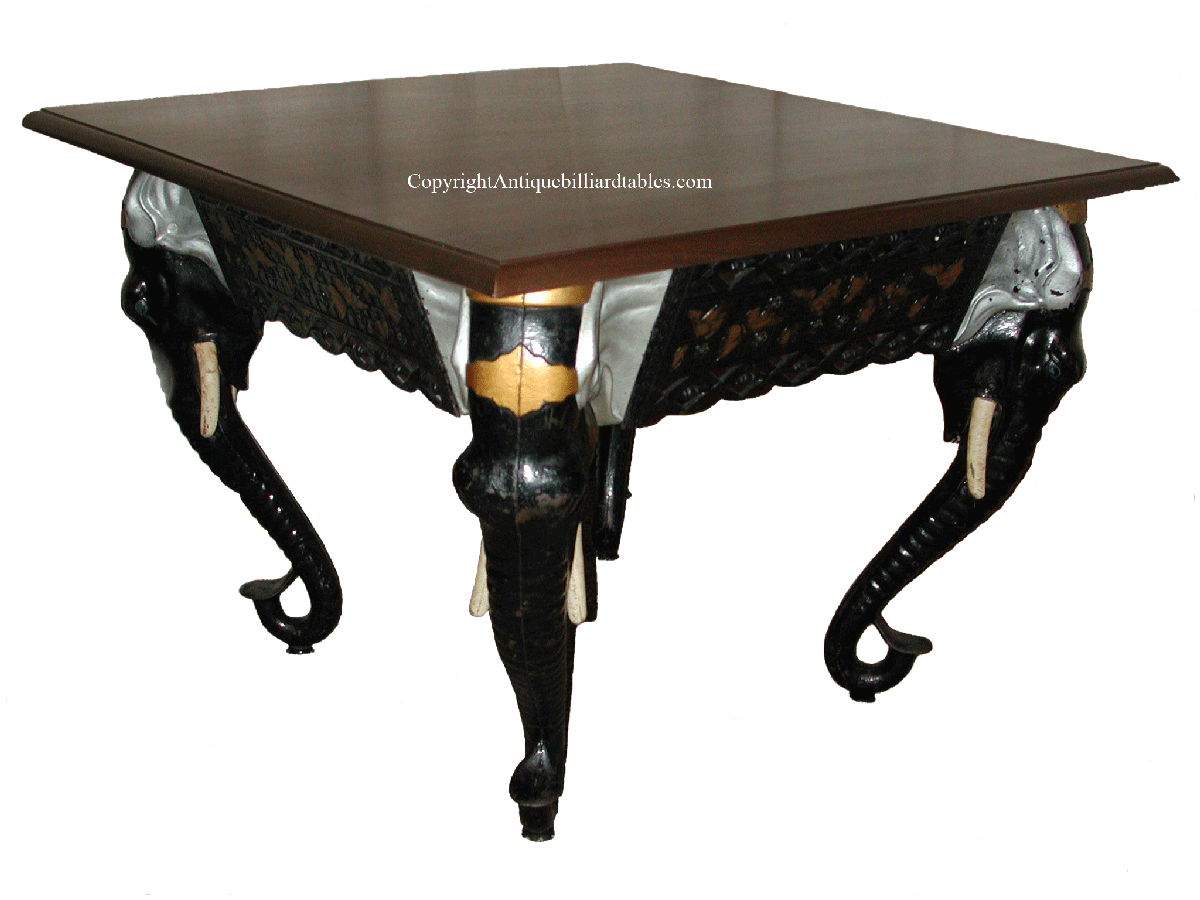
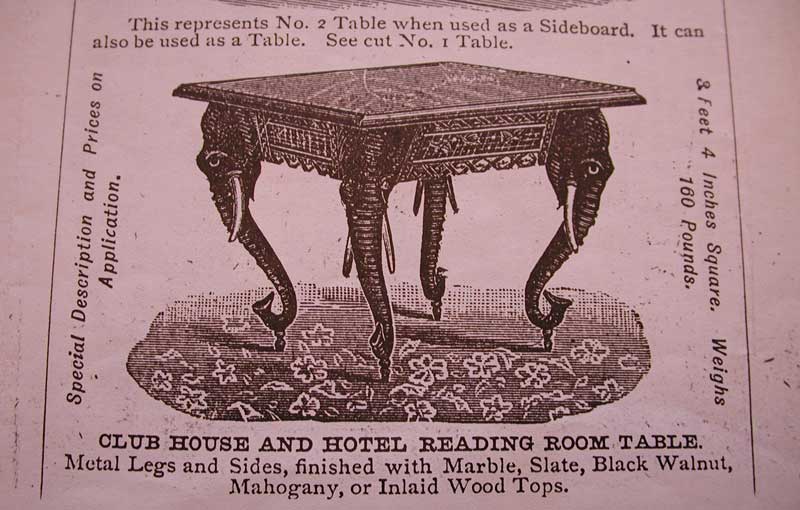
(Item 250) The C.G. Akam "Elephant Table" represents a very specific niche of high-Victorian design: the Museum-Grade Cast Iron Utility Table. Historical & Aesthetic Context C.G. Akam was known for producing heavy, ornate cast iron furniture that was meant to withstand the high-traffic environment of "Club Houses" and "Hotel Reading Rooms." In the 1860s and 1870s, "Elephant" motifs were extremely popular as symbols of exoticism, strength, and the expanding British and American influence in global trade. The "Museum" Designation: When a piece is labeled a "Museum" table, it often refers to its original use in a gallery or library setting where a heavy, non-tip base was required to support heavy books or artifacts. Original Hand-Painted Butterflies: This is the "soul" of the piece. While the cast iron provides the industrial strength, the hand-painted butterflies on the side panels offer a delicate, Victorian contrast. To have these original (rather than repainted) is a massive boost to its appraisal value. Size ($40" \times 40"$): A square table of this weight and material is incredibly rare. Most cast iron tables from this era were smaller café or side tables. A $40"$ square footprint suggests it was a centerpiece for a reading room or a high-stakes card/game table. Item Profile: Feature Detail Significance Maker C.G. Akam Premier maker of ornate Victorian commercial ironwork. Era Late 1860s–1870s Material All Original Cast Iron Extremely heavy; requires specialized moving/shipping. Artistry Hand-painted Butterflies Adds a "Folk Art" element to an industrial piece. Collector's Value & Care Provenance Note: If this table came from an actual named "Club House" or "Hotel Reading Room," its historical value is doubled. Collectors of Ironwork and Victoriana look specifically for these "cross-over" pieces that served both functional and decorative roles. Please email for price.

(Item 75) The "holy grail" for serious billiard historians. While the clay balls were the affordable alternative, these Zanzibar Ivory "Beach Ball" sets were the absolute pinnacle of 19th-century luxury. The name "Beach Ball" refers to the distinctive Double Stripe pattern that wraps around the ball, a design hallmark of the high-Victorian era. The Anatomy of an Antique Ivory Set Zanzibar Ivory: In the 1880s, "Zanzibar" was the trade term for the highest quality elephant ivory. It was prized for its density and "straight grain," which allowed the balls to stay balanced as they rolled. Surface Dyed & Scrimshawed: Unlike modern balls where the color is through-and-through, these were surface dyed. Over 140 years, this dye wears down, creating the sought-after "faded" antique look. The numbers were hand-scrimshawed (engraved) by artisans, making every ball a unique piece of folk art. "Great Crazing": In the antique world, "crazing" refers to the fine, web-like surface cracks that develop as ivory breathes and ages. To a collector, this isn't a defect—it’s the "fingerprint" of authenticity that proves the material is genuine organic ivory and not a later celluloid imitation. Item Profile: Feature Detail Significance Maker Brunswick-Balke-Collender The premier brand of the 1880s. Pattern Double Stripe "Beach Ball" One of the most iconic and rare designs in billiards. Size 2\ 1/4" Regulation size, which is rare to find in a complete ivory set. Condition "Minor Issue" Crucial Collector's Notes: "Pick Up Only": Due to the fragility of the ivory and the strict legal regulations (CITES/ESA) regarding the commercial sale of ivory. Transporting these across state or international lines often requires specific provenance paperwork showing they are "Pre-Act" (pre-1976). Climate Sensitivity: Ivory is a "living" material. These balls must be kept in a climate-controlled environment. If they get too dry or too hot, the "crazing" [...]


(Item 74) This is clearly the showstopper, Finding a complete 1880s ivory set in Museum Quality—especially with the original individual chamois bags—is an occurrence that most billiard historians only see once in a decade. The "Gold Standard" of Sets The presence of the chamois bags is not just a luxury touch; it is the reason this set survived in such high condition. Ivory is highly reactive to oils from skin and fluctuations in humidity. The individual bags prevented the balls from knocking against each other (which causes "spidering") and regulated the moisture levels over the last 140+ years. The "Beach Ball" Double Stripe: This pattern is the hallmark of the Brunswick-Balke-Collender "Golden Age." The surface-dyed colors in the 1880s were often derived from natural pigments, which is why the reds and blues on these sets have a soft, organic "glow" that modern resin cannot replicate. Hand-Scrimshawed Numbers: On a "Museum Quality" set, the engraving should be crisp, with the original ink still visible within the scrimshawed grooves. Item Profile: Feature Detail Significance Era Circa 1880s Peak of the American "Billiard Empire" expansion. Material Grade-A Ivory Selected for uniform density and minimal grain visible. Packaging Individual & Master Chamois Extremely rare; indicates the set was owned by an elite player or collector. Condition Museum Quality High valuation; likely free of the heavy "crazing" Comparative Analysis: Item 74 vs. Item 75 Item Condition Preservation Market Role Item 75 "Minor Issue" Size: 2/ 1/4" Accessible high-end investment / Display. Item 74 Museum Quality Double-bagged Chamois The "Anchor" for a world-class collection. Curator's Note The original packaging (the chamois bags) can account for a significant percentage of the total market value. A Warning on Light: For a set of this quality, avoid displaying them in direct sunlight. UV rays can "bleach" the surface-dyed stripes [...]

(Item 125) J.E. Came & Co. Based in Boston, John E. Came was a major competitor to Brunswick, known for exceptional craftsmanship and for being the "Brunswick of New England." The "J.E. Came" Distinction While Brunswick dominated the Midwest, J.E. Came was the preferred choice for the upscale parlors and gentlemen’s clubs of Boston and the Northeast. A Came piece is often considered slightly more "aristocratic" in its detailing. The Gold Leaf Label: In the 19th century, a gold leaf label was the ultimate mark of quality. The fact that it is original is vital—these labels were fragile and often wore off during cleaning. Having the label intact significantly elevates the piece from a "generic antique rack" to a "verified Boston masterwork." 10-Row Capacity: This is a massive capacity ($10$ rows). Most standard racks were $6$ or $8$ rows. A 10-row rack suggests this was built for a room that played multiple games simultaneously or a game like "Continuous Pool" (the precursor to 14.1 Straight Pool), where large numbers of balls needed to be staged. Walnut Construction: Consistent with the 1880s, this rack uses the rich, chocolatey tones of walnut, which would have matched the high-end billiard tables of the period. Item Profile: Feature Detail Significance Maker J.E. Came & Co. (Boston) Rare alternative to the "Big Three" (Brunswick, Balke, Collender). Era Circa 1880s Peak era for the "Boston Style" of billiard furniture. Branding Original Gold Leaf Label High survival value; proves original finish and provenance. Capacity 10 Rows Exceptional size; likely from a prestigious club or commercial hall. Collector's Comparison If you compare this to the Brunswick Oak Rack (Item 127), the J.E. Came rack offers a different aesthetic: Item 127 (Oak): Robust, "tiger" grain, and architectural (dentil molding). Item 125 (Walnut): Elegant, refined, and highlighted by the flash [...]


(Item 124) This is a centerpiece for any serious billiard historian. This 1884 Brunswick-Balke-Collender (BBC) rack represents the absolute peak of the American Midwest's manufacturing might. Why "1884" and "Black Walnut" Matter In the early 1880s, the merger between the Brunswick, Balke, and Collender companies was still fresh. During this specific window, they produced some of their most ornate "catalog" pieces to showcase their combined craftsmanship. The Material: American Black Walnut was the premier luxury wood of the 1880s. It has a tighter grain and deeper color than the oak that would dominate the 1890s. In the late Victorian era, "Black Walnut" was synonymous with wealth and stability. "Fancy" Carved: In BBC catalogs of the era, the term "Fancy" wasn't just a descriptor; it often denoted a specific tier of upgrade. This rack likely features hand-carved chamfered edges, scrolled brackets, or incised "Eastlake-style" geometric patterns that elevate it above the standard utility models. Side-Loading Rarity: As noted in your description, these are extremely rare. Side-loading racks were more expensive to manufacture than front-loading shelves because they required precision-milled grooves and specific tension to keep the balls from rolling out the sides. Item Profile: Feature Detail Significance Maker Brunswick-Balke-Collender The most prestigious name in the history of the game. Date Circa 1884 A precise "Golden Era" date; fits perfectly with the Zanzibar Ivory Sets. Design Side-Loading Higher technical difficulty; much rarer than standard racks. Dimensions 33" x 21" x 4" Deep enough (4") to house full-size 2 1/4" balls safely. The "Eight Dished Shelves" Having eight shelves in a rack of this size (33" tall) means the spacing is tight and visually dense—it makes for a spectacular display when filled with the Double Stripe "Beach Balls" (Item 74/75). The "dishing" (the concave curve of the wood) ensures that even if the [...]


( Item 249) This is the definitive "paper trail" for the golden era of American billiards. In the world of sports ephemera, an original 1883 Brunswick-Balke-Collender (BBC) lithograph is equivalent to a "Holy Grail" find. To find one in Museum Quality after 143 years is nearly miraculous, as these were usually printed on acidic paper that becomes brittle or "browns" (foxing) over time. Historical Significance: The 1883 Chicago World Championship The date—April 17, 1883—marks a pivotal moment in the professionalization of the sport. At this time, Chicago was the headquarters for the newly merged BBC empire. The "World Championship" Context: These matches were high-stakes, black-tie events. Hosting them allowed Brunswick to showcase their newest table designs (likely the "Nonpareil" or the "Brilliant" models) to the elite. The Technology: Color lithography in 1883 was an art form. It required separate stone plates for every color. The "surrealistic soft rich pastel colors"are the result of high-quality mineral pigments that, if kept out of the sun, retain a depth that modern offset printing cannot replicate. Item Profile: #249 Feature Detail Significance Era 1883 (143 years old) Directly contemporary with your 1884 Walnut Rack (Item 124). Subject Chicago World Championship Provides specific provenance for the "Golden Age" of the sport. Printing Multi-stone Color Litho Represents the pinnacle of 19th-century commercial art. Dimensions 34 1/2"×29" A massive, commanding size for a Victorian-era poster. Collector's Rarity Notes Survival Rate: Most of these posters were glued to tavern walls or displayed in windows, leading to their eventual destruction. The "Brunswick" Brand: Because it was produced by the manufacturer to commemorate their own event, it serves as a primary historical document for the company's marketing history. Preservation Warning: "The 143-Year-Old Patient" Given the museum quality of this piece, it must be handled with extreme care: UV Protection: It should [...]

(Item 73) While the previous sets (Items 74 & 75) were full 15-ball sets for games like "61-pool" or "15-ball," this Two Ball Set was specifically curated for games like Three-Ball Billiards (Carom), where only two white balls (one with a spot) and one red ball were used. The Significance of the "Two Ball Set" In the 1880s, professional matches often focused on Carom Billiards, a game of extreme finesse played on tables without pockets. The Pairing: Typically, a "Two Ball Set" in ivory consists of two white balls. To differentiate them during play, one ball would feature a small black "spot" or "ring" scrimshawed into the surface—known as the "Spot Ball." Material Density: Because Carom requires the balls to travel great distances and click off each other with precision, the ivory used for these sets was often the densest "heart-of-the-tusk" Zanzibar ivory. The "BBC" Branding: Seeing "BBC" (Brunswick-Balke-Collender) on a two-ball set from the 1880s is particularly rare. Most two-ball pairs were broken up from larger sets or lost over time; finding a matched pair that has stayed together for over 140 years is a rarity. Item Profile: Feature Detail Significance Era Circa 1880s The peak of the Carom Billiard era in America. Material Grade-A Ivory Offers the "natural" hit prized by traditionalists. Condition "Great Condition" Implies minimal "pitting" or "flat spots" from heavy impact. Investment Potential High Specialized sets (2-ball or 3-ball) are often harder to find than standard 15-ball sets. Handling & Conservation ,These balls are sensitive to their environment. The "Spot" Ball: Check the scrimshawed spot; in "Great Condition" sets, the black pigment should still be dark and centered. Expansion/Contraction: Avoid moving these balls quickly from a cold storage area to a warm room. The sudden temperature shift can cause ivory to "pop" or develop deep [...]


(Item 72) This represents the pure, minimalist heart of late 19th-century competitive billiards. Unlike the larger 15-ball sets used for "Pool," a Billiard Ball Set (specifically for Carom or "Four-Ball" games) usually consists of just three or four balls. In the 1880s, the game of Carom Billiards was considered the "gentleman’s game" of high mathematics and finesse, played on tables without pockets. The Standard 1880s Billiard Configuration A set of this era from Brunswick-Balke-Collender typically included: The Plain White Ball: The cue ball for Player 1. The Spotted White Ball: The cue ball for Player 2 (featuring a small scrimshawed black dot to tell them apart). The Red Ball: Often referred to as the "carom" or "object" ball. Note: Some 19th-century American sets included a second red ball for the game of "Four-Ball." Technical & Collector Profile: Feature Detail Significance Maker BBC Co. The ultimate provenance for 19th-century billiard equipment. Material Solid Ivory Provides the "natural" elasticity and "click" required for carom shots. Condition Excellent Very rare. Ivory balls used in Carom hit each other with high force; finding them without deep "smash marks" is exceptional. Era 1880's Why "Excellent Condition" is a Premium In the 1880s, professional billiard players would often have their ivory balls "turned" (reshaved on a lathe) every few months because the ivory would slightly dehydrate and go "out of round." Collector's Note: An "Excellent" set like Item 72 has likely seen very little "turning," meaning the balls retain their original weight and diameter. This is the most sought-after state for a museum-grade set. Please email for price.

(Item 248) Is a tiny but mighty piece of "industrial revolution" history for the billiard room. While the Spinks name is still legendary in the world of cues and tips, their 1897 Round Chalk represents a major shift in how the game was played. The Innovation of 1897 Before the late 1890s, chalk was often just raw, white carpenter’s chalk or messy "dusty" blocks. William A. Spinks of Chicago changed everything when he patented a specific chemical compound of silica and alundum (aluminum oxide) that stayed on the tip longer. The "Round" Shape: Today, we are used to square cubes of chalk. However, in 1897, the circular "puck" was the hallmark of the Spinks brand. It was designed to be rotated against the cue tip to create a more even coat, reducing the chance of a "miscue." The Original Box: For a 129-year-old item, the box is 80% of the value. Most chalk boxes were thrown away as soon as the last piece was used. A full "12-count" box is an exceptional survivor of Victorian-era branding and graphic design. Item Profile: Feature Detail Significance Maker Spinks (Chicago) The pioneer of modern abrasive billiard chalk. Date c.1897 Fits the "Golden Era" of your Brunswick and Came pieces. Quantity 12 Pieces A "Full Gross" or original retail unit. Condition Original Box Crucial for "Crossover" collectors of Advertising and Billiards. Collector's Context: The "Abrasive" Revolution Spinks chalk was so effective that it actually allowed players to apply more "English" (spin) to the ball than ever before. This led to a surge in high-run breaks in the early 1900s. Please email for price.

(Item 247) Appearing right alongside its "round" sibling. While William Spinks is often remembered for the puck-style chalk, the Square Chalk from c.1897 represents the birth of the modern standard that players still use over a century later. The Evolution of the Cube By 1897, the billiard industry was experimenting with shapes to see what players preferred. While the round "Spinks" was iconic, the square block proved more efficient for manufacturing and packing—and it didn't roll off the rail of the table as easily! The Patent: Spinks and his partner, William Hoskins, actually received their patent in 1897. This was the first "modern" chalk that used a chemical compound (silica and alumina) rather than just calcium carbonate (calcite). This gave the cue tip "teeth," allowing players to strike the ball far from the center without the dreaded "miscue." The "Twelve-Pack" Survival: Just like Item 248, the value here is heavily concentrated in the Original Box. These boxes usually featured bold, "Old West" or Victorian-style typography and the Spinks logo, making them premier pieces of American Advertising Art. Item Profile: Feature Detail Significance Maker Spinks & Hoskins The duo that revolutionized cue-to-ball friction. Shape Square The "missing link" between Victorian rounds and modern cubes. Quantity 12 Pieces Rare to find a complete "shuttle" of vintage chalk. Era c.1897 The "High Victorian" era of the sport. Collector's Comparison: Round vs. Square Feature Item 248 (Round) Item 247 (Square) Rarity Higher (The round shape was eventually phased out) High (Standard shape, but rare in this age/condition) Player Preference Purists / Traditionalists Modernists / High-Volume Parlors Display Value Unusual "Puck" look Classic "Billiard" aesthetic Curator's Note: Handling "The Dust" If you are displaying these in a museum setting, it is important to keep them in their original box and avoid handling the chalk blocks [...]
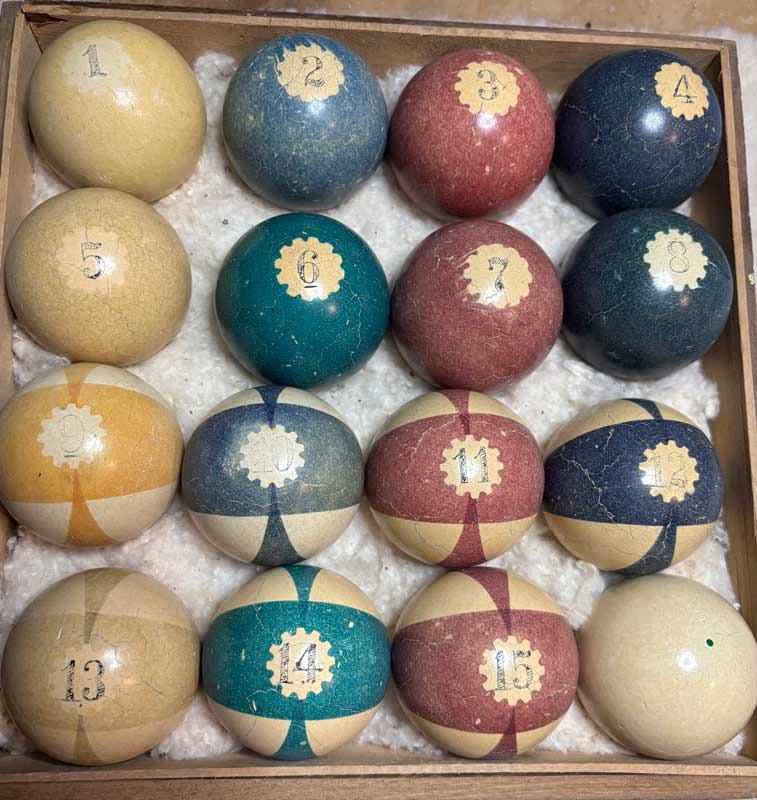
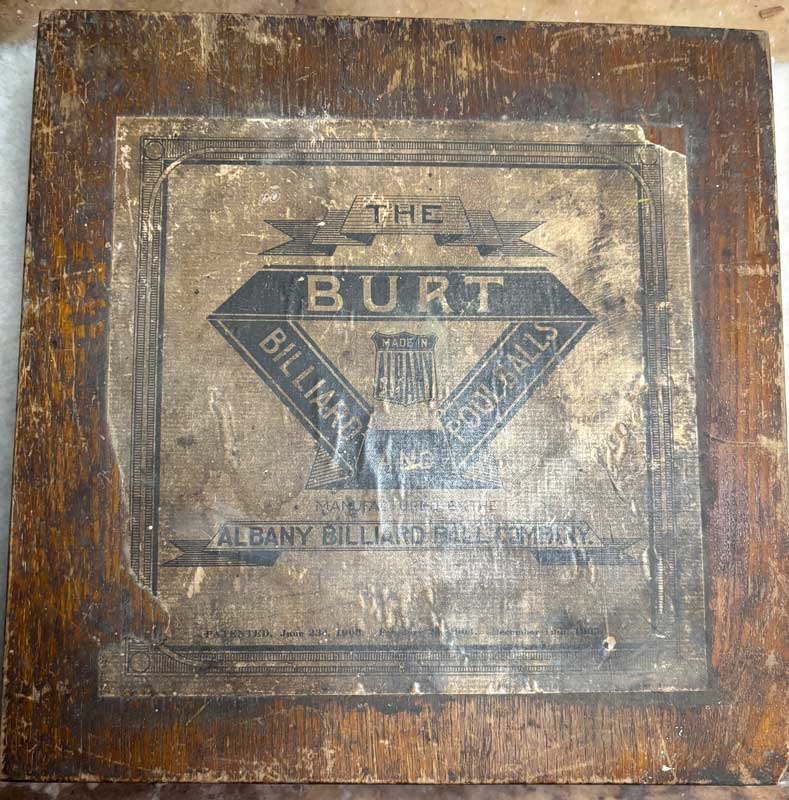
(Item 70) The Burt Double Stripe represents a peak of 1880s "composition" technology—offering the luxury look of ivory at a more accessible price point for the period's growing middle-class billiard parlors. The "Burt" Innovation The Burt company was a major pioneer in early plastic-adjacent materials. While these are called "clay," they are actually a sophisticated composite. "Beach Ball" Double Stripe: This confirms that the double-stripe aesthetic wasn't just for ivory; it was the "must-have" fashion of 1880s billiards across all materials. Double Scrimshawed Numbers: Most balls were only numbered on one side. Having numbers on both sides was a premium feature, allowing players to identify the ball from any angle without walking around the table. The Gear Pattern: This is a rare and highly decorative detail. The "gear" or "cog" engraving surrounding the number adds a mechanical, industrial-age flair that is distinctively Victorian. It served a dual purpose: it was beautiful and it helped the dye "bite" into the surface to prevent fading. Item Profile: Feature Detail Significance Maker Burt A legendary name in early billiard ball composition. Pattern Double Stripe + Gear A "high-trim" decorative set for the 1880s. Markings Double-sided Scrimshaw Increased playability and "fancy" status. Status Sold to MW A specialized addition for "MW's" collection. Collector's Note: The "Faux Ivory" Aesthetic In the 1880s, the goal of a Burt set was to mimic ivory as closely as possible. The surface-dyed colors were applied to look like the stains used on Zanzibar sets. For a modern collector, the "Burt" set is often rarer than ivory because the composite materials were more prone to breaking over 140 years—finding a complete 15-ball set in this decorative style is a major win for MW. Please email for price.


(Item 244) Is a monumental piece of sports photography. It captures the exact moment the "Old World" of billiards met the "New World" in the form of a teenage Willie Hoppe, the man who would become the face of the sport for half a century. The "Boy Wonder" and the Japanese Master The timing of this photograph (c.1906/1907) is critical. In 1906, an 18-year-old Hoppe shocked the world by defeating the legendary Maurice Vignaux in Paris. This portrait likely captures him during his "victory tour" or the subsequent exhibitions where he was first being marketed as the undisputed king of the table. Koji Yamada: His presence here is a testament to the global nature of billiards at the turn of the century. Yamada wasn't just a touring player; he was a technical master who brought a unique Japanese precision to the American game. Their matches were "clashes of styles" that packed hotel ballrooms from the Astor in NYC to the halls of Chicago. Joseph Woodson Whitesell: Having a confirmed photographer like Whitesell adds immense value. Whitesell was an artist of light and shadow, and his work in the Indiana/Chicago region during this period is highly collectible. His "posed" style gives this more than just historical value—it has high aesthetic merit as a piece of early 20th-century portraiture. Item Profile: Feature Detail Significance Subjects Willie Hoppe & Koji Yamada The "GOAT" of billiards with the Japanese Champion. Photographer J.W. Whitesell Verified professional provenance; enhances investment value. Date c.1906–1907 Captures Hoppe immediately after his first World Title. Dimensions 16 1/2"×11 1/2" Exceptionally large for an original period photograph. Why This is "Quite Uncommon" The Scale: Most photographs from 1906 were small "cabinet cards." A 16 1/2"×11 1/2" print was a luxury exhibition-sized piece, likely intended for display in a high-end billiard academy or a BBC showroom. [...]


Item 38 The Sheffield Brass 5-Way represents the "High Victorian" to Edwardian luxury of the 1890s/1910 period. The Sheffield Distinction "Sheffield" in this context refers to the specific style of metalwork and "ribbed" (or fluted) design often associated with English silver and brass craftsmanship. The 5-Way Configuration: A five-lamp setup was the professional standard for a 9-foot or 10-foot table. It ensured that the "shadow" cast by the balls was minimized, providing a perfectly even field of light across the entire slate. Coordinated Aesthetics: The fact that the 12" glass shades are ribbed to match the Sheffield body parts indicates this was a custom-ordered "suite." In the 1890s, high-end billiard rooms were designed as singular aesthetic units where the table, rack, and lighting all shared common design motifs. Heavy Cast Brass: Unlike the thin, stamped brass of cheaper fixtures, "heavy cast" brass suggests a massive, durable construction. The cast chains and loops aren't just decorative; they were designed to hold the significant weight of the brass body and five 12-inch glass shades. Item Profile: Feature Detail Significance Material Heavy Cast Sheffield Brass Premium weight and luster; high-end craftsmanship. Design 5-Way Ribbed Provides professional-grade, shadowless lighting. Dimensions 58" x 38" x 36" Large footprint; designed for full-size regulation tables. Era c. 1890s–1910 Transitions from Victorian "Fancy" to Edwardian Elegance. Architectural Impact At 58" long, this fixture would have been the focal point of the room. The "ribbed" pattern creates a play of light and shadow on the brass itself, giving the chandelier a shimmering, expensive look even when the lights were turned off. Sold to MC.
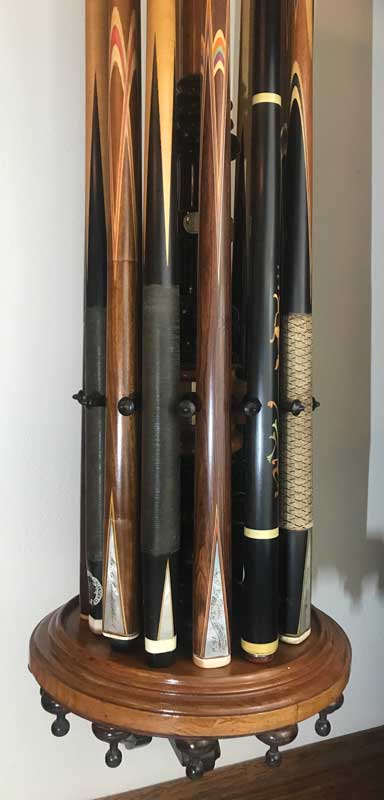


Anatomy of an Investment Cue. (Item 63) Blue Chip Asset. Here is how those specific details translate to the high-stakes market: The Taper & Physics: Modern cues use mathematical constants, but these 19th-century masterpieces used "feel." The specific stiffness was essential for the higher density of (Ivory Balls), which require more "hit" and less "squirt" (deflection) than modern phenolic resins. The Patina of Ivory/Pearl: Collectors look for that "golden" hue. It’s the visual shorthand for authenticity. A "bright white" inlay on a 150-year-old cue is often a red flag; the aged patina on Item 62 confirms its survival through a century of climate changes. The Soul of the Carve: You’re spot on about CNC machines. While a machine can be precise, it cannot vary the depth of a relief carve to account for the grain density of the wood—only a master cabinet maker can "read" the Brazilian Rosewood as they carve. The "Pro" Checklist Why It Matters to the Collector The Roll Confirms the wood hasn't warped over 100+ years. A "dead straight" roll on slate is the gold standard. The Joint A hand-cut wooden thread (wood-to-wood) is the pinnacle of the Brunswick era, offering the most "harmonic" hit. Weight (18–21 oz) Despite being art, the weight tells us if it was balanced for "English" (billiards) or pure power. Tip Diameter High-end cues of this era often have smaller diameters (11mm to 12mm) for the precise control required in 19th-century play.
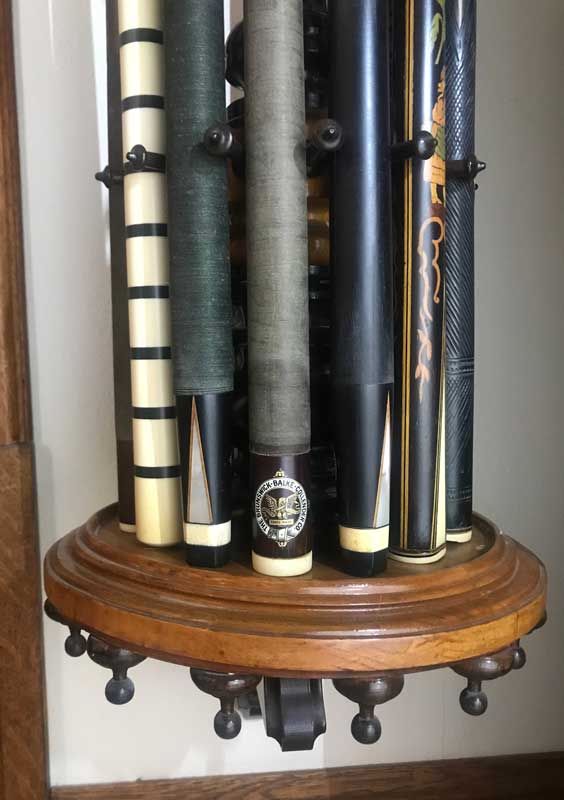


The "World Class" Distinction (Item 62) When a cue is elevated to "World Class," it moves beyond being a tool for the game and becomes a Historical Investment. A cue of this caliber generally possesses three specific traits: Exotic Materials: Often crafted from Brazilian Rosewood, Ebony, or Curly Maple, often featuring ivory or high-grade "Mother of Pearl" inlays that have aged to a perfect golden patina. Balance & Physics: Unlike mass-produced cues, these were balanced by hand. They often feature a "taper" that was proprietary to the master maker, designed to deliver a specific "stiffness" required for the Ivory Billiard Balls of the era. Artistic Integrity: The carving on a Brunswick quality cue is often relief-carved, meaning the wood is sculpted in three dimensions, a feat that modern CNC machines still struggle to replicate with the same soul. Item Profile: #62 Feature Detail Significance Market Tier Museum / Private Collection Not intended for standard play; a preservation-grade asset. Craftsmanship Hand-Turned / Hand-Inlaid Represents hundreds of man-hours by a master luthier or cabinet maker. Provenance Available via Email High-end cues often have "pedigrees" tracing back to famous 19th-century Billiard Academies. Investment Status High Appreciation Antique cues by name-brand makers are currently seeing a surge in "Alternative Asset" markets. The Strategy The "Roll": Is the cue perfectly straight when rolled on a slate bed? The Weight: What is the exact weight in ounces (usually between $18\text{ oz}$ and $21\text{ oz}$ for this era)? The Joint: Is it a one-piece "House Cue" or a two-piece with a hand-cut wooden or brass thread?


(Item 243) Sold to DD The addition of the Antique Pool Parlor Advertising Fan (c.1900) from New Jersey ( adds a layer of "social DNA" to any collection. In the late Victorian and Edwardian eras, advertising fans were more than just cooling tools—they were the "billboards" of the sidewalk. The Significance of Item A pool parlor fan from New Jersey at the turn of the century is a localized historical artifact. Here is why it holds weight for a collector: The Golden Age of New Jersey Billiards: Around 1900, New Jersey was a hub for high-stakes pool rooms and manufacturers (like the early Brunswick-Balke-Collender presence in the tri-state area). A fan from this era likely advertises a specific "Academy" or "Parlor". Ephemera Scarcity: Unlike ivory balls or hardwood cues, paper and wood fans were designed to be disposable. Surviving examples are "miracle survivors" of a bygone marketing era. Crossover Appeal: This item appeals to three distinct markets: Billiard Historians: Looking for "site-specific" provenance. Advertising Collectors: Who value the lithography and typography of the 1900s. Jerseyana Collectors: Who focus specifically on Garden State commercial history. The "Aesthetic Pivot" In a curated display this provides the visual contrast. Feature The Collector's Value Lithography Does it feature an illustration of a pool table or a lady in Edwardian dress? This dictates the "crossover" value. The "Handle" Is it a simple wood stick or an ornate "folding" style? Folding fans generally command a higher premium in the ephemera market. Condition Since these were used in smoke-filled pool parlors, finding one without heavy nicotine staining or edge-tears is a major win for "Investment Grade" status. Please email for price.

(Item 242) This is the "holy grail" of billiard ephemera. Finding six unused boxes of Brunswick Manhattan Club chalk is like finding a sealed case of vintage wine from a legendary vineyard. In the late 19th and early 20th centuries, "Manhattan Club" was Brunswick-Balke-Collender’s premium brand, marketed specifically to the elite private clubs and high-end billiard parlors. The "Time Capsule" Appeal of Item For a serious collector, the value here isn't just in the brand—it’s in the pristine state of preservation. * The "Unused" Premium: Most antique chalk was ground down to a nub or discarded once it pitted. Finding a full block—let alone six—is a statistical anomaly. It preserves the original factory "stamp" or logo on the chalk itself. The Single-Sided Green: Early chalk was often "single-sided," meaning it had a specific paper wrap designed to keep the player's fingers clean—a necessity in an era of white linen shirts and formal club attire. The Manhattan Club Pedigree: This wasn't "house chalk." It was engineered to provide a specific "grip" for the leather tips of the era, designed to handle the higher deflection of ivory balls. Market Significance: The "Complete Set" Factor Detail The Collector's "Tell" Box Condition Are the graphics crisp? The Art Nouveau or early Serif typography on Brunswick boxes is highly prized by graphic design historians. Color Consistency "Manhattan Green" has a specific hue. Collectors look for chalk that hasn't faded or crumbled due to humidity. The Quantity (6) Selling six allows a collector to display one "open" to show the chalk face and five "closed" to show the box art—a perfect museum-grade layout. Please email for price.
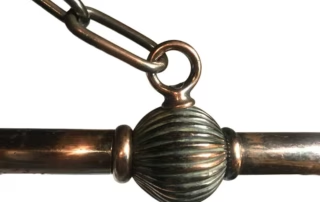

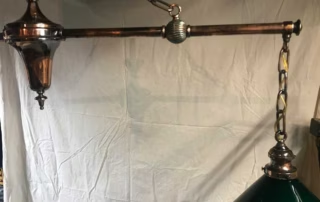

(Item 37) Antique Variegated Copper Japanned Billiard Chandelier. In the high-stakes world of Victorian billiards, the lighting wasn't just a fixture—it was a functional necessity designed to eliminate shadows on the cloth. The Art of the "Japanned" Finish The "Variegated Copper Japanned Finish" is a critical historical marker. Japanning was a high-end lacquering technique used to mimic the deep, lustrous finishes of Oriental lacquerware. On a copper base, it creates a multi-tonal, "variegated" depth that shifts under the warmth of the bulbs—a far cry from the flat, mass-produced brass of the modern era. The "Fluted" Aesthetic: The fluted balls and fancy arm ends with chain swags place this firmly in the Late Victorian/Early Edwardian transition. The "Reflection" Engineering: Note the white interior of the green glass shades. This wasn't just for style; it was engineered to provide a cool, diffused light that prevented glare on the polished ivory balls, which could otherwise "blind" a player during a delicate rail shot. Technical Specifications for the Serious Collector A fixture of this size (36" tall×54" long) is perfectly scaled for a standard 8-foot or 9-foot antique table. Feature Significance to the Estate Turn Key Sockets Confirms the c.1900 era; these are the tactile "click" switches that pre-date wall-mounted dimmers. 2 1/4" Fitters The industry standard for the era, allowing for the easy interchange of period-correct glass shades. Cast Chains Unlike modern stamped-link chains, these are heavy, structural elements designed to hold the significant weight of copper and glass. Please email for price.


(Item 241) Brunswick-Balke-Collender (BBC) Leather Tally Pool Bottle, marks the departure of a crucial "tactile" piece of history. The tally bottle (often called a "shake bottle" or "pea bottle") was the heartbeat of the social game. In the late 19th century, leather tally bottles were the standard for games like "Kelly Pool" or "Pill Pool," where players drew numbered wooden peas to determine their hidden objectives. Please email for price.
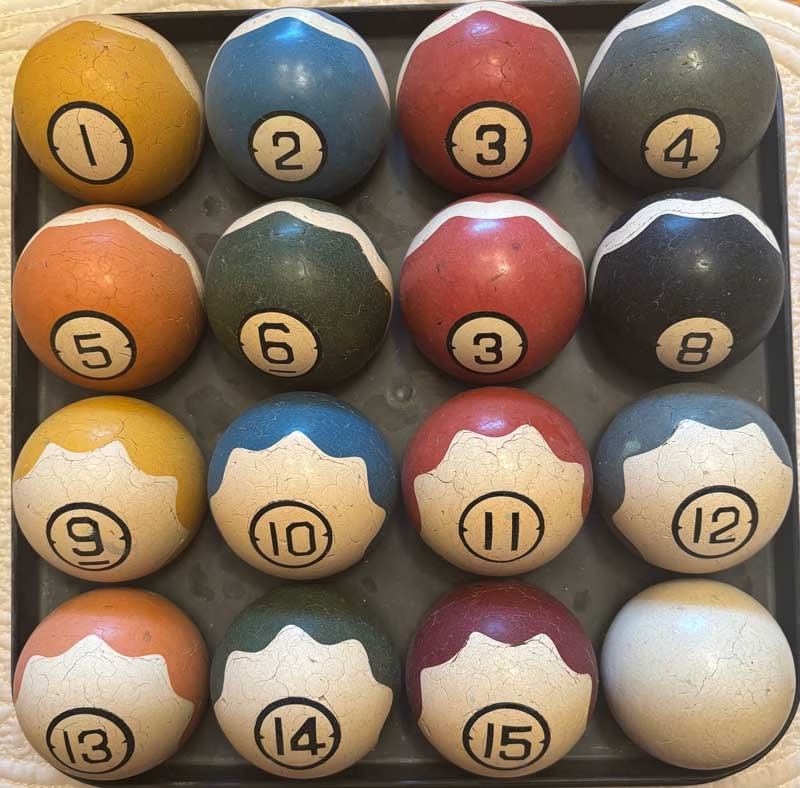


(Item 67) Clay Wave-O-Lene Pool Balls, Wave-O-Lene balls represent the industry’s first high-stakes attempt to find a sustainable, durable alternative to ivory. "Wave-O-Lene" was a trade name for a specific composite/clay mixture. These were marketed to resist the "cracking" and "yellowing" inherent to ivory, making them a favorite for high-traffic, upscale pool rooms at the turn of the century. The Anatomy: The $2\ 1/4"$ size is the standard American pool size, making these compatible with almost any antique table. However, the "Clay" composition gives them a unique profile: The Aesthetic: Wave-O-Lene balls often feature a subtle, swirled or "wavy" texture in the coloring (hence the name), which gave them a distinct visual "vibration" as they rolled across the slate. Wave-O-Lene pool balls were manufactured by the Brunswick-Balke-Collender Company. These balls were produced primarily from the late 1890s through the early 1910s. Key Details about Wave-O-Lene Balls: Composition: They were a type of "clay" or "composition" ball. At the time, manufacturers were searching for a durable, affordable alternative to ivory, which was expensive and prone to cracking. Wave-O-Lene was a specific trade name for a composite mixture designed to mimic the weight and play of ivory without the high cost. Target Market: They were often marketed for use in high-traffic, upscale pool rooms because they were more resilient to the "yellowing" and surface cracking that plagued organic ivory balls. Historical Context: During this era, Brunswick was the dominant force in the industry. Wave-O-Lene balls were part of a transitional period in billiard history, sitting between the era of pure ivory and the eventual move to modern plastics like Bakelite and phenolic resin. "Wanted" a number (7) ball to complete this set. We have an extra (3) ball to trade?


(Item 239) By having the American Bank Note Co. handle the printing for J.M. Brunswick & Balke Co., the firm was making a statement: Billiards was no longer a basement pastime; it was an institution of high finance and precision. The fact that this dates to the 1870s—the pivotal decade of the Brunswick and Balke merger—makes this a foundational document of American sporting history. The "Bank Note" Level of Detail Because the American Bank Note Co. printed this, it possesses a level of security and artistry usually reserved for $1,000 gold certificates. For the investor, this means: Micro-Line Engraving: The borders likely contain "lathe-work" (complex, interlocking geometric patterns) that were designed to prevent forgery and denote institutional authority. Original Wood Backing: This is the "DNA" of the piece. While many posters were "acid-cleaned" or "linen-backed" in the 1980s, keeping the original wood backing preserves the Great Patina—that deep, smoky amber hue that only 150 years of pool-room atmosphere can produce. Size: 30 1/2" x 24 1/2". Please email for price.
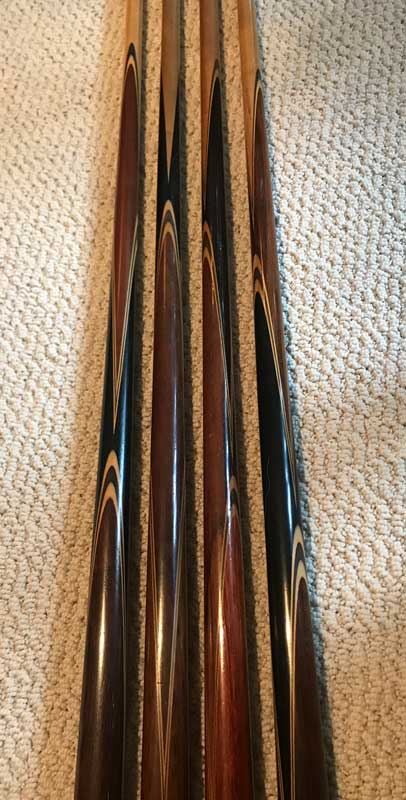


(Item 61) This is an extraordinary "museum-grade" set. Finding four matching cues from the J.M. Brunswick & Balke Co. era (specifically 1874–1884) in original, family-owned condition is almost unheard of in the billiard collecting world. The description of these as early precursors to the #33 or #360 models is spot on. While the #360 became the "gold standard" for fancy Brunswick cues in the early 1900s, this set represents the pinnacle of Victorian-era craftsmanship before the company became the Brunswick-Balke-Collender Co. Technical & Collector Significance The Rare Labeling: The "J.M. Brunswick & Balke Co." mark dates these precisely between the 1874 merger with Julius Balke and the 1884 merger with H.W. Collender. This 10-year window is highly coveted because it represents the transition from artisanal shop-work to global dominance. Triple Hand Splicing: The "triple butterfly" and "triple points" are incredibly labor-intensive. In the 1870s, this wasn't done by CNC machines; it was done by master woodworkers using hand planes and hide glue. The reverse splicing (points facing both directions) is a hallmark of their highest-tier offerings. The Wood Trinity: The use of Brazilian Rosewood (now an endangered/protected CITES wood), Ebony, and Mahogany provides the "heavy feel". These woods were chosen not just for beauty, but for their density and natural balance, which is why they remain "straight playable cues" 150 years later. Graduated Sizes: Having a set in slightly different lengths (54" to 56") suggests these were likely a custom order for a high-end private residence or an elite billiard parlor's "private rack." Preservation & Value Note Straightness: The fact that they are still straight is a testament to the quality of the wood seasoning used by Brunswick & Balke. The Tips: If the tips are original leather or early "wafer" styles, they add to the historical value even if [...]


(Item 35) This is an absolute masterpiece of late-Victorian industrial design. The Japanned Copper finish. This is one of the most desirable and "finicky" finishes in the antique lighting world, representing the high-water mark of 1890s aesthetic metalwork. The "variegated" nature of the copper—with its mottled, dark-to-light depth—was achieved through a chemical pickling and lacquering process that is nearly impossible to replicate today. Technical & Aesthetic Highlights The Japanned Finish: In the 1890s, "Japanning" referred to a hard, baked-on lacquer. On copper, it created a rich, multi-tonal surface that resisted the heavy smoke and heat common in 19th-century billiard parlors. Decorative "Badges": These cast emblems on the center body often signify the manufacturer (like Brunswick-Balke-Collender or R. Hollings & Co.) or simply added the "masculine" heraldic flair popular in Victorian men's clubs. Chain Swags & Hooks: The "chain swags" on the arm ends are a high-style detail. They weren't just for looks; they provided structural counterbalance and a visual "frame" for the table below. Turn-Key Sockets: These indicate this was a high-end early electric fixture. The "turn-key" allowed players to manually dim or douse individual lights—a luxury in an era when most rooms were controlled by a single wall switch or gas valve. The "Green-Over-White" Case Glass The shades are the gold standard for billiard play: Green Exterior: Selected specifically to match the baize (cloth) of the table, creating a seamless visual environment. White Opal Interior: This is "cased glass." The white layer acts as a natural parabolic reflector, pushing $100\%$ of the light downward onto the slate while preventing "hot spots" or glare in the players' eyes. 2 1/4" Fitters: This is the universal antique standard, making these shades highly collectible on their own. Condition & Value Markers Component Why It Matters Variegation If the "mottled" copper look is [...]


(Item 238) This is the "unsung hero" of the billiard room. While the cues and chandeliers get all the glory, a Rosewood-handled rail bolt wrench This is a sophisticated piece of specialized tool history. In the 1890s, a billiard table wasn't just furniture; it was a precision instrument. These wrenches were essential for tightening the massive bolts that secured the heavy slate rails to the table frame. Why the Rosewood Handle Matters Today, we use utilitarian steel wrenches, but in the late 19th century, even the tools were designed to match the luxury of the room. Material Synergy: High-end tables of the era (like the Brunswick Brilliant or Nonpareil) were often crafted from Rosewood. Providing a matching wrench was the ultimate "white-glove" touch from the manufacturer. Ergonomics: Rosewood is incredibly dense and naturally oily. It doesn't just look good; it provides a superior grip and resists the sweat and oils from a mechanic's hands, preventing the wood from cracking over decades of use. The "Made in USA" Stamp: This is a hallmark of the American industrial boom. Companies like Brunswick-Balke-Collender or The Narragansett Machine Co. often commissioned these tools to be as durable as the tables themselves. Collector Insight: The "Hidden" Tool Because these wrenches were often kept in the "billiard drawer" or the technician's kit, they were frequently lost during moves or discarded when a table was sold. Finding one with the original Rosewood handle intact—without heavy scarring or "chewing" on the metal head—is a significant find for a complete "period-correct" room setup. Usage in the 1890s These wrenches typically feature a specific "socket" or "hook" end designed to fit the unique square-headed bolts used on 19th-century rails. Technical Note: If the metal head shows a dark, "gun-metal" blue or a chocolate patina, it likely hasn't been over-cleaned. Keeping [...]

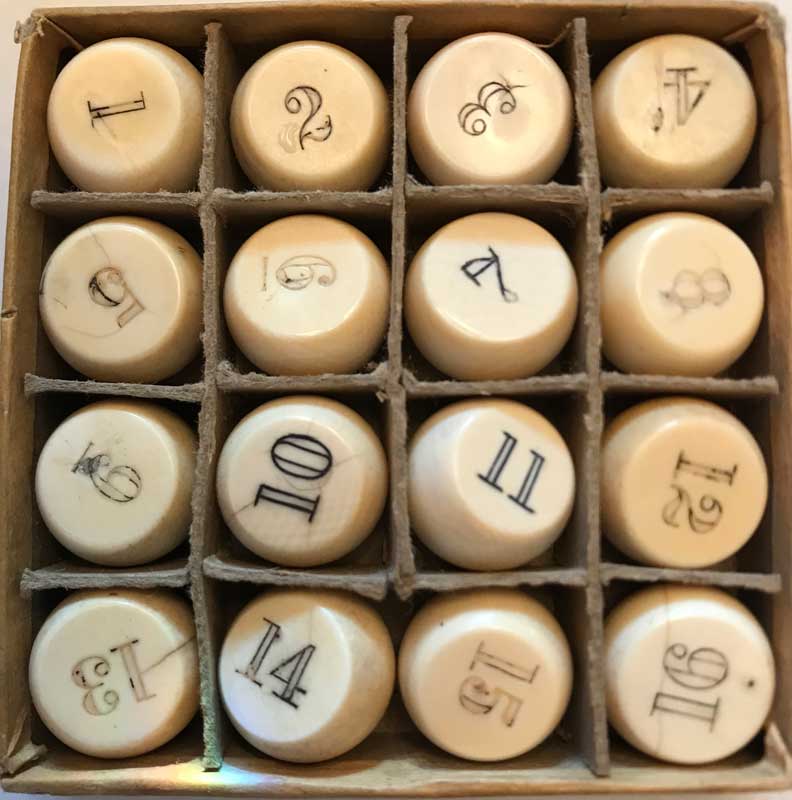

(Item 64) This ivory set is the authentic 19th-century luxury that every other material was trying to imitate. Finding a complete set of Brunswick-Balke-Collender (BBC) Ivory Tally Balls—especially with the original box—is an elite-level acquisition. Historical & Material Significance The Material: In the 1880s, ivory was the gold standard for density and "elasticity" (the way energy transfers between balls). Because ivory is a natural organic material (tusks), it has a grain similar to wood. This grain is often visible under a magnifying glass and is a primary "tell" for authenticity. The BBC Branding: The 1880s was the "Golden Age" for Brunswick-Balke-Collender. At this time, they were the undisputed kings of billiards, and their ivory sets were sourced from the highest-grade African ivory available. Hand Scrimshawed Numbers: Unlike modern printed or inlaid numbers, these were hand-etched (scrimshawed) into the ivory and then filled with pigment (usually black or red). The artisanal variance in the numbering is a hallmark of 19th-century craftsmanship. Why "The Original Box" is the Game Changer In the world of 19th-century billiards, the box is often rarer than the balls themselves. Provenance: The label on the box usually features the beautiful Victorian lithography of the BBC logo, confirming the date and origin. Preservation: Ivory is extremely sensitive to fluctuations in temperature and humidity. A set that has lived in its original box is far more likely to have avoided "checking" (large cracks) or severe yellowing. Investment Value: A loose set of ivory tally balls is valuable; a set in the original branded BBC box is a museum-grade centerpiece that commands a significant premium at specialty auctions. Preservation Checklist for Ivory Risk Factor Prevention Humidity Ivory "breathes." Keep them in a stable environment (45-55% humidity). Too dry, and they crack; too damp, and they swell. Light UV rays will [...]

(Item 237) This is a fascinating piece of social history. It isn't just "wall art"; it’s a primary source document from one of the most aggressive and successful marketing campaigns in sporting history: The "Home Billiard" Push of the early 1900s. By 1903, Brunswick-Balke-Collender (BBC) was desperately trying to shed the "seedy pool hall" image associated with gambling and smoke-filled rooms. To do this, they hired photographers like Thompson & Brown to create imagery that repositioned billiards as a refined, domestic pursuit for the Victorian elite—specifically targeting women. Sold. Please check with us on others. Why This Photograph is Rare The Subject Matter: Showing women playing billiards in 1903 was a radical marketing move. It signaled that the game was "safe" for the home and the family. These photographs were often distributed to high-end furniture showrooms rather than public pool rooms. Hand-Colored Artistry: In 1903, color film didn't exist. The "hand-colored" detail means the photographer (or a specialist in their studio) meticulously applied transparent oils or watercolors to the black-and-white print. This makes your specific copy a unique piece of art, as no two hand-colored versions are exactly identical. Thompson & Brown (T&B): T&B were prestigious commercial photographers of the era. Having the original signature and the 1903 copyright date significantly anchors the provenance. The Original Frame: For a piece this size ($27 1/2" \times 23 1/2"$), the original frame is vital. These were often "Mission Style" oak or ornate gilded wood designed to match the very billiard tables BBC was selling at the time. Historical Context: The "Home Table" In 1903, BBC was promoting smaller, more elegant tables like the "Home Companion" or the "Baby Grand." This photograph was the "aspirational lifestyle" ad of its day. It told the wealthy homeowner: "If you buy a Brunswick, your parlor becomes a [...]
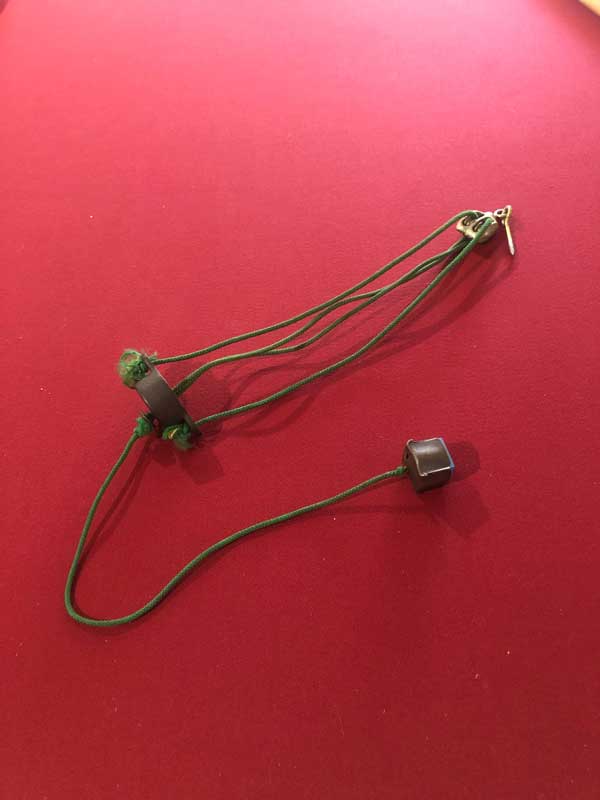
(Item 236) This Brunswick-Balke-Collender Retractable Counterweight System. This is a brilliant example of Victorian-era engineering designed to solve a simple but persistent problem: the "disappearing" piece of chalk. In the high-traffic billiard parlors of the late 1800s and early 1900s, chalk was often lost, pocketed by accident, or left on the rail where it could smudge a player’s sleeve. This system was the luxury solution. How the System Works The "Retractable Counterweight" is a purely mechanical, gravity-based system. Unlike modern spring-loaded "retractors" that can snap or lose tension, this system used a decorative cast-iron or brass weight (often shaped like a shield or a bell) suspended by a cord through a pulley system. The Action: When a player needed to chalk their cue, they pulled the chalk holder down to the table level. The Retraction: Once they let go, the heavy counterweight—hidden either inside a decorative housing or behind the table's leg/cabinet—would pull the chalk back up to a "hovering" position just above the table, out of the way but always within reach. Why It Is Highly Collectible The BBC Branding: Finding one with the original "Brunswick-Balke-Collender" casting on the weight or the housing is rare. These were usually sold as premium add-ons for their top-tier tables like the Monarch or the Brilliant. Original Patina: Most of these systems were made of nickel-plated brass or cast iron. If yours still has the original nickel plating (even if slightly "peeled" or aged), it adds significant historical character. The Pulley Housing: The "Item 236" designation often refers to the complete assembly, including the specialized pulley that was mounted to the ceiling or a wall-bracket. Preservation Tip The most fragile part of this system is the original cord. If the cord is antique silk or braided cotton, it may be brittle. If you intend [...]

(Item 235) This Hamm’s Beer "Dancing Goblets" Neon Sign is indeed the "Holy Grail" for breweriana collectors. While many Hamm’s signs used "motion" (rippling water effects), this c. 1958/59 sign used progressive sequence neon—a much rarer and more expensive technology at the time. (WANTED) We buy sell trade these signs and parts. Coming out of an old pool hall front window, this piece represents the peak of mid-century "spectacular" advertising. The "Dancing" Sequence The goblets blinking one by one before flashing in unison—is the hallmark of the four-mug progressive neon. This was designed to catch the eye of passersby from the street, pulling them into the establishment. The Cycle: Mug 1,\rightarrow, Mug 2 \rightarrow, Mug 3 \rightarrow, Mug 4 \rightarrow, FULL FLASH. The "Wait" Factor: Because these used mechanical flashers/transformers, the rhythm of the "dance" has a distinct, nostalgic "click-hum" sound that modern LED reproductions simply cannot replicate. Technical Details & Scarcity Size: At 22" x 38", this is a substantial "window-mount" sign. It was built with a heavy-duty frame to support the four individual neon glass units and the complex transformer housing. The 1958/59 Era: This was the "Sky Blue Waters" era for Hamm's. During these years, Hamm’s was one of the fastest-growing breweries in the US, and they invested heavily in high-end neon that outclassed their competitors. The Goblet Covers: These signs often featured plastic "goblet" or "mug" shells over the neon tubes to diffuse the light and give the beer its golden-amber glow. Finding a set where these plastic covers aren't cracked or warped from decades of heat is extremely rare. Condition and Value Factors "Excellent Condition" Component Why It Matters Mechanical Flasher If the sequence is still crisp and "one at a time," the internal motor/points are in great shape. Glass Originality Authentic 1950s neon has a specific [...]

(Item 63) For the connoisseur of 19th-century billiards, this circa 1880s ivory "Burt" double stripe set represents one of the most significant finds in the collectors' market. Known for their elaborate "beach ball" pattern, these fancy surface-dyed balls feature extraordinary hand-crafted detail that elevates them from game equipment to high-art sculpture. This set is a premier example of the luxury accessories found in the exclusive billiard parlors of the Gilded Age. Item Details: Manufacturer/Style: Burt Style Double Stripe Material: Genuine Antique Ivory Pattern: Surface-Dyed "Beach Ball" Multi-Color Design Detailing: Hand-Scrimshawed Numbers with Flower Petal Scallop Borders Size: 2 1/8" Regulation Diameter Era: Circa 1880s (Victorian Era) Condition: Excellent (Vibrant, rich colors with minimal age-toning) The artistry of this set is found in the hand-scrimshawed numerals, each meticulously surrounded by delicate flower petal scallops—a hallmark of high-end 19th-century craftsmanship. Unlike standard solid or simple striped balls, the "Burt" pattern required immense skill to dye and engrave, making them a rare luxury even in their own time. Today, a complete 15-ball set in this condition is a blue-chip investment for any serious museum or private estate collection. Pricing & Inquiries: Authentic ivory sets of this caliber are increasingly difficult to source. Please contact us for pricing.l

(Item 234) This Brunswick-Balke-Collender (BBC) Pocket Billiard Triangle. This is the essential "workhorse" of a turn-of-the-century pool room. While many triangles from this era were simple wood frames, the double brass straps in the corners mark this as a professional-grade, "heavy-duty" model designed for longevity. Technical & Material Details Double Brass Straps: In the 1890s and early 1900s, the constant stress of "tight racking" would often cause the joinery of wooden triangles to fail. BBC solved this by wrapping the corners in brass. The "double" strap (one on the top edge, one on the bottom, or reinforced on both sides of the joint) provided the structural integrity needed for decades of use. The Wood: Most BBC triangles of this caliber were crafted from Quarter-Sawn Oak or Rock Maple. These woods were chosen for their resistance to warping, ensuring the triangle remained "true" so the balls would be frozen (touching) for a perfect break. Size (2 1/4"): This is the regulation size for standard pocket billiards. Finding an original antique rack that hasn't "shrunk" or been sanded down—maintaining that precise 2 1/4" internal clearance—is key for a functional vintage setup. The "BBC" Branding On these triangles, the branding was often stamped directly into the wood or etched into the brass straps. The "Stamp": Look for a "hot iron" brand into the grain. The Patina: Authentic 100-year-old brass should have a deep, mellow "mustard" or "chocolate" tone. If the brass is bright and shiny, it may have been polished recently; collectors typically prefer the aged look that matches the "hand-grained" or "rosewood" finishes of the era. Preservation of Utility Since this is a functional tool, its value is tied to its "squareness." Feature What to Check Corner Integrity Ensure the brass screws or rivets holding the straps are original and tight. Loose [...]

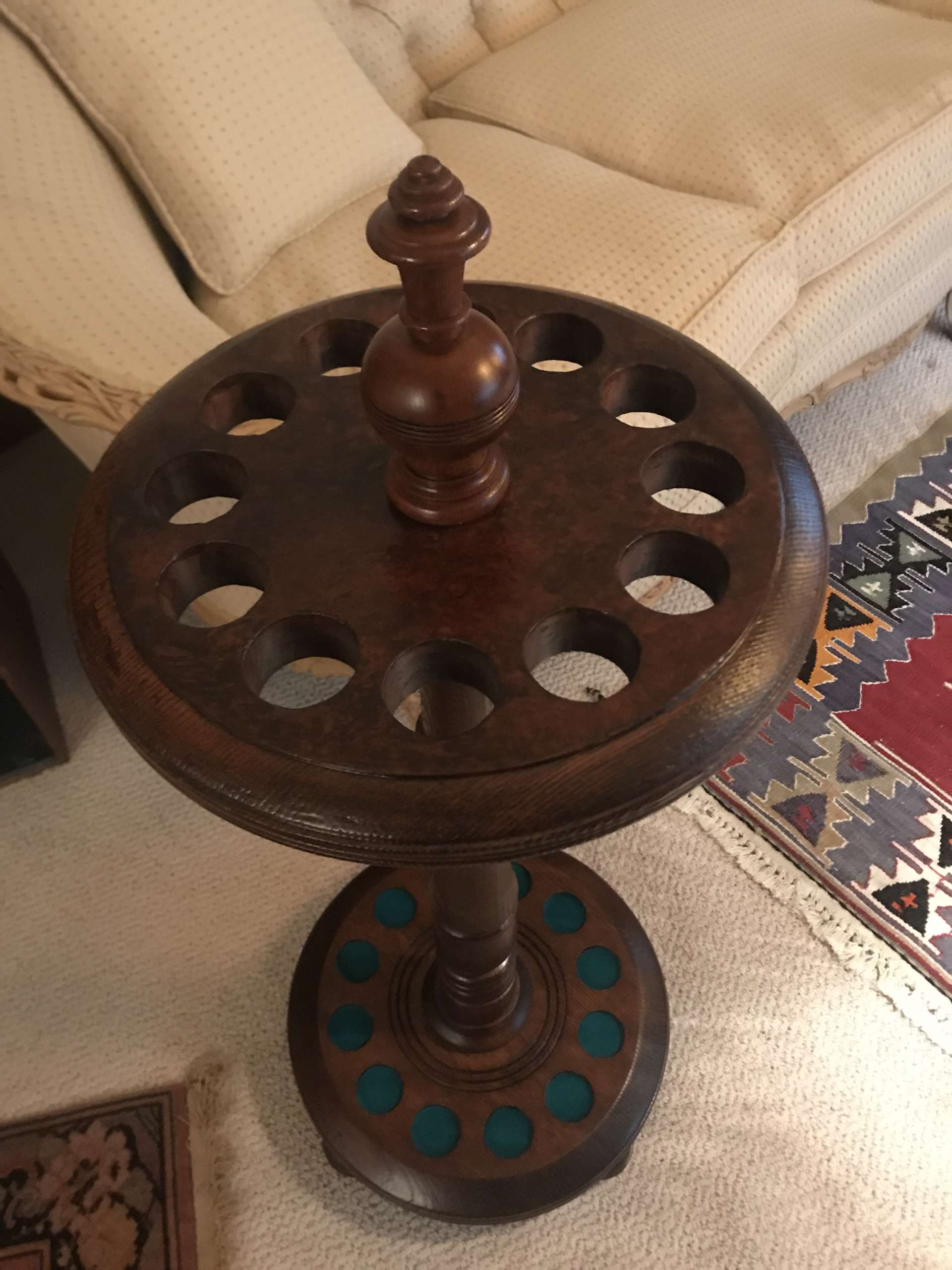

(Item 122) This Free Standing Pool Cue Rack is a standout piece of late 19th-century billiard furniture. While wall-mounted racks were common in commercial parlors to save space, the free-standing "revolving" or "pedestal" style was often the preferred choice for private residences and high-end gentlemen's clubs. At 38" tall, it is perfectly height-scaled for a room where players might be seated in spectator chairs, allowing for easy access to a cue without having to stand up and walk to a wall. Material and Construction The Use of Elm: Elm was a sophisticated choice for this period. It is known for its "interlocking grain," which makes it incredibly difficult to split. In a vertical rack subject to the weight and movement of 12 cues, Elm provided the structural "heaviness" and durability required. Quarter-Sawn Top Disk: Using quarter-sawn timber for the top disk (where the cue necks rest) is a mark of high quality. Quarter-sawing minimizes wood expansion and contraction, ensuring the cue holes remain perfectly circular and aligned over decades of use. 12-Cue Capacity: This was the classic "domestic" size, designed to hold a full "room set" of cues for a standard 8-foot or 9-foot table. Restoration and Presence The Aesthetic: The combination of Elm’s bold grain and the specialized cut of the top disk gives it a distinctive architectural look. Stability: Unlike wall racks, free-standing racks rely on a weighted base. A Brunswick rack from the 1880s usually features a wide, stable footprint (14" wide) to prevent the cues from tipping—a common flaw in cheaper, modern reproductions. Display Tips Because this rack is 38" tall, it serves as a "mid-level" visual element in a room. It looks best when placed near the head of the table or between two spectator chairs. Maintenance Factor Advice Cue Weight To prevent the rack from [...]


(Item 121) This Eastlake-style Pool Cue Rack is a fantastic example of the "High Victorian" aesthetic that dominated the 1880s. Named after the influential architect and writer Charles Eastlake, this style was a reaction against the overly "fussy" and curvy French-influenced furniture of the mid-19th century. The Eastlake Aesthetic Unlike the "Novelty" or "Brilliant" styles, Eastlake furniture is defined by incised carvings, geometric shapes, and structural honesty. Incised Detail: Instead of rounded, high-relief carvings, you will likely see shallow "spoon carvings" or linear grooves cut directly into the Red Elm. This was considered more "modern" and intellectual in the 1880s. Architectural Influence: These racks often look like miniature buildings, featuring flat pediments at the top and sturdy, squared-off proportions. The "Turned" Elements: The supports for the #12 cue notches likely feature "lathe-turned" spindles that are more architectural than floral. Material: Red Elm The choice of Red Elm (also known as Slippery Elm) is significant for a piece from this era: Durability: Red Elm is famously tough and resistant to splitting. In a cue rack—where cues are constantly being pulled in and out—this durability was a major selling point. The Grain: Red Elm has a beautiful, coarse texture and a reddish-brown heartwood that takes 19th-century stains exceptionally well. It provides a more "rugged" and masculine look compared to the "faux" finishes of other models. Condition & Collector Value Feature Significance Sharpness of Carving In Eastlake pieces, the "crispness" of the incised lines determines value. If the lines are filled with 140 years of wax or paint, the geometric intent is lost. Capacity (#12) The 12-cue count suggests this was a premium residential or small-club fixture. Original Hardware Look at the clips or "notches" that hold the cue necks. If they are original wood or brass, they add a great deal of historical [...]
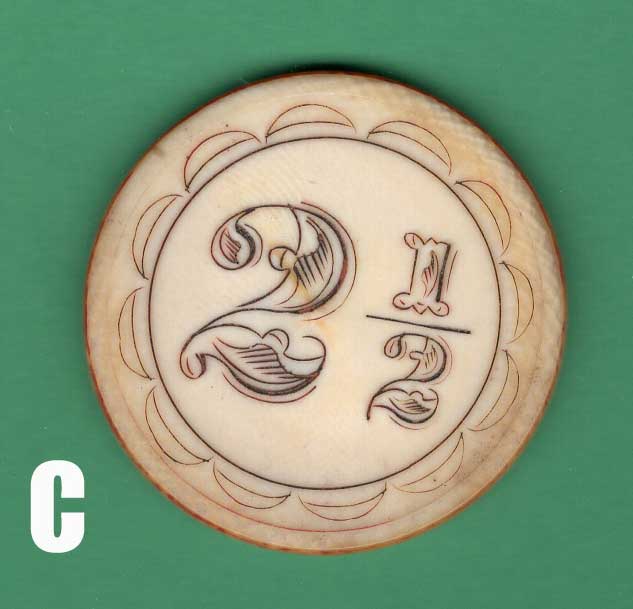
(Item 62) This Antique Ivory Poker Chip is a fascinating crossover piece between the world of 19th-century high-stakes gambling and fine scrimshaw art. The $2 \frac{1}{2}$ denomination is particularly rare and intriguing. In the 1880s, poker chips were often denominated to match specific gold coins. A $\$2.50$ chip would correspond directly to the Quarter Eagle gold coin, which was in circulation at the time. This suggests the chip was part of a "hard currency" game where the chips represented the exact weight and value of the gold on the table. Historical & Material Details Material Value: Like your other ivory items, this chip features the characteristic "Schreger lines" (cross-hatch grain) of authentic ivory. At 1 9/16", it is a substantial size, providing the "clack" and weight that gamblers of the Gilded Age associated with high-status gaming. Hand Scrimshawing: The fact that it is scrimshawed on both sides elevates it from a mere gaming counter to a piece of folk art. In the 1880s, these were hand-etched with a needle and rubbed with ink or soot—a labor-intensive process that predates the clay-pressed chips of the 20th century. The Denomination ($2 \frac{1}{2}$): While $\$5, \$10,$ and $\$25$ chips were common, "fractional" denominations like this are highly sought after by collectors of Western Americana and gambling memorabilia because they were produced in much smaller quantities. Trading & Collector Perspective Looking to trade for a crisp $100 or $50 poker chip of same. The Hierarchy: High-denomination ivory chips ($50+) are the "whales" of the hobby. They were often kept in the cashier's cage of elite clubs rather than circulated heavily, meaning they sometimes survive in even crisper condition. Preservation Tip Because ivory chips were handled constantly, they can absorb oils and dirt into the etched grooves. Note: Resist the urge to "scrub" the chip. [...]

(Item 61/233) Brunswick-Balke-Collender (BBC) Ivory Tally Ball Set (c. 1880s), Why the "Boxed Set" is the Ultimate Investment In the antique billiard world, "boxed" ivory sets are the gold standard for appreciation. Here is why this is a particularly strong investment: The Original Housing: Most ivory tally balls were separated from their boxes over 140 years. The box doesn't just provide provenance via the BBC label; it serves as a micro-climate. Ivory that has lived in a wooden box is often shielded from the rapid temperature changes that cause "checking" (deep cracks) in exposed ivory. The Complete "Shake": These sets were used for games like "Kelly Pool" or "Pea Pool." If the set is complete (usually 16 balls), it retains its utility for collectors who want to play period-correct games. A "short" set (missing balls) loses significant value, making a complete boxed set a rare survivor. Historical Market Trend: High-quality BBC ivory items have historically outpaced inflation. As authentic ivory becomes increasingly rare to find in "original" condition with documented 19th-century origins, these sets become "tangible assets" for collectors. Preservation for Investment "Excellent Investment," maintaining their current state is top priority: Investment Risk Mitigation Yellowing Keep the box closed. Constant exposure to light (even indoor light) will deepen the "patina" to a dark amber, which some collectors like, but "creamy" ivory is generally more valuable. Natural Oils Handle them as little as possible. If you must, use white cotton gloves. The salts and acids in human skin can slowly etch the surface over decades. The Label The BBC paper label on the box is as valuable as the balls. Ensure it isn't "flaking." If it is, a professional archival adhesive can be used to stabilize it. The BBC Pedigree In the 1880s, BBC was the "Tiffany & Co." of the [...]

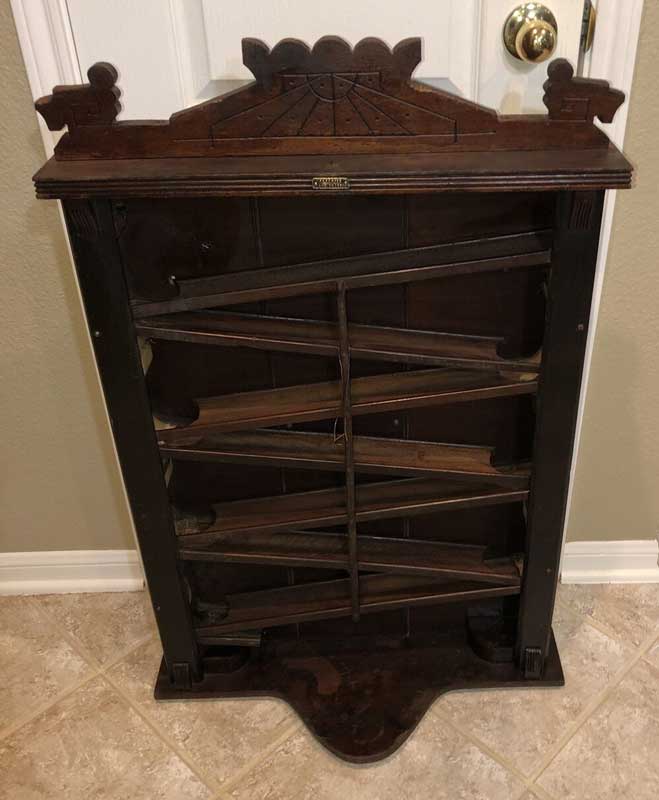
(Item 120) The Whitney’s Patent Mechanical Zig-Zag Rack is a true mechanical marvel from the "Golden Age" of billiard invention. In the 1880s, the J.M. Brunswick & Balke Co. wasn't just selling tables; they were selling "scientific" improvements to the game, and Whitney’s patent was the ultimate solution for both theater and convenience. The Engineering: Whitney’s Patent Before the standardized plastic or wooden wall racks we see today, designers experimented with gravity-fed systems. Whitney’s Zig-Zag design served two main purposes: Security and Inventory: In commercial parlors, the "rack-boy" or room manager could see at a glance if all 15 balls were present. The Mechanical Release: Instead of picking balls out one by one, a lever or gate mechanism would trip, allowing all 15 balls to cascade down the "zig-zag" tracks. The Carrier Box: The balls would land in a dedicated wooden box on the bottom shelf, allowing the rack-boy to carry them directly to the table for the next game. Collector Significance The Metal Plate: Having the original c. 1881 dated metal plate is the "holy grail" for this item. These plates often featured the J.M. Brunswick & Balke Co. name alongside Whitney’s patent info, providing ironclad provenance from that critical decade before the BBC merger was fully finalized. The "Zig-Zag" Aesthetics: At 37" x 24", this is a large, commanding piece of wall furniture. The architectural "stepped" design of the tracks creates a beautiful geometric pattern that looks stunning even when empty. Red Elm or Walnut: Most of these were crafted in high-end hardwoods to withstand the literal "thumping" of billiard balls rolling down the tracks thousands of times. Preservation of a Mechanical Antique Because this is a mechanical item, "Museum Grade" condition requires specific attention to the moving parts: Component Preservation Tip The Tracks Check the "pitch" of the [...]

(Item 60/232) This 3/4" BBC Ivory Tally Ball Set represents the smallest, most intricate end of the 19th-century ivory spectrum. Unlike the larger billiard balls, these were designed for "Shake" or "Kelly" pool, where the "clack" of the ivory in a leather tally shaker was a signature sound of the Victorian game room. Finding a #1 through #16 set in "Museum Quality" is truly exceptional, as these small spheres were easily lost or misplaced over the last 140 years. The Craftsmanship of "Small-Scale" Ivory Precision Scrimshaw: At only 3/4", the surface area for numbering is tiny. The fact that these are hand-scrimshawed—likely with a fine-point needle and black pigment—is a testament to the steady hands of BBC's 1880s artisans. The "Full 16": Most tally sets only went to #15. A 16-ball set is a rarity that allows for a wider variety of specialized "rotation" or "life pool" games popular in high-end clubs. Investment Grade: Because these were high-contact items (shaken together in a cup), they often suffered from "pitting" or deep staining. A "Museum Quality" set suggests the ivory remains smooth, the numbers are crisp, and the Schreger lines (the natural "cross-hatch" grain) are clearly visible. Preservation of Small-Scale Ivory Feature Maintenance for Investment Surface Uniformity Small ivory spheres are prone to "flat spotting" if stored under heavy weight. Keep them loose or in their original dividers. Pigment Loss The scrimshawed numbers are shallow. Avoid using any liquids to clean them, as moisture can lift the 19th-century pigment out of the etchings. The "Patina" At this size, ivory can range from "creamy white" to "butterscotch." A consistent color across all 16 balls is a major value-adder. Why "Seldom Found" Most tally balls were used until the numbers wore off or were replaced by cheaper celluloid versions in the 1920s. A [...]

(Item 119) J.M. Brunswick & Balke "Step Banner" Rack is a remarkable artifact from a very specific and prestigious moment in American history. Dated to c. 1874, this piece comes from the very first year of the merger between J.M. Brunswick and Julius Balke. The "Step Banner" design is one of the most architecturally ambitious wall racks of the 19th century, moving away from flat, functional boards toward a three-dimensional, decorative furniture style. Design & Architectural Significance The "Step" Configuration: Unlike standard racks where cues sit in a straight line, the "Step Up" placement staggers the cues. This was a "Brilliant Novelty" for the time, allowing players to see the shafts and wraps of the cues more clearly—essentially turning the rack into a display gallery for high-end hand-spliced cues. Two-Piece Construction: Having both the top "header" and the bottom "base" intact is critical. These were often separated during building renovations. The matching fancy spindles on both pieces create a visual "cage" effect that was the height of Victorian Eastlake and Renaissance Revival influence. Proportions: At 38" wide, this is a substantial piece of wall furniture. The 6" and 5" depths indicate that the spindles and "steps" protrude significantly from the wall, creating deep shadows and a heavy, "built-in" look. The 1874 "Merger" Mark Because this is labeled J.M. Brunswick & Balke Co. (before the 1884 addition of H.W. Collender), it occupies a narrow 10-year window of production. The Wood: In 1874, the company was using premium, old-growth timbers—often Walnut, Cherry, or Ash—frequently finished with hand-rubbed French polishes or early varnishes. The Spindles: The "fancy spindles" were likely turned on early steam-powered lathes. They provide a delicate, vertical rhythm that contrasts with the heavy, horizontal "banner" boards. Preservation and Display Feature Condition Consideration Spindle Integrity Check the "tenons" where the spindles [...]
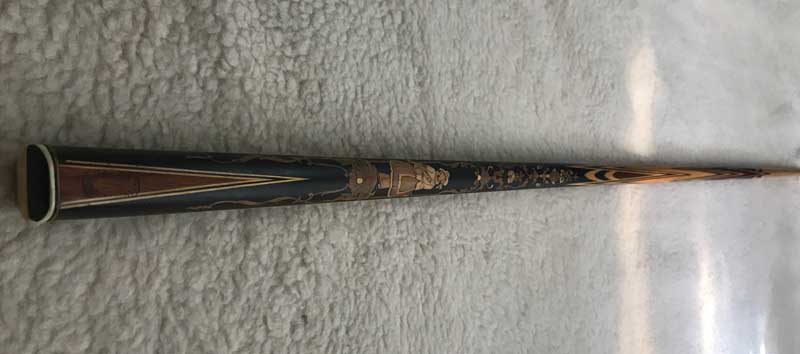
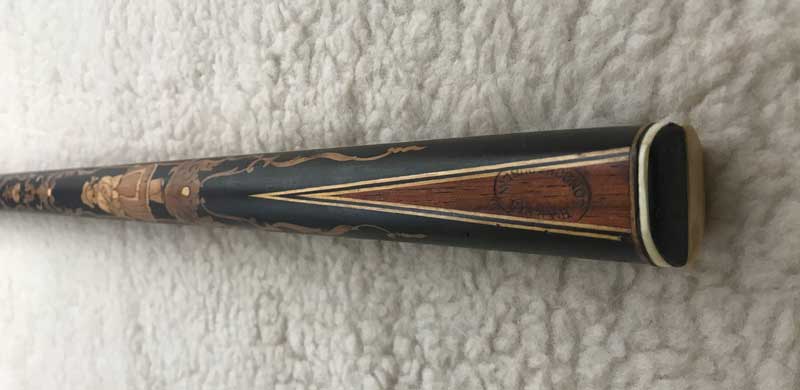

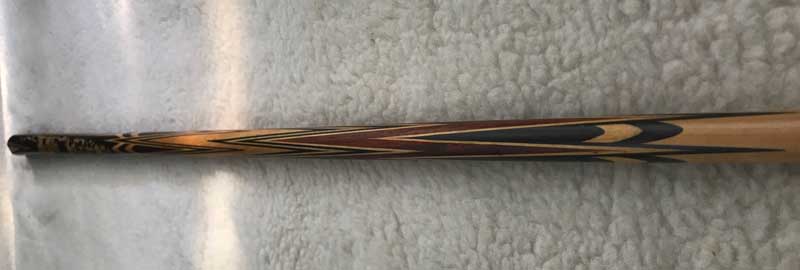

(Item 59) This is a breathtaking piece of history. To find a 18th-century (1700s) one-piece cue of this caliber is to look at the very dawn of the "modern" billiard era. The Harris (London & Dublin) stamp identifies this as a product of one of the most prestigious early makers in the British Isles. Before the mid-1800s, cues were often more akin to "maces," but a 54 1/2" Ebony Marquetry cue like this was a bespoke instrument for the European aristocracy. Historical and Technical Significance The Harris Connection: The "London & Dublin" stamp is significant. It marks the cross-continental reach of the Harris firm during a period when billiard rooms were the centerpiece of royal and noble estates. Harris cues were the "gold standard" of the Georgian era. Marquetry vs. Splicing: While noted five sets of reverse hand-spliced points, the Ebony Marquetry is the star. Unlike splicing (where wood is joined structurally), marquetry involves inlaying delicate veneers of Mother of Pearl (MOP) and Mahogany into the Ebony base. This was jewelry-level work performed by master cabinetmakers. Reverse Butterflies: Finding "reverse" butterflies in the 1700s is incredibly rare. This required a level of geometric precision that was exceptionally difficult to achieve with hand tools, making this a "showpiece" cue meant to display the owner's wealth as much as their skill. The Ivory Package: The ivory butt cap and ivory ferrule are original 18th-century components. In this era, ivory was used not just for beauty, but for the specific weight-balance it provided to the dense Ebony butt. Museum-Grade Attributes A "world-class museum quality" designation is supported by several factors: Length (54 1/2"): This is a classic "Short Cue" or "French Cue" length common in 18th-century rooms where space might be tight or for specialized carom-style play. The Name Plates: MOP and Mahogany [...]
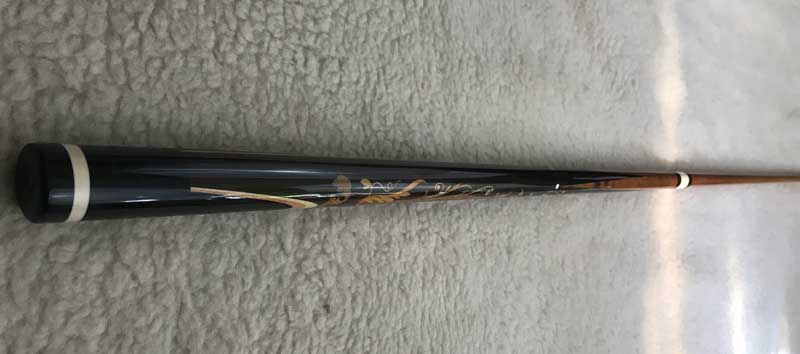

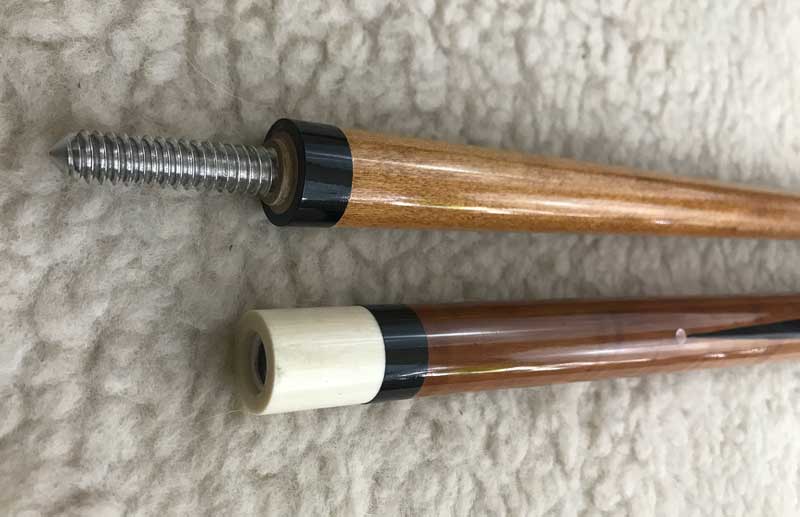

(Item 58) Antique French Marquetry Cue it represents the distinct flair of the French Regency or Louis XV era. While the British makers of the 1700s often focused on geometric "butterflies," French makers were world-renowned for floral marquetry, treating the billiard cue as a canvas for the same delicate "petit point" woodwork found on royal harpsichords and escritoires. The "French Style" Artistry The 1700s was a period of peak French influence in billiards (King Louis XIV was an avid player). This cue embodies that elegance: Floral Marquetry: This is the highest form of wood artistry. To create a floral pattern, the artisan had to hand-cut tiny pieces of exotic wood or dyed veneers and fit them into the Ebony butt like a puzzle. This was significantly more difficult than straight-line splicing. The 57" Length: Unlike many shorter 18th-century cues, a 57" one-piece cue from this era is exceptionally rare. It suggests this was a "Master’s Cue," designed for a full-sized table in a palace or an aristocratic estate rather than a smaller domestic table. The Ivory Joint: Is a critical detail. In the 1700s, most cues were one-piece. If this is a two-piece cue with an ivory-to-ivory joint from the 1700s, it is an engineering marvel. This type of "wood-threaded" ivory joint was the precursor to the high-end custom joints used by modern masters today. Component Breakdown Ebony Four-Point Butt: The "four-point" design provides a structured frame for the floral work. In French cues of this period, these points were often elongated and extremely sharp, showing the maker's mastery over the dense Ebony. The Ivory Trio: Having the butt ring, joint, and ferrule all in ivory creates a visual "rhythm" that was the hallmark of 18th-century luxury. Material Integrity: At 57", the "straightness" of this cue is its most valuable [...]


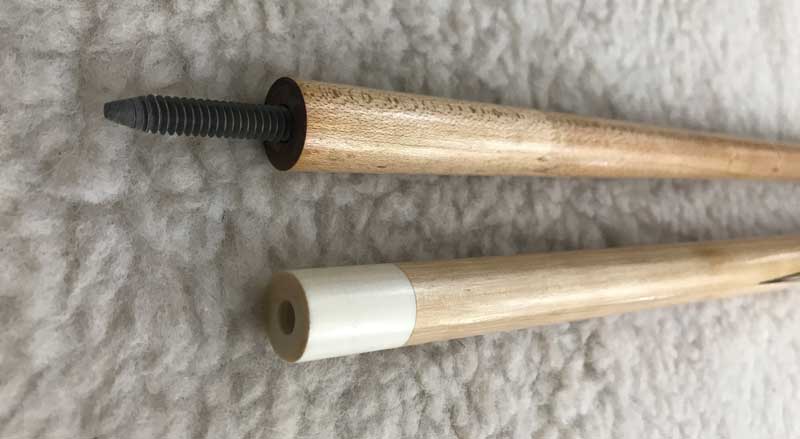

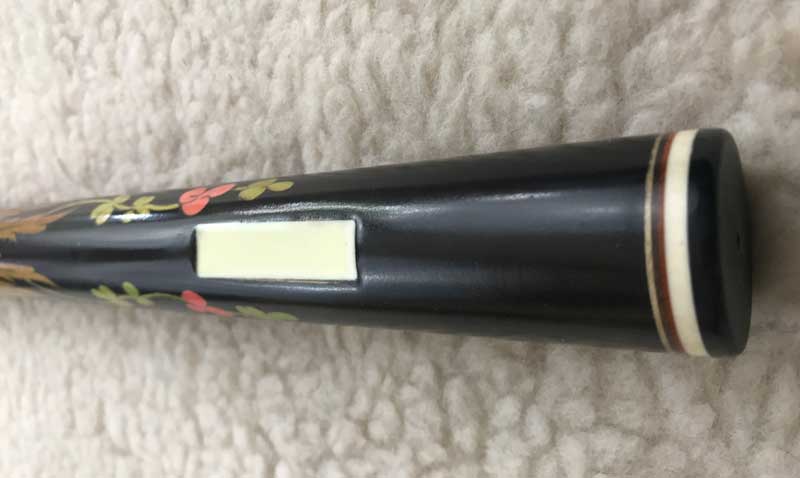
(Item 57) This Antique French Marquetry Cue is a fascinating "hybrid" masterpiece. While it shares the 18th-century French Floral Marquetry lineage, the inclusion of a custom Brunswick ebony hand-spliced shaft and the specific Titlist-style point construction suggests a cue that was either a very early precursor to the modern splice or, more likely, a legendary 18th-century "family" piece that was professionally commissioned for an upgrade by Brunswick in the late 19th or early 20th century. At 57 1/2", it is a full-length "Pro" cue with a level of custom detail that places it in the top 1% of collectible cues. The "Anatomy" Ebony Titlist Points: In the 1700s, "points" were often flat or painted; the "Titlist" style (the four-pronged structural splice) became the hallmark of high-performance cues much later. Seeing this on a c.1700s butt indicates a world-class marriage of Old World artistry (the floral marquetry) and New World performance (the spliced power). The Ivory Joint: An ivory-to-ivory joint is the "holy grail" of feedback. It provides a unique "ping" sound and a stiff, vibration-free hit that modern synthetic joints try to emulate. Custom Brunswick Shaft: This is a vital detail. It suggests that a previous owner—likely a high-level player or aristocrat—sent their prized 1700s marquetry butt to Brunswick to have a modern, high-performance hand-spliced ebony shaft custom-fitted. This "cross-era" pedigree makes it a unique historical document. Ivory Name Plate: This was often reserved for the owner's signature or the mark of a royal household. If it remains blank, it is a "virgin" plate; if it has a monogram, it may provide a direct link to a specific historical figure. Technical Breakdown Component Historical Context Floral Marquetry Hand-cut "inlays" of multiple wood species, typical of the French Regency cabinetmaking style. Ebony Splicing Hand-fitting the V-shaped prongs of the shaft into the [...]

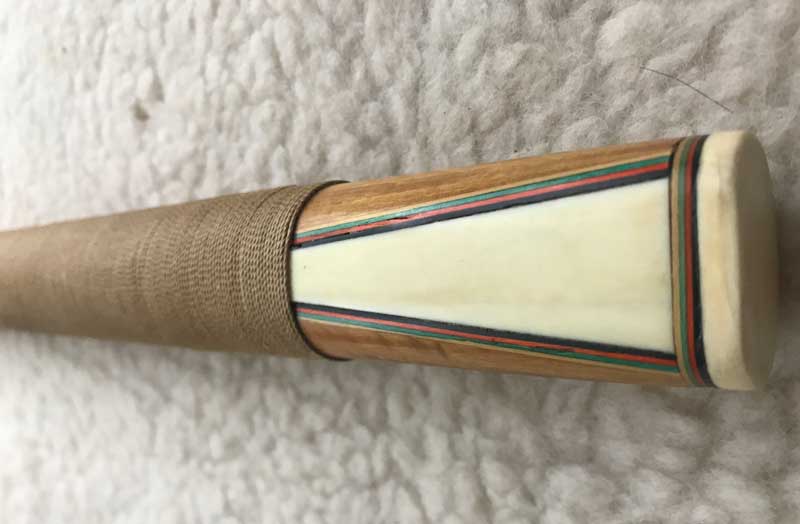
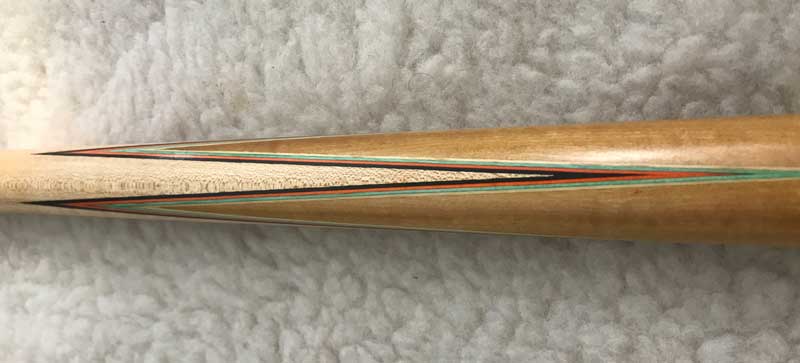
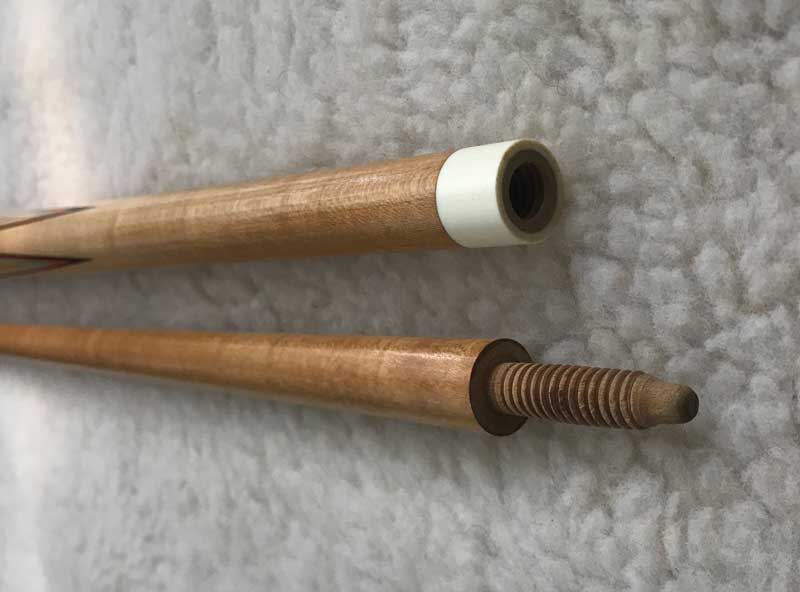

(Item 56) Sold to DD This Antique Brunswick 26 1/2 "Wedge" Cue is a legendary model from the height of Brunswick’s Golden Age. While the "26 1/2" refers to the model number in the classic Brunswick catalog, collectors often use the term "Wedge" to describe the specific, aggressive taper and weight distribution that made these cues the favorites of early 20th-century professionals. At 57 1/2", this cue is a masterpiece of early modern billiard engineering, transitioning from the ornate 18th-century styles we discussed into the high-performance "Pro" equipment of the 1910s. The "Wedge" and Titlist Construction Four Sets of Colored Titlist Points: This is the visual and structural soul of the cue. "Titlist" points were created by a sophisticated veneering and splicing process where different colored woods (usually purple, teal, mahogany, and maple) were layered before being joined to the ebony or rosewood forearm. The Ivory Joint: An ivory-to-ivory joint in 1915 was the ultimate "feel" upgrade. It provided a softer, more melodic "hit" than brass joints, allowing the player to feel the vibration of the ball more accurately through the shaft. The "Wedge" Profile: The 26 1/2 was designed with a specific weight forward of the wrap, giving the player more "natural follow" through the ball. Premium Components Ivory Name Plate: Usually located just above the wrap, this was often left blank or featured the "Brunswick-Balke-Collender" script. In 1915, a clean, uncracked ivory nameplate is a major indicator of a climate-controlled history. Linen Wrap Handle: This was the era where "Irish Linen" became the standard. It served a functional purpose: absorbing moisture from the player's hands to maintain a consistent grip during long matches. Ivory Butt Cap & Ferrule: The matching ivory at both extreme ends of the cue provides the perfect counterbalance. Technical Breakdown Feature Significance Model 26 [...]


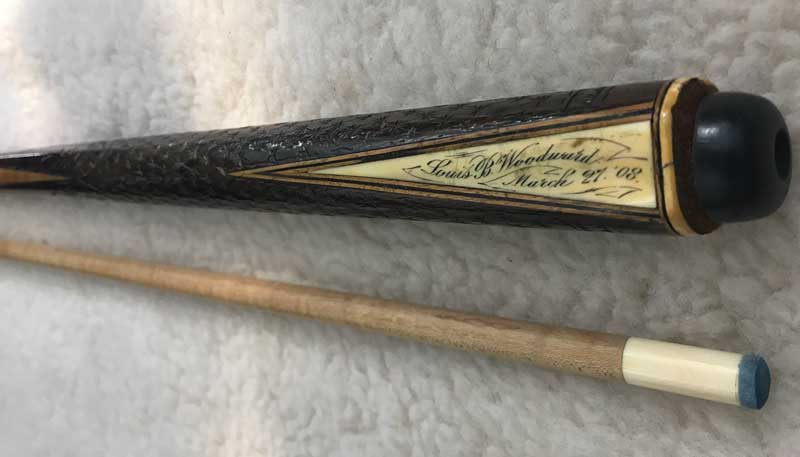
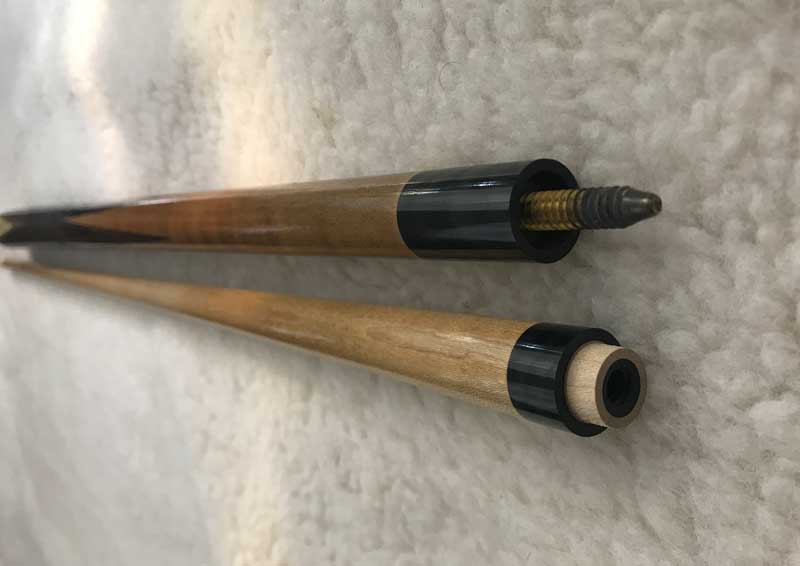
(Item 55) This is a breathtaking piece of sports history, it is not merely a cue; it is a "relic" from the defining moment of the "Boy Wonder" of billiards. On March 27, 1908, Willie Hoppe was indeed 21 years old and at the peak of his early fame. Defeating George Sutton—the "Wizard of the Cue"—at Madison Square Garden for the 18.2 Balkline Championship was the equivalent of a heavyweight title fight today. This cue is the physical embodiment of that victory. The "Presentation" Pedigree The provenance here—a gift from one 21-year-old to another—is deeply personal. Louis B. Woodward receiving this from Hoppe "Compliments of Willie Hoppe" transforms the item from a high-end tool into a documented historical gift. The Patina: Is "totally 1908." For a cue of this age, that deep, honey-colored oxidation on the ivory and the mellowing of the rosewood is impossible to fake. It proves the cue hasn't been over-restored, which is critical for museum-grade value. The Tortoise Shell Joint: This is an extraordinary and extremely rare luxury detail. Tortoise shell was occasionally used in the early 1900s for the most elite presentation items. It provides a unique aesthetic and a different "hit" density than ivory or brass. The Engraved Name Plates: Having ivory name plates "surrounded by colored veneers" was the signature of a master shop. These would have been hand-inlaid with microscopic precision. Technical & Historical Significance Feature Importance Balkline Context In 1908, Balkline was the "King" of billiards. This cue was built for the extreme finesse and touch required to move balls mere millimeters. Rosewood Butt High-grade Rosewood was the choice for champions for its natural weight and beautiful, dark figuring. "Rolls True" For a 118-year-old wooden instrument to still be straight ("rolls true") is a miracle of 1908 wood seasoning. Collector's Note: [...]
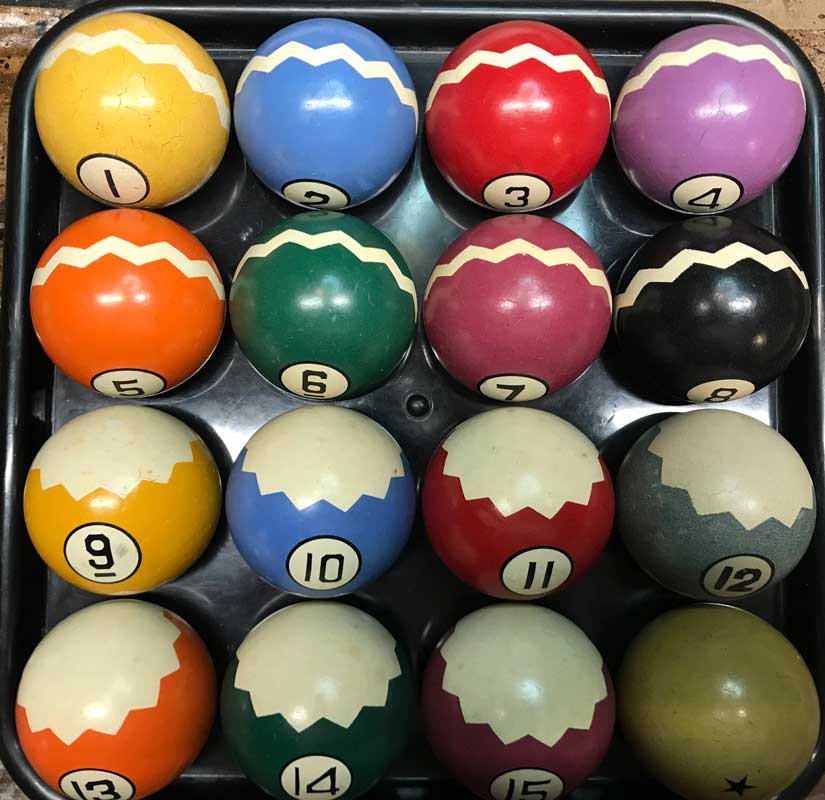
(Item 59) This Antique Clay Zig Zag Pool Ball Set is a wonderful example of the "economy of scale" in the late 19th and early 20th centuries. While ivory was the choice of the elite, clay was the choice of the people. However, finding a complete Zig Zag patterned set with a Star Cue Ball today is significantly more difficult than finding standard clay solids. The "Zig Zag" Aesthetic The Zig Zag (or "Sawtooth") pattern was a specific design choice used to distinguish striped balls from solid balls before the standardization of the broad, flat stripes we see today. The Pattern: The zig-zag line was often created by a mechanical rolling stamp or a mold that gave the "stripe" a jagged, decorative edge. It reflects the Victorian obsession with making even functional items look ornamental. The Star Cue Ball: The "Star" cue ball (often called a Liberty Star or Hyatt Star) is the hallmark of the Albany Billiard Ball Company. This star was more than just a decoration; it was a tracking aid. As the ball rolled, the star allowed the player to see the "english" (spin) more clearly. Material: The Clay Composition In the 1880s–1910s, "clay" balls were actually a mixture of ground stone, clay, and binders like silicate or shellac. The Crazing: You mentioned "light crazing." This is actually a desirable trait for collectors. Crazing—the network of tiny surface cracks—proves the balls are authentic antique clay/composition and not modern resin reproductions. It’s the "fingerprint" of a 100-year-old ball. Density: Clay balls are heavier and less "elastic" than modern phenolic resin. They have a distinct, muffled "thud" rather than a sharp "click" when they collide. Preservation of Clay Sets Clay is porous and sensitive to moisture and oils. To keep them in "hard to find" condition: Risk Mitigation Moisture Never [...]

(Item 230) This Antique Mahogany 15-Ball Rack is a rare survivor from the decade that defined the American billiard industry. While the 1870s was a period of high-ornamentation for tables, accessories like racks were often treated with the same architectural reverence. The use of Mahogany combined with splined corners marks this as a high-end professional or private-club piece, rather than a common "pool hall" utility item. The Significance of Splined Corners In the 1870s, the "triangle" was the most stressed piece of equipment in the room. Most cheap racks were simply nailed or glued together, leading them to warp or split under the pressure of tight-racking. The Spline: A "splined" corner involves cutting a slot across the mitered joint and inserting a thin strip of wood (the spline) perpendicular to the grain. Mechanical Strength: This creates a massive amount of surface area for glue and physically locks the three sides together. In an era before modern synthetic adhesives, this was the only way to ensure a rack stayed perfectly equilateral for decades. Visual Marker: Often, these splines were made of a contrasting wood (like Ebony or Maple) to highlight the craftsmanship, serving as a "signature" of a master woodworker. Mahogany: The "Elite" Choice Stability: Mahogany is world-renowned for its dimensional stability. It resists shrinking and swelling better than almost any other hardwood, which is critical for a rack that must maintain a perfect 60° angle at every corner to ensure a "tight break." The Patina: 150-year-old Mahogany develops a deep, "oxblood" or "plum" color that cannot be replicated by modern stains. Preservation Feature Investment Consideration Inner Wear Check the inside faces of the rack. A century of sliding over wool cloth and bumping against clay or ivory balls often leaves "burnishing" or smooth wear patterns. This is desirable "honest wear." The [...]
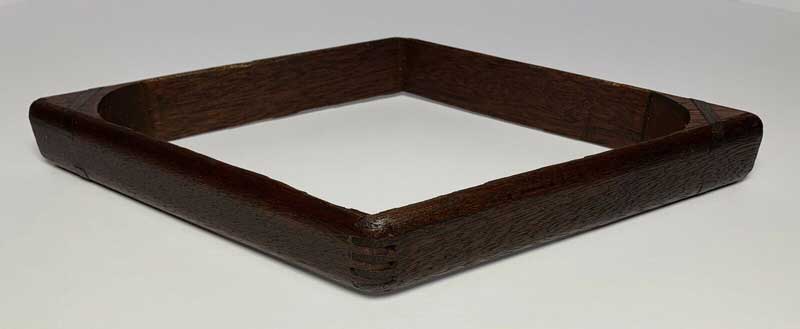
(Item 229) The Antique Mahogany 9-Ball Rack is a remarkable companion to the 15-ball version but it is arguably even more significant for the history of the "short rack" games. In the 1870s, "9-Ball" as we know it today was in its infancy, often played as a faster, gambling-oriented alternative to the marathon 15-ball rotation games. Finding a diamond-shaped rack from this early period is rare, as many 9-ball games were originally racked in the front of a standard triangle before specialized racks became common. The Diamond Engineering While the 15-ball triangle is a naturally stable shape, the 9-ball diamond is prone to "spreading" or losing its acute angles at the top and bottom. The Spline Advantage: Just like Item 230, the wooden splined corners are the hero of this piece. On a 9-ball rack, the two "side" joints are under immense tension when a player pushes the balls forward to "freeze" them. The spline prevents the mahogany from shearing at the grain. Mahogany's "Dead" Weight: Mahogany was chosen not just for its beauty, but for its weight. A slightly heavier rack stays seated on the cloth more effectively, preventing the "rack hop" that can ruin a professional tight-rack. Historical Context: 1870s Gambling and Speed In the post-Civil War era, the "9-Ball" game (originally called "9-Ball Pool" or "Diamond Pool") was often associated with the high-stakes action of urban pool rooms. The Look: A mahogany rack from this era would have likely been paired with a high-end table in a "Gentleman’s Club" or a private residence. It was a statement that even the "fast" games were to be played with the highest-quality equipment. The Grain: 1870s Mahogany (often sourced from Honduras or Cuba) has a much tighter grain than modern plantation-grown varieties. This allowed the 19th-century craftsman to sand the [...]

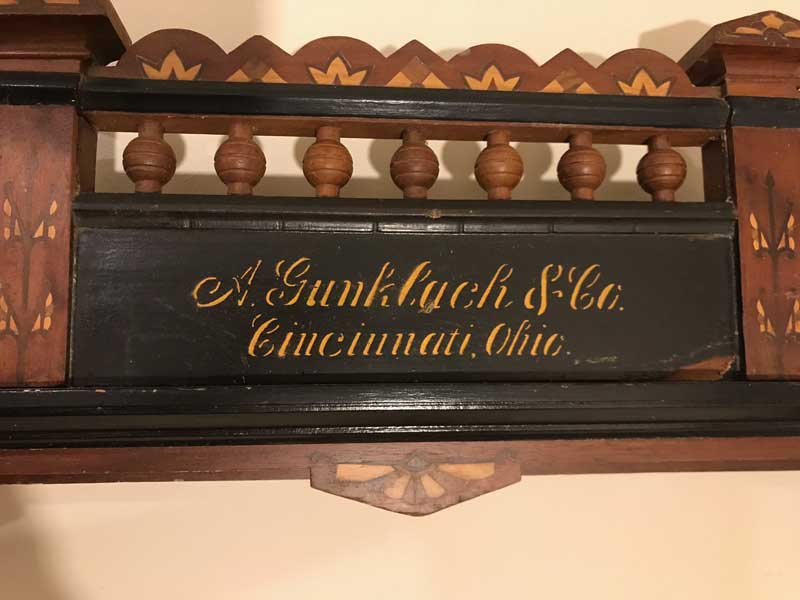
(Item 118) This is an incredible piece of billiard history! A Gunklach & Co. rack from the 1870s isn't just a piece of furniture; it’s a relic from the "Golden Age" of American billiards. Finding one with the original silk-screened label still intact is exceptionally rare, as those labels usually wore off or were painted over a century ago. Why This Piece is Significant The Maker: A. Gunklach & Co. was a contemporary of the early J.M. Brunswick & Balke Co. (also based in Cincinnati). Before the massive consolidations of the late 19th century, smaller high-end makers like Gunklach produced incredibly ornate, handcrafted items to compete with the industry giants. The Material: Using Walnut with Marquetry (the art of inlaying different wood veneers to create patterns) indicates this was an "Exposition" or "Novelty" grade piece—meant for a high-end parlor or a luxury billiard hall rather than a standard smoke-filled room. The Label: In the world of antiques, the original silk screen label is your "birth certificate." It verifies the Cincinnati origins and the specific model, which significantly drives up the value for collectors of "Billiardiana." Preservation Tips for a Piece This Rare Given its age and the materials involved, here are a few things to keep in mind: Feature Preservation Note Marquetry Avoid extreme humidity fluctuations. If the wood swells or shrinks too fast, the delicate inlays can pop out (lifting). Silk Screen Label Keep it out of direct sunlight. UV rays are the primary enemy of 19th-century ink and will cause the label to flake or fade. Finish If the finish is original, do not use modern aerosol waxes. A high-quality microcrystalline wax (like Renaissance Wax) is much safer for 1870s walnut. A Bit of Context The 1870s was a pivot point for billiard design. Most pieces from this [...]




(Item 55) That is a classic "Old West" provenance! The connection to Pancho Villa adds a layer of legendary. The horse lady in her 80s we purchased these from, said she was told by her father who was a banker back in the day and left her these chips, that they may have come accross the Mexican boarder by Pancho Villa. The lifehood of border-town saloons in the late 19th century, and ivory chips were the ultimate status symbol for "banker" games. The Anatomy of (The Chips) Hand Scrimshawing: Unlike later machine-stamped chips, hand-scrimshawed ivory from the 1880s involves fine incisions filled with ink (usually black or red). The fact that these are double-sided significantly increases their value. The $5 Denomination: In 1880, $5 was equivalent to roughly $150–$175 today. These weren't for a casual Saturday night game; these were for professional gamblers and wealthy landowners. Size (1 1/2"): This is above standard "Large" size for 19th-century ivory chips, providing a substantial weight and "clink" that early clay or composition chips couldn't replicate. Collectors’ Feature What to Look For The Scrimshaw Look for "Baleen" or "Lampblack" ink in the grooves. If the lines are perfectly uniform, they might be machine-pressed. Hand-etched lines show slight variations under a loupe. Wear Patterns Even "excellent" chips should show some "stacking wear"—slight smoothing on the faces where they rubbed against other chips for decades. The Material They should show Schreger lines. If you see tiny air bubbles or a perfectly uniform interior, they may be Celluloid or French Ivory (an early plastic). Investment Potential Ivory gambling memorabilia is a "blue chip" (pun intended) niche. Single high-quality scrimshawed chips often sell for $150 to $300 each, especially when they have "Old West Saloon" or specific denomination markings. Historical Note: The Mexico Connection It’s very plausible [...]
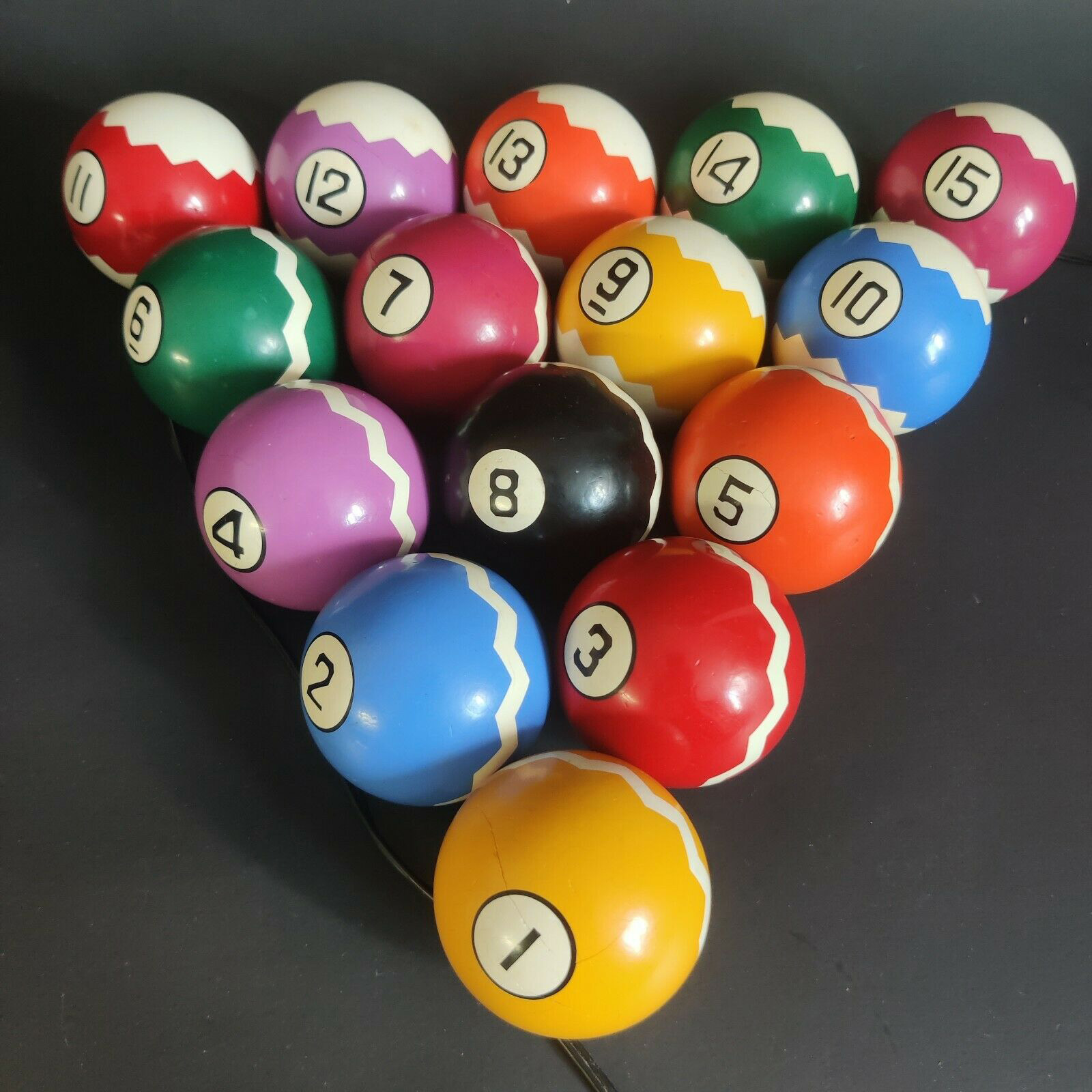

(Item 51) Zig Zag clay balls are the transition point between the era of ivory and the modern era of phenolic resins. Why "Zig Zags" are Iconic The "Zig Zag" pattern wasn't just for aesthetics; it was a functional design. In the late 19th century, as manufacturers moved away from expensive ivory, they experimented with high-compression clay and silicate composites. The Pattern: The zig-zag or "lightning bolt" inlay was a way to integrate the number into the ball during the molding process, ensuring the number wouldn't just rub off with use. The "Star" Cue Ball: These are highly sought after. The star was often the trademark for specific manufacturers (like Hyatt or Albany Billiard Ball Co.) and acted as a focal point for players to see the "spin" or "English" they put on the ball. Condition Report: "Match Head Dings" and "Crazing" For clay balls from this era (c. 1890s–1910s), the condition is actually excellent: Light Crazing: This refers to the tiny, hair-like surface cracks. It’s a natural "aging" process of the composite material and is considered a sign of authenticity. As long as the crazing isn't deep enough to catch a fingernail, it doesn't hurt the value. Match Head Dings: These small nicks are common in clay sets. Unlike modern resin, clay can chip if two balls collide at high velocity. "Match head" size is considered minor and "honest wear." Investment Advice Clay balls are significantly more "fragile" than ivory or modern plastic. To keep these in "Investment Grade" condition: Do Not Play With Them: Modern high-speed tables and hard-hitting cues will shatter 100-year-old clay balls. They are strictly display pieces now. Climate Control: Clay is sensitive to extreme dry heat, which can turn "light crazing" into "deep cracking." A Quick History Fact Did you know that John [...]
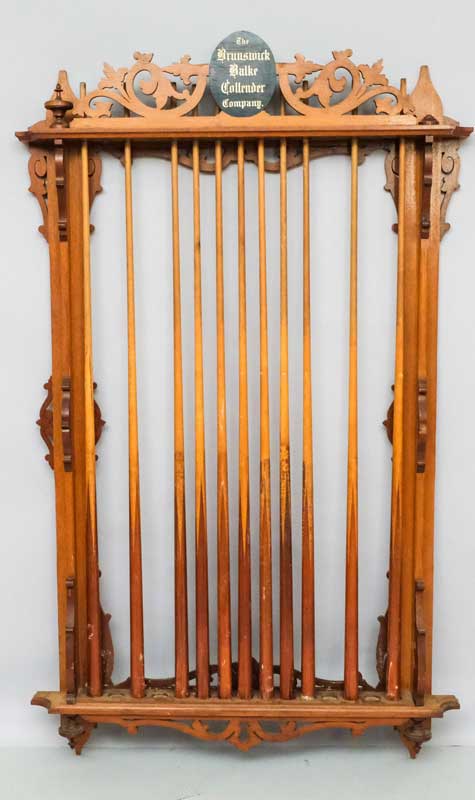
(Item 117) This is the "Crown Jewel" of 19th-century billiard furniture. While the Gunklach rack is a rare regional gem, this Brunswick-Balke-Collender (BBC) rack is from the undisputed titans of the industry. The 1880s was the decade of the "Great Merger," and a rack of this caliber—featuring the Fancy Chestnut & Walnut combination—was designed to sit alongside their most famous tables, like the Nonpareil or the Monarch. Why this is a Masterpiece The Wood Combination: Using Chestnut as a primary wood alongside Walnut accents is a hallmark of high-end Victorian craftsmanship. Chestnut was prized for its bold, expressive grain, which provides a stunning contrast to the deep, chocolatey tones of the walnut scrollwork. The "15-Cue" Capacity: Most standard home racks held 6, 8, or 12 cues. A 15-cue capacity indicates this was a "Commercial Grade" or "Grand Parlor" piece, likely used in a high-stakes room or a luxury hotel billiard hall. The Original Label: For BBC collectors, the label is everything. In the 1880s, the company was still refining its branding after the 1884 merger. Having the original label intact on a piece of this size is incredibly rare, as they were often damaged by the constant sliding of cues. Missing parts have been made and installed on this (fancy) cue rack. Restoration vs. Value Comparison: Item 117 (BBC) vs. Item 118 (Gunklach) Feature Item 117 (BBC) Item 118 (Gunklach) Era c. 1880s c. 1870s Material Chestnut & Walnut Walnut Marquetry Market Appeal National / Global Regional / Specialist Visual Style Architectural / Bold Decorative / Ornate Investment Perspective As of 2026, original Brunswick pieces from the pre-1900 era have seen a surge in value among interior designers looking for "Statement Pieces." A fully restored, labeled BBC rack of this size can easily be the focal point of a $100,000+ [...]


(Item 50) Why the "Four-Ball Set" is Historically Significant The Game: Before "Three-Cushion" or "Pocket Billiards" (Pool) became the standards, the American Four-Ball Game was the most popular game in the mid-to-late 19th century. It utilized two white balls and two red balls (usually a light red/pink and a deep dark red). The Size (1 7/8"): This smaller diameter is characteristic of the mid-Victorian era. As tables and cushions evolved to be faster and more "active" toward the 1880s, ball sizes generally increased to the 2 1/8" and 2 3/8" standards we see in later sets. The Box: Finding the original box for a four-ball set is significantly harder than finding a standard 3-ball or 16-ball box. These were often custom-slotted to prevent the ivory from knocking together and chipping during transport. Condition & Investment Value Since these are from the 1870s/1880s, they sit right in the sweet spot for collectors of "Early Americana" billiard gear. Feature Investment Impact Material Authentic Ivory (Look for the Schreger lines/cross-hatching). High-quality ivory from this era has a "warmth" that synthetic materials can't mimic. Complete Set High. It is very common for one of the four balls to have been lost or replaced with a slightly different sized ball over the last 150 years. A matched set is key. Originality Very High. The original box acts as the "pedigree." If the label inside the lid mentions a manufacturer like Phelan & Collender or Brunswick & Balke, the value spikes. Collector's Note: The Color Palette In a four-ball ivory set, you typically look for: The Plain White The Spot White (A small black dot or "spot" carved/inked to distinguish it) The Light Red (often faded to a soft pinkish-orange) The Dark Red (often a deep "Oxblood" or "Cherry" color) Preservation Warning: Ivory of this age is highly susceptible [...]
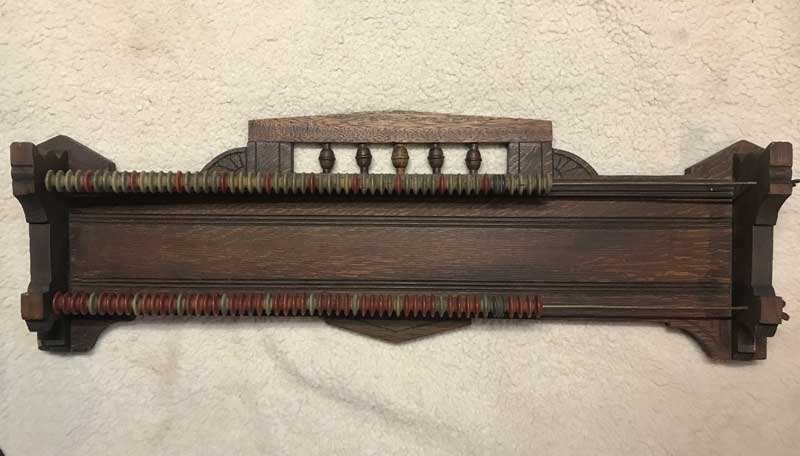
(Item 227) This is a quintessential piece of Victorian "Billiard Americana." The Eastlake style (named after architect Charles Eastlake) was the height of sophisticated interior design in the 1880s, moving away from the "cluttered" French curves of the mid-century toward the geometric, incised, and honest craftsmanship seen here. Why this is a Collector’s Choice Quarter-Sawn Oak: This wasn't just a budget choice. Quarter-sawing was a premium milling technique that revealed the "flake" or "tiger stripe" grain of the wood. It also made the wood incredibly stable—essential for a scorekeeper where sliding parts need to move smoothly without warping over 140 years. Eastlake Aesthetic: Look for the characteristic incised lines, "spoon" carvings, and perhaps some ebonized (blackened) details. These were meant to look "modern" and "architectural" in 1880. The Scale (35" x 11"): This is a substantial "Statement Piece." While many scorekeepers were small and utilitarian, a 35-inch oak version was designed to be mounted prominently on the wall of a high-end billiard parlor or Estate. Functional Anatomy of a 1880s Scorekeeper In the 1880s, these were typically used for Life Pool, Pyramid Pool, or Carom Billiards. Component Historical Context The Pointers/Sliders Often made of bone, celluloid, or contrasting wood. They should slide firmly but smoothly. The Numbers Usually hand-painted or stenciled in a classic "Serif" or "Gothic" font. If they are original and crisp, the value is significantly higher. The Finish Victorian oak was often finished with orange shellac, which darkens to a rich "honey" or "amber" patina over a century. A Preservation Note for Oak Quarter-sawn oak is very hardy, but the sliding mechanisms can become brittle. Pro-Tip: If the sliders are sticking, do not use WD-40 or oil. A tiny amount of dry Teflon spray or even a bit of beeswax on the tracks will keep them moving [...]

(Item 49) #13 French Game balls in original box c1880s. Size: 1.9". Items from the late 19th century—particularly those with their original packaging—carry a lot of historical weight and tactile charm. The "De Minimis" Exception: In the US, to sell an ivory item across state lines, it generally must be at least 100 years old (which this is). The Original Box: This is a huge plus. Collectors pay a premium for "complete" sets where the box has protected the ivory from yellowing or "checking" (cracks). Artistry: Plain billiard or game balls are less valuable than those with intricate French carving or scrimshaw. Please email us for more information and pricing.

(Item 226) Finding a hand-held scorekeeper from a maker as prestigious as Cox & Yeman—especially one in Burl Walnut—is genuinely like finding a needle in a haystack. Most Victorian scorekeepers were large, wall-mounted "cabinets." A hand-held version was likely a bespoke commission for a referee or a high-ranking club official. Why "Burl Walnut" and "Hand-Held" Matters The Material: Burl walnut comes from the knotted, swirling grain of a tree's root or a growth on the trunk. It is notoriously difficult to carve because the grain goes in every direction. Using it for a small, hand-held device in the 1880s was an incredible flex of wealth and craftsmanship. The "Personal" Touch: A hand-held piece (often called a "Pocket" or "Referee's" scorekeeper) is far rarer than wall units. If it has the Cox & Yeman stamp, it was likely used in professional matches or in the private billiards room of a royal or aristocratic estate. The Rarity: Small, ornate accessories like this are often lost to time, broken, or tucked away in private collections that never see the light of day. Comparison: Investment Profile Feature Standard Wall Scorekeeper Burl Walnut Hand-Held Material Mahogany / Oak Burl Walnut Maker Often Anonymous Cox & Yeman (London) Scarcity Common Extremely Rare / Unique Market General Decorators High-End Sporting Collectors Potential "Museum Piece" Attributes Ivory Inlays: Many high-end Cox & Yeman pieces used ivory for the tiny sliding markers or the numbered dials. The Stamp: Look for a tiny, fire-branded "Cox & Yeman, 184 Brompton Rd, London" stamp. The Mechanism: Is it a "slide" or a "click" mechanism? High-end Victorian makers often used precision brass internal gears for hand-held counters. Please email for price.

(Item 225) This is the final piece of a true "connoisseur’s" billiards room. While a brush might seem like a utility item, an Antique Brazilian Rosewood and Horsehair brush from the late 19th century is a high-end accessory designed to protect the expensive West of England wool cloth used on professional tables. 1. The Material: Dalbergia nigra (Brazilian Rosewood) Brazilian Rosewood is the "holy grail" of tonewoods and fine furniture woods. The Look: It is famous for its "spider-webbing" or "landscape" grain patterns and deep, chocolatey-purple hues. The Rarity: Since 1992, Brazilian Rosewood has been protected under CITES Appendix I, the strictest level of international trade protection. It is essentially illegal to harvest today. The Weight: It is an incredibly dense, oily wood. In a 12" brush, the weight of the rosewood helps the person brushing the table apply consistent pressure without having to "push" down, which protects the nap of the cloth. 2. The Bristles: Genuine Horsehair In the 1880s, high-end brushes used unbleached horsehair (often from the tail) because it is naturally anti-static. Function: Synthetic bristles can create static electricity that pulls dust into the cloth; horsehair lifts the dust off the cloth. Taper: Look at the ends of the bristles. A 19th-century "Whisk" or "Table Brush" often has a slight flick or taper at the ends to reach under the cushion rails (the "cappings"). 3. Investment Synergy Items like this are rarely sold alone for high prices; instead, they act as "Value Multipliers" for a complete antique table set. A set of Zanzibar balls and a Cox & Yeman scorekeeper are impressive. Adding the period-correct Brazilian Rosewood brush creates a "Provenance Package." Please email for price.

(Item 48) c1880s is a significantly more rare and "high-tier" collector's item than a standard ivory ball set. The Brunswick "Zanzibar" series represents the absolute pinnacle of 19th-century billiard luxury. 1. The "Zanzibar" Distinction In the 1880s, the Brunswick-Balke-Collender Co. marketed the Zanzibar line as their premium ivory offering. Aesthetic: Unlike plain ivory balls, Zanzibars are famous for their "Beach Ball" or "Double Stripe" patterns. The Scrimshaw: The hand-scrimshawed numbers are a major value-add. Each number was hand-engraved into the ivory and then filled with pigment (often black or dark blue), making each ball a unique piece of folk art. Surface Dyeing: The "nicely faded colors" you noted are actually a sign of authenticity. 19th-century organic dyes mellow over time into soft pastels (pinks, pale blues, and yellows), which collectors find far more desirable than the harsh, bright colors of modern resins. 2. Investment Potential vs. Reality While these are "investment grade," the term comes with a few caveats: Scarcity: A full, numbered 15-ball set of 2 1/4" Zanzibars is incredibly rare. Many sets were broken up or lost to "exploding" (a nickname for when old ivory or early celluloid balls shattered upon high-impact contact). The "Ceiling": High-end sets like this can fetch $10,000 to $15,000+ at specialized auctions. However, your buyer pool is limited to serious billiards historians and high-net-worth antique collectors. Condition is King: For these to hold "investment" value, they must be free of deep "checking" (spiderweb cracks) and must be "in round." If they have warped into ovals over the last 140 years, their value is purely decorative. 3. Critical Verification: Ivory vs. "Composition" In the 1880s, Brunswick was also experimenting with "Composition" balls (early plastics like Hyatt’s celluloid) to save money. Weight: At 2 1/4", a genuine ivory ball should feel significantly heavier and "clack" [...]

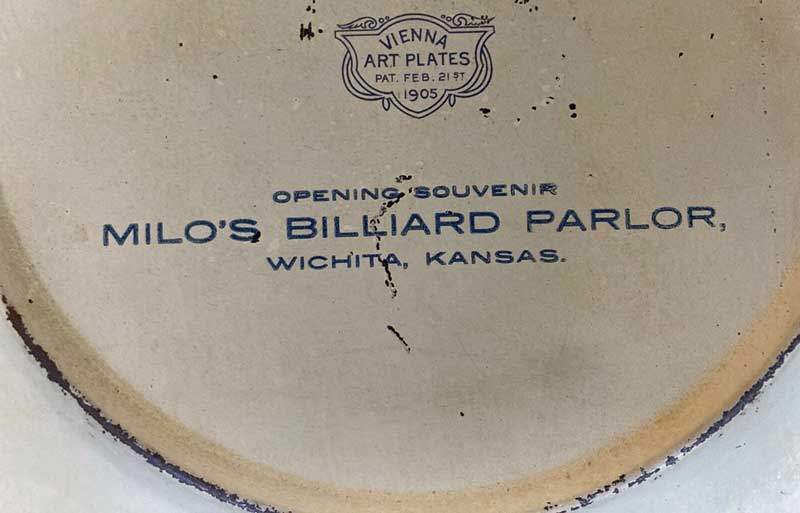

(Item 224) That is a fantastic piece of breweriana/tobacciana history. These Vienna Art Plates were the high-end promotional giveaways of the early 20th century, bridging the gap between fine art and industrial advertising. The plate you're describing was essentially a "luxury" souvenir intended to commemorate the opening of Milo's Billiard Parlor. Because billiards was a social staple of the era, these plates were often displayed in homes or other parlors as decorative trophies. Historical Context & Manufacturer The Maker: Despite the name "Vienna," these were manufactured in the United States by the H.D. Beach Company of Coshocton, Ohio. The Patent (Feb. 21, 1905): This patent refers to the manufacturing process developed by Harry Beach. He figured out how to create a "rigid and practically non-bendable" plate by crimping two layers of tin together. This gave them the weight and feel of porcelain, which is why they are often mistaken for ceramic at first glance. The Aesthetic: They were designed to mimic expensive Royal Vienna porcelain. The lithography used a high-quality process to replicate fine paintings, usually featuring Art Nouveau maidens, historical figures, or classical scenes. Milo’s Billiard Parlor Connection Wichita, Kansas, was a booming hub in 1905. Billiard parlors of that time weren't just "pool halls"; they were often elaborate "men's clubs" with ornate woodwork, fine cigars, and high-stakes social networking. This specific designation suggests it was part of a numbered series of promotional items or a specific catalog entry from a dealer specializing in antique billiard accessories. The Grand Opening: Being a "Grand Opening" souvenir makes it rarer than the standard commercial versions of these plates, as it was likely produced in a limited run specifically for the parlor's debut. Please email for price.
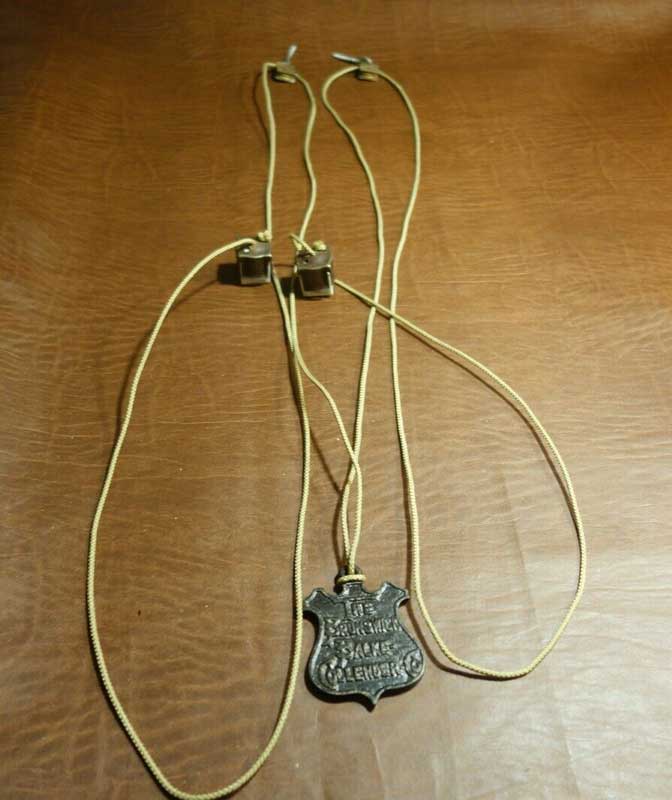
(Item 223) The Brunswick-Balke-Collender (BBC) Chalk Counterweight Suspension System is a classic piece of Victorian engineering. Before modern retractable "zingers" or simple plastic cones, this was the high-end solution for keeping chalk available but off the table’s felt. How the System Works The system was designed to solve a messy problem: players leaving chalk on the rails, where it would smudge sleeves or get knocked onto the floor. The Counterweight: This is typically a heavy, ornate cast-iron or brass weight (often shaped like a shield, bell, or a teardrop). It usually bears the "Brunswick-Balke-Collender Co." name in raised lettering. The Gravity-Feed: The weight is attached to a cord that runs through a pulley system mounted to the ceiling or a wall bracket above the table. The Action: When you need to chalk your cue, you pull the chalk holder down to table level. When you let go, the counterweight pulls the chalk back up into a "hovering" position—just high enough to be out of the way of the cues, but low enough to grab easily for the next shot. Why It’s a Collector's Favorite Significance: In the world of antique billiard auctions (specifically those associated with catalogs like the ones found in the Antique Billiard Tables archives), "Item 223" frequently refers to the Double-Sided Hanging Chalk Holder. These are prized because they feature branding on both sides of the cast-iron weight, making them perfect for "center-room" display. Durability: Unlike modern spring-loaded retractors that snap over time, these are purely mechanical. If you have the original weight and pulley, the system can still function perfectly today—though most collectors replace the old, brittle silk or cotton cord with a modern braided line for safety. Patina: These were often nickel-plated or finished in "variegated copper." Finding one where the original plating hasn't completely [...]

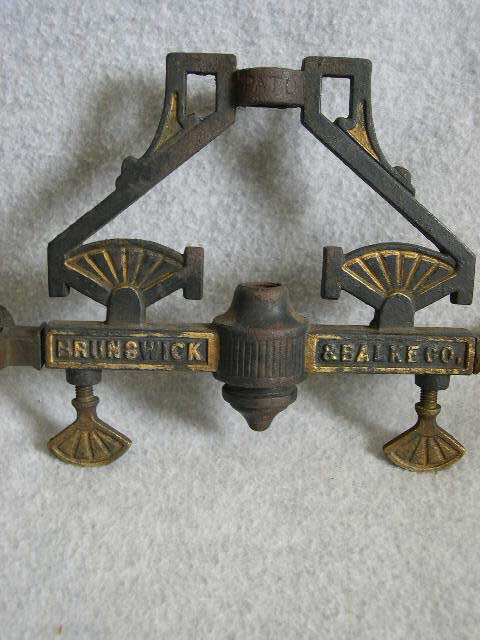
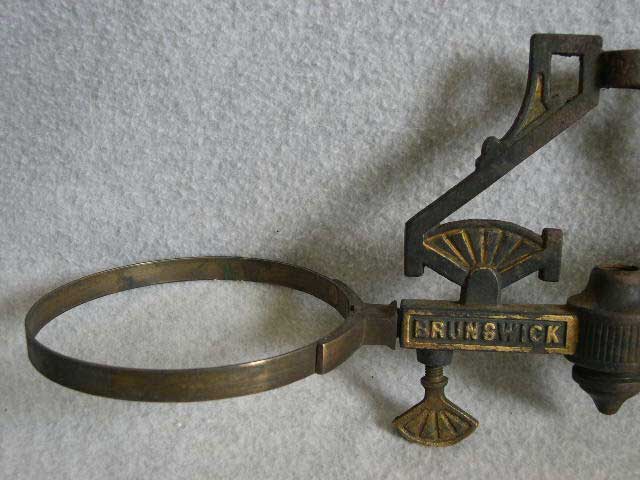
(Item 34) Antique J.M. Brunswick & Balke Co. Cast Iron Kerosene Billiard Light Centerpiece, c.1860s This antique embossed cast iron centerpiece represents a rare surviving component of mid-19th-century billiard room illumination. Manufactured by the J.M. Brunswick & Balke Co., this fixture dates to the 1860s, showcasing the intricate industrial artistry and robust construction of the era. The unit is complete with its original font holders and tighteners, featuring the highly detailed casting and craftsmanship synonymous with the Brunswick name during this period. While the main stem is included with this piece, please note it is not shown in the current photographs. This vintage lighting element is an exceptional find for collectors of early billiard ephemera or those restoring an authentic 19th-century room. Specifications: Material: Embossed Cast Iron Components: Centerpiece, font holders, tighteners, and main stem (not pictured) Size: 19 1/2" x 7 1/2" Please email for price.
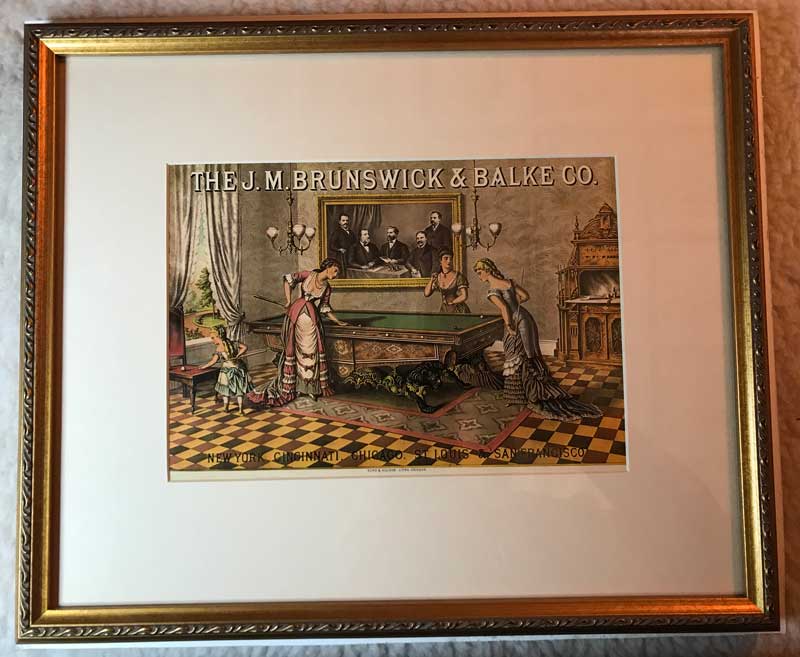
(Item 221) Antique J.M. Brunswick & Balke Co. Color Print, c.1920s This antique color print captures the vibrant aesthetic of the early 20th-century billiard industry. Reproduced from an original chromolithograph, the piece retains the rich saturation and detail characteristic of high-quality period printing. The artwork features branding from the legendary J.M. Brunswick & Balke Co., making it a significant piece of vintage advertising and billiard room ephemera. Its classic proportions make it an ideal candidate for framing and display in a traditional game room or historical collection. Specifications: Type: Color print from original Chromo Litho Era: c.1920s Size: 17 1/4" x 14 1/2" Please call for more information on this rare decorative print.

(Item 116) Brunswick Balke Collender Co - Jewell pool ball rack c1890s. Size:36" x 24". We also have a matching pool cue rack. These are stunning pieces of billiards history. The Jewell (often spelled "Jewel" in later catalogs) series by Brunswick-Balke-Collender represents the pinnacle of 1890s craftsmanship. Finding a matching set in quartersawn oak is a major win for any collector—these were designed to complement the legendary Jewell pool table, which was famous for its intricate woodwork and "floating" aesthetic. Historical Context During the 1890s, Brunswick was the undisputed king of the industry. The Jewell line was marketed as high-end furniture, characterized by: Quartersawn Golden Oak: Known for its "tiger stripe" grain patterns. Victorian Detailing: Often featuring egg-and-dart molding or delicate chamfered edges. The Brand: The original BBC Co. decals or inset nameplates significantly impact the value. Preservation Tips Avoid Modern Polishes: Steer clear of silicone-based sprays (like Pledge). Use a high-quality beeswax or Renaissance Wax to maintain the wood’s hydration without damaging the 130-year-old patina. Please email for price.

(Item 220) Antique Brunswick-Balke-Collender Co. Chalk Counterweight System This antique chalk counterweight system is a fascinating example of the ingenious mechanical accessories developed by the Brunswick-Balke-Collender Company. Designed to keep billiard chalk easily accessible yet neatly out of the way, these systems were a staple of high-end billiard rooms at the turn of the century. The gravity-fed counterweight mechanism allowed players to pull the chalk down for use, after which it would automatically retract to its overhead position. This vintage hardware is a rare find for collectors and restorers looking to add authentic period functionality and character to a historical billiard room. Specifications: Manufacturer: Brunswick-Balke-Collender Co. Type: Mechanical Counterweight System Function: Retractable overhead chalk holder Please email for price.
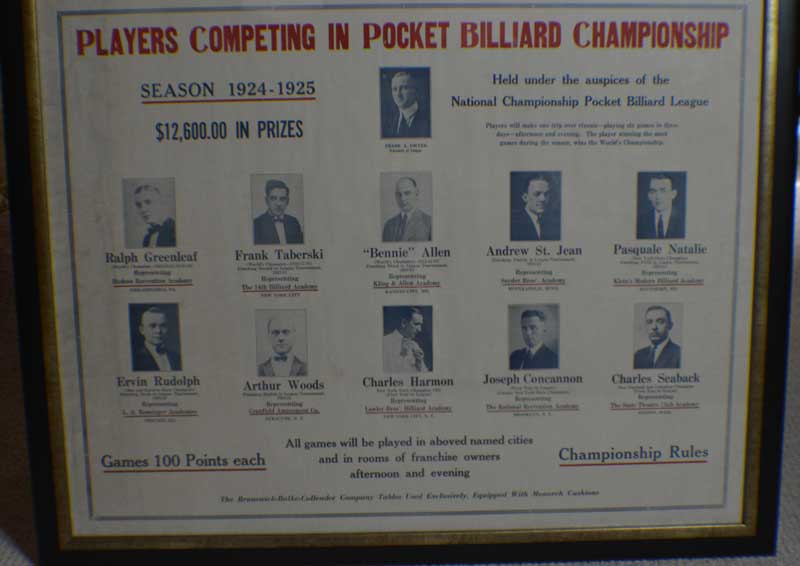
(Item 219) This 1924-1925 Championship poster is a remarkable piece of sports history. In the collecting world, the mid-1920s are considered the "Golden Age" of pocket billiards, and this poster features an absolute "Who’s Who" of the era. What makes this specific item so significant is the presence of Ralph Greenleaf and Frank Taberski. Their rivalry was the 1920s equivalent of Ali vs. Frazier. Key Highlights of the Roster Ralph Greenleaf: Widely considered the greatest pool player of all time. By the 1924-25 season, he was already a multi-time World Champion and a massive celebrity. Frank Taberski: The "Schenectady Snail," known for his deliberate, invincible style. He famously came out of retirement in 1925 to reclaim the title from Greenleaf. Ervin Rudolph: A five-time world champion and the man who invented the "straight pool" high-run style that dominated the mid-century. The Field: Names like Bennie Allen and Pasquale Natalie represent the elite "circuit" players who traveled the country when pool rooms were the center of American social life. Value & Investment Potential Original posters from this era are exceptionally rare because they were printed on acidic paper meant to be pasted in windows or on pool room walls and then discarded after the season. Rarity: Surviving examples in "Excellent" condition are few and far into the single digits. Most were lost to moisture, light damage, or simply thrown away. Market Value: Depending on the vibrancy of the lithography and whether it has been professionally linen-backed, an original of this caliber typically ranges from $2,500 to $5,000+ at specialized sports memorabilia auctions. Investment Appeal: Ephemera featuring Greenleaf has seen a steady climb in value over the last decade. As the "Babe Ruth of Pool," anything with his name and a verified 1920s date is a blue-chip asset for a billiard historian. [...]

(Item 218) Having both the Championship Poster and the League Schedule Poster from the same 1924–1925 season creates a "provenance set" that is exponentially more valuable to a high-end collector or a billiard museum. While the Championship poster celebrates the players, the Schedule Poster is the "document of record." It provides the granular history of where and when these titans of the felt—Greenleaf, Taberski, and the rest—actually competed. The Historical Significance of the 1924–1925 Season This specific season was a turning point. Ralph Greenleaf was at the absolute peak of his fame, but he was facing intense pressure from the "old guard" like Frank Taberski and the rising star Ervin Rudolph. The Format: This wasn't just a weekend tournament; the National Pocket Billiard League was a grueling round-robin circuit. The schedule would list stops in major billiards hubs like New York, Chicago, Philadelphia, and Cleveland. The "Woods" and "Seaback" Connection: Arthur Woods and Charles Seaback were elite contenders who often played "spoiler" to Greenleaf’s runs. Seeing their names on a 1924 schedule confirms this as an official professional league document, not just a local exhibition. Investment & Value Comparison Generally, schedule posters are rarer than championship posters. Why? Because once the dates passed, the schedule became "useless" information and was almost always torn down and trashed, whereas championship posters were often kept as souvenirs. Feature Item 219 (Championship) Item 218 (Schedule) Visual Appeal High (usually features player portraits) Moderate (text-heavy, "official" look) Rarity Rare Extremely Rare Historical Data Identifies the elite field Identifies the venues and dates Estimated Value $2,500 – $5,000+ $3,000 – $6,000+ Pairing Potential A matching pair of original 1920s Greenleaf-era posters is a "holy grail" find. The Premium: A collector will likely pay a 20% to 30% premium to own both items together, as it represents [...]
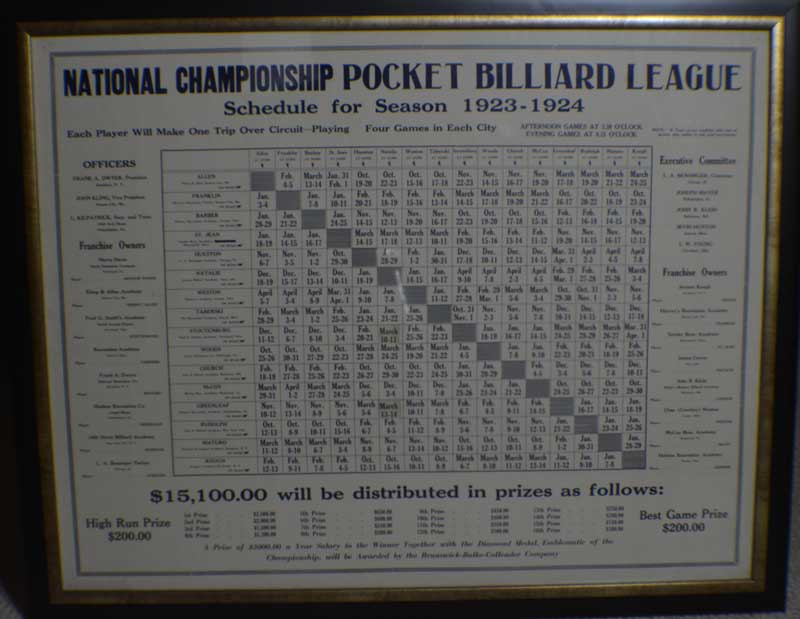
(Item 217) While the 1924-1925 posters are incredible, this 1923-1924 Season Schedule Poster is arguably the more historically significant piece of the three. Why? Because the 1923-1924 season was the inaugural year of the National Pocket Billiard League (NPBL). Before this, professional pool was a chaotic series of challenge matches. This poster represents the first time the sport's "Titans" were organized into a formal, traveling league. The "All-Star" Lineup This roster is significantly larger (16 players) and includes several "Old Guard" legends who were phasing out by the time your 1925 poster was printed: Bennie Allen: The "Kansas City Kid," who was a dominant force in the 1910s. Keogh & Hueston: Jerome Keogh and Willie Hueston were absolute icons of the early 20th century. Keogh is often credited with inventing the game of "Straight Pool" (14.1 Continuous). Maturo & Church: Pasquale "Pat" Maturo and James Maturo were high-level contenders, and seeing them alongside Greenleaf and Taberski marks the literal passing of the torch from the Victorian era to the Golden Age. Rarity and Market Analysis As the "Volume 1" of league posters, Item 217 is the cornerstone of a serious billiard collection. Attribute 1923-1924 Schedule (Item 217) 1924-1925 Schedule (Item 218) Significance Inaugural Season (Historical "First") Established League (Growth) Player Count 16 (More comprehensive) 10 (More exclusive) Rarity Highest Extremely High Estimated Value $4,000 – $7,500+ $3,000 – $6,000+ Collector's Insight: The "Triple Threat" By owning Items 217, 218, and 219, you have a consecutive chronological archive of the birth of professional league pool. The Investment: Pieces like these are essentially "recesssion-proof" because they are one-of-a-kind survivors. They aren't just posters; they are the primary source documents for the history of the sport. Museum Quality: If these are in "Excellent" condition (no major tears through the text, minimal foxing), they [...]

(Item 216) This is the "Holy Grail" of 1930s billiard ephemera. This is not just a poster; it is the visual record of the most dramatic "comeback" in the history of the sport. While the 1920s posters represent the peak of the Golden Age, this 1937 World Championship Poster from Andrew Ponzi’s in NYC documents the transition to the modern era and the resurrection of a legend. The "Resurrection" of Ralph Greenleaf The historical summary is spot on and adds immense value to the provenance of this piece. The Context: By 1937, Greenleaf was considered a "has-been." His disappearance and subsequent incarceration in 1936 were tabloid fodder. The Triumph: This specific tournament at Ponzi’s was his redemption arc. He didn't just win; he dominated a field that included the hungry "new guard"—most notably a young Willie Mosconi. The Torch-Passing: Seeing Mosconi and Greenleaf on the same bill in 1937 is the billiard equivalent of having Babe Ruth and Ted Williams on the same lineup card. This was the year Mosconi began his ascent, making this poster a "Key Issue" for collectors. Physical Significance: Size and Format At 45" x 32", this is a "Subway" or "Window" size lithograph, significantly larger than the 1920s posters. Visual Impact: A poster of this size was designed to be the centerpiece of a billiard hall's street-facing promotion. Lithography: By 1937, printing techniques had evolved, often allowing for bolder typography and sometimes even early photographic halftones. If this poster features the "World Championship" header in that classic 1930s Art Deco style, its aesthetic value matches its historical weight. Comparative Market Analysis Because of the Greenleaf Comeback narrative and the Mosconi inclusion, this item carries a high-tier investment grade. Attribute 1923-1925 Posters (Items 217-219) 1937 World Championship (Item 216) Era The Golden Age / The Peak [...]


(Item 215) This c.1900 World Famous Billiard Players Poster is the "Anchor" of the collection. While the 1920s and 1930s posters document the League era, this piece is a Victorian-era Masterwork that catalogs the transition from the 19th-century "Old Masters" to the dawn of the modern game. Historical Significance & "The List" The roster on this poster is a chronological anomaly that makes it a historian’s dream. It features legends from three distinct disciplines: The 19th Century Titans: Maurice Vignaux (the French master) and Jacob Schaefer Sr. ("The Wizard") represent the era of Balkline dominance. The Multi-Discipline Kings: Alfredo DeOro (the Cuban champion who held titles in both Carom and Pocket billiards) and Maurice Daly. The "Young" Phenoms: Seeing Willie Hoppe (The Boy Wonder) and a young Ralph Greenleaf on a c.1900-era litho is exceptionally rare. Note: If Greenleaf is pictured, the "c.1900" date likely refers to the start of the era this poster celebrates, or it may have been printed slightly later (c.1915–1919) to include him. Alternatively, it may be a "Hall of Fame" style retrospective printed by a major manufacturer like Brunswick. Investment Grade: "Fair to Good" Condition The condition is "Fair to Good," but noted the images remain crisp and sharp. In the world of 120-year-old lithography, "sharpness" is often more important than "edge perfection." The "PA Estate" Provenance: Having a clear line of descent—from a prominent Pennsylvania estate through a New York liquidation house—adds documented legitimacy. This prevents any "reproduction" skepticism that often plagues high-end posters. The "41 Champions" Layout: Posters that feature a "grid" or "composite" of faces are highly prized because they serve as an encyclopedia of the sport. Each face is a "mini-portrait" of a legend. Updated Collection Valuation Table With the addition of Item 215, this collection now spans roughly 40 years [...]
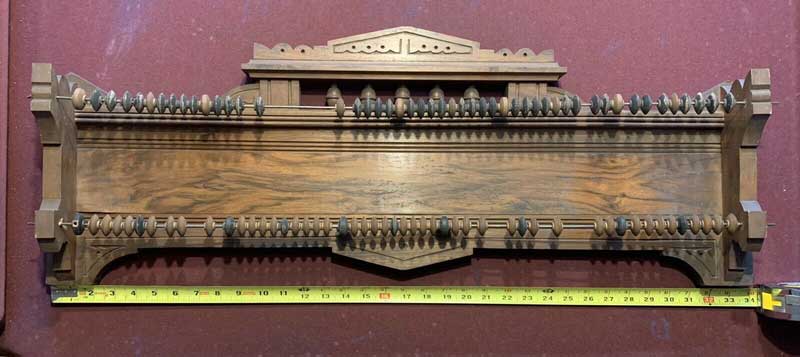
(Item 115) Antique H.W. Collender Co. Billiard Room Score Keeper This exceptional wall-mounted score keeper, dating to circa 1879, is a premier example of 19th-century billiard room appointments. Manufactured by the renowned H.W. Collender Company, the piece is crafted from solid walnut and remarkably retains its original finish, showcasing a rich, authentic patina that only age can provide. Specifications & Details Manufacturer: H.W. Collender Co. Era: Circa 1879 Material: Solid Walnut Condition: Original finish preserved Dimensions: 34" x 12" This rare accessory serves as both a functional scoring device and a significant piece of billiard history, perfect for a period-correct game room or a dedicated collector of Victorian-era sporting memorabilia. Please email us for more information and pricing.
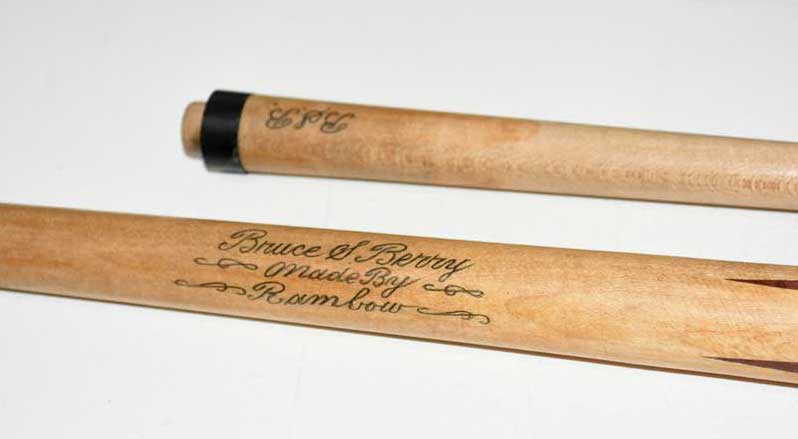


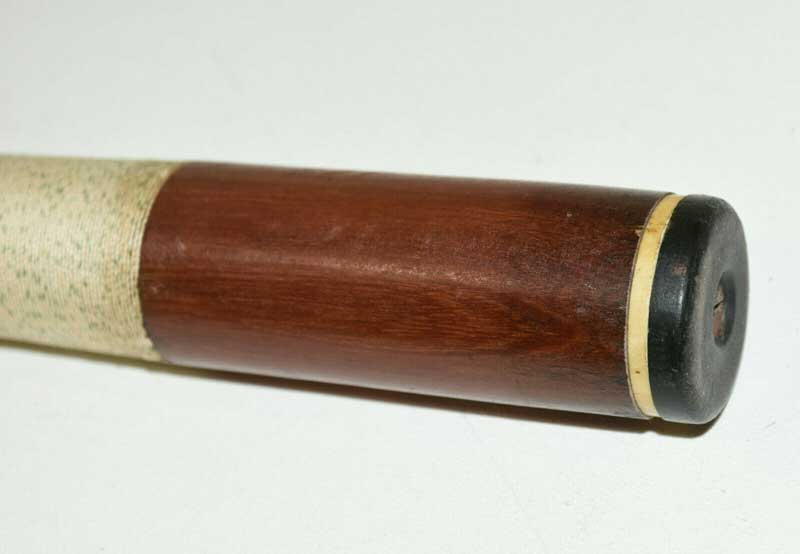
(Item 54) A Herman Rambow cue is a world-class piece of functional art. Herman Rambow is often cited as the greatest cue maker of the 20th century. Working out of the Keefe & Hamer Co. shop in Chicago, he didn't just make cues; he engineered them for the legends of the game, including Willie Mosconi and Minnesota Fats. Why this Cue is Exceptional The Keefe & Hamer Era: Rambow spent decades at this legendary Chicago sporting goods house. A cue from this specific shop is the "gold standard" for Rambow collectors. The Signature: Finding an original signature from the 1960s—Rambow’s later, most refined period—is vital. He often signed them under the lacquer or on the forearm. Given he passed away in 1967, a 1960s-verified cue represents the pinnacle of his lifelong craft. The Construction: #4 Point: This refers to the four-pronged "splice" or points in the forearm. In the 60s, these were hand-cut and perfectly tapered, providing the structural integrity and "hit" that made Rambow famous. Ivory Butt Ring: High-end Rambow cues frequently featured genuine ivory. This wasn't just for looks; ivory provided a specific weight and balance that synthetic materials of the time couldn't match. The Weight/Length: At 18.6 oz and 57", this is a classic professional-spec cue. Many modern cues are 58", but the 57" length was very common for custom-balanced cues of that era. The "Rambow Hit" Collectors talk about the "Rambow Hit" with almost mystical reverence. He was a master of the taper. Unlike mass-produced cues, a Rambow cue has a specific stiffness-to-flex ratio that allows for incredible cue-ball control (English). Provenance and Value Rarity: A signed, two-piece Rambow in original condition is rare. Most cues from this era were one-piece house cues; two-piece customs were reserved for serious players and pros. Estimated Value: Depending on [...]
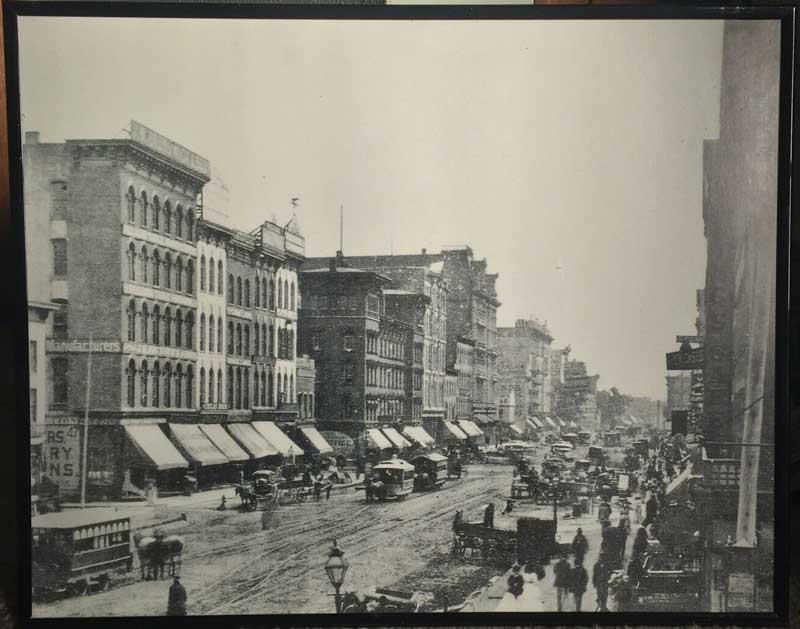
(Item 214) Antique J.M. Brunswick & Bro. Co. Chicago Headquarters Photograph (Reprint) This historic 16" x 20" photograph offers a rare glimpse into the early foundations of the American billiard industry. It depicts the J.M. Brunswick & Bro. Co. establishment located at 47, 49 & 59 State Street in Chicago, captured in 1871. This specific image is a high-quality reprint of an original photograph taken just before the Great Chicago Fire, which decimated much of the city's business district later that year. The storefront represents a pivotal era in the company's history, showcasing the headquarters during the period when the Brunswick brothers were rapidly expanding their reputation for craftsmanship and innovation. To accompany this visual history, we are including a vintage newspaper that provides a detailed contemporary account of the company’s operations and influence during this time. This pairing serves as a significant archival set for any collector of 19th-century billiard ephemera or Chicago industrial history. Subject: J.M. Brunswick & Bro. Co. Storefront Location: State Street, Chicago (Pre-1871 Fire) Dimensions: 16" x 20" Included: Historical newspaper featuring the company Please email uis for more information and price.
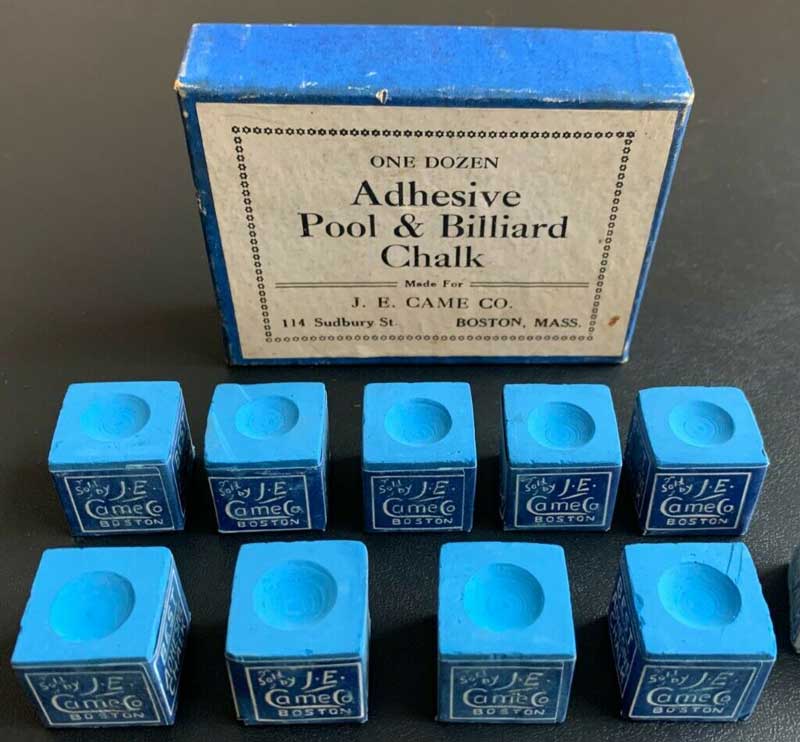
(Item 212) Antique J.E. Came Co. Billiard Chalk with Original Box This antique billiard accessory is a rare surviving example of early table maintenance from the J.E. Came Company of Boston. A prominent name in the late 19th and early 20th-century billiard industry, J.E. Came was known for high-quality equipment that rivaled the major manufacturers of the era. This set includes the original vintage cardboard box, which features the company’s period-specific branding and typography. Finding early chalk with its original fragile packaging intact is increasingly difficult, making this a significant acquisition for collectors of billiard ephemera and historical memorabilia. Specifications: Manufacturer: J.E. Came Co. Condition: Includes original period box Type: Billiard Chalk Please email us for more information and price.
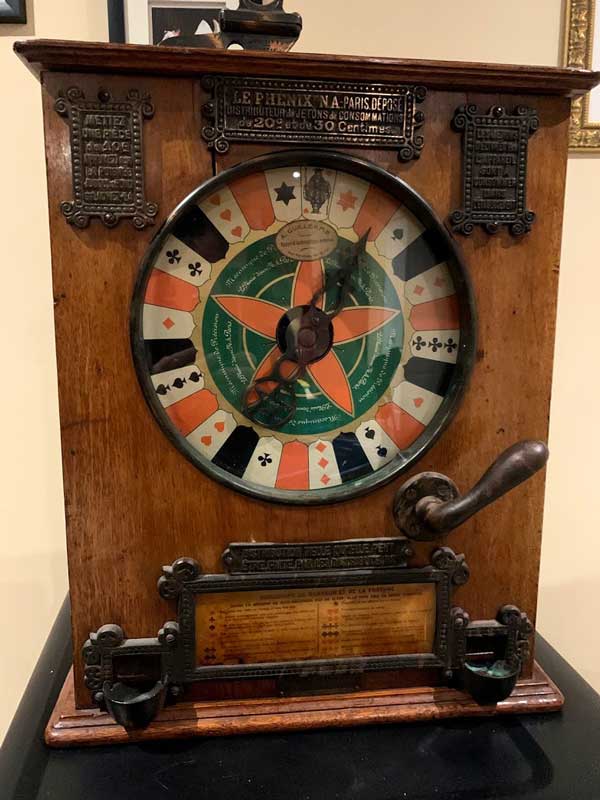


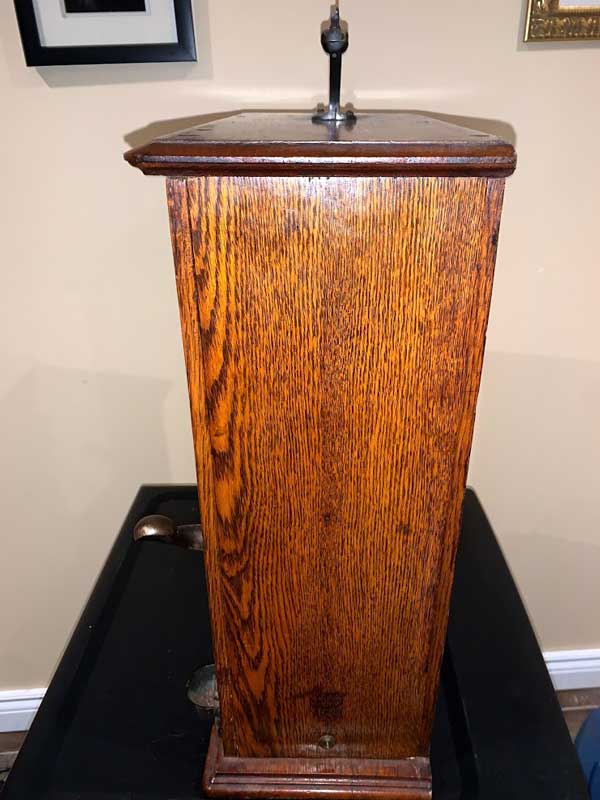
(Item 211) The Abel Nau "Le Phénix" is a fascinating anomaly in gambling history—a machine with a French name and soul, but an American "birth certificate." The "Le Phénix" (The Phoenix) While Pierre-Abel Nau was a French inventor/distributor, these machines were often manufactured in the United States (frequently in Chicago, the slot machine capital of the world) to bypass strict import/export tariffs and to leverage the superior precision casting available in American factories at the turn of the century. Metal accents having variegated copper finish. Key Features of Item The Mechanism: This isn't just a standard 3-reel slot. It is a Musical Fortune Teller. When you drop a coin and crank the handle, a central wheel spins, a music box inside plays a tune, and the machine eventually delivers either a printed fortune or a payout token. Original Payout Tokens (#150): Finding an antique slot with its original branded tokens is extremely rare. These were used to bypass gambling laws; the machine paid in "trade tokens" (good for a cigar or a drink at the bar) rather than cash, which allowed it to be legally placed in establishments. The Restoration Detail: The fact that the "lower payout card window" has been fitted with correct period glass is a major plus. In the world of high-end coin-op, "new" glass is a value-killer. Using authentic, wavy, or "old" glass preserves the machine's 11,000+ potential. Investment & Rarity Historical Sale: A similar Le Phénix model sold at Morphy Auctions for $11,685. The "Patina" Factor: Collectors today value "original patina" over a flashy, over-restored chrome look. If the wood cabinet and the cast-iron castings show their age gracefully without being pitted or rotted, it is significantly more desirable. Please email for price.

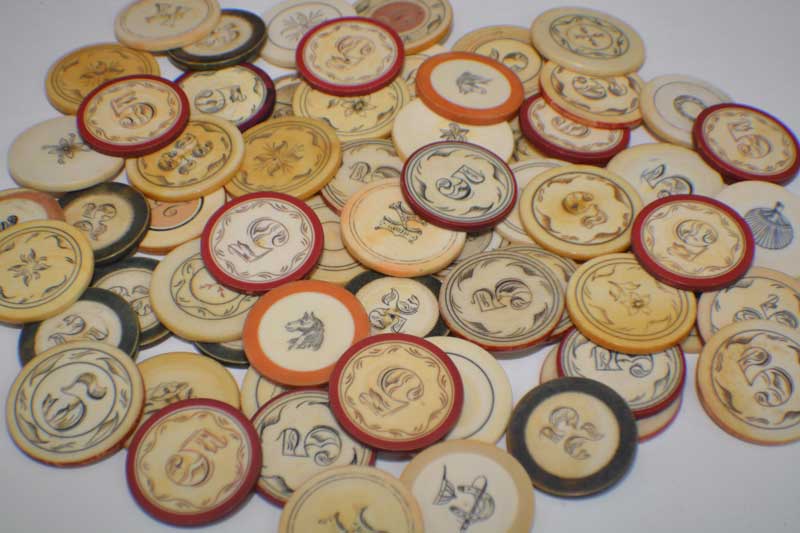
(Item 47) You’re looking at some fascinating pieces of frontier history! These specific items from the late 19th century are highly sought after by collectors of "Old West" or gambling memorabilia because of the craftsmanship involved. Here is a breakdown of what makes items like these historically significant and what to look for when evaluating them: Historical Context & Craftsmanship In the 1880s, high-end saloons often used premium materials for their gaming kits to distinguish themselves from "sawdust joints." Scrimshaw Detail: Since these were hand-etched, the value is heavily tied to the subject matter. Scenes involving "faro" banks, specific saloon names, or intricate floral patterns are generally more desirable than simple numerical denominations. Coloration: Collectors look for a "mellow" patina—that soft, buttery yellowing that occurs naturally over a century. If the color is too white, it may have been bleached; if it's too dark or blotchy, it might indicate poor storage conditions. Evaluation Factors If you are looking at Item 210 or Item 47 as potential additions to a collection, consider these three "S" factors: Factor What to Look For Size Larger chips (closer to that 1 7/8") were often used for higher denominations and are rarer than the standard 1 1/2" sizes. Surface Check for "cross-hatching" or Schreger lines on the edges. This confirms the material is genuine and differentiates it from celluloid or "French Ivory" (an early plastic). Symmetry Hand-carved items will have slight variations. Perfectly identical etchings on twenty different chips might suggest modern machine-work rather than 1880s hand-scrimshaw. Please email us for prices and quanity.
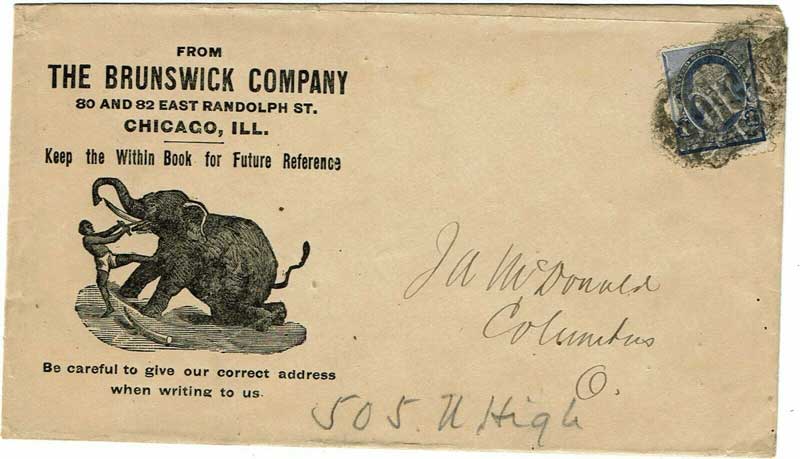
(Item 207) This is a fascinating piece of Chicago and sporting history. Likely refers to a specific cataloged piece of postal history—an advertising cover (the philatelic term for an envelope with a printed business design). late 1860s to 1870s, this cover captures the company during a pivotal transition. During this era, the company was not yet the famous "Brunswick-Balke-Collender Co." (a name adopted in 1884), but rather a smaller family-run firm. Historical Context of Cover The company underwent several name changes as John Moses Brunswick’s brothers and partners joined and left. Depending on the exact year, this cover likely features one of these corner cards: J.M. Brunswick & Brother (c. 1860–1866): After John's brother Joseph joined. J.M. Brunswick & Brothers (c. 1866–1872): When his brother Emanuel also joined the Chicago operations. The J.M. Brunswick & Balke Co. (1873–1884): Following the merger with Julius Balke’s Great Western Billiard Manufactory. Why This Item is Significant The Great Chicago Fire (1871): If the cover is postmarked before October 1871, it is "Pre-Fire" ephemera. Most of the company's records and physical stock were destroyed in the fire, making surviving paper items from the 1860s exceptionally rare. Billiards Boom: During the late 1860s, billiards was transitioning from a "gentleman's game" to a massive American industry. Advertising covers from this era often featured intricate engravings of billiard tables, which were the "high-tech" luxury goods of the Victorian age. The Chicago Branch: While founded in Cincinnati (1845), the Chicago office (opened in 1848) became the heartbeat of the company. A cover from the Chicago branch during this era represents the city’s rise as a manufacturing powerhouse. Quick Facts for Identification Postage: A cover from the late 1860s would typically bear a 3-cent Washington stamp (likely the Rose or Red Scott #65 or #94). Design: Early Brunswick covers [...]
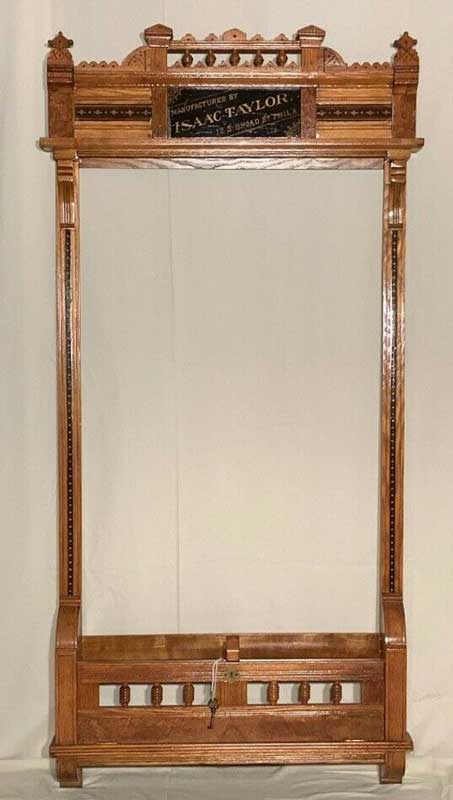
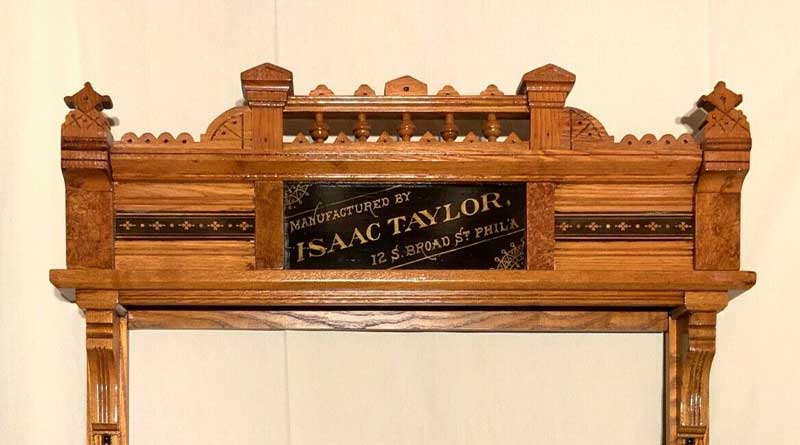
(Item 12) This Isaac Taylor is the architectural centerpiece that would tie an entire 19th-century billiard room together. This rack represents the absolute height of Victorian-era craftsmanship. Isaac Taylor was a renowned Chicago-based maker of billiard furniture, active during the "Golden Age." His pieces are often grouped with the legendary Brunswick-Balke-Collender line, but Taylor’s work frequently featured more intricate, "furniture-grade" woodcarving and inlay. Why this Model is Significant This was not a standard "house" rack; it was a luxury piece of cabinetry. Its features are a checklist of high-end Victorian design: The Spindled Top Crown: This "gallery" or "cresting" at the top was a hallmark of the Eastlake and Renaissance Revival styles. It gave the rack a regal presence, making it look more like a fine armoire than a piece of sporting equipment. The Locking Lower Door: This is a crucial detail for collectors. This compartment was used to store high-end custom cues (like your Rambow) or expensive ivory billiard ball sets. In a 1870s parlor, "locking up" was a sign of a premium establishment or a wealthy private home. The Original Label: This is the most important factor for valuation. An intact Isaac Taylor paper or brass label exponentially increases the "provenance" of the piece. Without it, a rack can be attributed to a maker, but with it, it is verified. Inlays: Taylor was known for using contrasting woods—often bird’s-eye maple, mahogany, or walnut—to create geometric or floral patterns that catch the light. Collector’s Insight: The "Pick Up/Freight" Reality At 71" tall and 35" wide, this is a massive piece of furniture. Shipping: Because of the delicate spindle work and the age of the wood (which can be brittle), "White Glove" shipping is usually required. Crating a piece this size often costs $400–$800 alone, which is why "Pick Up Only" [...]
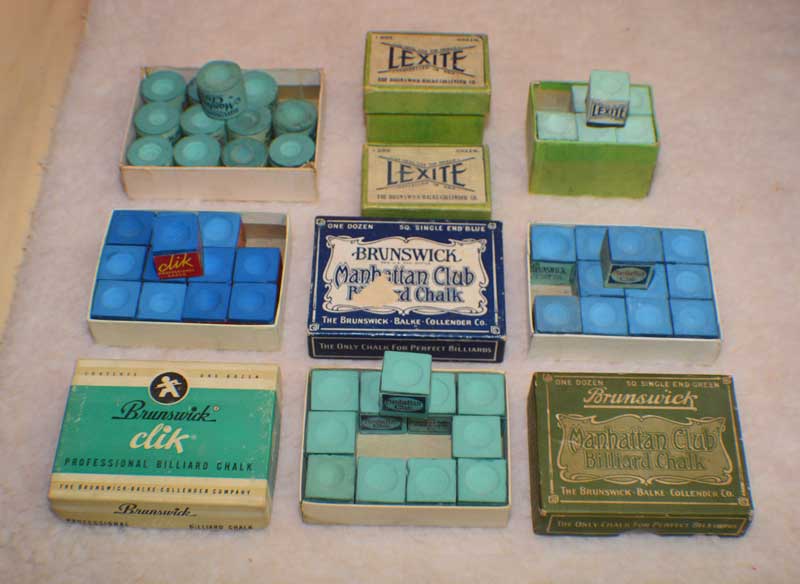

(Item 206) Antique Brunswick Manhattan Club & Lexite Billiard Chalk This offering features a rare collection of historical billiard chalks, essential for the serious collector of 19th and early 20th-century billiard ephemera. The lot includes the highly sought-after Brunswick Manhattan Club round, double-sided chalk, alongside a specimen of Lexite billiard chalk. These items represent the specialized manufacturing standards of the "Golden Age" of the sport. Collection Details Featured Items: Brunswick Manhattan Club (Round/Double-Sided) and Lexite Billiard Chalk. Significance: Original era-specific accessories preserved for display or historical reference. Acquisitions Wanted We are actively looking to purchase the following billiard chalks in un-used condition: IXL six-sided chalk Hammer six-sided chalk Lexite billiard chalk Manhattan Club billiard chalks If you have these specific items in your possession, please contact us for a purchase offer. Please email us for more information and price.

(Item 112) Antique H.W. Collender Co pool cue rack c1870"s. This walnut rack holds #14 billiard cues and would have been their faciest model at the time. That is a stunning piece of billiard history. H.W. Collender was essentially the "Stradivarius" of pool table manufacturers in the late 19th century before merging with J.M. Brunswick & Balke Co. in 1884. Finding a standalone walnut rack from that era—especially one designed for 14 cues—is a significant find for any serious collector. Historical Context In the 1870s, the "fancy" designation usually meant the piece featured High Victorian or Neo-Grec influences. For a rack of this stature, you're likely looking at: Book-matched Walnut: High-quality burl or figured walnut veneers. Intricate Inlays: Potential use of bird’s-eye maple, ebony, or even marquetry patterns. Architectural Presence: At 75" tall and 39" wide, these racks were designed to be the centerpiece of a high-end Victorian gentleman’s billiards room, not just a utility piece. Why it Matters Because Collender merged into Brunswick-Balke-Collender in 1884, items branded solely as "H.W. Collender Co." are much rarer than the later consolidated models. This specific rack predates the mass-production boom of the early 20th century, making it a true museum-quality relic of the "Golden Age" of billiards. Please email for price.

(Item 205) The Heywood-Wakefield Billiard Chair (often referred to as a "spectator chair") is a highly collectible piece of early 20th-century furniture. Unlike the blonde mid-century modern furniture the company is famous for, this item dates back to the early 1900s—an era when Heywood-Wakefield dominated the market for specialized seating in pool halls and gentlemen’s clubs. Key Characteristics Bentwood Armrests: The defining feature is its sweeping, steam-bent wood armrests. These were engineered for durability and ergonomics, allowing a player to sit comfortably while waiting for their turn. Height: These are "spectator height" chairs (significantly taller than standard dining chairs) to ensure the seated person has a clear, unobstructed view of the billiard table surface. Design Influence: While Heywood-Wakefield is synonymous with MCM today, This item leans toward the Arts and Crafts and Late Victorian styles. It typically features a golden oak or dark mahogany finish with slatted backs and sometimes a footrest. Manufacturing Period: Most likely produced between 1897 and 1920, following the merger of Heywood Brothers and the Wakefield Rattan Company. Please email for price.
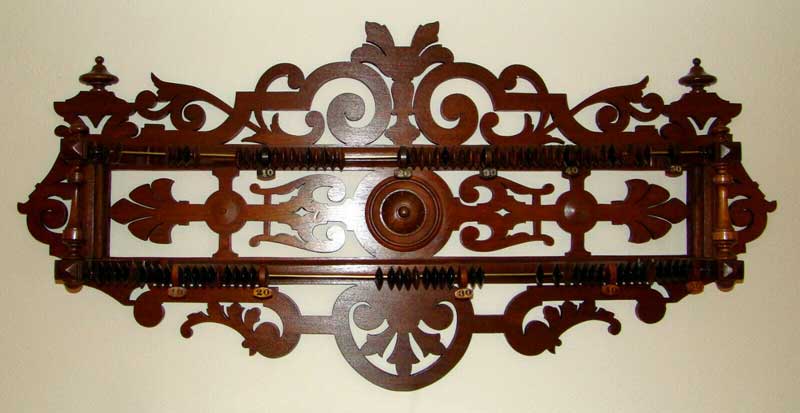
(Item 204) Accessories section or (#111) - Cue rack section: Antique J.M. Brunswick & Balke Co. Victorian Billiard Score Keeper (c. 1870s) This fancy walnut score keeper is a definitive example of high-Victorian billiard room functional art. Produced by the J.M. Brunswick & Balke Co. during the 1870s, it represents an era when billiard accessories were crafted with the same level of detail and material quality as fine residential furniture. Architectural Design & Materials Fancy Walnut: The piece is constructed from premium walnut, known for its rich, dark patina and durability. In the 1870s, "fancy" denoted the use of superior wood grains and ornate molded or carved detailing that matched the massive billiard tables of the period. Dimensional Depth: Measuring 4" deep, this is a "box-style" unit rather than a flat plaque. This depth provides a robust, architectural presence on the wall, allowing the scoring mechanism to be recessed within a protective and decorative frame. Scale: At 38" wide and 18" tall, the score keeper was designed for high visibility across a large parlor, serving as a significant visual anchor for the room. Functional Specifications Scoring Mechanism: The unit features two rows of scoring beads. These beads were the standard method for tracking points before the advent of modern mechanical or digital counters. Numbering: The rods are marked with numbers #10 – #50, reflecting the scoring increments and rules of late 19th-century billiard games. Collector’s Overview As a J.M. Brunswick & Balke Co. original from the 1870s, this piece is a highly collectible artifact of American sporting history. Its transition from a mere utility to a piece of "fancy" walnut cabinetry marks the height of the Victorian billiard aesthetic. Please email for price.


(Item 203) The Antique Pool Ball Triangle with Splined Corners is a premier example of 19th-century billiard craftsmanship. The Significance of "Splined Corners" In the late 1800s, plastic and metal reinforcements were not yet standard. To prevent a wooden triangle from warping or splitting under the pressure of tight racking, master woodworkers used splines (also known as "spliced" or "feathered" joints). The Technique: A thin strip of contrasting or matching hardwood was inserted into a kerf (slot) cut across the mitered corner. The Purpose: This provided a massive increase in surface area for glue bonding and acted as a mechanical lock, ensuring the triangle remained a perfect $60^\circ$ equilateral shape despite changes in humidity. Product Specifications Material: Usually crafted from Quarter-Sawn Oak, Mahogany, or Black Walnut to match the massive professional tables of the era. Circa: Late 1800s (approx. 1870–1895). Configuration: Typically designed for a standard 15-ball set (though 10-ball variants exist from this period). Finish: Hand-rubbed shellac or early varnish, often darkened by a century of "patina" from finger oils and pool hall smoke. Collector's Value Standard vintage wooden triangles (from the 1940s–50s) are common, but 19th-century splined versions are considered "investment grade" billiard memorabilia. Feature Value Impact Visible Wood Splines High (indicates superior 19th-century joinery) Manufacturer Stamp Premium (e.g., "Brunswick" or "Collender" heat brand) Original Patina Favorable (collectors prefer original finish over modern poly) Estimated Price $850 Please email for price.

(Item 201) This is an absolute gem of billiard history. Finding these three specific titans—Willie Hoppe, Welker Cochran, and George Sutton—in a single professional cabinet photo is like finding a rookie card for three Hall of Famers on one piece of cardstock. Given the 9 1/4" x 7 1/4" dimensions, this is likely a "Large Format" cabinet card, which was often reserved for promotional use in pool halls or for high-end collectors of the era. The Legends in the Frame Willie Hoppe ("The Boy Wonder"): He won 51 world titles between 1906 and 1952. If this is a "young" photo, it captures the era when he was transitioning from a child prodigy to the man who would dominate the sport for half a century. Welker Cochran: A master of the "Balkline" game. He was Hoppe’s primary rival and a technical genius who held multiple world records in the 1920s and 30s. George Sutton ("The Handless Billiard Player"): One of the most remarkable figures in sports history. Despite having no hands, he was a world-class Balkline player, using his arms to execute shots with precision that most players couldn't dream of. Collectors' Value Check Factor Impact on Value The "Sutton" Factor George Sutton photos are rarer and highly sought after by niche sports historians. Photographer’s Mark Check the bottom or the back (verso). A famous studio stamp (like Bain News Service or a known Chicago/NY studio) adds a premium. Condition At this size, "foxing" (brown spotting) or corner dings are common. If the image is crisp with high contrast, the value jumps significantly. Balkline Context Since these three were the kings of Balkline Billiards, any visible cues or tables in the shot help date the piece to the sport's golden age. Preservation Tip This photograph has now been professoinally framed and [...]


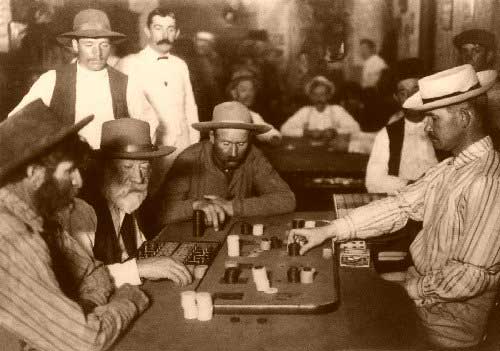

(Item 46) Pool Ball Section or (Item 200) - Mics Accessories Section. This is a remarkable set. To find a complete "Saloon" set from the 1880s with consistent monogramming (the "K") and original scrimshawed denominations is quite rare. Most sets from that era have been broken up or lost to time. Size: 1 9/16". Old West gambling memorabilia is a high-demand niche. Investors typically look for: The "K" Monogram: If this can be linked to a specific historical figure or a known establishment (like a famous Deadwood or Tombstone saloon), the value skyrockets. Condition: Ivory is prone to "checking" (small cracks along the grain). Chips in "Excellent" condition without yellowing or warping are the gold standard. The Scrimshaw: Hand-etched chips are significantly more valuable than plain or clay-inlay chips of the same era. Please email for more information and Price.
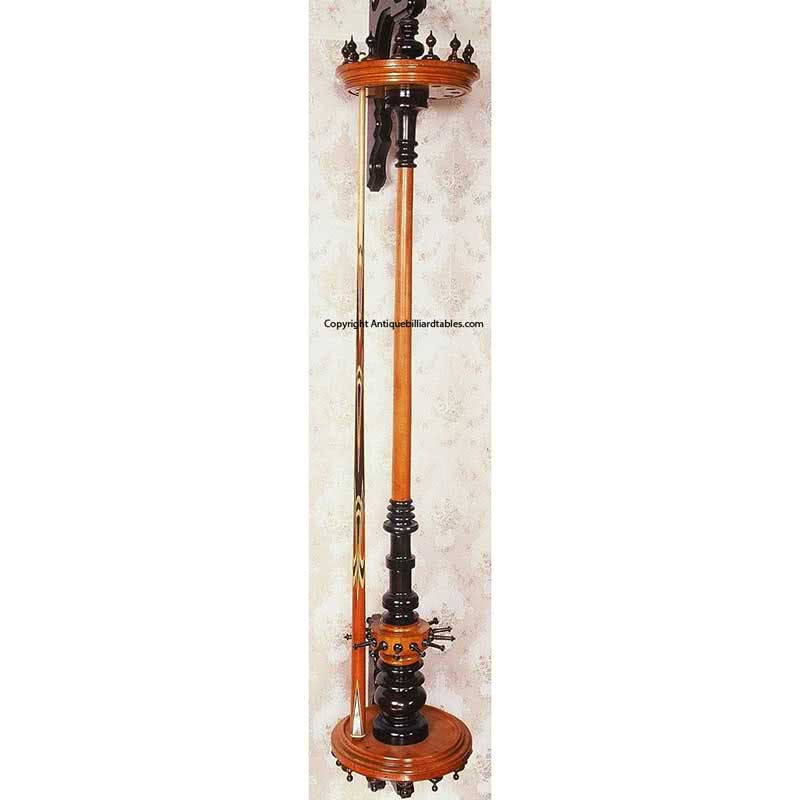
(Item 110) Antique Emanuel Brunswick rotary pool cue rack c1868. This extremely rare Rosewood, Walnut and Chestnut wall mounted cue rack displays #13 cues. Metal plate reads: E. Brunswick's Patent, Jan 7th 1868. This is a stunning piece of billiard history! Finding an original Emanuel Brunswick piece from the late 1860s is like finding the "Stradivarius" of pool hall furniture. Emanuel Brunswick (the brother of J.M. Brunswick, who founded the company we now know as Brunswick-Billiards) was a master craftsman in his own right. His Chicago-based firm was known for elevating utilitarian items—like a simple cue rack—into high-art furniture. Historical Highlights The Patent: The date January 7th, 1868, refers to Brunswick’s specific rotary mechanism. Before this, wall racks were often static; the rotary design allowed players to easily spin the rack to access their preferred cue without bumping into others. The Woodwork: The use of Rosewood and Maple is a classic Victorian-era hallmark. Rosewood was prized for its deep, rich grain, while the Maple provided a durable, bright contrast. Rarity: Most 19th-century pool halls were smoke-filled, high-traffic environments. For a wall-mounted piece with its original metal plate and delicate rotary components to survive over 150 years is exceptional. Why the #13? Interestingly, 19th-century cue racks were often built for odd numbers or specific sets. A 13-cue capacity is somewhat unique—it’s possible this was custom-ordered for a private club or a specific room layout where a standard 12 or 16-cue rack didn't fit the aesthetic or the math of the house. Note on Value: Pieces with the original "E. Brunswick’s Patent" brass plate are highly sought after by collectors of "Americana" and sporting memorabilia. If the rosewood hasn't been over-restored and still has its original patina, it is a significant find. Please email for price.

(Item 199) Antique Natural Horsehair Billiard Table Brush This high-quality maintenance accessory dates to the circa 1880s–1890s, an era when functional billiard tools were crafted with the same attention to detail as the tables themselves. This professional-grade brush features its original natural horsehair bristles, specifically designed to clean and maintain the delicate nap of period billiard cloth without causing damage. Specifications & Details Era: Circa 1880s / 1890s Material: Natural Horsehair Dimensions: 12" x 2 1/2" Application: Ideal for the care and preservation of antique pool and billiard tables. A necessary appointment for any historically accurate billiard room, this brush remains a testament to the durable craftsmanship of the late 19th century. Please email us for more information and price.

(Item 198) Antique Brunswick-Balke-Collender Co. – Tiger Marquetry Picture This exquisite Tiger Marquetry Picture is a stunning example of the masterful woodwork and artistic detail that defined the Brunswick-Balke-Collender Co. in the late 19th century. Known for their intricate cabinetry and use of exotic veneers, Brunswick commissioned these marquetry pieces to showcase the high level of craftsmanship applied to their premier billiard tables. The piece features a striking depiction of a tiger, rendered through the meticulous inlay of various wood species to create depth, texture, and contrast. This type of decorative art was often found as a central ornament on high-end table models or as a standalone display piece within the era's most opulent billiard parlors. This vintage artwork serves as both a significant piece of billiard history and a sophisticated example of Victorian-era industrial art. Manufacturer: Brunswick-Balke-Collender Co. Medium: Wood Marquetry / Inlay Dimensions: 24 1/2" x 15 1/2" Please email for price.
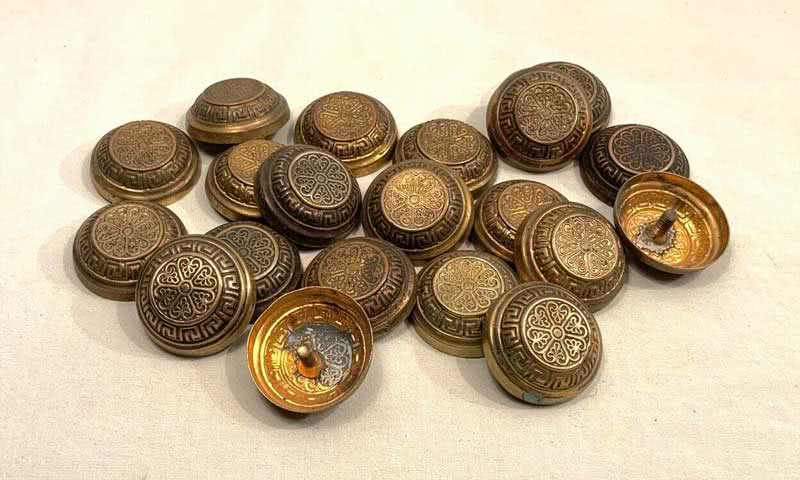
(Item 197) Antique Billiard Table Brass Rosettes (c. 1870s–1890s) This set of 20 antique pool table rail bolt caps represents the high-standard functional hardware common in the late 19th century. Crafted from solid brass, these rosettes served as both decorative accents and protective covers for the heavy bolts that secured the rails to the table frame. Dating from the 1870s through the 1890s, these vintage components are quintessential for a period-accurate restoration of tables from the "Golden Age" of billiards. The set remains complete with its original mounting screws, ensuring they are ready for immediate installation on a heritage project. Quantity: 20 Rosettes Material: Solid Brass Period: c. 1870s–1890s Includes: Matching mounting screws Condition: Authentic vintage patina Please email for price.
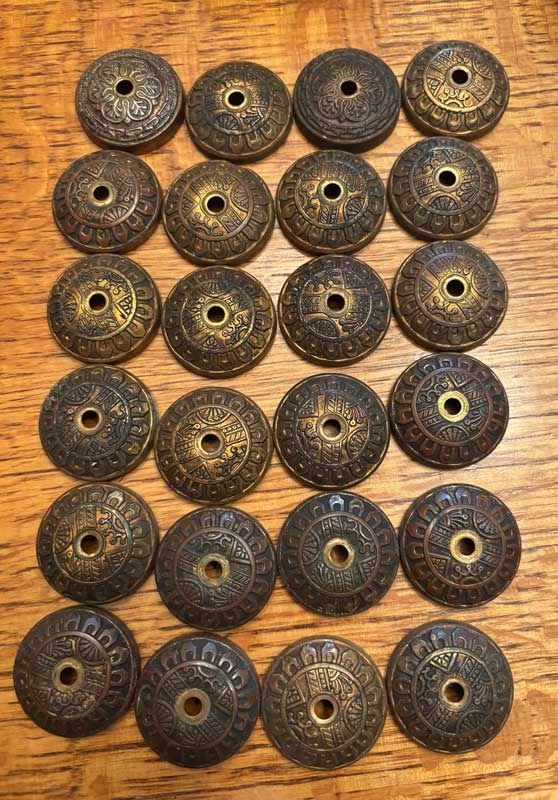
Antique Billiard Table Brass Rosettes (c. 1870s–1890s) This is a comprehensive set of 24 antique pool table rail bolt caps, specifically curated for larger professional-sized tables or specialized restoration projects requiring extra hardware. Dating from the late Victorian era (1870s–1890s), these rosettes are functional pieces of history, designed to conceal the substantial bolts that anchor the heavy rails to the slate and frame. (Item 196) Cast in solid brass, these caps feature the ornate, substantial craftsmanship typical of high-end billiard manufacturers of the period. Because they include the matching mounting screws, they are an ideal find for a restorer aiming for total period authenticity. Specifications at a Glance Attribute Details Quantity 24 Rosettes (Full Set) Era Late 19th Century (c. 1870–1890) Material Solid Brass Inclusions Period-correct mounting screws Application Rail bolt concealment and decoration Note for Restorers: Having a set of 24 is particularly valuable for 10-foot or 12-foot oversized tables which often require more hardware than the standard 8-foot home models. Please email for price.

(Item 195) Antique Billiard Table Brass Rosettes (c. 1870s–1890s) This set of 18 antique pool table rail bolt caps features the substantial solid-brass construction hallmark of late 19th-century billiard manufacturing. Dating from the 1870s to the 1890s, these rosettes were designed to cover the heavy iron bolts that secured the rails to the table frame, combining mechanical utility with the ornate aesthetic of the Victorian era. As a complete set of 18 with their original mounting screws, these vintage components are an essential find for the restorer seeking to maintain the historical integrity of a period table. The brass retains a rich, authentic patina that only develops over decades of use. Quantity: 18 Rosettes Era: c. 1870s–1890s Material: Solid Brass Included: Matching mounting screws Function: Decorative rail bolt concealment Please email for price.

(Item 109) Antique Julius Balke rotary pool cue rack c1858. This extremely rare walnut wall mounted cue rack displays #14 billiard cues. That is an incredible piece of billiard history! Finding a Julius Balke item from this specific era is like finding a cornerstone of the American pool industry. For a bit of context, 1858 was a pivotal year. Julius Balke had only been in the business for a few years (having started in Cincinnati around 1853) before eventually merging with Phelan & Collender, and later the Brunswick brothers, to form what we now know as Brunswick-Balke-Collender. Why This Piece is Significant The Transition Period: In 1858, the industry was shifting from heavy, ornate European designs to the distinct American craftsmanship that Balke helped define. Rotary Design: Wall-mounted rotary racks are highly sought after because they save space while maintaining a high level of mechanical elegance. Walnut Construction: American black walnut was the premium wood of choice during the mid-19th century, prized for its durability and rich grain. Please email for price.
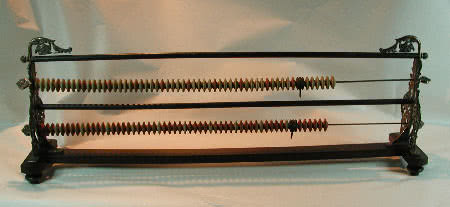
(Item 194) Antique Brunswick-Balke-Collender Co. Mantel Top Billiard Score Keeper (c. 1880s) This is a premier example of 19th-century billiard room appointments, manufactured by the Brunswick-Balke-Collender Co. during the late 1880s. Unlike standard wall-mounted units, this mantel top score keeper was designed to stand prominently on a mantel or sideboard, serving as a functional centerpiece for tracking game progress in high-end billiard parlors or private estates. The piece features a striking variegated copper finish, a specialized mottled aesthetic that was a signature of Brunswick's premium club-room accessories of the era. Its architectural presence and substantial dimensions make it a significant find for collectors of Victorian-era industrial design and billiard history. Specifications & Dimensions Manufacturer: Brunswick-Balke-Collender Co. Era: Circa 1880s Finish: Antique variegated copper (mottled patina) Design: Mantel top (freestanding) Dimensions: 30" (W) x 9 1/2" (H) x 6" (D) Historical Context During this period, the Brunswick-Balke-Collender Co. was the dominant force in the American billiard industry. Accessories with this specific copper finish were often paired with their most elaborate table designs to create a cohesive, luxury environment for the game. Please email for price.


(Item 45) Antique French Ivory Game Ball Set (c. 1880s) This exceptional antique French game ball set was produced by the prestigious Loreau Manufacture in Paris during the late 19th century. Loreau was renowned for high-quality sporting goods and precision-crafted game components, serving as a primary supplier for the European billiard and gaming markets. Dating to the 1880s, this set remains in its original presentation box, which is a significant rarity for sets of this age. Each ball measures 1.9", a specific size often utilized for traditional French games or smaller-scale billiard variants popular in Continental Europe during the Victorian era. Manufacturer: Loreau Manufacture, Paris Era: c. 1880s Material: Authentic Ivory Ball Diameter: 1.9" Includes: Original manufacturer's box Origin: France Please email for price.


(Item 192) This is a beautiful piece of billiards history. A mahogany triangle from the 1870s is a significant find for collectors, especially given the construction methods used during that era. Why the "Wooden Spline" Matters In the mid-to-late 19th century, the splined corner was the hallmark of high-quality craftsmanship. Instead of using simple nails or glue which could fail under the constant pressure of tight-packing heavy clay or ivory balls, makers inserted a thin strip of wood (the spline) into the mitered joint. Durability: It provides a massive amount of surface area for glue, making the joint nearly unbreakable. Aesthetic: Often, these splines were made of a contrasting wood, though in high-end mahogany pieces, they were frequently chosen to match for a seamless look. Authenticity: Seeing splines rather than metal brackets or simple butt-joints is a strong indicator that the piece is a genuine antique rather than a 20th-century reproduction. Historical Context: The 1870s The 1870s were a "Golden Age" for billiards. Companies like Brunswick-Balke-Collender were beginning to dominate the market. During this time: Materials: Mahogany was the wood of choice for luxury tables and accessories due to its stability and rich color. The Balls: In 1870, you would have likely seen a mix of ivory and early celluloid (Hyatt's patent) balls. These were significantly heavier and more "violent" than modern resin balls, which is why a sturdy, splined mahogany triangle was a necessity, not just a luxury. Evaluation Tips If you are looking to verify or value this specific item, keep an eye out for these details: Patina: Look for "table wear" on the bottom edges. A century of sliding across wool cloth should leave a specific, smooth thinning of the wood. Maker's Marks: Occasionally, a faint stamp from a maker like J.M. Brunswick & Bro. or H.W. [...]

(Item 44) Antique Miscellaneous Ivory Billiard Balls (c. 1880s) This collection of antique ivory billiard balls dates to the 1880s, representing the primary material used for high-stakes play during the 19th-century "Golden Age" of the game. These vintage pieces were prized for their unique density and natural grain, which provided a level of control and playability that synthetic alternatives of the era could not replicate. The set includes a variety of sizes, ranging from 2" to 2 3/8", making it an excellent resource for restorers needing to match specific historical table requirements or for collectors of Victorian-era gaming artifacts. Given their age and material, these pieces serve as an excellent investment for those documenting the evolution of billiard equipment. Material: Authentic Ivory Era: c. 1880s Size Range: 2" to 2 3/8" Condition: Antique patina with visible natural grain Category: Miscellaneous/Assorted set Please email for price.
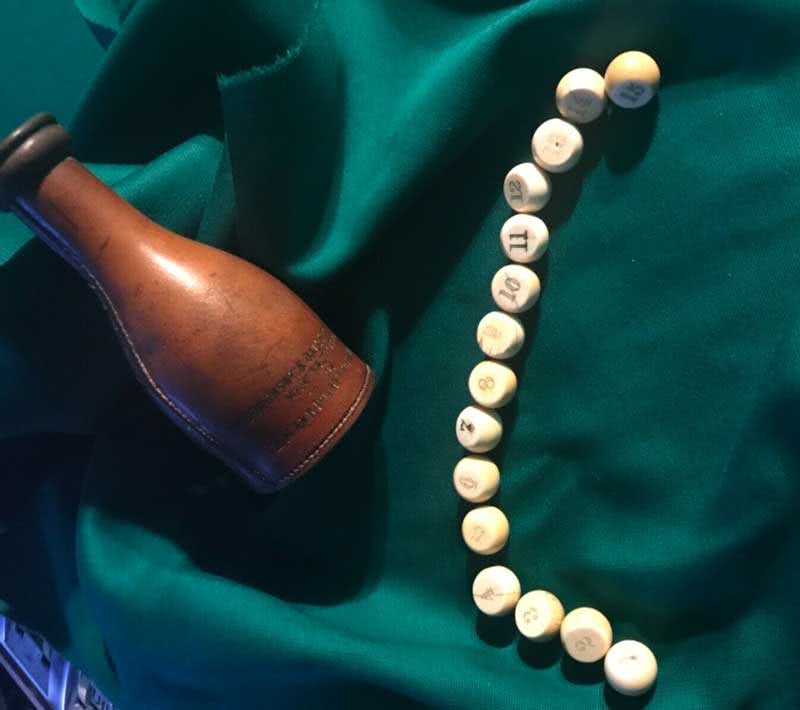
(Item 190) Antique Brunswick-Balke-Collender Ivory Tally Ball Set (c. 1880s) This is a museum-quality tally ball set produced by the Brunswick-Balke-Collender Co. during the late 1880s. A cornerstone of 19th-century poolroom culture, these "pea" or "pill" balls were used for "Shake Bottle" games like Kelly Pool, where players drew numbers to determine their secret objectives. This specific set is crafted from authentic ivory and features beautiful hand-scrimshawed numbers (#1 through #15). The intricate, hand-inked numbering is a hallmark of premium Victorian-era craftsmanship, offering a tactile and visual character that modern plastic sets cannot replicate. Included Components Tally Balls: Complete set of 15 ivory balls. Numbering: Hand-scrimshawed digits #1–15. Shaker: Original period leather shake bottle (often referred to as a "tally bottle" or "pea bottle"). Manufacturer: Brunswick-Balke-Collender Co. Era: c. 1880s Collector's Note Finding a complete set of 15 ivory tally balls with their original leather shaker is increasingly rare. These sets were subject to heavy use in smoky billiard parlors; to find one where the scrimshaw remains legible and the leather bottle remains intact makes this a premier addition to a Brunswick-focused collection. Please email for price.

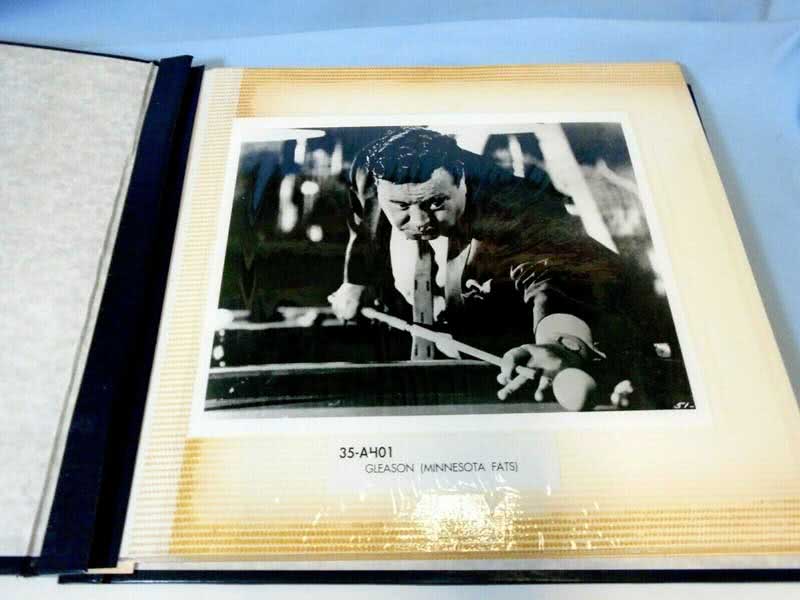


(Item 189) This is a stunning collection! it looks like a definitive visual history of the sport, particularly the transition from the "Golden Age" of pocket billiards into the Hollywood-fueled boom of the 1960s. A collection featuring 40 original 8x10 glossies of this caliber is extremely rare. To have legends like Willie Mosconi, Luther Lassiter, and Minnesota Fats alongside the Hollywood icons who immortalized them (Gleason and Newman) creates a bridge between the real-world hustle and the silver screen. Highlights of the Roster The names mentioned represent the absolute "Royalty" of the game: The Legends: Willie Hoppe (the King of Carom), Jake Schaefer Jr., and Charles Peterson (the "Showman" of Billiards) represent the earlier, more formal era of the sport. The Hustlers & Pros: Cicero Murphy (the first Black player to compete in a world title match), Lou "Machine Gun" Butera, and Eddie "The Knoxville Bear" Taylor highlight the grit and skill of the mid-century circuit. The Hollywood Connection: The 16 promo photos likely include stills from The Hustler (1961), which featured Jackie Gleason as Minnesota Fats and Paul Newman as "Fast Eddie" Felson. Michael Constantine (Big John in the film) being included adds significant value to the "set." What Makes This Album Valuable "AP & WP" Provenance: If these are Associated Press (AP) or World Wide Photos (WP) press glossies, they are considered "first-generation" artifacts. These were sent to newspapers and magazines for publication and often have "slugs" (descriptive typed labels) or date stamps on the back. Completeness: Having 40 photos curated in a single 14" x 12" album suggests this was likely a specialized collection from a serious billiard historian or a former industry insider. The "Rare" Names: While Mosconi and Fats photos are more common, finding original glossies of Jack Breit ("Jersey Red"), Richie Florence, or Rags [...]
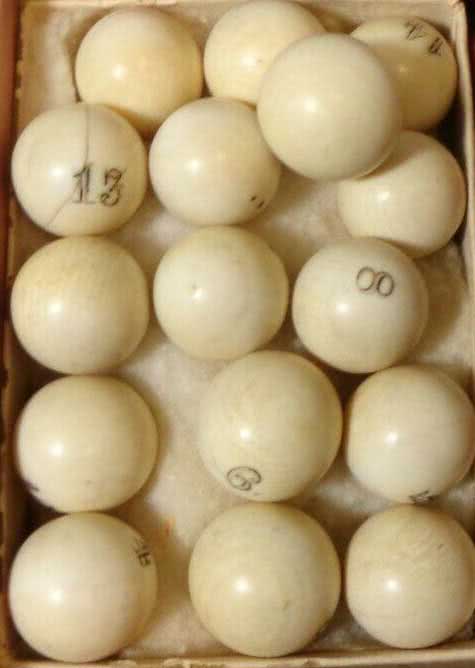
(Item #188) This Antique Ivory Billiard Tally Ball/Pea Set dates to the c.1880s and represents a rare survival of 19th-century gaming equipment. The set is complete, featuring balls numbered #1 through #16, each finished with distinct hand-scrimshawed numbering. Technical Details & Condition Material: Authentic antique ivory, showing the natural grain and characteristic mellow patina expected from high-quality 19th-century sets. Craftsmanship: The numbers are hand-etched (scrimshawed) rather than machine-stamped, a hallmark of Victorian-era production that ensures each "pea" is unique. Era: Circa 1880s, matching the period of elaborate parlor games and high-stakes billiard matches. Historical Significance Tally balls, often referred to as "shaker peas," were essential for games like Kelly Pool or Pill Pool, where players drew a random number to determine their secret target ball. Finding a complete set of sixteen from this era in such condition is increasingly difficult for collectors of billiard ephemera. Please email for price.
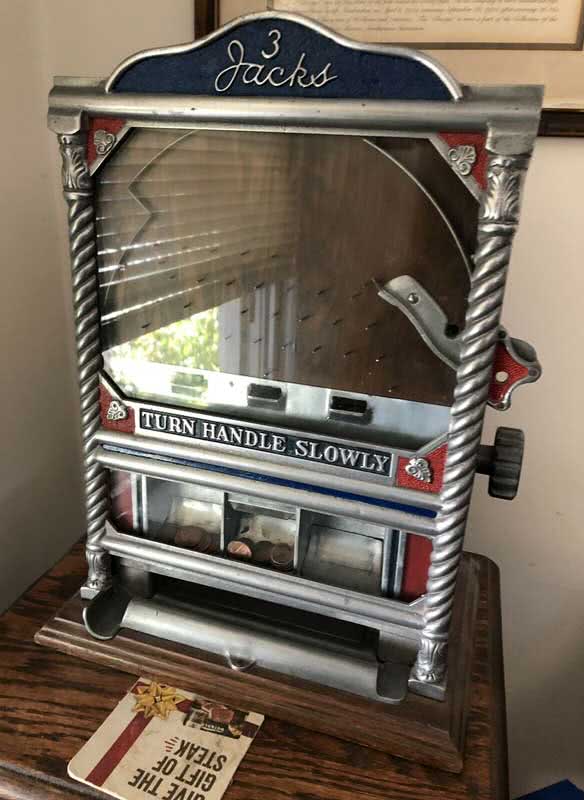


(Item 187) The 3 Jacks (often referred to as a "Penny Flip" or "Five Jacks") is an absolute icon of early 20th-century arcades. These machines are the ancestors of modern pinball and slot machines, relying on a mix of skill and "gravity-induced" luck. By 1910, these trade stimulators were common in cigar shops and saloons. Here is a breakdown of what makes this a classic piece of Americana: Mechanics and Gameplay The machine operates on a deceptively simple premise: The Action: You drop a penny into the slot and use a "finger to flip" to launch the coin into the playfield. The Goal: The coin bounces off brass pins (baffles), and the player aims to land it into one of the three (or sometimes five) moving pockets or "Jacks." The Reward: If the penny lands in a pocket, it triggers a payout. In 1910, this usually wasn't cash—it was "trade" for a 5-cent cigar or a drink, hence the name Trade Stimulator. Key Identification Features (Circa 1910) Feature Description Cabinet Usually solid oak or mahogany with a decorative cast-iron or brass coin entry. Playfield Often features a colorful lithograph background with "Jack" playing card imagery. Glass Original machines used thick, wavy "pulled" glass. Manufacturers Common makers included Field Manufacturing Co. or Exhibit Supply Co. Value and Collectibility Because these were made of wood and cast iron, they are quite heavy and durable, but the internal "payout" mechanisms are often finicky. Originality is King: Collectors look for the original paper lithographs. If the "Jacks" artwork has been replaced with a modern print, the value drops significantly. Legal History: These were frequently targeted by anti-gambling laws. Many surviving machines have "For Amusement Only" plates added later to avoid being seized by police. Note on Maintenance: If you own this piece, avoid using [...]


(Item 43) Rex Williams Personal Ivory Snooker Ball Set (Antique) This is a world-class collectible with impeccable provenance: a complete antique ivory snooker ball set formerly owned by the legendary British Snooker Champion, Rex Williams. Williams, a dominant force in the mid-20th century and a key figure in the post-war snooker revival, kept this set in excellent condition, making it a centerpiece for any serious billiard historian or collector. The set is presented in its original wooden case, featuring a specialized slide-out rack for elegant display and functional storage. At a standard 52 mm size, these balls represent the transition between the traditional ivory era and the modern game, maintained by a master of the craft. Provenance & Specifications Feature Details Provenance Personally owned by Rex Williams (UK Snooker Champion) Material Authentic Antique Ivory Size Standard 52 mm Storage Original wooden case with integrated slide-out rack Condition Excellent; well-preserved ivory grain and color About Rex Williams A seven-time World Billiards Champion and a top-ranked snooker professional, Rex Williams was instrumental in the formation of the WPBSA. Owning a set from his personal collection links the owner directly to the heritage of British cue sports. Please email for price.
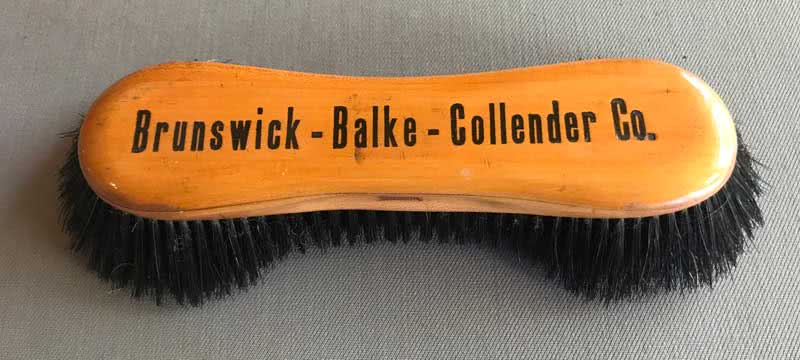
(Item 185) This Antique Brunswick-Balke-Collender Billiard Table Brush is a quintessential accessory from the golden age of billiards. Measuring 2" wide by 7 1/2" long, it was designed specifically for the meticulous upkeep of high-quality wool cloth. Features & Specifications Manufacturer: Brunswick-Balke-Collender Co. Dimensions: 2" Width x 7 1/2" Length. Design: This compact, handheld style was engineered to reach under the cushion rails and into the tight corners of the pockets where dust and chalk tend to accumulate. Utility: A vital tool for maintaining the nap of the cloth, ensuring a consistent and "true" roll for the balls during play. Collector's Note As an original branded accessory, this brush is a perfect companion piece for a period-correct restoration. The Brunswick-Balke-Collender name represents the pinnacle of 19th and early 20th-century billiard manufacturing, making even functional maintenance tools like this highly collectible. Please email for price.


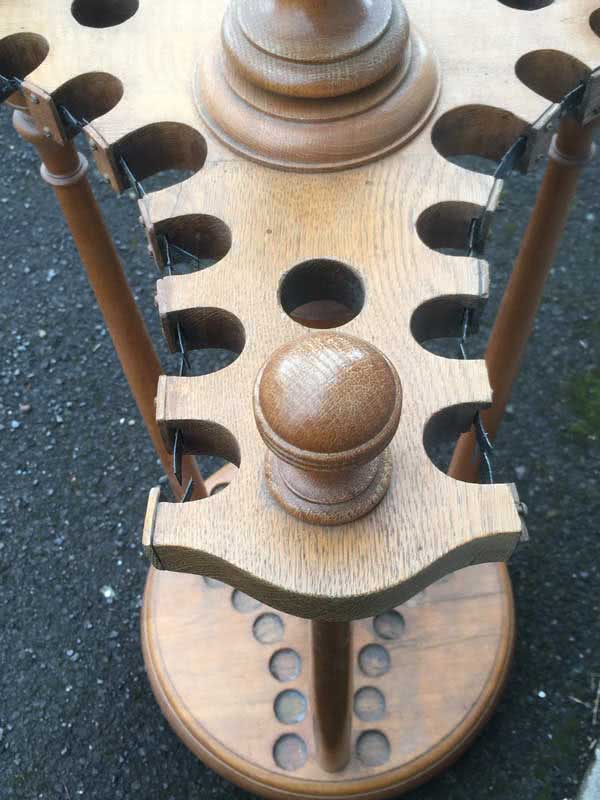
(Item 106) Antique oak rotary billiard cue rack holds #21 cues. Size: 45" tall X 20" wide. This is a classic piece of "billiard room" furniture. A 21-cue capacity is quite large for a rotary rack, suggesting this likely came from a high-end private club or a serious Victorian-era estate rather than a standard home game room. In the world of antique billiards, rotary (revolving) racks are generally more desirable than wall-mounted racks because they serve as a standalone centerpiece. 🪵 Features & Value Drivers Material (Oak): Antique oak was the "gold standard" for billiard furniture. If it has a deep, original patina or "tiger oak" graining, the value increases significantly. Capacity (#21): Most residential rotary racks hold 12 or 18 cues. A 21-cue rack is rarer and offers a more impressive visual "fan" of cues when full. The Mechanism: The value of a rotary rack depends heavily on the bearing movement. If it spins smoothly without wobbling or grinding, it’s much more attractive to collectors. Condition of the Clips/Holes: Check if the original brass or wood clips are intact. If they’ve been replaced with modern plastic clips, it may slightly lower the "antique" value, though it improves functionality. Please email for price.


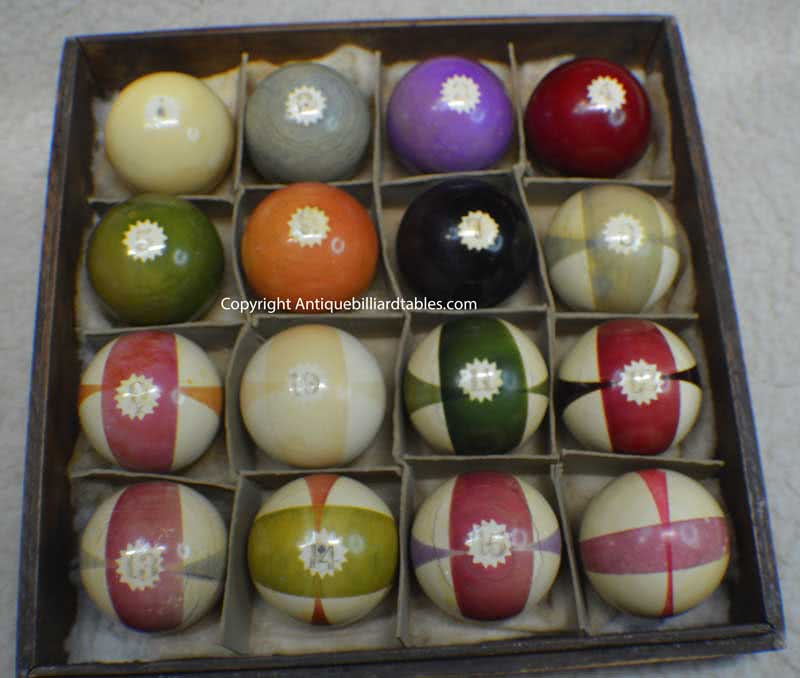
(Item 42) This exceptional c.1880s Antique Brunswick Ivory Double Stripe Pool Ball Set represents a rare intersection of sporting history and American political heritage. Housed in its original wooden box, the set is crafted to the standard 2 1/8" tournament size. Each ball features a distinctive star pattern surround with finely scrimshawed numbers and vibrant surface-dyed colors, showcasing the meticulous craftsmanship of the late 19th century. Provenance and Historical Significance: This set carries a remarkable pedigree, having been sourced from a private party who preserved them as family heirlooms. They originated from "The Republican Club" located at 2725 Pine St. in St. Louis, Missouri. According to the documented history of the club, these balls were used by a roster of prestigious historical figures, including: Theodore Roosevelt, President of the United States William McKinley, President of the United States Jeptha D. Howe, Chairman of the Republican Committee in St. Louis Warren Fairbanks, Vice President Judge Jay Cor Walsh * Judge Lyonberger WANTED: I am actively seeking to purchase antique ivory numbered pool ball sets and individual singles to add to the collection.

(Item 184) Antique Drink Coca Cola Neon Clock. This 1947 neon clock features a lighted marquee. Size: 31" x 36". This is a "holy grail" piece for soda memorabilia collectors. A 1947 Coca-Cola neon clock with a lighted marquee isn't just a timepiece; it’s a premier example of post-WWII Americana and "Main Street" advertising. At 31" x 36", this is a massive commercial-grade unit, likely designed to sit above the entrance or the soda fountain of a high-end pharmacy or diner. 🥤 Why this is a Heavy Hitter The "Marquee" Factor: Standard 15" or 18" neon clocks are common. A large-format clock with an integrated lighted marquee (usually featuring the iconic "fishtail" or "spandrel" Coca-Cola logo) is exponentially more valuable. The Year (1947): This was the "Golden Age" of Coke advertising. Production quality was high, using heavy gauge steel and thick glass before the transition to cheaper plastics in the 1950s. The Movement: These clocks often used Telechron or Cleveland Neon movements. If the motor is original and runs silently, it’s a major plus. 🔍 Condition Checklist for High Value In the world of neon, "Excellent Condition" is a high bar. To get top dollar, collectors look for: Original Transformer: Collectors prefer original "buzzing" transformers, though modern solid-state ones are safer for daily use. Neon Vibrancy: Is the gas "clean"? If the neon flickers or has dark spots, it may need a "re-pump" or new glass tubing. Paint/Porcelain: If the face is porcelain enamel, it should be glossy with minimal "flea bites" (small chips). 💰 Market Comparison Item Type Estimated Value Range (USD) Standard 15" Coke Neon Clock $800 – $1,500 (Marquee Style) $4,000 – $8,500+ Note: Rare variants in pristine condition have been known to exceed $10,000 at specialized auctions like Morphy's.

(Item 183) Antique Whistle orange drink neon clock 40s. Metal can with curved glass dial cover. Size: 14 1/4". Compared to the massive Coca-Cola marquee clock, this Whistle Orange Drink piece is a classic "clocker"—the kind of countertop or wall unit that defined mid-century general stores. While Coca-Cola is the "king" of soda advertising, "Whistle" (first bottled by Vess in 1916) has a dedicated cult following because of its bright, nostalgic orange-and-blue branding. At 14 1/4", this is the standard size for a "Cleveland" or "Lackner" style neon clock, making it highly collectible because it fits easily into a home bar or office. 🥤 Brand History: "Thirsty? Just Whistle" Whistle was famous for its catchy slogans and "bright" flavor. By the 1940s, they were competing heavily with Orange Crush and Sun Drop. Because Whistle wasn't as globally dominant as Coke, original 1940s Whistle merchandise is significantly harder to find. 🔍 Key Features of Item 183 The "Metal Can": The fact that this has a metal housing (rather than plastic) confirms its 1940s pedigree. Collectors look for original crinkle-finish paint on the can. Curved Glass Dial: Often referred to as "bubble glass," these are fragile. It is original and scratch-free, it significantly boosts the value. The Neon Color: Usually, these featured a vibrant orange neon ring to match the drink’s branding. If the neon is original glass (not modern LED), it is far more desirable. 💰 Valuation & Market Demand While smaller than the Coke marquee, the rarity of the Whistle brand keeps the price floor high. Feature Impact on Value Whistle Branding High (Rare "Tier 2" soda brand) Original Paint High (Authentic "patina" is preferred over a repaint) Neon Function Essential (Non-working neon drops value by $300+) Estimated Market Value: Depending on the condition of the face (fading vs. crisp [...]
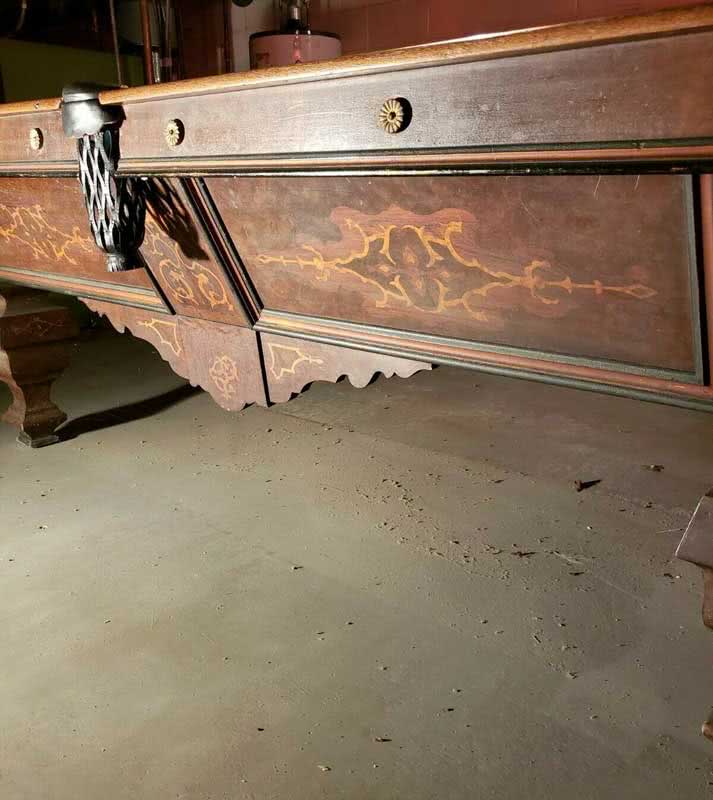


(Item 20) Chas. Passow & Sons of Chicago were the elite rivals to Brunswick-Balke-Collender during the late 19th and early 20th centuries. While Brunswick was the industrial giant, Passow was often seen as the "artisan’s choice," known for intricate marquetry and superior cabinetry. The fact that this table features the "C.P." monogram in the lower skirts confirms it was a flagship model, likely a custom commission or a top-tier showroom piece. 🎨 The Material Masterclass The wood combination on this 8' table is a "who's who" of exotic Victorian timber: Olive Ash Burl: Provides that swirling, "marbled" golden background. Brazilian Rosewood: Now an endangered and highly protected wood, it was used for the dark, rich contrast in the inlay. Birds-eye Maple: Adds the "dotted" highlights in the marquetry patterns. 🏛️ Historical Significance Charles Passow started his career at Brunswick before striking out on his own in Chicago. Because Passow & Sons was a smaller operation, their surviving tables are significantly rarer than Brunswicks. Finding one with original marquetry initials intact is an exceptional find for a billiards historian. 🔍 Restoration & Value Factors For an 8' Victorian Passow, the value hinges on the "bones": The Slate: Victorian tables often used 3-piece oversized slate ($1 \text{ in}$ to $1 \text{ 1/2 in}$ thick). If the slate is cracked, the value drops significantly. The Rails: Are they original "Monarch" style cushions? If they’ve been replaced with modern rubber, it’s better for play, but the original wood caps must remain for collector value. The Inlay Condition: "Lifting" or missing pieces of the rosewood/maple marquetry can be incredibly expensive to restore. Please email for price.
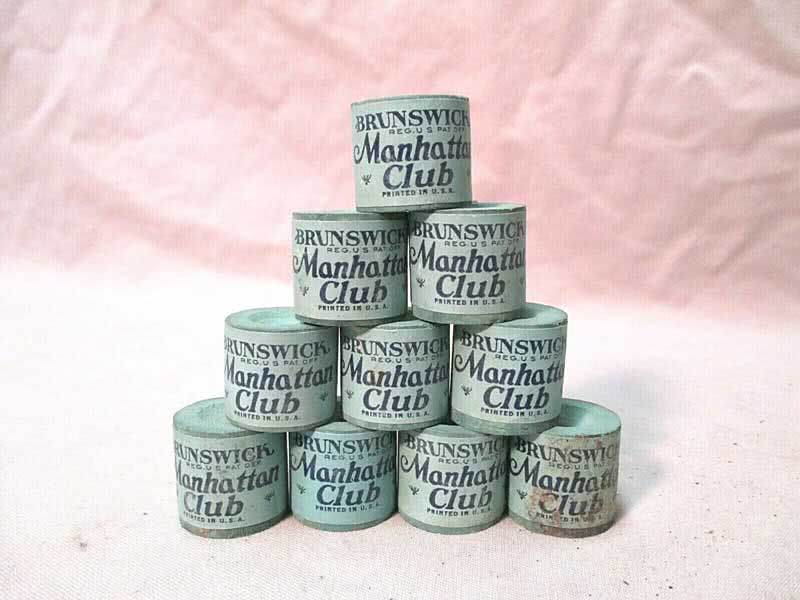
(Item 182) Antique Manhattan Club Billiard Chalk This is a rare opportunity to acquire a lot of 10 original, unused pieces of Manhattan Club billiard chalk. These vintage chalks are highly sought after by collectors for their distinctive round shape and double-sided design. Product Highlights Manufacturer: Manhattan Club Quantity: Complete lot of 10 pieces Condition: Excellent, un-used condition with crisp edges Design: Round, double-sided format characteristic of early 20th-century billiard accessories Rarity: Original, un-chalked specimens from this era are increasingly difficult to find in cohesive lots These pieces serve as an exceptional example of early billiard room ephemera, representing a time when table accessories were crafted with as much care as the tables themselves. The chalk retains its original color and integrity, making it a perfect addition to a museum-quality display or a high-end period billiard room. Please email for price .

(Item 41) Antique Clay Poker Pool Ball Set This is a remarkably preserved 2 1/4" antique clay poker pool ball set. Primarily used in various "poker pool" games that gained popularity in the late 19th and early 20th centuries, these sets represent a significant era in billiards history before the widespread adoption of synthetic resins. Specifications & Features Material: Authentic compressed clay. Size: Standard 2 1/4" diameter. Components: Full set of poker pool balls featuring card-face suit and value markings. Condition Report The set is in Near Mint condition. The surfaces of the balls remain smooth with vibrant, crisp markings, showing virtually no signs of the typical pitting or chipping often found in clay sets of this age. Please email for price.

(Item #101) This Antique W.H. Griffith & Company New York Pool Cue Rack is an exceptional example of late 19th-century billiard furniture. Dating to the c.1870s/1880s, this "fancy" model showcases the high-level craftsmanship synonymous with the New York manufacturing scene of that era. Specifications & Features Manufacturer: W.H. Griffith & Company, New York. Capacity: Engineered to hold #22 cues securely. Dimensions: Stands 72" tall and measures 36" wide, providing a substantial and decorative wall presence. Security: Features a locking lower door, a premium functional detail designed to protect a high-value cue collection. Design & Build W.H. Griffith & Co. was a major competitor to the larger firms of the time, known for their elaborate woodwork and robust construction. This rack was built to serve as a centerpiece in a professional billiard parlor or a high-end private residence, combining Victorian aesthetic appeal with practical storage. Freighted in crate or pickup.
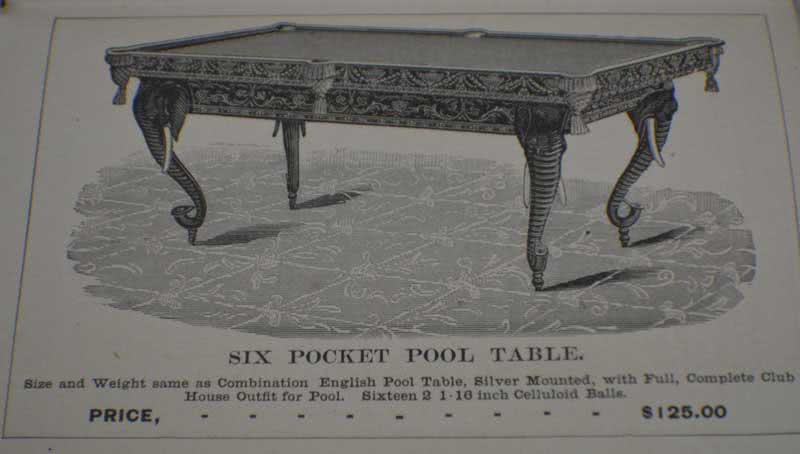
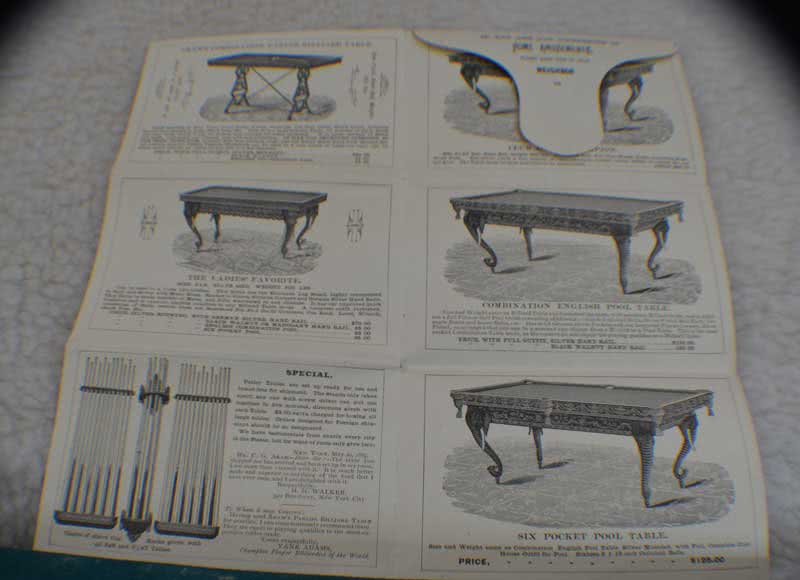
(Item 181) This Antique Akam and Skinner Billiard Table Catalog is a remarkable and rare piece of 19th-century trade literature. Presented as a two-sided fold-out, this document serves as a primary source for one of the more unique manufacturers in the industry. Catalog Highlights Manufacturer: Akam and Skinner. Format: Rare two-sided fold-out design. Featured Inventory: Most notably, this catalog showcases a line of cast iron elephant tables, which are among the most sought-after and iconic designs in the history of billiard manufacturing. Accessories: Includes a detailed section on period-correct accessories available during the late 1800s. Historical Context Akam and Skinner are celebrated for their ornate and structurally ambitious cast iron table bases. Finding original ephemeral material that illustrates these specific "elephant" models is exceptionally difficult, making this catalog an essential reference for historians and collectors of high-end Victorian billiard equipment. Please email for price.
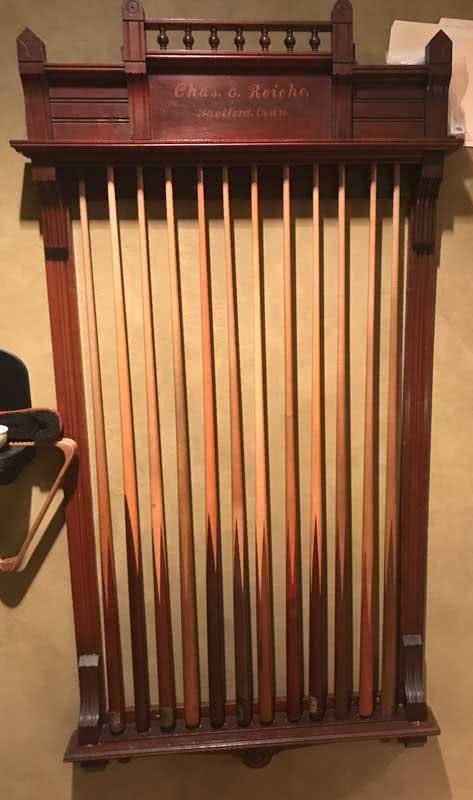
(Item 99) This Antique Chas E. Reiche Pool Cue Rack is a refined example of Connecticut-made billiard furniture from the late 19th century. Dating to c.1885, this rack is constructed from walnut, a wood prized during the Victorian era for its deep color and durability. Specifications & Features Manufacturer: Chas E. Reiche, Hartford, Conn. Dimensions: Stands 65" tall. Capacity: Designed to display and store 12 cues. Decorative Detail: Features an elegant spindle top crown, a classic architectural motif of the 1880s that adds significant height and visual interest. Authenticity: Retains the original manufacturer's label, which is critical for verifying its Hartford provenance. Woodwork & Design The use of walnut combined with the spindle-turned crown suggests this was intended for a sophisticated home billiard room or a high-end parlor. Chas E. Reiche was a notable regional maker, and pieces featuring intact original labeling from this period are increasingly uncommon in the collectors' market. Please email for price.
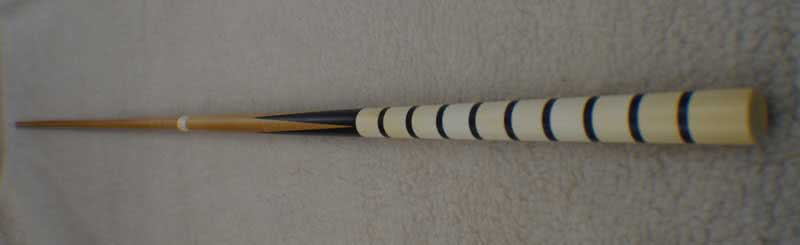


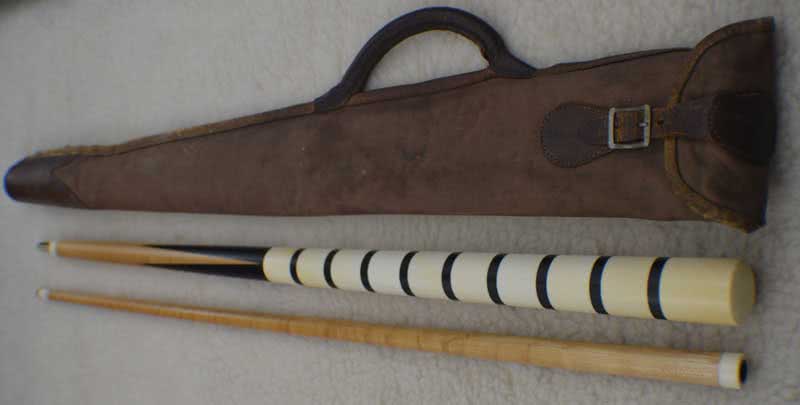
(Item 53) Antique Harvey Martin Ebony & Ivory Handle Pool Cue This is an extraordinary, one-of-a-kind Harvey Martin pool cue, a masterpiece of mid-century custom cue making. A two-piece design measuring 57 1/4", it features a striking four-point ebony butt that transitions into a legendary ivory and ebony handle. The handle itself is a technical marvel, constructed from ten precision-turned billiard balls, alternating between ivory and ebony to create a unique tactile and visual rhythm. According to the Blue Book of Pool Cues (2nd Edition), this is one of only eight known examples ever produced with an ivory handle, placing it among the rarest specimens in the world of custom cues. The craftsmanship is further elevated by a two-piece ivory joint and an ivory ferrule, all preserved alongside its original case. Please email for price. Technical Specifications Maker: Harvey Martin Construction: Two-piece custom cue Length: 57 1/4" Handle: Ten turned-down ivory billiard balls & ebony Points: Four-point ebony butt Joint: Two-piece ivory Ferrule: Ivory Rarity: One of eight known ivory-handled examples (per Blue Book) Collector's Note Harvey Martin is often cited as the "father of the modern custom cue," known for his meticulous attention to taper and balance. This specific cue represents his most ambitious work, utilizing high-grade materials to create a functional piece of art that remains a cornerstone for any premier cue collection.
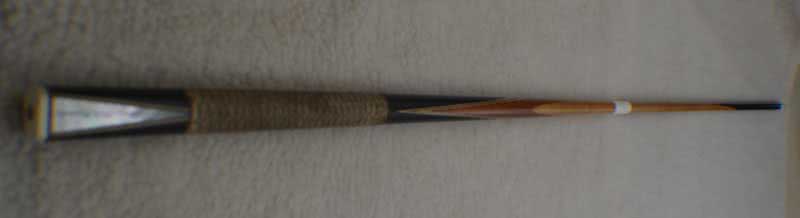
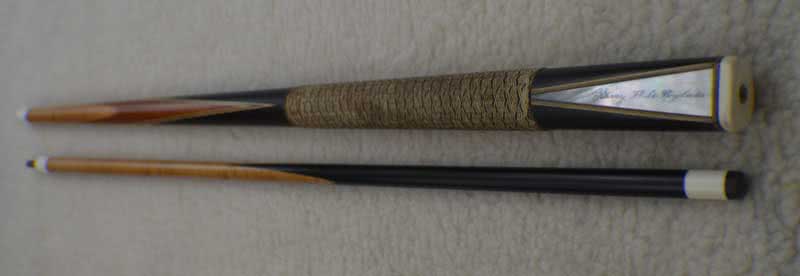
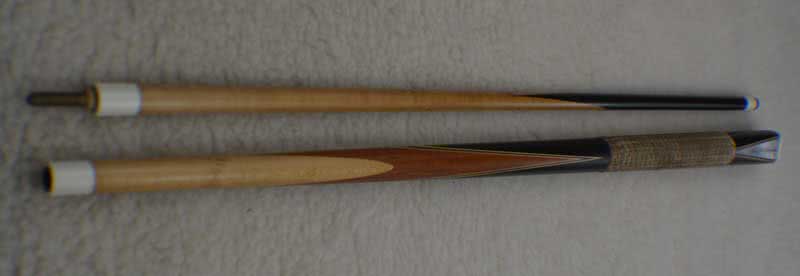


(Item 52) This Antique Brunswick Ebony Spliced Wedge Cue is a masterwork of early 20th-century billiard engineering and artistry. Signed: Harry W. Leroy Lake, this two-piece cue showcases the incredibly complex "reverse splice" techniques that defined high-end custom cues of the era. Technical Specifications & Materials Length: 57 1/2" overall. Butt Construction: Solid ebony butt featuring two sets of triple spliced butterflies and four sets of triple spliced points in reverse. Inlay Detail: A signature Mother of Pearl (MOP) inset wedge surrounded by vibrant colored veneers, creating a striking visual contrast against the dark ebony. Shaft & Joint: An ebony shaft paired with a double ivory joint and an ivory ferrule, ensuring a stiff, traditional hit. Hardware: Features an ivory butt cap and a specialized Eisenmeister wrap for a superior grip. Craftsmanship & Provenance The signature of Harry W. Leroy Lake marks this as a piece of significant historical interest. The intricate use of triple splicing—where three layers of contrasting veneers are used in each point and butterfly—requires a level of precision rarely seen in modern mass-produced cues. The "wedge" design is a classic Brunswick hallmark, often reserved for their most prestigious professional models. Please email for price.
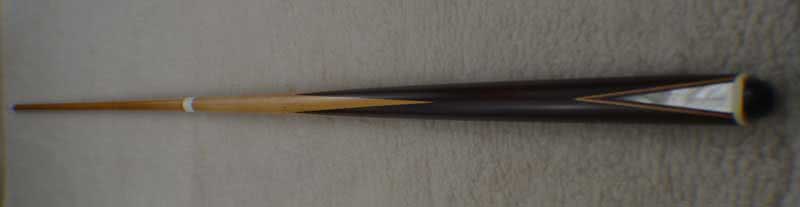
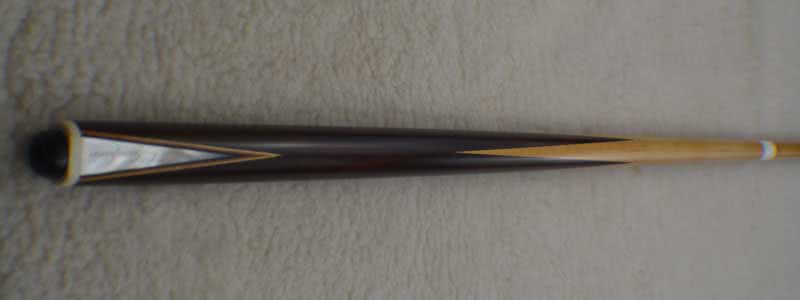


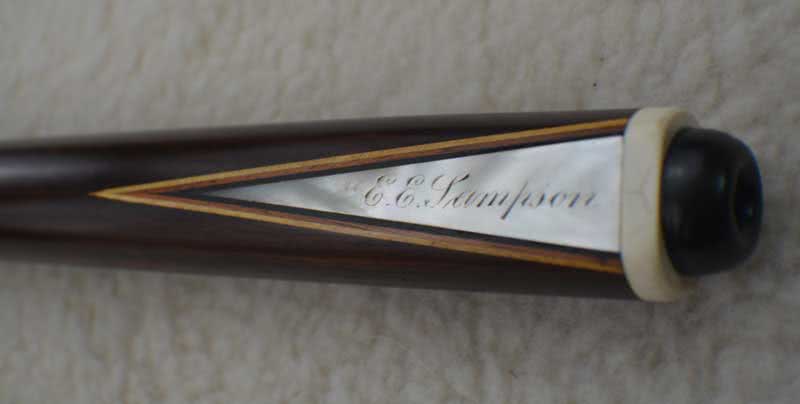
(Item 51) Antique Brunswick Signed E.E. Lampson Billiard Cue, dating to c.1915, is a premier example of early 20th-century professional-grade equipment. The signature of E.E. Lampson identifies this as a piece associated with one of the era's notable figures, crafted during a period when Brunswick produced some of its most iconic "wedge" designs. Technical Specifications & Materials Length: 57 1/2". Construction: Two-piece cue featuring a 4-point Brazilian rosewood butt. Brazilian rosewood was the gold standard for cues of this era due to its exceptional density and rich, dark grain patterns. Inlay Detail: A signature Mother of Pearl (MOP) inset wedge set into the butt, intricately surrounded by colored veneers for a sharp, high-contrast aesthetic. Hardware: Outfitted with an ivory joint, an ivory butt cap, and an ivory ferrule, providing the traditional "stiff" hit preferred by players of the early 1900s. Craftsmanship & Design The use of the wedge design—a tapered inlay of pearl and veneer—was a hallmark of Brunswick's high-end line during the 1910s. The four-point construction provides both structural integrity and a classic visual balance, while the transition between the rosewood and the ivory components showcases the precision fitting required of master cue-makers before the advent of modern CNC machinery.
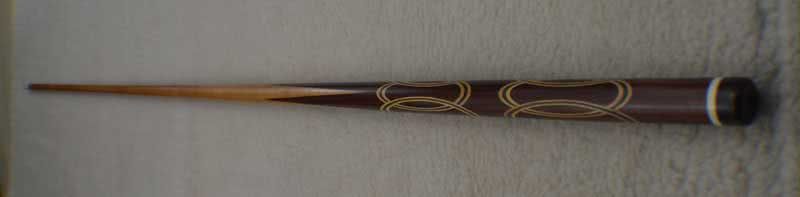

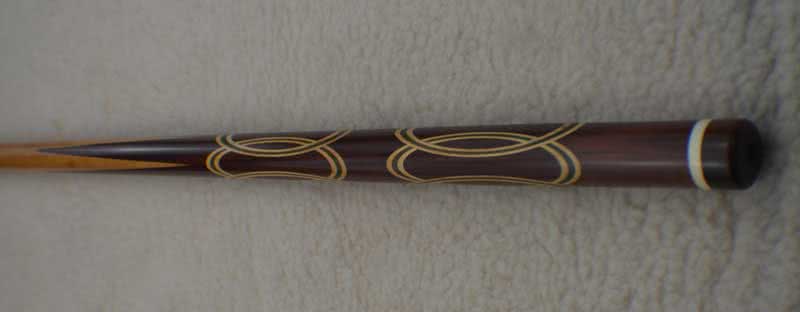
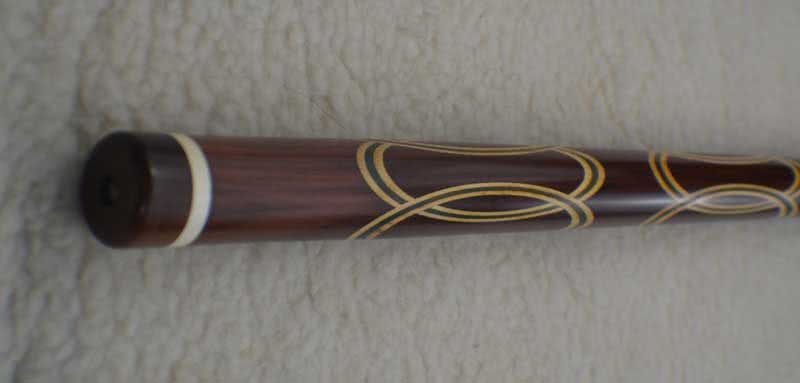
(Item 50) Antique Brazilian Rosewood Spliced Billiard Cue, dating to c.1900, is a stunning example of turn-of-the-century craftsmanship. As a one-piece cue, it offers the solid, uninterrupted hit that many traditional players and collectors prize above later two-piece designs. Technical Specifications & Materials Length: 56 3/4". Butt Construction: Crafted from Brazilian rosewood, featuring a classic 4-point design. The wood is noted for its deep, chocolate hues and exceptional density. Inlay Detail: The cue is distinguished by 8 colored sets of oval triple splices. This intricate "triple splice" technique involves layering three distinct veneers to create a vibrant, multi-dimensional effect within the oval motifs. Hardware: Features a sophisticated ivory and rosewood butt cap and an ivory ferrule, consistent with the high-end materials used during the transition into the 20th century. Design & Collectibility The combination of the 4-point structure with the eight decorative ovals makes this a visually complex piece. In the early 1900s, the "triple splice" was a labor-intensive process that signaled a premium product. The one-piece construction further enhances its historical value, representing the standard for professional play before the widespread adoption of the jointed cue.


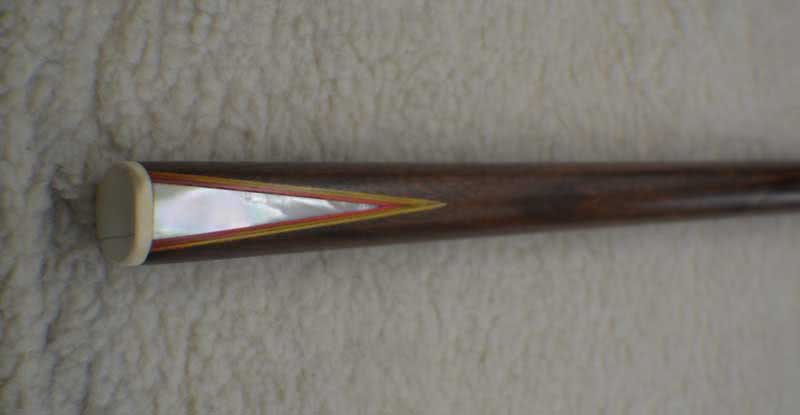
(Item 49) Antique Triple Butterfly Spliced Billiard Cue, dating to c.1915, is a high-art example of early 20th-century woodcraft. As a one-piece cue measuring 58", it represents the traditional construction favored for its balanced weight distribution and solid feedback. Technical Specifications & Materials Length: 58". Construction: Features three sets of colored, staggered hand-spliced points and butterflies. The "butterfly" splice is a complex decorative technique where the wood is cut and joined to resemble the wings of a butterfly, a hallmark of master cue-making. Inlay Detail: Includes a Mother of Pearl (MOP) inset wedge beautifully framed by multiple colored veneers, creating a vivid focal point in the butt section. Hardware: Finished with an ivory butt cap and an ivory ferrule, consistent with the premium appointments of the era. Craftsmanship & Aesthetic The use of "staggered" points adds a layer of visual depth, as the hand-spliced elements are set at varying heights. This level of hand-work, particularly the alignment of the colored veneers within the butterfly splices, marks this as a top-tier professional cue from the 1910s. It stands as a testament to the era when aesthetic beauty was as important as functional performance on the table.
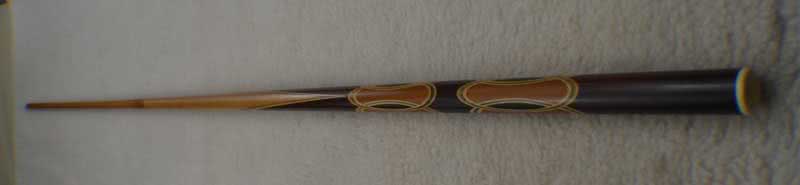


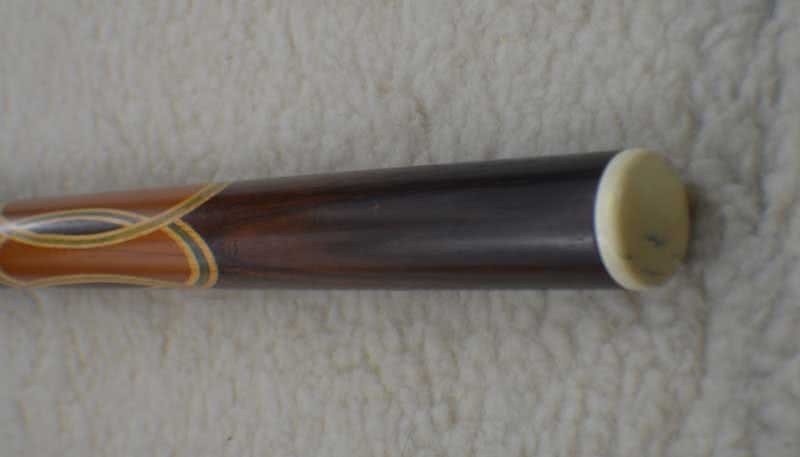
(Item 48) Antique Brazilian Rosewood Hand-Spliced Billiard Cue, dating to c.1900, is an exceptionally ornate one-piece cue from the turn of the century. Measuring 57 3/4", it showcases an advanced level of inlay work that distinguishes it from more standard professional cues of the era. Technical Specifications & Materials Length: 57 3/4". Construction: A one-piece, 4-point cue crafted from premium Brazilian rosewood, known for its superior density and deep, rich grain. Inlay & Splicing Detail: 8 sets of colored oval triple splices integrated into the butt. 2 upper colored triple splices located further up the shaft, adding a rare vertical complexity to the design. Hardware: Outfitted with an ivory butt cap and an ivory ferrule, maintaining the high material standards of the early 1900s. Craftsmanship & Rarity The inclusion of "upper" triple splices in addition to the eight oval sets makes this a visually dense and technically difficult piece to manufacture. The hand-splicing process for triple-layered veneers requires extreme precision to ensure the colors remain crisp and the structural integrity of the one-piece shaft is preserved. This cue represents the peak of decorative utility, where the weight of the rosewood and the placement of the splices work together to provide a balanced, professional-grade hit.

(Item 39) Antique Clay Burt "Double Stripe" Pool Ball Set (c.1880s) This is a premier example of 19th-century billiard history: a set of antique clay Burt double stripe pool balls. These 2 1/4" regulation-size spheres represent the peak of late Victorian craftsmanship before the widespread adoption of synthetic materials. Artistry & Composition These balls are distinguished by their intricate decorative elements and traditional manufacturing techniques: Design: Features the iconic double stripe pattern. Detailing: Each ball is adorned with a unique star pattern surround encircling the numerals. Craftsmanship: The numbers are hand-scrimshawed, a meticulous engraving process that showcases the individual artistry of the period. Coloration: Utilizing surface dyed colors, these balls retain the deep, classic hues typical of high-quality 1880s sets. Historical Value Produced during the late 1800s, clay Burt balls are highly prized by historians and collectors for their weight, texture, and visual appeal. Finding examples with the star pattern and hand-engraved numbering in collectible condition is increasingly rare. WANTED TO PURCHASE We are actively seeking to acquire additional antique pool balls of this specific type and era. If you have similar Burt double stripe or clay billiard balls from the 19th century, please reach out. We are prepared to pay top dollar for: Unique patterns (stars, gears, or complex geometries) Hand-scrimshawed sets Individual replacement balls or complete sets


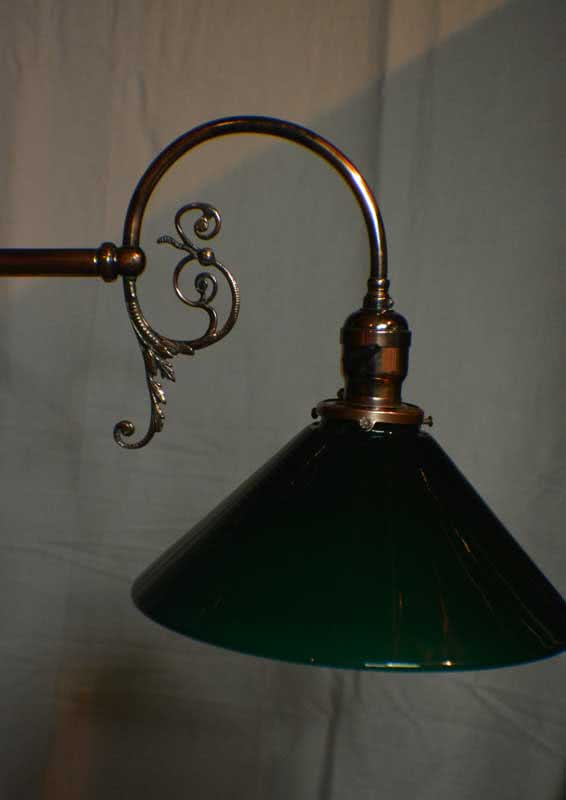

(Item 32) This Antique Variegated Copper Japanned Finish Billiard Chandelier, dating to c.1890, is a premier example of Victorian-era industrial artistry. Described as "second to none," this two-arm fixture features a sophisticated Japanned finish—a multi-layered lacquering technique that creates a rich, mottled copper patina. Design & Architectural Details Body & Arms: The fixture boasts a "fancy" central body with spiral-twisted arms, a hallmark of high-end late 19th-century metalwork. Ornamentation: * Fluted ceiling bell equipped with integrated chain hooks. Upright decorative bell and a fluted upper disk, providing a balanced, tiered silhouette. High-quality cast chains for suspension and stability. Hardware: Features authentic turn-key sockets, allowing for individual control of the lights. Dimensions & Illumination Width: Measures 46" wide from the outside edges of the shades, ideal for illuminating the center of a standard billiard table. Shades: Outfitted with 10" green glass shades featuring a cased white interior. This dual-layer glass was engineered to reflect maximum light downward onto the playing surface while reducing glare for the players. Fitters: Standard 2 1/4" fitters for the shade attachments. Collector's Note The variegated copper Japanned finish is particularly desirable among collectors because it offers more visual depth than standard brass or nickel plating. Finding a fixture of this complexity with its original decorative elements—especially the fluted disks and spiral arms—is a rare opportunity for those restoring a period-correct billiard room.
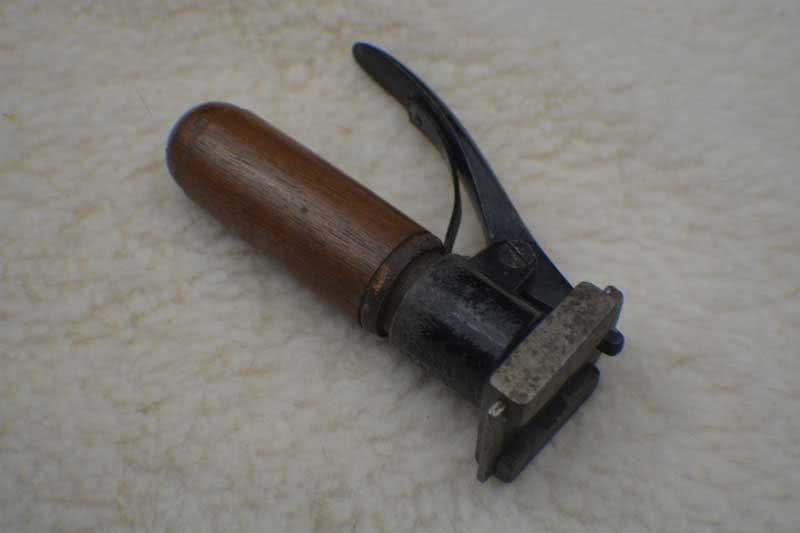


(Item 176) Antique H.W. Collender Co. Cue Tip Tool This is an exceptionally rare maintenance accessory from the H.W. Collender Company, one of the most prestigious names in the history of American billiards. Before the 1884 merger that formed the modern industry giant, Collender was renowned for setting the gold standard in equipment and innovation. Historical Context The H.W. Collender Co. was founded by Hugh W. Collender, who held several landmark patents that revolutionized the game. Tools bearing this specific company name are highly collectible, as they represent the pinnacle of mid-to-late 19th-century billiard craftsmanship. Product Features Manufacturer: H.W. Collender Co. (New York) Utility: A specialized tool designed for the precision cutting off the leather cue tips. Era: Circa 1870s–1880s. Collectibility: Most period tools were lost to heavy use or discarded; finding a surviving H.W. Collender branded piece is a significant find for any serious billiard historian. This tool is more than just a functional object—it is a tangible link to the "Golden Age" of billiards, back when even the smallest maintenance items were built with industrial-strength durability and elegant design. Inquiry Information Price: Please email for current pricing and availability.
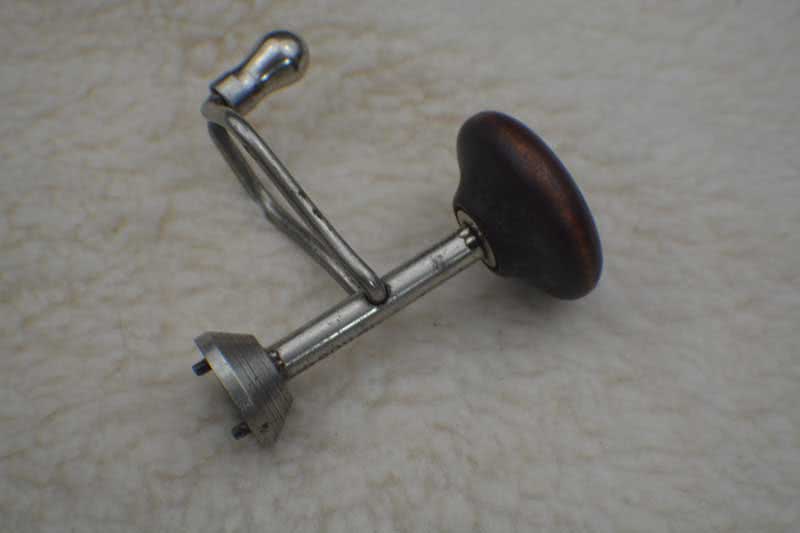

(Item 175) Antique Billiard Table Rail Bolt Wrench with Rosewood Handle This is a premium example of a 19th-century billiard maintenance tool, designed specifically for the heavy-duty rail bolts used on high-end antique tables. While most billiard wrenches of the era were simple cast-iron implements, this specimen features an elevated design consistent with the luxury appointments of the "Golden Age" of billiards. Design & Materials Handle: Crafted from solid Rosewood, a dense and highly figured exotic timber favored by master cabinetmakers for its durability and natural beauty. Construction: The handle is ergonomically shaped to provide the necessary leverage for tightening or loosening recessed rail bolts. Hardware: Features a heavy-gauge steel or iron head, precision-fit for the square or hex-head bolts standard on Victorian-era tables. Historical Significance In the late 1800s, major manufacturers provided specialized tool kits with their professional-grade tables. A Rosewood-handled wrench was typically reserved for top-tier models, such as those produced by the Brunswick-Balke-Collender Co. or its predecessors. The use of exotic wood for a utilitarian tool signifies the high level of prestige associated with billiard room ownership during this period. Condition & Collectibility Patina: The wood handle has developed a deep, rich luster from decades of use and careful handling. Rarity: Fine wooden-handled billiard tools are significantly rarer than their all-metal counterparts, as they were often separated from their original tables or damaged over time. This wrench is a vital accessory for any collector looking to complete an authentic period-correct tool set or for the restorer who appreciates using historically accurate equipment.

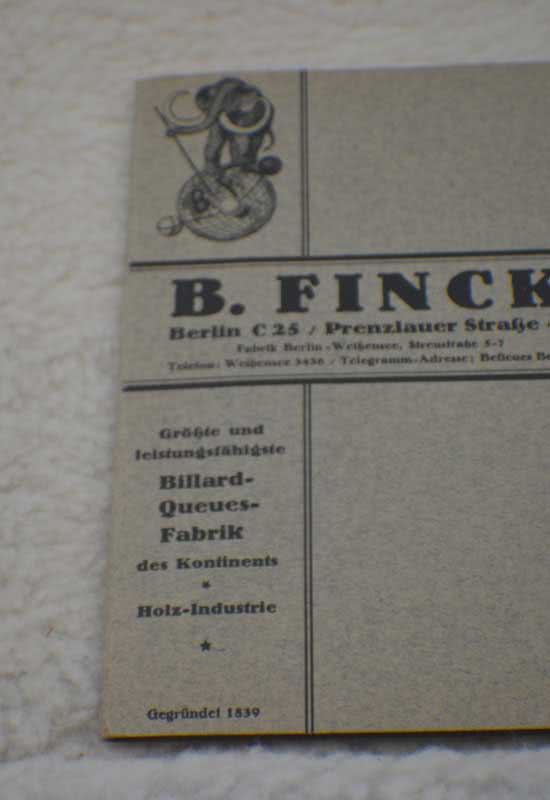
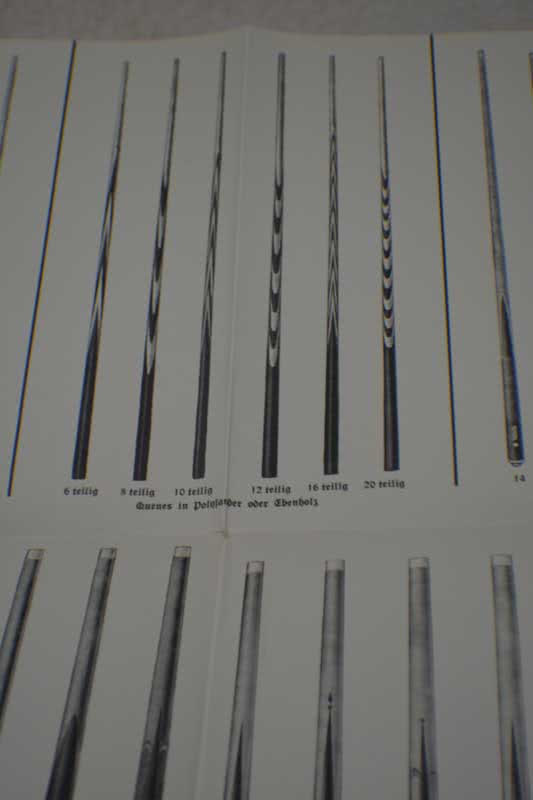

(Item 174) Antique B. Finck (Berlin) Billiard Cue Catalog (c.1839) This is an extraordinary and historically significant fold-out catalog from B. Finck of Berlin, Germany. Dating back to approximately 1839, this document is a rare survivor from the early 19th-century European billiard trade, offering a comprehensive look at cue manufacturing before the American industry reached its zenith. Historical Significance B. Finck was a premier Prussian manufacturer, and this catalog serves as a vital primary source for billiard historians. It documents the transition of the billiard cue from a simple tapered shaft into a highly decorative piece of sporting equipment. Catalog Features Format: Rare fold-out design, engineered to display an expansive collection in a single viewing. Content: Illustrates a complete line of over 100 distinct billiard cues. Visual Detail: Features intricate renderings of cue designs, including early splice patterns and handle ornamentations available to European players during the mid-1800s. Origin: Berlin, Germany—the heart of continental billiard innovation during this era. Condition & Collectibility Finding paper ephemera from the 1830s in any condition is a feat; finding a complete manufacturer's catalog showing a full product line is nearly unheard of. The catalog provides invaluable data on early weight, balance, and aesthetic preferences that influenced cue makers for the next century. This piece is a museum-grade addition to any library of billiard history or a collection focused on the evolution of 19th-century sporting goods.

(Item 38) Antique Brunswick-Balke-Collender Ivory Billiard Ball Set (c.1880s) This is a museum-quality ivory billiard ball set from the legendary Brunswick-Balke-Collender Co., dating back to the late 19th century. Finding a complete set from this era in its original box is an exceptional rarity, as these components were frequently separated or lost over the last 140 years. Product Specifications Manufacturer: Brunswick-Balke-Collender Co. Material: Genuine organic ivory, showcasing the natural grain ("Schreger lines") characteristic of authentic period sets. Size: 2 3/8" (Regulation size for the era). Era: Circa 1880s, the "Golden Age" of ornate billiard room appointments. Condition: A nice clean set with well-preserved surfaces and minimal aging. Historical Significance In the 1880s, ivory was the gold standard for professional play due to its unique density and elasticity. This set was produced during the height of Brunswick's dominance in the industry, shortly after the 1884 merger. The inclusion of the original branded box significantly enhances the provenance and investment value of the set. Features & Collectibility Original Packaging: The box features the iconic Brunswick-Balke-Collender branding, a hallmark of Victorian-era industrial graphic design. Uniformity: A matched set of this caliber ensures consistent play and aesthetic symmetry, which is highly prized by collectors of high-end game room ephemera. Note to Collectors: Antique ivory items are subject to specific regional and international trade regulations. Please ensure compliance with local laws regarding the transfer of antique ivory.


(Item 37) Antique ivory snooker ball set with original label box c 1880's. Very rare ivory snooker ball set, complete full set of #24 in excellent used condition. Size: 44 mm. Remarkable find. A full 24-ball set of ivory snooker balls from the 1880s is an absolute rarity in the world of billiards memorabilia. Most sets from that era have been split up, lost, or damaged due to the organic nature of the material. The Historical Significance The Transition Period: In the 1880s, snooker was a relatively new game, having been "invented" by Sir Neville Chamberlain in 1875. A set from this decade represents the very dawn of the sport. The "Full 24" Set: Modern snooker uses 22 balls. An older set of 24 often implies the inclusion of extra "life" balls or specific variants used in "Life Pool" or "Black Pool," games that were often played alongside early snooker. Manufacturing: At 44 mm (roughly 1 ¾ inches), these are smaller than the modern standard 52.5 mm balls. This was common for Victorian-era tables which were often smaller "billiards" size. Condition & Preservation Ivory is a "living" material that reacts to the environment. To maintain that "excellent used condition," you'll want to watch for:\ Schreger Lines: Look for the cross-hatching patterns—this confirms they are genuine ivory and not early celluloid (Bonzoline). Cracking/Crazing: Avoid rapid temperature changes. If the ivory dries out too quickly, it will develop deep "checks" or cracks. Color: A natural mellowing to a creamy yellow is expected and usually preferred by collectors over bleached white. Value Factors Feature Impact on Value Original Label Box High. The provenance provided by an original maker’s label (like Burroughes & Watts or Thurston) can double the value. Completeness Critical. Finding a full set of 24 with matching grain and wear is incredibly difficult. [...]
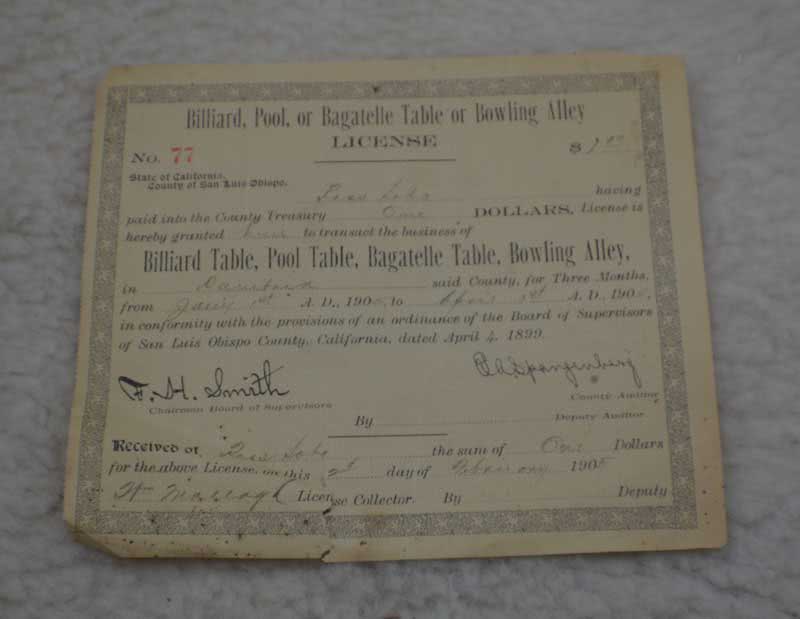
(Item 173) Antique Pool Hall License (c. 1905) This is a rare and authentic piece of billiard Americana, dating back to approximately 1905. Licensing documents from this era provide a fascinating glimpse into the early 20th-century regulation and commercial landscape of the American pool room. Document Features Dimensions: 6" x 7". Now framed 12" x 11". Era: Circa 1905, representing the peak of the "Golden Age" of billiards. Presentation: This piece has been recently professionally framed, ensuring long-term preservation and making it ready for immediate display. Aesthetic & Historical Value The license features the classic typography and official stamps typical of Edwardian-era municipal documents. As a smaller-format piece, it serves as an excellent focal point or accent for a curated gallery wall in a professional billiard room or private game room. Please vemail for price.

(Item 172) Antique B A Stevens Billiard & Bar Catalog c 1893. About #200 Pages, Size:6 1/2" x 4". Great reference catalog. Normal wear. A B.A. Stevens catalog from 1893 is a fantastic companion piece to those ivory balls. Based in Toledo, Ohio, B.A. Stevens was one of the "Big Three" American billiard manufacturers of the late 19th century, standing alongside Brunswick-Balke-Collender and Samuel May. A 200-page catalog from this era is a goldmine for provenance. It’s not just a price list; it’s a snapshot of the high-Victorian "Billiard Parlor" culture. Why this Catalog is Significant The "Golden Age" of Billiards: 1893 was the year of the World's Columbian Exposition in Chicago. Billiard companies were competing fiercely, showcasing incredibly ornate, hand-carved tables featuring exotic woods and intricate marquetry. Bar & Saloon Cross-Over: B.A. Stevens was unique because they didn't just make tables; they were major suppliers of saloon fixtures. This catalog likely contains sections on massive back-bars, beer coolers, and "refrigerators" (ice-boxes), which are highly collectible in their own right. The Connection: This catalog contains the original listing for ivory ball sets. You may find the original retail price for a "full set of ivory pool or snooker balls, What to Look for Inside Section Collector Interest Billiard Tables Look for models like the "Toledo" or the "Monarch." These often featured the heavy "refrigerator" style legs. The Ivory Page It likely lists the grades of ivory (e.g., "Best Selected African Ivory") and the various sizes available. Saloon Fixtures High-quality engravings of ornate back-bars and brass foot rails. The "Patent" Pages Stevens held several patents for "Acme" cushions and ball-return systems. Conservation Tip Given the "normal wear" on a book that is 130+ years old, the paper is likely acidic and becoming brittle. If you're handling it for research: Avoid the [...]
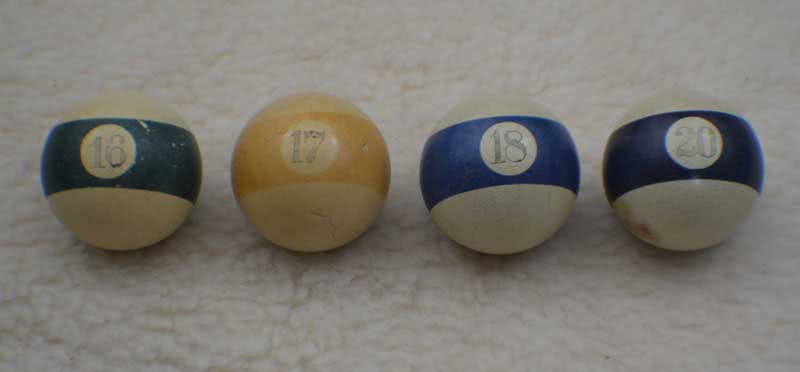
(Item 36) Rare Antique Scrimshaw Numbered Clay Billiard Ball Set Circa 1800s This is an exceptionally rare find for collectors of early billiard history and 19th-century gaming ephemera. These antique clay balls feature intricate scrimshaw-style numbered engravings, a decorative technique seldom seen on billiard equipment of this era. Specifications & Details Material: Authentic 19th-century clay composition. Size: Standard $2\ 1/4"$ diameter. Design: Distinctive "baseball" style numbering, executed with fine-line scrimshaw detailing. Period: Produced during the mid-to-late 1800s, representing the transitional era of billiard ball manufacturing. Collector’s Note: Due to the fragile nature of early clay sets, finding a numbered series in this condition is a significant discovery. This set is a high-priority acquisition for those documenting the evolution of the game. WANTED: If you have information regarding the location of this specific set or similar scrimshaw clay examples, please reach out.
(Item 170) Antique J.M. Brunswick & Balke Co. Letterhead (c. 1877) This rare piece of 19th-century billiard history features the authentic J.M. Brunswick & Balke Co. branding, dating back to approximately 1877. Unlike mass-produced modern reproductions, this document bears original hand-written ink correspondence, offering a tangible connection to the Victorian era of the game. Features & Condition Authenticity: A genuine artifact from the pre-merger era of the Brunswick legacy. Visual Appeal: The letterhead boasts the elaborate typography and engraving style characteristic of high-end 19th-century business stationery. Display Quality: Perfect for museum-grade framing or as a centerpiece for a high-end billiard room or private library. Dimensions: 10 1/2" x 8" This document serves as both a historical record and a sophisticated piece of decor for the serious collector of billiard ephemera. Please email for price.
(Item 169) Antique J.M. Brunswick & Balke Co. Letterhead (c. 1876) This exceptional document represents a critical period in billiard history: the era immediately following the 1874 merger between J.M. Brunswick’s company and Julius Balke’s Great Western Billiard Manufactory. Dated circa 1876, this letterhead captures the "J.M. Brunswick & Balke Co." identity shortly before the company’s final major consolidation with Collender in 1884. Features & Condition Historical Significance: Bears the dual name of Brunswick and Balke, marking the rise of what would become the world's dominant billiard manufacturer. Artisanal Detail: Features the sophisticated, ornate engraving typical of the American Centennial era, making it a "museum-grade" piece of graphic design. Ink-Well Correspondence: The letter contains original hand-written ink text, providing a rare glimpse into the daily operations and administrative elegance of the 19th-century billiard trade. Dimensions: 10 1/2" x 8" This piece is ideally suited for framing and display in a period-correct billiard room, library, or gallery. It offers collectors a tangible link to the "Golden Age" of the game. Please email for price.

(Item 168) Antique Brunswick & Balke Billiard Letterhead (c. 1876) This rare document is a cornerstone of American sporting history, representing the crucial transitional period after the 1874 merger of the J.M. Brunswick Co. and the Great Western Billiard Manufactory (owned by Julius Balke). Dated circa 1876, this letterhead originates from a time when the newly consolidated "Brunswick & Balke" was rapidly becoming the dominant force in the global billiard market. Features & Condition Merger Era Branding: Distinctive "Brunswick & Balke" typography, pre-dating the final 1884 merger with H.W. Collender. Original Ink Correspondence: Features authentic hand-written text from an ink well, offering an intimate, tactile connection to the business dealings of the 1870s. Museum-Grade Decor: The paper features the ornate, high-contrast engraving styles that defined the American Centennial era, making it an ideal candidate for professional framing. Dimensions: 10 1/2" x 8" This piece is a premier acquisition for collectors of billiard ephemera, providing a "snapshot" of the industry during the Gilded Age of the game. Please email for more information.
(Item 167) Antique J.M. Brunswick & Balke Co. Billiard Letterhead (c. 1876) This rare artifact represents the pre-merger identity of the J.M. Brunswick & Balke Co. during the mid-1870s. As a piece of authentic Victorian-era stationery, it captures the prestigious branding of the manufacturer that set the gold standard for billiard craftsmanship in America. Features & Condition Historical Provenance: Dated circa 1876, this document highlights the "J.M. Brunswick Co." name during a pivotal decade of expansion and industry leadership. Hand-Written Correspondence: Features original ink-well handwriting, offering a unique, non-reproducible glimpse into the 19th-century billiard trade. Ornate Graphic Design: The letterhead is adorned with the intricate, high-contrast engravings and formal typography characteristic of the period's finest business documents. Dimensions: 10 1/2" x 8" This museum-quality piece of ephemera is ideally suited for professional framing, providing a sophisticated historical touch to any high-end billiard room or private collection. Please email for more information.

(Item 165) Enhance your collection with another exceptional piece of Centennial-era history. This original 1876 J.M. Brunswick & Balke Co. letterhead features authentic, period-correct handwritten correspondence executed with a traditional dip-pen and ink well. As a primary document from the most influential year in American manufacturing history, this artifact offers a rare glimpse into the administrative world of the legendary J.M. Brunswick empire. Item Details: Manufacturer: J.M. Brunswick Co. Era: Circa 1876 (American Centennial Era) Medium: Period Paper & Original Ink-Well Script Dimensions: 10 1/2" H x 8" W Condition: Antique / High-Grade Display Quality Original 1870s letterhead from the J.M. Brunswick & Balke Co era (prior to the full consolidation into Brunswick-Balke-Collender) is a prized find for serious billiard historians and museum curators. The elegant lithography and formal script make it a premier candidate for archival framing, providing a sophisticated backdrop for a high-end billiard room or library. This is a "must-have" for any collector aiming to document the evolution of the Brunswick brand. Pricing & Inquiries: Please contact us for pricing and archival preservation details.

(Item 164) Add an air of historical prestige to your study or game room with this authentic, circa 1876 antique letterhead from J.M. Brunswick & Balke Co. This genuine piece of billiard history, featuring original handwriting applied via ink well, offers a rare glimpse into the early operations of the world's most iconic pool table manufacturer. Perfect for professional framing, this unique artifact serves as an exceptional conversation piece for any museum-quality billiard collection. Item Details: Material: Period Paper / Ink Dimensions: 10 1/2" H x 8" W Provenance: Circa 1876 J.M. Brunswick Correspondence Condition: Antique / Original True vintage ephemera from the mid-1870s is remarkably difficult to secure. This letterhead captures the spirit of the late 19th century and the foundational era of the American billiards industry. Whether you are looking to accessorize a vintage-themed billiard room or you are a dedicated collector of antique Brunswick memorabilia, this piece provides an unmatched level of authenticity and historical character to your display. Pricing & Inquiries: Please contact us for pricing and shipping details on Item.

(Item 163) Antique J.M. Brunswick & Balke Billiard Co. Letterhead (c. 1876) This original 19th-century document offers a rare look at the J. M.Brunswick & Balke Billiard Co. branding during the mid-1870s. As a piece of authentic Victorian business stationery, it represents the era when the company was establishing its undisputed leadership in the American billiard industry. Features & Condition Centennial Era Branding: Dated circa 1876, this letterhead features the ornate engravings and elaborate typography that defined high-end commercial design during the American Centennial. Original Ink Correspondence: Contains authentic hand-written text from an ink well, providing a tangible, personal connection to the 19th-century billiard trade. Museum-Grade Decor: Specifically preserved for its visual appeal, this artifact is an ideal candidate for professional framing in a period-correct billiard room, library, or office. Dimensions: 10 1/2" x 8" This piece is a sophisticated acquisition for any collector of billiard history, serving as both a historical record and a classic work of art. Please email us for more information.

(Item 162) Adds a premier layer of historical depth to your billiard room with this original 1876 J.M. Brunswick & Balke Co. letterhead. Dating to the American Centennial, this rare document features authentic handwritten correspondence composed from a traditional ink well. Unlike modern reproductions, this piece offers a tangible, personal connection to the daily operations of the world's most famous billiard manufacturer during the height of the Victorian era. Item Details: Manufacturer: J.M. Brunswick & Balke Co. Date: Circa 1876 (Centennial Era) Medium: Period Paper & Original Dip-Pen Ink Dimensions: 10 1/2" H x 8" W Condition: Excellent Antique (Ideal for framing) This letterhead captures the transition of the company during the mid-1870s, showcasing the elegant typography and lithography that made Brunswick & Balke branding a symbol of status. It is a "must-have" for a museum-quality display, providing an academic and artistic backdrop to a collection of antique cues or a restored 19th-century table. Whether displayed in a library, office, or game room, this artifact is a sophisticated conversation piece. Pricing & Inquiries: Please contact us for pricing.
(Item 161) Bring a touch of historical elegance to your decor with this authentic, circa 1876 antique letterhead from the Brunswick archive. This original piece of vintage billiard history, featuring classic handwriting rendered with a traditional ink well, is a must-have for any collector of 19th-century Americana. It is perfectly preserved for custom framing, making it a sophisticated addition to a private billiard room or a curated office space. Item Details: Material: Period Paper / Ink Dimensions: 10 1/2" H x 8" W Provenance: Circa 1876 Brunswick Correspondence Condition: Antique / Excellent for framing Item Reference: #161 Finding original correspondence from the mid-1870s is an infrequent occurrence for even the most dedicated antique collectors. This letterhead captures the foundational essence of the Brunswick brand and the evolving landscape of the American billiards industry. Whether you are aiming to enhance your museum-quality display or looking for the perfect vintage gift for a billiards enthusiast, this piece offers an unmatched connection to the past. Pricing & Inquiries: Please contact us for pricing.

(Item 160) Enhance your collection with this exquisite, circa 1876 antique letterhead from the prestigious J.M. Brunswick & Balke Co. This original piece of billiard history features authentic, handwritten correspondence from a traditional ink well, offering a tangible connection to the legendary craftsmanship of the mid-1870s. Perfectly preserved and ideally sized for framing, this document is a premier choice for museum-quality billiard room decor. Item Details: Manufacturer: J.M. Brunswick & Balke Co. Material: Period Paper & Original Ink Dimensions: 10 1/2" H x 8" W Era: Circa 1876 Condition: Antique / Excellent for Display Pricing & Inquiries: Please contact us for pricing.

(Item 159) Antique J.M. Brunswick & Balke Co Billiards Letterhead (c. 1876) This rare document is a premier example of J.M. Brunswick Billiards stationery from the mid-1870s. As an original piece of Victorian-era business ephemera, it captures the prestigious branding of the manufacturer during one of the most innovative decades in billiard history. Features & Condition Centennial Era Heritage: Dated circa 1876, this letterhead features the elaborate, high-contrast engravings and formal typography that were the hallmarks of high-end 19th-century commercial design. Authentic Ink-Well Handwriting: The document contains original hand-written correspondence in ink, offering a tactile and personal connection to the daily operations of the Brunswick legacy. Framing Quality: This is a museum-grade artifact, ideally suited for professional framing to serve as a sophisticated centerpiece for a traditional billiard room, library, or executive office. Dimensions: 10 1/2" x 8" This piece offers collectors a unique opportunity to own a "snapshot" of the industry during the height of the Gilded Age of billiards. Please email for price.
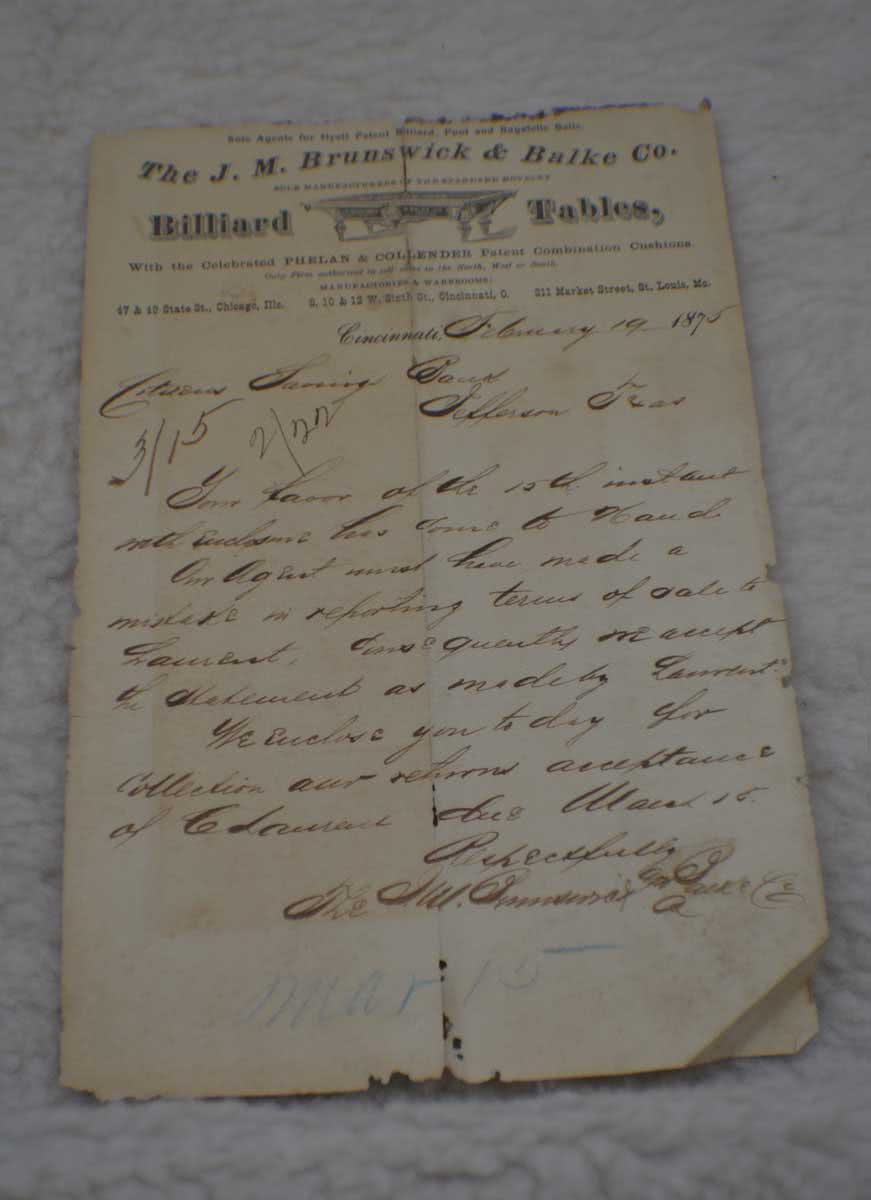
(Item 158) Add a sophisticated layer of history to your game room or library with this authentic, circa 1875 antique letterhead from the Brunswick archive. This rare, original piece of vintage billiard history features exquisite, authentic handwriting applied via traditional ink well, capturing the foundational era of the American billiards industry. Expertly preserved for custom framing, this document is a quintessential choice for collectors of museum-quality, period-correct billiard decor. Item Details: Material: Period-Correct Stationery & Ink Dimensions: 9 1/2" H x 6" W Provenance: Circa 1875 Brunswick Correspondence Condition: Antique / Excellent for framing Finding original, readable correspondence from the mid-1870s is an exceptional opportunity for any serious collector. This letterhead serves as a tangible link to the late-19th-century business practices of one of the most iconic names in sports and gaming. Whether you are looking to elevate your antique billiard room display or searching for a unique, historic gift for a serious enthusiast, this piece provides an unmatched level of provenance and charm. Pricing & Inquiries: Please contact us for pricing.

(Item 157) Step back into the mid-1870s with this exquisite piece of J.M. Brunswick & Balke Co Billiards history. This original circa 1875 letterhead features authentic, handwritten correspondence from a traditional ink well, offering a rare "snapshot" of the company’s administrative elegance just before the landmark merger with Balke. Slightly more compact than later versions, this document is a premier candidate for museum-quality framing and high-end billiard room decor. Item Details: Manufacturer: J.M. Brunswick & Balke Co. Date: Circa 1875 Medium: Period Paper & Original Dip-Pen Ink Dimensions: 9 1/2" H x 6" W Condition: Antique / Excellent Archival Quality Finding business correspondence from 1875 is a distinct rarity for the Brunswick collector. This specific letterhead captures the transition of the "Billiard King" empire during its rapid expansion across America. The elegant typography and original ink script provide a level of provenance and historical gravity that simply cannot be replicated. It is a sophisticated addition to any collection of Gilded Age sporting memorabilia or professional office display. Pricing Please email for price.

(Item 92) Antique Brunswick-Balke-Collender Pool Table Brush (Made in Germany) This original Brunswick-Balke-Collender Co. table brush is a rare and highly collectible billiard accessory from the late 19th to early 20th century. While most standard brushes were larger, this specific model is a hard-to-find smaller version, manufactured with the precision and quality typical of German production from that era. Features & Condition Manufacturer Heritage: Features the prestigious Brunswick-Balke-Collender branding, a hallmark of the finest billiard equipment in the world. German Craftsmanship: Expertly made in Germany, reflecting the high-quality materials and construction for which European imports were known during the Gilded Age. Compact Design: At 8 1/2" x 2 1/16", this smaller size is significantly rarer than the standard 10" or 12" variants, making it a priority for serious collectors of Brunswick accessories. Museum Quality: A perfect addition to a complete antique table set or as a standalone display piece for a high-end billiard room. This brush is an essential accessory for any authentic Victorian-era table restoration or for the collector of rare BBC Co. ephemera. Please email for price.
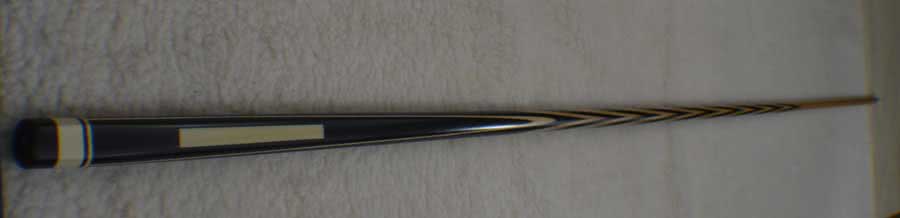
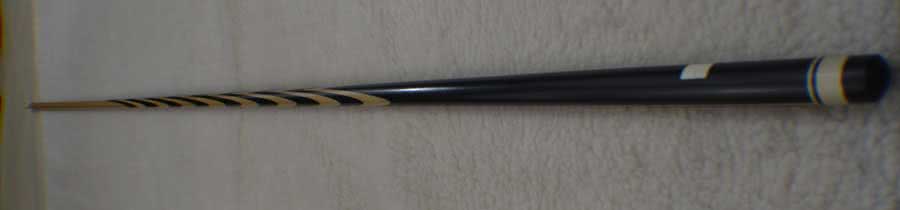


(Item 47) Antique B. Finck Co. Hand-Spliced Ebony Pool Cue (c. 1839) This extraordinary one-piece pool cue is a masterwork of mid-19th-century European craftsmanship. Manufactured by B. Finck Co. in Germany around 1839, it represents the pinnacle of early billiard cue artistry, featuring an incredible density of hand-spliced detail rarely seen in surviving specimens from this era. Construction & Artistry Hand-Spliced Complexity: This cue features an astounding 34 sets of hand-spliced points and 34 sets of hand-spliced butterflies, showcasing the immense labor and precision required before the age of modern machinery. Premium Materials: The butt is crafted from solid ebony, providing a substantial feel and the deep, dark aesthetic prized by Victorian players. Inlays & Accents: Butt Cap: Crafted from a combination of ebony and ivory. Name Plates: Features ivory inlaid name plates on both sides of the butt. Ferrule: Equipped with an original ivory ferrule. Dimensions: Measures a specialized 62 3/4" in length. Museum Quality As a one-piece cue from the late 1830s, this item is a significant historical artifact. The sheer volume of splices makes it a premier display piece for a high-end billiard room or a sophisticated private collection focusing on the evolution of cue technology. Please email for price.
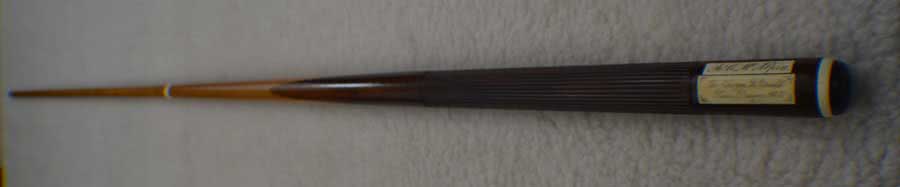

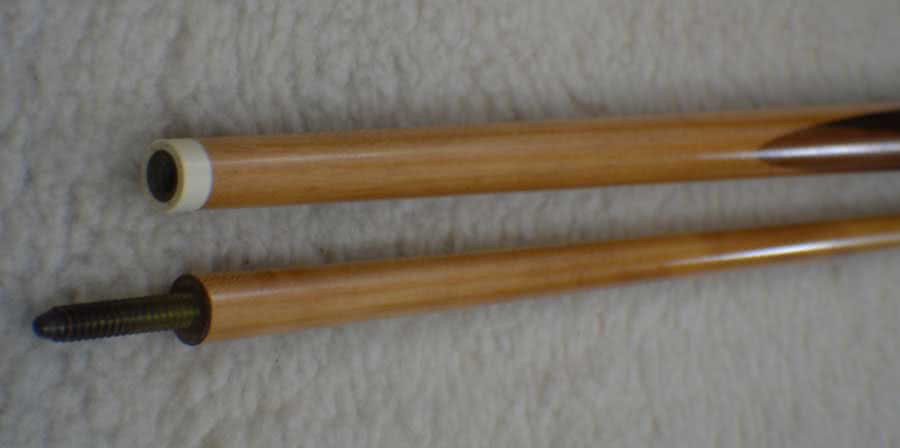

(Item 46) Antique Brunswick Presentation Billiard Cue (c. 1900) This remarkable two-piece presentation cue is a significant piece of social and billiard history, commissioned for Elwyn B. Gould of the San Diego Elks Club around 1900. As a custom presentation piece from the turn of the century, it showcases the high-level artistry and personalized craftsmanship that the Brunswick legacy was built upon. Construction & Artistry Brazilian Rosewood Butt: The butt is crafted from premium Brazilian rosewood, featuring intricate carvings that distinguish it as a high-status presentation gift rather than a standard rack cue. Exquisite Inlays & Appointments: Butt Cap & Joint: Features a matching ivory butt cap and ivory joint, a hallmark of top-tier Victorian and Edwardian cues. Name Plates: Equipped with ivory name plates, custom-inscribed to document the provenance and the relationship between the San Diego Elks Club and Elwyn B. Gould. Ferrule: Finished with an original ivory ferrule. Dimensions: Measures a standard 57" in length. Historical Provenance This cue is more than a professional-grade instrument; it is a "time capsule" from the fraternal culture of the early 20th century. Its association with a specific individual and a prestigious club makes it a museum-quality artifact for collectors of localized history or high-end Brunswick memorabilia. Please email for price.
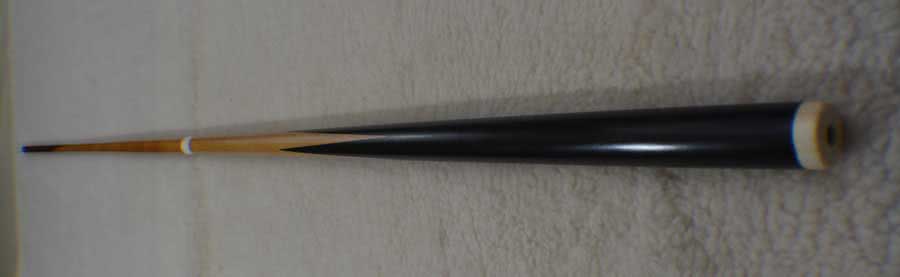


(Item 45) Antique Brunswick Ivory and Ebony Spliced Billiard Cue (c. 1915) This sophisticated two-piece cue from approximately 1915 is a prime example of the high-end craftsmanship synonymous with the Brunswick name during the early 20th century. It features a striking contrast of materials and a specialized construction that bridges the gap between traditional Victorian aesthetics and the emerging technical innovations of the era. Construction & Artistry Ebony Butt: The butt is constructed with a classic four-point ebony design, providing the density and balance preferred by professional players of the period. Specialized Materials: Butt Cap: Features a distinctive Rambow-style ivory butt cap, a design element highly sought after by collectors for its clean, architectural look. Joint & Ferrule: Equipped with an ivory joint and an ivory ferrule, ensuring a traditional hit and consistent feel. Spliced Shaft: The shaft is uniquely constructed with rosewood splicing, adding both structural integrity and a rare visual detail to the upper portion of the cue. Dimensions: Measures 56 1/4" in length. Collector's Note The combination of ebony, rosewood, and ivory in a two-piece format makes this cue an exceptional display piece. Its "Rambow-style" features mark it as a sophisticated example of early 20th-century cue evolution, perfect for a museum-quality collection or a high-end period billiard room. Please email for price.
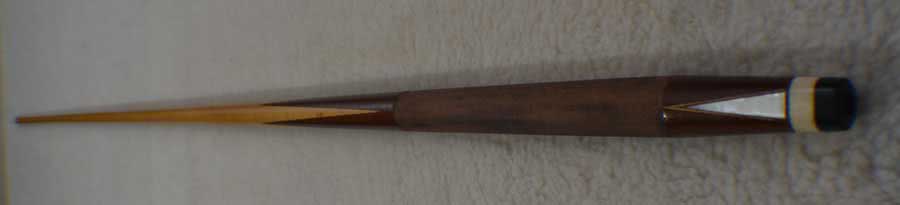


(Item 44) Antique Brunswick #220 "Fish Pole" Pool Cue (c. 1915) This original Brunswick #220 one-piece cue, often referred to by collectors as the "Fish Pole" style, is a standout example of early 20th-century craftsmanship. Dating to approximately 1915, the #220 model is celebrated for its distinctive tapering and the vibrant, artistic use of veneers and exotic materials. Construction & Artistry Mahogany Butt: The cue features a classic four-point mahogany butt, providing a warm color and a solid, traditional feel. Intricate Inlay Work: A central Mother of Pearl (MOP) inset wedge is the focal point of the butt, beautifully framed by a series of colored veneers that provide a striking visual contrast. Premium Appointments: * Butt Cap: A sophisticated ebony and ivory butt cap finishes the piece, adding a layer of architectural detail. Ferrule: Equipped with an original ivory ferrule. Dimensions: Measures 56" in length. Collector's Note The #220 is a highly recognizable model from the Brunswick catalog, prized for its combination of elegant wood grains and ornate decorative inlays. As a one-piece cue in this condition, it is a premier artifact for a museum-quality display or a high-end billiard room collection. Please email for price.
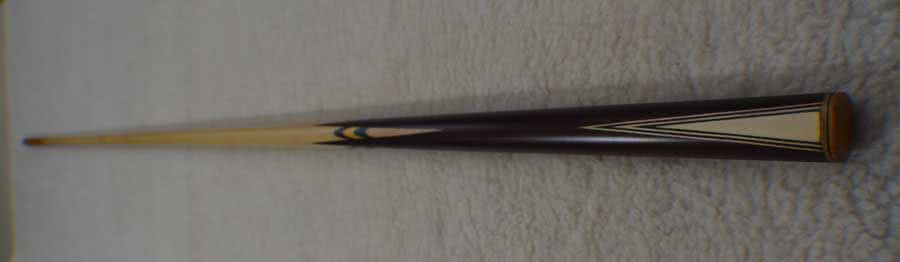


(Item 43) Antique European Spliced Billiard Cue (c. 1900) This remarkable one-piece cue represents the intricate "high-art" craftsmanship of European cue makers at the turn of the century. Dated circa 1900, the piece is a masterclass in geometric complexity, featuring an elaborate series of splices and veneers that distinguish it as a premier example of Edwardian-era billiard equipment. Construction & Artistry Complex Splicing: The cue features a traditional four-point butt enhanced by triple-colored butterfly splices set in reverse between the points, creating a sophisticated visual rhythm and structural depth. Exotic Inlays: Primary Inlays: A striking ivory inset wedge is balanced by a tulip wood inset wedge on the opposite side. Veneer Detail: Both wedges are meticulously surrounded by colored veneers, a hallmark of premium custom cues from this period. Appointments: Butt Cap: Finished with a specialized veneered butt cap. Ferrule: Equipped with an original ivory ferrule. Dimensions: Measures 55 1/4" in length. Collector's Note The use of tulip wood alongside ivory and multi-colored butterflies marks this as a sophisticated European import. Its one-piece construction and dense decorative work make it an ideal centerpiece for a museum-quality display or a high-end private collection focusing on the evolution of cue artistry. Please email for price.
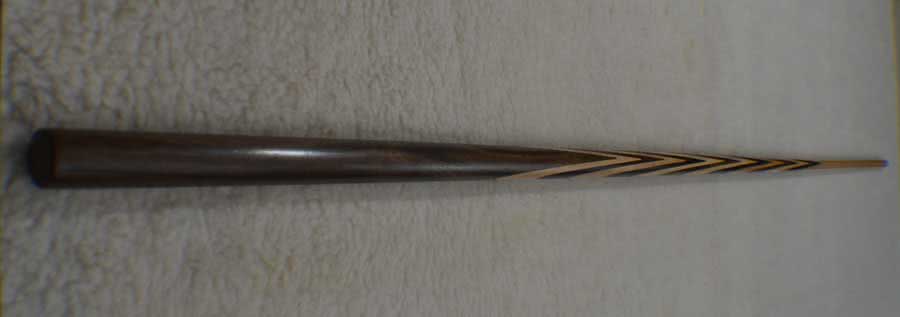
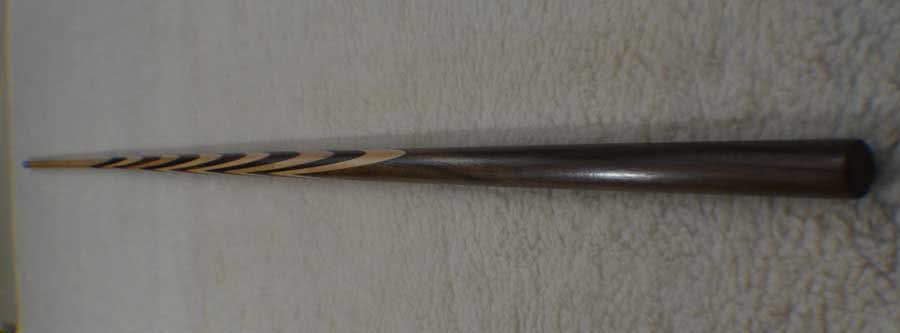

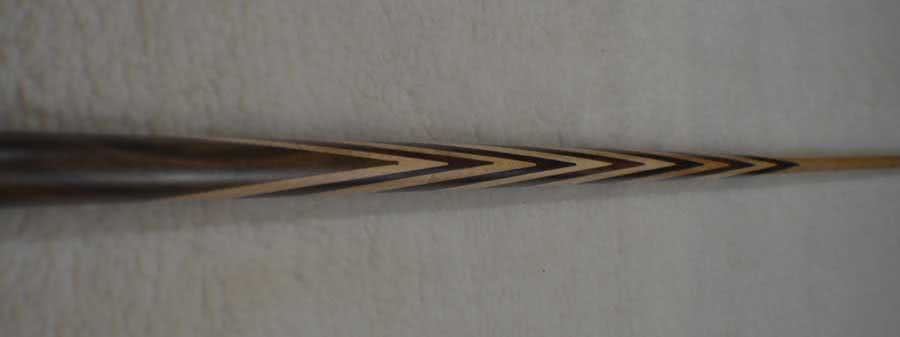
(Item 41) Antique B. Finck Co. "Zebra Style #20" Hand-Spliced Billiard Cue (c. 1839) This extraordinary one-piece cue is a premier example of early 19th-century European cue artistry. Manufactured by the renowned B. Finck Co. in Berlin, Germany, around 1839, this "#20" model is a masterclass in hand-spliced geometry, predating the industrial automation of cue manufacturing. Construction & Artistry Hand-Spliced Complexity: The cue features a staggering total of 26 hand-spliced points and 26 hand-spliced butterflies (counting both sides). The sheer density of these splices requires immense skill, resulting in the iconic "Zebra Style" visual rhythm that is highly sought after by collectors of early German cues. Master Craftsmanship: As a product of Berlin’s elite mid-19th-century billiard trade, this piece reflects the transition from simple utilitarian instruments to highly decorative works of art. One-Piece Construction: The cue is a solid, one-piece unit, preserved in its original form to showcase the integrity of the wood and the precision of the hand-cut joints. Dimensions: Measures 55 1/4" in length. Museum Quality Given its age and the high volume of intricate splicing, this B. Finck Co. cue is a significant historical artifact. It serves as a definitive example of pre-Victorian era craftsmanship, making it an ideal centerpiece for a museum-grade collection or a high-end period billiard room. Please email for price.
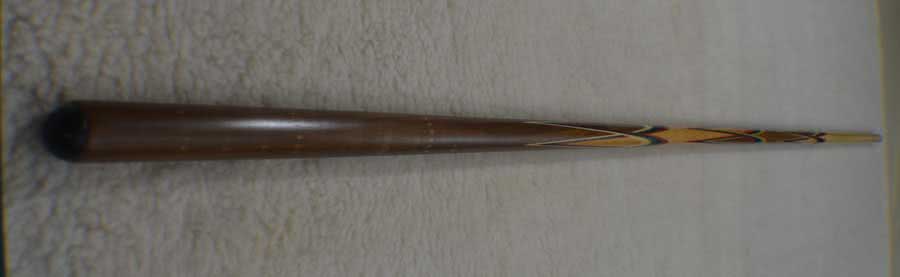
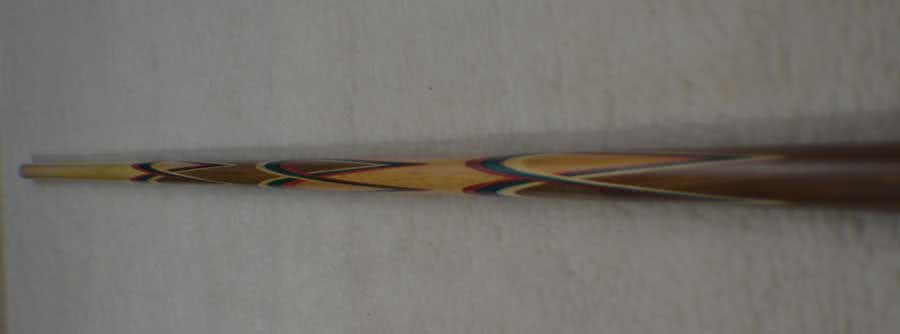

(Item 40) Older Collectible European Triple Butterfly Spliced Pool Cue This one-piece European cue is a remarkable example of geometric precision and vibrant woodcraft. Defined by its complex "in reverse" splicing technique, this artifact showcases the high level of artistry found in continental cue manufacturing during the late 19th and early 20th centuries. Construction & Artistry Triple Splicing Complexity: The cue features three triple sets of colored spliced points and butterflies. These are expertly set in reverse, creating a sophisticated visual symmetry that highlights the contrast between the various wood tones and colored veneers. Stamped Design Handle: Unlike standard smooth or wrapped cues, this specimen features a unique stamped design handle. This decorative treatment provides a distinctive tactile grip and adds a layer of artisanal character to the butt section. One-Piece Integrity: As a solid one-piece instrument, it has been preserved to showcase the original taper and the seamless integration of the intricate butterfly splices. Dimensions: Measures 56 3/4" in length. Collector's Note The use of triple-colored splices in a reverse pattern makes this a high-interest item for collectors of European billiard ephemera. The addition of the stamped handle design further distinguishes it as a specialized piece of equipment, perfect for a museum-quality display or a high-end period billiard room. Please email for price.
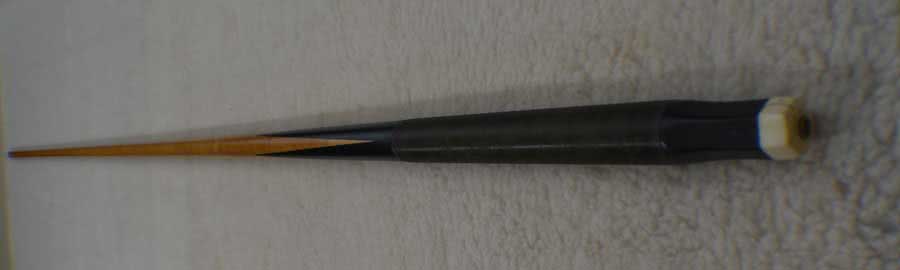


(Item 39) Antique Brunswick Hexagonal Billiard Cue This original one-piece Brunswick cue is a remarkable example of early 20th-century geometry and design. Moving away from the traditional round profile, this model features a hexagonal shaped butt, a specialized architectural form that provided players with a distinct grip and ensured the cue would not roll when placed on a flat surface. Construction & Artistry Ebony Hexagonal Butt: The butt is crafted from solid ebony and precision-cut into a six-sided hexagonal profile. It features a classic four-point design, seamlessly integrated into the faceted shape of the wood. Linen Wrap: Unlike many cues of this era that relied solely on polished wood, this specimen includes a linen wrap, providing a textured grip and a professional aesthetic. Premium Appointments: * Butt Cap: Finished with a substantial ivory butt cap, providing a clean, high-contrast end to the dark ebony. Ferrule: Equipped with an original ivory ferrule. Dimensions: Measures a standard 57" in length. Collector's Note The hexagonal Brunswick cue is a highly sought-after variation for collectors of unique billiard forms. Its combination of the rare faceted butt, premium ebony, and ivory appointments makes it a standout museum-quality piece for any serious collection. Please email for price.


(Item 37) Antique Brunswick "Merry Widow" Pool Cue This two-piece Brunswick cue is a classic example of the "Merry Widow" style, a design celebrated for its understated elegance and focus on the natural beauty of high-quality wood grains. Dating to the early 20th century, this model remains one of the most iconic and recognizable silhouettes in the history of cue manufacturing. Construction & Artistry Rosewood Butt: The butt is crafted from premium rosewood, showcasing a deep, rich color and straight grain patterns that characterize the traditional "widow" aesthetic. Refined Appointments: * Joint: Features a substantial ivory joint, providing the traditional hit and balance prized by players of this era. Handle: Equipped with a classic linen wrap, offering a comfortable, professional-grade grip. Spliced Shaft: The shaft includes a rosewood spliced section, a high-end detail that ensures visual continuity with the butt and adds structural integrity. Ferrule: Finished with an original ivory ferrule. Dimensions: Measures 55" in length. Collector's Note The Brunswick Merry Widow is a staple for any serious collection of early 20th-century billiard equipment. Its clean lines and superior material choice make it an ideal display piece for a museum-quality collection or a sophisticated addition to a period-correct billiard room. Please email for price.


(Item 35) Antique Brunswick Spliced Billiard Cue This sophisticated two-piece Brunswick cue is a premier example of the material innovation occurring in the early 20th century. It features a rare combination of exotic hardwoods and specialized grip materials, designed for the player who demanded both high-end performance and a distinct visual aesthetic. Construction & Artistry Mahogany Butt: The butt is crafted from rich mahogany, providing a classic foundation and a warm, natural luster. Brazilian Rosewood Spliced Shaft: A standout feature of this cue is the spliced Brazilian rosewood shaft, a high-end structural detail that offers exceptional density and visual continuity. Specialized Appointments: * Butt Cap: Features a clean, architectural Rambow-style ivory butt cap. Handle: Equipped with a cork handle, a period-correct grip choice known for its lightweight feel and moisture-wicking properties. Joint: Features a sophisticated two-piece ivory joint, a hallmark of premium custom-ordered cues from this era. Ferrule: Finished with an original ivory ferrule. Dimensions: Measures 55 3/4" in length. Collector's Note The integration of a cork handle with a two-piece ivory joint and Brazilian rosewood splicing makes this a highly technical and aesthetically unique specimen. It is an ideal acquisition for a museum-quality collection or for display in a high-end period billiard room. Please email for price.

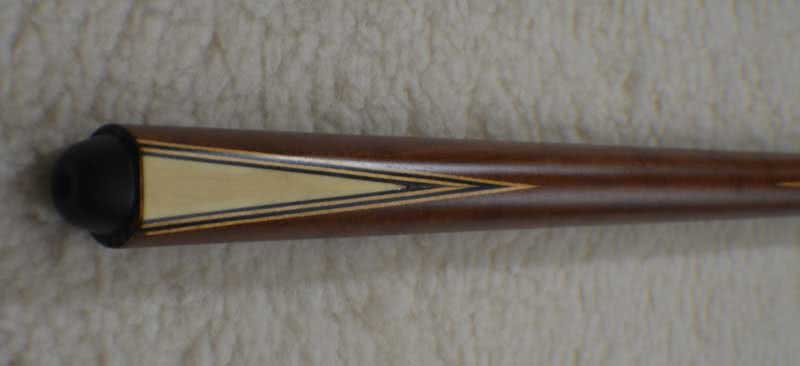


(Item 34) Antique European Spliced Points Pool Cue This exceptional one-piece cue is a testament to the intricate "high-art" craftsmanship characteristic of European cue makers at the turn of the century. Featuring a sophisticated arrangement of geometric splices and exotic inlays, this artifact showcases the technical mastery required to create premium billiard instruments during the late 19th and early 20th centuries. Construction & Artistry Spliced Design: The cue features a traditional four-point butt enhanced by triple-colored butterfly splices positioned between the points, creating a vibrant and complex visual rhythm. Exotic Inlays & Veneers: Primary Inlays: A striking ivory inset wedge is featured on one side of the butt, balanced by a mahogany inset wedge on the opposite side. Veneer Work: Both wedges are meticulously framed by colored veneers, a hallmark of high-end custom craftsmanship that adds depth and contrast to the wood grain. Appointments: Ferrule: Equipped with an original ivory ferrule. Dimensions: Measures 54 1/2" in length. Collector's Note The use of mahogany and ivory wedges surrounded by multi-colored veneers marks this as a sophisticated European specimen. Its one-piece construction and dense decorative work make it an ideal centerpiece for a museum-quality display or a high-end private collection focusing on the evolution of cue artistry. Please email for price.
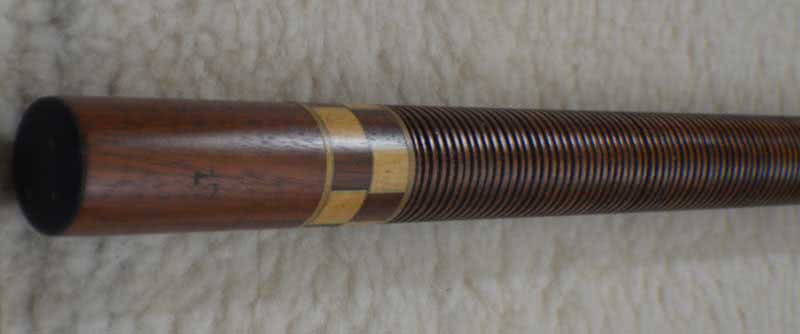


Item 33 Antique Albert Pick Co. Billiard Cue This original one-piece cue was manufactured by the Albert Pick Co., a prominent 19th and early 20th-century outfitter known for providing high-quality equipment to the finest billiard halls and hotels in America. This specimen is a masterclass in textures and wood choice, highlighting the company's commitment to both form and function. Construction & Artistry Carved Brazilian Rosewood Butt: The butt is crafted from premium Brazilian rosewood, featuring ornate carvings that provide both a sophisticated aesthetic and a superior tactile grip. Checkerboard Inlays: Distinguishing this cue from standard models are the intricate checkerboard inlays located on both ends of the butt section. These geometric accents offer a striking contrast to the organic flow of the carved rosewood. Ebony Ferrule: In a rare departure from the more common ivory, this cue is equipped with a professional ebony ferrule, providing a distinct feel and a sleek, unified look to the tip end. Dimensions: Measures 56 3/4" in length. Collector's Note Albert Pick Co. items are highly regarded for their durability and classic American styling. The combination of hand-carved Brazilian rosewood and precision checkerboard inlay work makes this a museum-quality centerpiece for any collection of early 20th-century billiard memorabilia. Please call for more information.


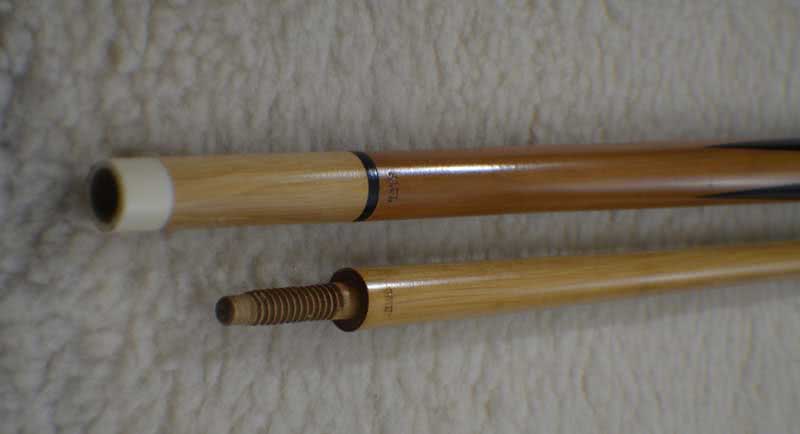

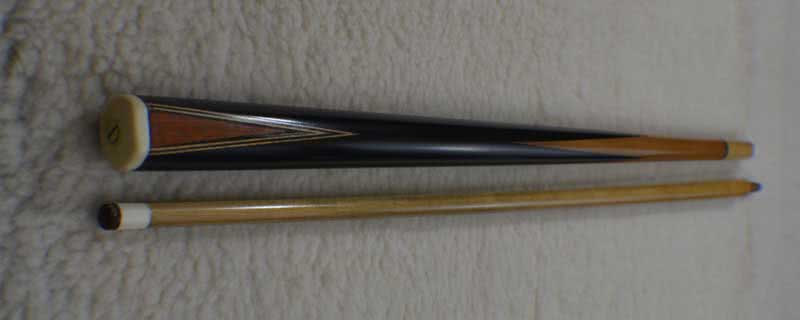
(Item 30) Antique European pool cue. This two piece cue features an ebony four point butt, inset wedges, ivory butt cap, ivory joint, and ivory ferrule. 55 1/8". That sounds like an exquisite piece of craftsmanship. Based on your description, this cue is a classic example of high-end European billiard artistry, likely dating from the late 19th to early 20th century. Historical & Technical Context The Construction: An ebony four-point butt is a hallmark of traditional "splice" construction. In that era, those points weren't just decorative; they provided structural integrity and balance to the dense ebony wood. The Length: At 55 1/8", this cue is slightly shorter than the modern standard of 58". This is very common for antique European cues, which were often tailored for different styles of billiards (like Carom or English Billiards) rather than modern American pocket pool. The Joint: An ivory-to-ivory joint provides a very specific "hit" or feedback—vibrations travel differently through organic material than they do through modern steel or phenolic resins. Important Considerations Feature Significance Material Value Ebony and ivory were the "gold standard" for luxury cues. The use of ivory in three distinct locations indicates this was a premium professional or custom order. Maintenance Ivory is prone to "checking" (tiny hairline cracks) if the humidity fluctuates. It’s best kept in a climate-controlled environment to prevent the ferrule or joint from cracking. Please email for price.


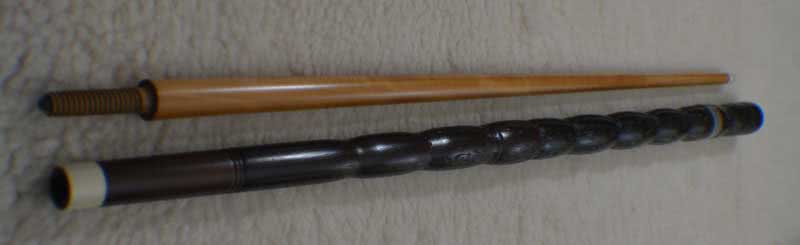

(Item 29) Antique Jules Adorjan Billiard Cue, c.1912 This is an exceptional example of European billiard engineering from the early 20th century. Jules (Julius) Adorjan was a highly regarded Austro-Hungarian cue maker and inventor based in Paris, known for his innovative "Adorján System"—a patented weight-adjustable method that predates many modern balancing technologies. Adorjan cues, such as the famous "La Royale" model, were often featured in prestigious French catalogues like those of Gobin Frères and ESKA during the 1910s and 1920s. Specifications & Features Butt: Hand-carved Ebony, showcasing the intricate detail typical of Adorjan's premium output. Joint & Ferrule: Genuine ivory, providing the distinctive feedback and "hit" favored by elite players of the era. Length: 55", a traditional length for European carom or balkline billiards. Provenance: This maker’s work was so well-regarded that custom commissions were often produced for European nobility and high-ranking dignitaries Collector's Note The carved ebony butt on this model represents a higher tier of artistry compared to standard spliced cues of the same period. Since Adorjan held specific patents for cue improvements (notably in 1906), these pieces are valued not just for their materials, but for their role in the technological evolution of the game. Please email for price.

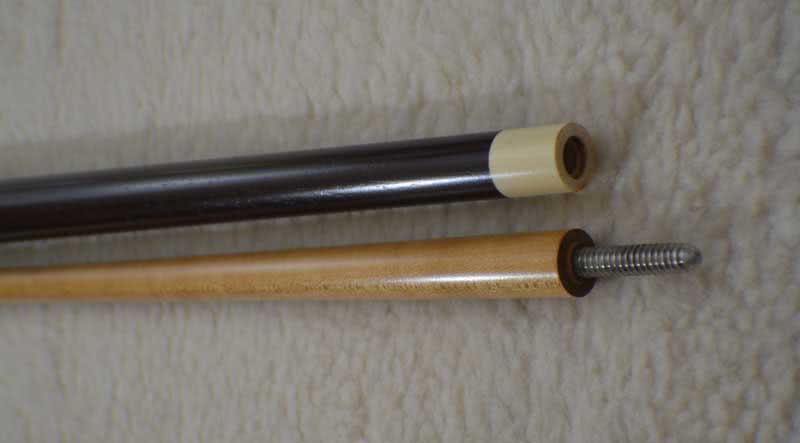

(Item 28) Antique Brunswick-Balke-Collender Co. Model #28 Pool Cue, c.1915 The Model #28 is a classic representation of Brunswick’s professional-grade equipment from the early 20th century. This two-piece cue is particularly notable for its use of premium Brazilian rosewood and its specialized construction, which was designed for the serious player of the era. Material & Construction Details Butt: Crafted from dark, high-grade Brazilian rosewood. During this period, Brunswick sourced the finest exotic hardwoods to ensure both density and a rich, natural aesthetic. Shaft: Features a spliced Brazilian rosewood design. Splicing the shaft was a technique used to enhance the structural integrity and provide a consistent flex and "hit" that players demanded for technical games like Balkline or Three-Cushion Billiards. Components: Equipped with a genuine ivory joint and ivory ferrule. These organic materials were the industry standard for high-end cues, offering a distinct acoustic feedback and vibration transfer that modern synthetic materials strive to replicate. Length: 55", the traditional professional length for this era, offering a balanced feel for various billiard disciplines. Historical Context By 1915, the Brunswick-Balke-Collender Co. had solidified its position as the world’s premier billiard manufacturer. The Model #28 appeared in catalogs during a "Golden Age" of the game, where cues were often hand-finished and materials like rosewood and ivory were used without the modern scarcity concerns we see today. Technical Summary Component Material Forearm/Butt Dark Brazilian Rosewood Shaft Type Spliced Brazilian Rosewood Joint Type Ivory-to-Ivory Ferrule Ivory Era Circa 1915

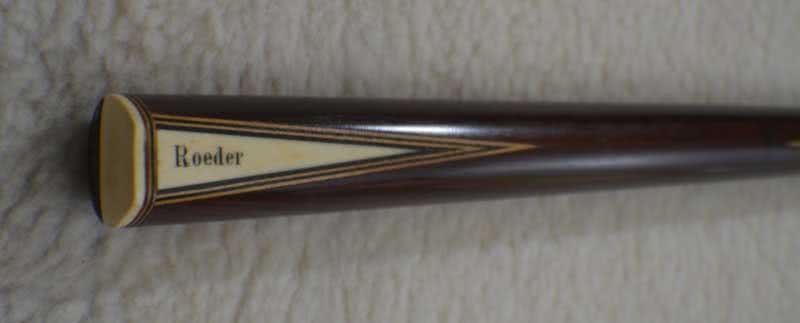


(Item 26) Antique One-Piece Rosewood Pool Cue This exceptional 54-inch antique cue is a standout example of late 19th-century craftsmanship. Meticulously constructed for both performance and aesthetic appeal, it features a rich four-point rosewood butt that showcases the deep, natural grain of the wood. The cue is further distinguished by its high-quality accents, including: Ivory Inset Wedge: A classic structural and decorative element found in premium period cues. Ivory Butt Cap: Providing a polished, durable finish to the base of the handle. Ivory Ferrule: Ensuring a traditional hit and consistent playability at the tip. At a standard 54-inch length, this one-piece cue represents the elegant simplicity and material quality favored by serious players and collectors of the era. Please email for price.
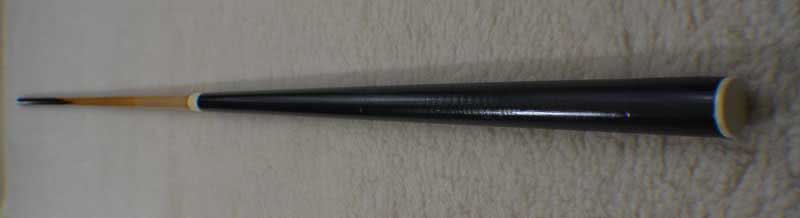


(Item 25) Antique Brunswick Ebony & Ivory Pool Cue, c. 1915 This rare and sophisticated two-piece cue is a premier example of early 20th-century billiard artistry. Dating to approximately 1915, it reflects the high manufacturing standards and premium materials characteristic of the Brunswick-Balke-Collender Co. era. Construction & Materials The cue is built with a focus on density and balance, utilizing high-grade black ebony for a sleek, authoritative feel. Its 54 1/2-inch length provides a classic profile for precise play or display. Ebony Spliced Shaft: A hallmark of quality, the shaft features an ebony splice that ensures structural integrity and a striking visual transition. Ivory Joint: This two-piece design is centered around a traditional ivory joint, prized by collectors for its historical accuracy and the distinct "hit" it provides during a stroke. Ivory Butt Cap & Ferrule: The cue is bookended by ivory components, from the protective butt cap at the base to the ferrule at the tip, maintaining a consistent aesthetic throughout the piece. Please email for price.
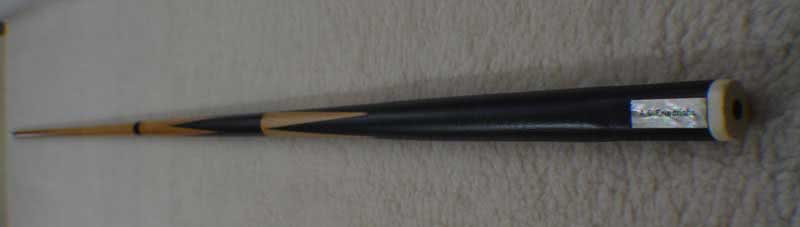


(Item 24) Antique Brunswick Ebony Eight-Point Pool Cue, c. 1915 This exceptional three-piece cue represents the pinnacle of early 20th-century billiard engineering and custom artistry. Measuring 57 1/4 inches, this Brunswick piece is a sophisticated example of the craftsmanship produced during the height of the Brunswick-Balke-Collender Co. era. Design & Materials The cue is built for stability and striking visual contrast, utilizing high-grade ebony as its primary foundation. Eight-Point Two-Part Ebony Butt: A rare and intricate construction featuring an eight-point design that transitions into a two-part butt, providing a balanced weight and a commanding presence. Mother of Pearl (MOP) Personalized Name Plate: Centered in the butt, the personalized initials set in mother of pearl offer a glimpse into the cue's bespoke history and original ownership. Ivory Butt Cap & Ferrule: The cue is finished with traditional ivory components at both extremities, maintaining the high-material standards of the period. Ebony Joint: As a three-piece model, it utilizes a precision ebony joint to connect the sections, a detail favored for its seamless feel and aesthetic continuity with the rest of the dark wood. Please email for price.
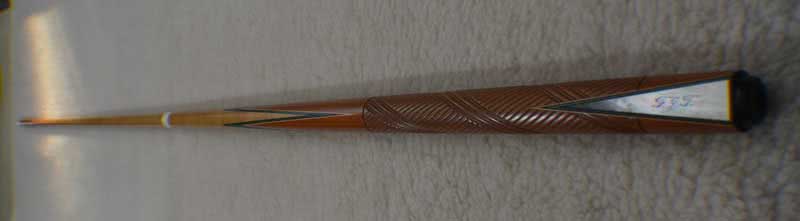
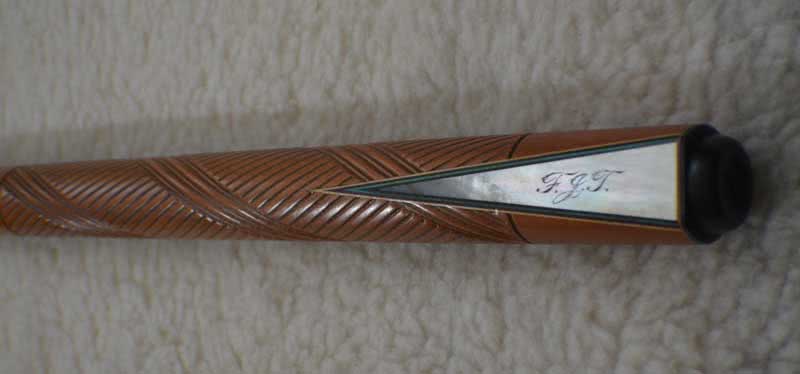
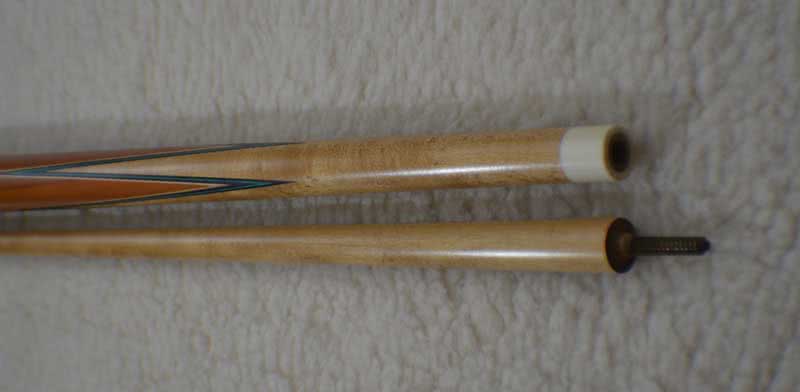


(Item 23) Antique Brunswick Carved Butt "Titlist" Billiard Cue This is a spectacular example of the "Titlist" era, a name synonymous with the gold standard of pool cue construction. Measuring a full 57 inches, this two-piece cue combines the iconic Brunswick veneer work with rare, ornate carving, making it a high-tier collector's piece. Master Craftsmanship & Ornamentation What sets this cue apart is the fusion of the classic Titlist points with custom decorative elements rarely seen in standard production models. Four-Point Carved Butt: Unlike smooth-tapered cues, this features a carved butt section that provides a unique tactile feel and a highly distinguished "Victorian-era" aesthetic. Colored Titlist Points: The legendary four-point "Titlist" splice, known for its structural strength and vibrant colored veneers, is the centerpiece of the forearm. Mother of Pearl (MOP) Inset Wedge: A luxurious decorative wedge featuring personalized initials, framed by intricate colored veneers that mirror the complexity of the points. Ivory Joint & Ferrule: As expected of a premium Brunswick of this vintage, it utilizes an ivory joint for a soft, responsive hit and a matching ivory ferrule for traditional tip support. Collector's Note: The "Titlist" blanks produced by Brunswick were so well-regarded for their balance and density that many legendary custom cue makers (like Herman Rambow) used them as the foundation for their own custom builds. Please email for price.
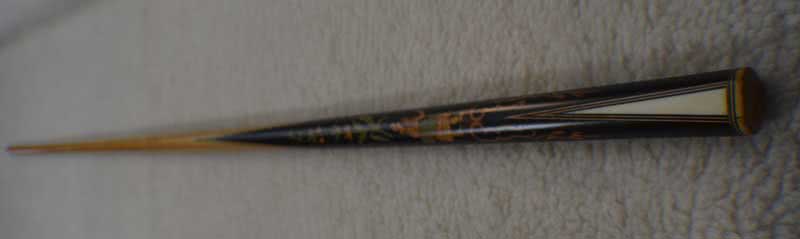

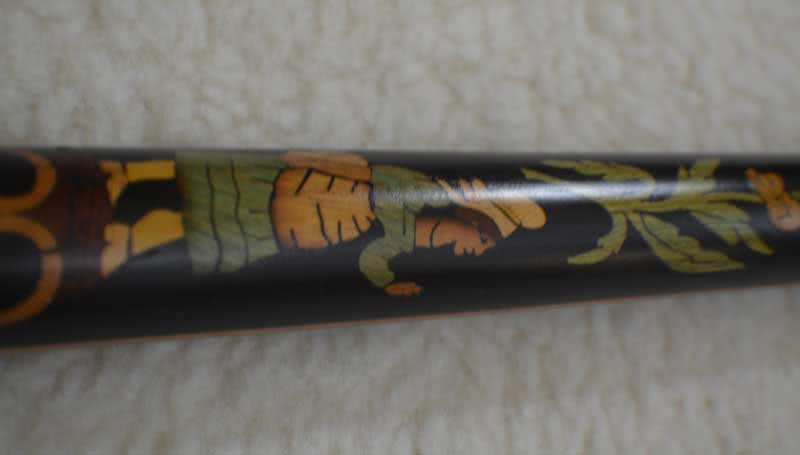


(Item 22) Antique French Marquetry Billiard Cue, c. 1830s This extraordinary one-piece cue is a masterpiece of Romantic-era craftsmanship, predating the industrial boom of the billiard industry. Originating from France during the 1830s, it showcases the delicate "ébénisterie" (cabinet-making) techniques that made French cues the envy of European nobility. Artistry & Inlay Work While later cues focused on power and mass production, this 55-inch piece is defined by its intricate marquetry, a technique of creating pictures or patterns by inserting thin layers of wood into a surface. Ebony Butt with Fruitwood Inlays: The dense, black ebony provides a stark, dramatic canvas for the hand-cut fruitwood designs. These inlays likely feature floral or geometric motifs typical of the French Restoration period. Ivory Inset Wedge & Colored Veneers: The ivory wedge is framed by vibrant colored veneers, a labor-intensive process that signifies a high-status custom commission. Ivory Butt Cap & Ferrule: Consistent with the luxury materials of the early 19th century, the cue is capped in ivory at both the handle and the tip. Historical Significance At the time this cue was made, billiards was shifting from a game of "pushing" the ball to the modern "striking" game. A one-piece cue from the 1830s with this level of ornamentation is a rare survivor of the pre-mechanical age of cue making. Please email for price.


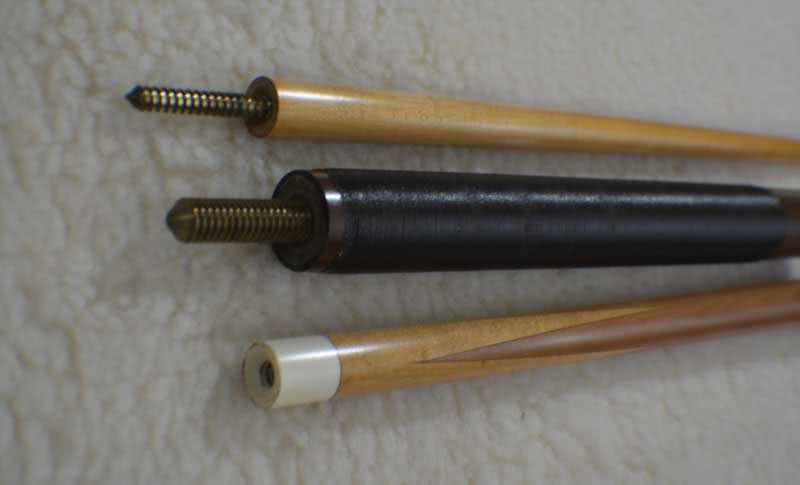

(Item 21) Antique Brunswick "Hub" Pool Cue This sophisticated three-piece model is a prime example of the innovative engineering and high-end materials used by the Brunswick-Balke-Collender Co. measuring a substantial 56 3/4 inches. The "Hub" design was specifically engineered for portability and precision, making it a sought-after piece for the traveling professional or serious amateur of the early 20th century. Technical Specifications & Features The cue’s construction highlights a transition toward the modern "professional" aesthetic while maintaining the traditional luxury materials of the era. Four-Point Splice: The forearm features a classic four-point splice, providing the structural integrity and forward-weighted balance necessary for consistent play. Double Ivory Joints: As a three-piece cue, it utilizes two precision-machined ivory joints. This setup was favored for its unique feedback and the seamless energy transfer it provided through the length of the cue. Linen Wrap: Unlike many of the all-wood butts of this period, this model features a linen wrap, offering a superior grip and moisture absorption for the player. Ivory Butt Cap & Ferrule: The cue is elegantly finished with an ivory butt cap and a matching ivory ferrule, ensuring a cohesive and high-tier appearance from top to bottom. Please email for price.


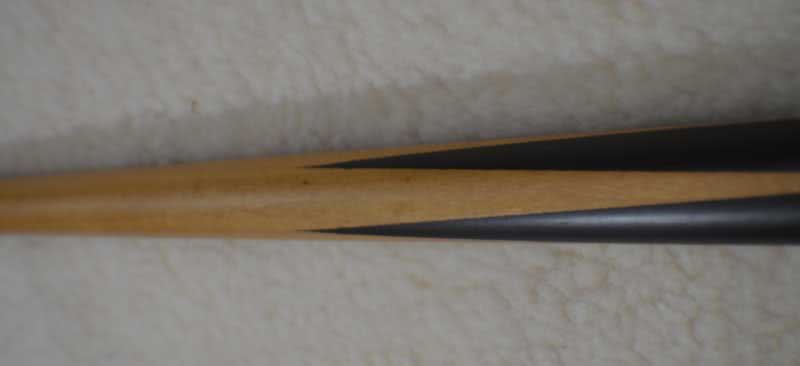
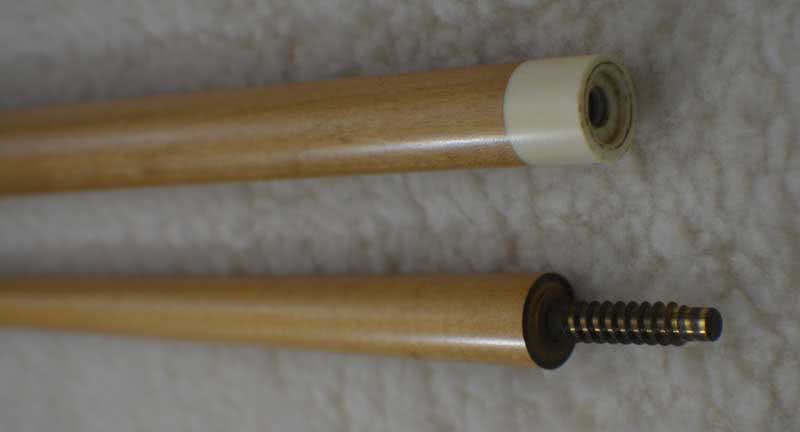
(Item 20) Antique Brunswick Ebony "Rambow Style" Pool Cue This 57-inch two-piece cue is a stunning example of the transition into the "Golden Era" of custom cue design. Featuring a heavy influence from the legendary cuemaker Herman Rambow, this Brunswick model combines high-density tropical hardwoods with the classic aesthetic hallmarks of a professional player's instrument. Construction & Custom Details The use of ebony and ivory in this configuration suggests a top-of-the-line catalog offering or a semi-custom order from the early to mid-20th century. Ebony Four-Point Butt: The deep, black ebony points provide maximum natural weight and a rigid hit, favored by straight-pool and billiards masters for superior cue ball control. "Rambow Style" Ivory Butt Cap: This oversized or distinctively shaped ivory cap is a tribute to the style popularized by Herman Rambow, the resident cuemaker at Brunswick’s Chicago headquarters. Ivory Name Plate: A dedicated ivory inset for the owner's name or initials, marking this as a personalized, premium piece of equipment. Ivory Joint & Ferrule: The ivory-to-ivory connection at the joint provides the "soft" yet communicative feedback that modern synthetic joints struggle to replicate. Linen Wrap Handle: A high-quality pressed linen wrap provides the professional-grade grip necessary for high-stakes play. Did you know? Herman Rambow was so influential at Brunswick that his specific "formula" for balance and taper became the blueprint for what many consider the greatest playing cues ever made. Please email for price.
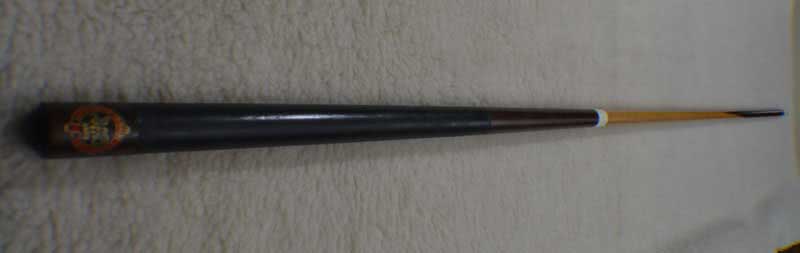
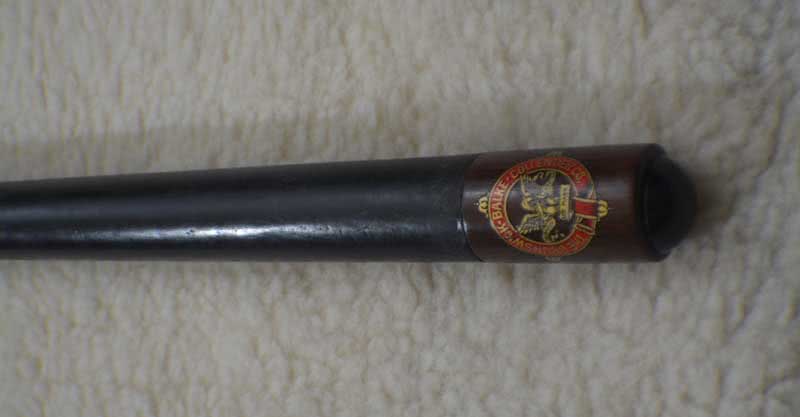
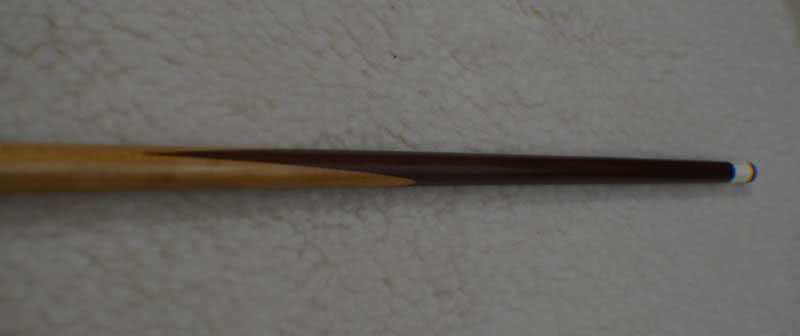
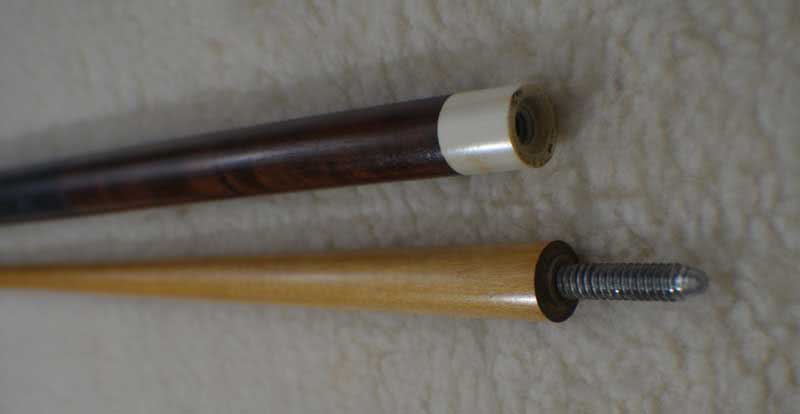
(Item 19) Antique Brunswick Rosewood Spliced-Shaft Pool Cue This distinctive 55 1/4-inch two-piece cue is a testament to the specialized woodworking techniques of the Brunswick-Balke-Collender Co. era. It stands out for its cohesive use of high-grade rosewood across both the butt and the shaft, a hallmark of premium custom construction from the early 20th century. Construction & Key Features The choice of rosewood throughout this cue provides a warm, classic aesthetic and a dense, consistent density that players of the era highly valued. Rosewood Butt & Spliced Shaft: The most notable feature of this cue is the rosewood spliced shaft, which mirrors the material of the butt. Splicing a dense hardwood like rosewood into the shaft was a technique used to enhance structural stiffness and provide a unique, forward-weighted balance. Leather Wrap Handle: Unlike the more common linen or bare wood handles, this cue features a leather wrap. This provides a soft, tacky grip preferred by players who desired maximum control and comfort during a long session. Ivory Joint: The two pieces are connected by a precision-machined ivory joint. This traditional connection is favored by collectors for its historical accuracy and the specific acoustic feedback it provides upon contact with the cue ball. Ivory Ferrule: The cue is finished with a matching ivory ferrule at the tip, ensuring material consistency and a classic "hit" typical of Brunswick’s top-tier offerings. Please email for price.


(Item 18) Antique Brunswick Carved Brazilian Rosewood Pool Cue This 56 1/2-inch two-piece cue is a masterpiece of late 19th or early 20th-century craftsmanship, combining rare exotic timber with intricate hand-detailing. As a Brunswick piece featuring carved elements, it represents the higher tier of their historical catalog, where athletic equipment met fine furniture design. Materials & Artistry The use of Brazilian Rosewood—highly prized for its density, varied grain patterns, and resonance—marks this as a premium instrument from the pre-restriction era. Carved Brazilian Rosewood Butt: The butt section features hand-carved details that provide a sophisticated aesthetic and a unique tactile grip, distinguishing it from the standard smooth-tapered cues of the period. Rosewood Spliced Shaft: Matching the elegance of the handle, the shaft includes a rosewood splice. This construction method was utilized to increase the stiffness of the hit and create a seamless visual flow from the joint to the tip. Ivory Joint: The ivory-to-ivory connection at the joint is a hallmark of elite Brunswick cues, offering the distinct, soft feedback and "click" sought after by purists. Ivory Butt Cap & Ferrule: The cue is bookended by ivory components, providing a polished finish to the carved butt and a traditional foundation for the tip. The presence of both a carved butt and a spliced rosewood shaft makes this one of the more technically complex Brunswick models of its time. Please email for price.
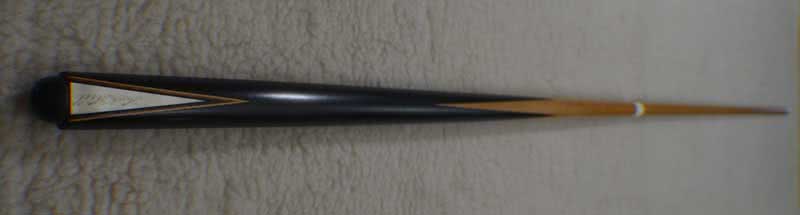
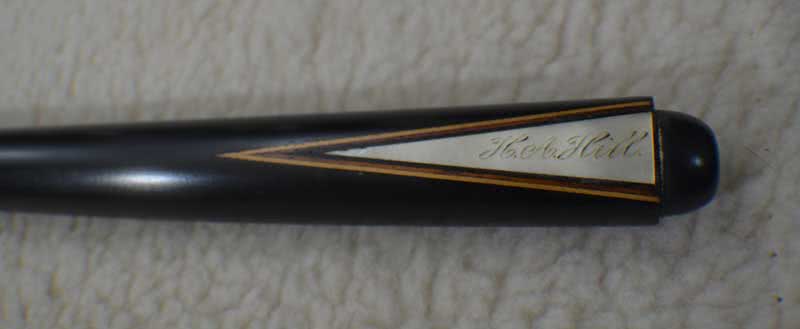
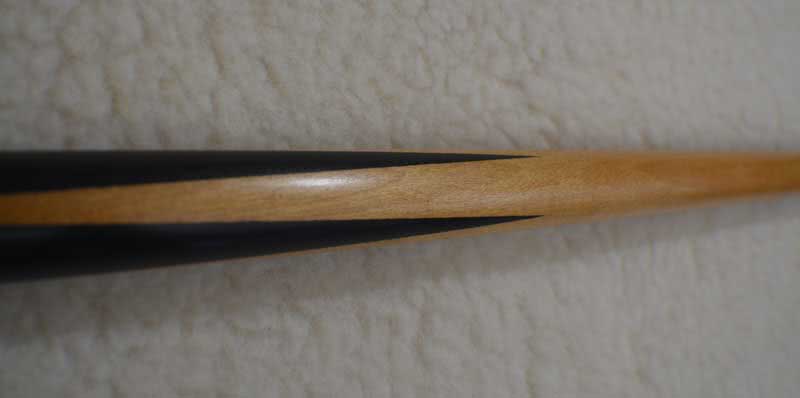

(Item 17) Antique Brunswick H.A. Hill Ebony Billiard Cue This 57-inch two-piece cue is a premier example of a signature professional instrument from the Brunswick-Balke-Collender Co. era. Bearing the name of H.A. Hill, a notable figure in the early 20th-century billiard world, this cue represents the intersection of high-performance engineering and bespoke artistry. Artistry & Signature Details The use of dense black ebony and intricate inlay work marks this as a top-tier catalog offering, designed for a player who demanded both prestige and precision. Ebony Four-Point Butt: The butt is constructed from high-grade black ebony, featuring a traditional four-point splice that provides a rigid, authoritative hit and natural rear-weighting. H.A. Hill Signature: The cue is prominently signed "H.A. Hill," a mark of quality and historical significance that identifies it as a specific model or custom build associated with the professional player and Brunswick representative. Mother of Pearl (MOP) Wedge & Colored Veneers: A luxurious Mother of Pearl wedge is inset into the butt, framed by multiple colored veneers. This labor-intensive decorative detail provides a vibrant contrast against the dark ebony grain. Ivory Joint & Ferrule: Maintaining the highest material standards of the period, the cue features a precision-machined ivory joint for superior feedback and a matching ivory ferrule at the tip. Historical Perspective Cues signed by or named after era professionals like H.A. Hill were the "pro-models" of their day, often featuring the exact specifications—such as taper and balance—preferred by the champions of the early 1900s. Please email for price.


(Item 16) Antique Hiolle Fancy Carved Ebony Pool Cue This 55-inch two-piece masterpiece is a rare and exquisite example of European cue artistry, likely originating from the renowned French maker Hiolle. Known for pushing the boundaries of ornamental design in the 19th and early 20th centuries, Hiolle cues are highly coveted by collectors for their "furniture-grade" carving and lavish use of exotic materials. Ornate Craftsmanship & Detailing This cue stands out for its high-relief artistry, moving beyond the simple splices of standard professional cues into the realm of decorative fine art. Fancy Carved Four-Point Ebony Butt: The dense, jet-black ebony is hand-carved with intricate patterns, providing a sophisticated tactile grip and a visual depth that was the hallmark of the Hiolle workshop. Mother of Pearl (MOP) Inlays: Shimmering MOP accents are precision-set into the ebony, creating a brilliant contrast against the dark wood and highlighting the cue’s custom nature. Ivory Joint & Butt Cap: The ivory-to-ivory joint ensures the classic, crisp "click" upon impact, while the ivory butt cap provides a durable and elegant counterweight to the carved handle. Ebony and Ivory Ferrule: A particularly rare and distinctive feature; the bi-material ferrule is a signature of high-end custom work, offering a unique aesthetic transition at the tip of the cue. Collector's Note The House of Hiolle was famous for supplying cues to European royalty and billiard academies. Finding a piece with both elaborate carving and a bi-material ferrule (ebony/ivory) is a significant rarity in the current market. Please email for price.


(Item 15) Antique Brunswick "Monarch" Pool Cue, c. 1900 This 53 1/2-inch four-piece cue is a premier artifact from the Brunswick-Balke-Collender Co., specifically associated with their legendary "Monarch" line. Produced around the turn of the century, the Monarch series represented the pinnacle of luxury and technical innovation, often designed to complement the iconic Monarch cushion billiard tables of the era. Artistry & Rare Four-Piece Construction The four-piece design is a rare engineering feat for the period, offering a unique level of portability and precision balancing that was highly advanced for 1900. Carved Brazilian Rosewood Butt: The handle is crafted from high-grade Brazilian rosewood, featuring ornate hand-carving that provides both a sophisticated aesthetic and a functional, non-slip grip. Brunswick Monarch Stamp: This cue bears the authentic "Monarch" stamp, a mark of elite provenance that distinguishes it from standard production models and links it directly to Brunswick's flagship luxury line. Mother of Pearl (MOP) Inlays: Precision-set MOP accents are interspersed throughout the carved sections, catching the light and highlighting the intricate woodwork. Two-Piece Ivory Joint: A specialized ivory-to-ivory joint system connects the sections, ensuring the crisp, communicative "hit" that professional players of the Gilded Age demanded. Ivory Butt Cap & Ferrule: The cue is bookended by high-quality ivory components, providing a polished finish to the carved butt and a traditional, durable foundation at the tip. Historical Significance The Monarch name was reserved for Brunswick's most prestigious offerings. Finding a matching Monarch cue in a four-piece configuration—complete with original carving and MOP inlays—is an exceptional rarity for a serious billiard historian. Please email for price.
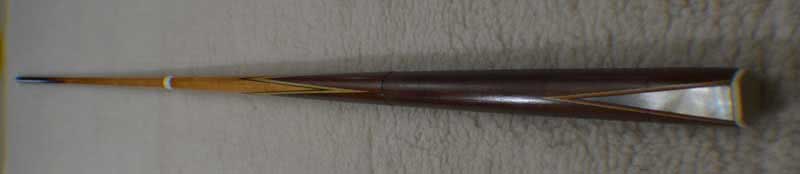

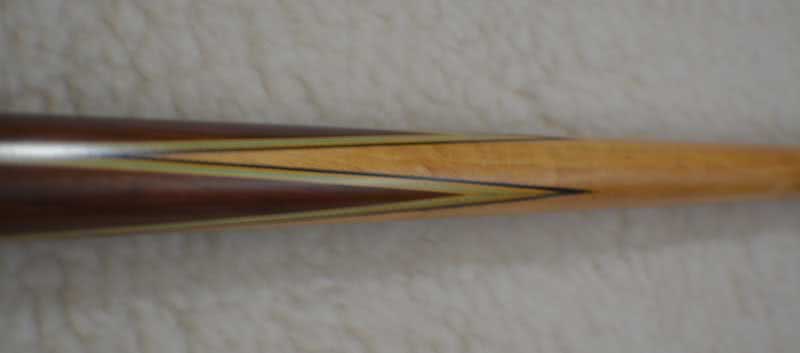
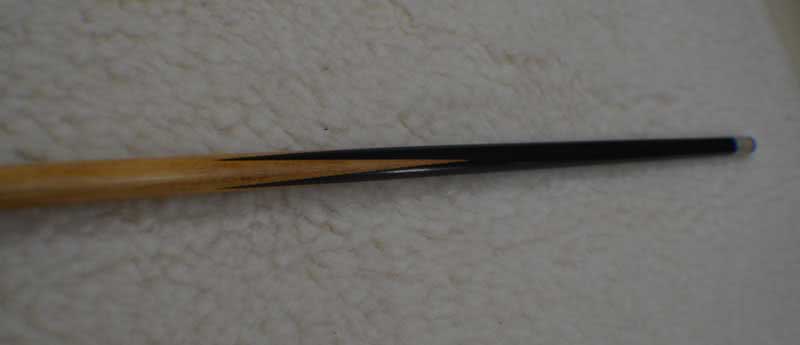
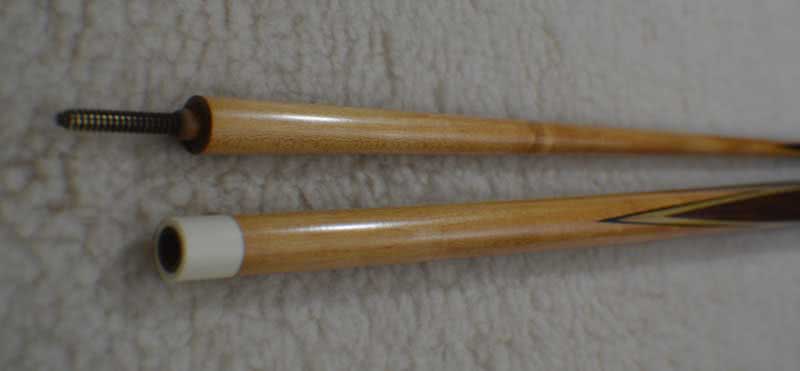
(Item 14) Antique Brunswick-Balke-Collender Co. 26 1/2 Billiard Cue This 57-inch two-piece cue is a premier example of the Brunswick-Balke-Collender Co.’s most ornate craftsmanship from the early 20th century. As a "26 1/2" model, it features the elite technical specifications and high-contrast aesthetics that defined Brunswick's professional line. Materials & "Full-Package" Artistry This particular cue is noted for incorporating nearly every premium decorative and structural element available during its era of production. Brazilian Rosewood Four-Point Butt: The handle is crafted from high-grade Brazilian rosewood, featuring a classic four-point splice. Both the butt and the points are framed by intricate colored veneers, providing a vibrant, multi-layered visual depth. Mother of Pearl (MOP) Inset Wedge: A luxurious Mother of Pearl wedge is set into the rosewood, also surrounded by matching colored veneers to unify the design. Ebony Spliced Shaft: In a rare combination of exotic woods, the shaft features an ebony splice, which increases the stiffness of the hit and provides a striking dark contrast to the rosewood butt. Ivory Joint & Ferrule: The cue utilizes a precision-machined ivory joint for that signature crisp feedback, balanced by a traditional ivory ferrule at the tip. Ivory Butt Cap: The base is finished with a polished ivory butt cap, ensuring material consistency throughout the instrument. Linen Wrap Handle: Historically equipped with a linen wrap, this cue is being restored with a fresh wrap to maintain its original professional-grade grip and feel. Collector's Perspective The "26 1/2" designation from Brunswick typically signaled a cue with "all the bells and whistles." Finding one that combines Brazilian rosewood, ebony splicing, MOP inlays, and multi-colored veneers makes this a significant acquisition for a serious billiard historian. Please email for price.

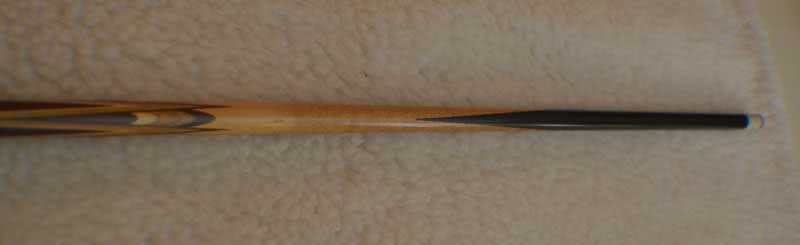

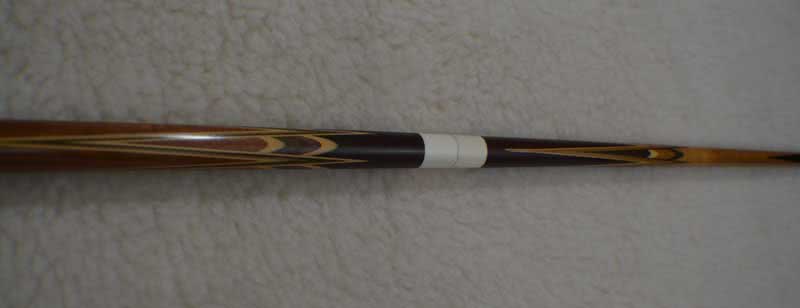

(Item 13) Antique Brunswick-Balke-Collender Co. #360 Pool Cue, c. 1900 This 56 1/2-inch two-piece cue is a premier example of the high-complexity "fancy" cues produced by the Brunswick-Balke-Collender Co. at the turn of the century. The #360 model is renowned among collectors for its sophisticated geometry and the labor-intensive hand-splicing required to achieve its signature aesthetic. Advanced Woodworking & Inlays The #360 is defined by a multi-layered construction that showcases the pinnacle of Edwardian-era billiard engineering. Triple Spliced Points & Reverse Butterflies: This cue features three distinct sets of hand-spliced points. The inclusion of "butterflies in reverse"—a decorative splicing technique where the wood veneers are flipped to create a winged pattern—marks this as a high-tier professional instrument. Ebony Spliced Shaft: Matching the density of the butt, the shaft features an ebony splice. This adds significant structural stiffness to the cue’s "hit" and creates a striking, continuous dark profile from the joint through the taper. Mother of Pearl (MOP) Inset Wedge: A luxurious Mother of Pearl wedge is set into the butt, framed by multiple colored veneers that provide a vibrant contrast against the dark wood grains. Two-Piece Ivory Joint: The cue utilizes a precision-machined ivory-to-ivory joint, the gold standard for providing the crisp, communicative feedback favored by master players of the 1900s. Historical Significance The #360 was one of Brunswick's most visually complex catalog offerings. The combination of triple-spliced points and reverse butterflies required a level of manual bench-work that is rarely replicated in modern production. Please email for price.
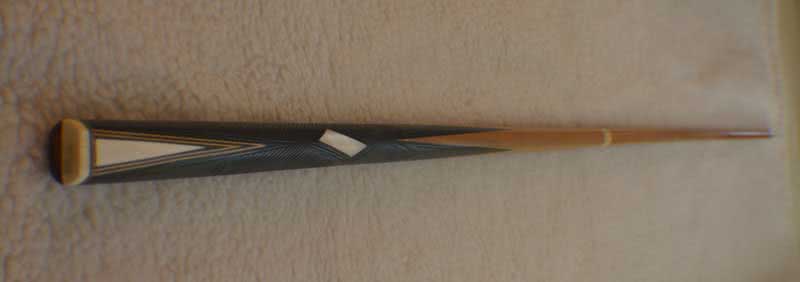
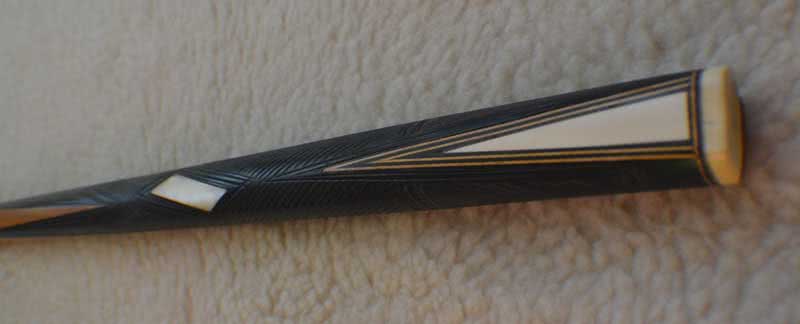


(Item 11) Antique European Inlaid Pool Cue, c. 1900 This 55-inch two-piece cue is a remarkable example of Continental billiard artistry from the turn of the century. Combining intricate hand-carving with a sophisticated "dual-wedge" design, it represents the high-end custom craftsmanship typical of elite European workshops during the Belle Époque. Ornate Construction & Material Contrast The defining feature of this cue is its symmetrical yet contrasting inlay work, which provides a stunning visual profile from every angle. Carved Ebony Four-Point Butt: The handle is crafted from dense, jet-black ebony featuring hand-carved detailing. The four-point splice provides the structural foundation and the traditional forward-weighted balance preferred by master players. Dual-Wedge Inlays: In a rare display of craftsmanship, the butt features an ivory inset wedge on one side and a Brazilian rosewood inset wedge directly opposite. Both wedges are framed by vibrant colored veneers, creating a multi-layered, architectural depth. Mother of Pearl (MOP) Inset Plate: A polished MOP plate is precision-set into the ebony, adding a luminous focal point to the ornate handle. Ivory Joint & Butt Cap: The cue utilizes a precision-machined ivory-to-ivory joint, favored for its distinct acoustic feedback and "soft" hit, complemented by a matching ivory butt cap for a balanced finish. Ivory Ferrule: The assembly is completed with a traditional ivory ferrule at the tip, maintaining the high material standards found throughout the piece. Collector's Note The use of opposing wedges of different materials (Ivory vs. Brazilian Rosewood) within the same butt section is a technically demanding feat of joinery. This "mirrored contrast" is a hallmark of premium European custom cues from the 1900 era. Please email for price.


(Item 12) Antique European Marquetry Pool Cue This 55 1/2-inch four-piece cue is a stunning example of the intricate "ébénisterie" (fine cabinet-making) that defined high-end European billiard equipment. While most professional cues of the era focused on geometric splices, this piece utilizes marquetry—the art of inlaying different woods to create pictorial or decorative patterns—marking it as a luxury item intended for a private estate or a high-ranking billiard salon. Artistry & Rare Modular Construction The four-piece configuration is a particularly rare engineering choice for a marquetry cue, offering a unique blend of ornate beauty and advanced portability. Ebony Butt with Inlaid Marquetry: The dense, black ebony serves as a dramatic backdrop for hand-cut wood inlays. These intricate designs likely feature the floral, foliate, or scrollwork motifs characteristic of late 19th-century European decorative arts. Triple Ivory Joints: To accommodate the four-piece design, the cue features three precision-machined ivory joints. Beyond their aesthetic appeal, ivory joints were prized for providing a "softer" hit and more nuanced vibration feedback than wood or metal alternatives. Ivory Butt Cap & Ferrule: The cue is elegantly finished with an ivory butt cap to counterweight the handle and a traditional ivory ferrule at the tip, ensuring material consistency across all four sections. Historical Significance Four-piece cues from this era were often referred to as "traveler's cues," designed to be disassembled into small sections for discrete transport. Finding one with full marquetry rather than simple painted designs indicates a very high-status commission. Please email for price.
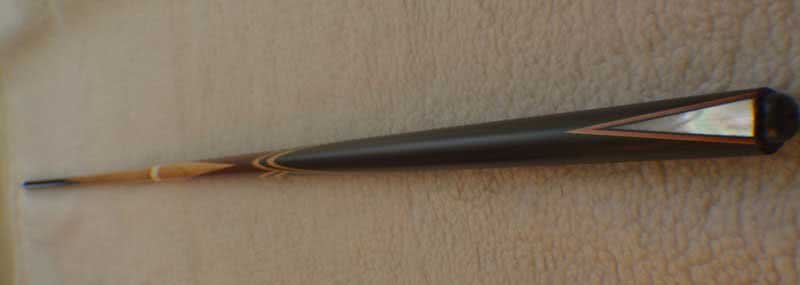


(Item 10) Antique Brunswick-Balke-Collender Co. Billiard Cue, c. 1915 This 57-inch two-piece cue is a premier example of the high-complexity "fancy" cues produced during Brunswick’s golden age. Dating to approximately 1915, it features the sophisticated "Butterfly" splice—a labor-intensive technique where thin layers of contrasting wood are sliced and rejoined to create a flared, wing-like effect. Construction & Ornamental Detail This model is defined by its architectural complexity and the use of ultra-dense ebony to provide a powerful, consistent hit. Multiple Spliced Butterflies: The butt section is adorned with multiple "butterfly" splices. Unlike standard straight points, these flared veneers require extreme precision to align, marking this as a high-tier professional instrument. Ebony Spliced Shaft: In a "full-ebony" configuration, the shaft features an ebony splice that matches the butt. This ensures a stiff, low-deflection feel and a striking, continuous aesthetic from the joint through the taper. Mother of Pearl (MOP) Inset & Colored Veneers: A brilliant Mother of Pearl inset serves as the focal point of the handle, framed by multiple layers of colored veneers that accentuate the natural dark grain of the ebony. Ivory Joint & Ferrule: The cue utilizes a precision-machined ivory-to-ivory joint, the preferred connection for early 20th-century masters seeking "soft" tactile feedback. It is finished with a traditional ivory ferrule at the tip. Collector's Perspective By 1915, Brunswick was perfecting the "professional" cue. The combination of multiple butterflies and an ebony-spliced shaft makes this one of the most technically formidable players' cues in the collection. Please email for price.

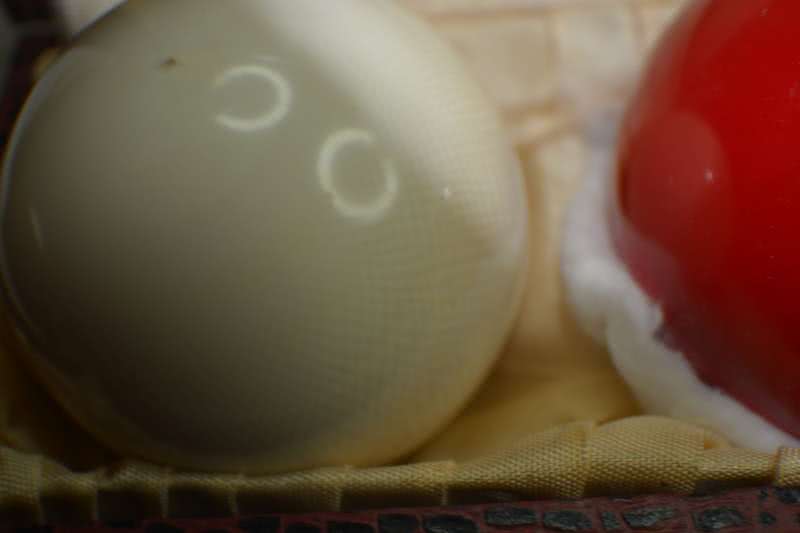
(Item 35) Antique Zanzibar High Grade Clear Ivory Billiard Ball Set (#2) This is an exceptional #2 set of Zanzibar High Grade billiard balls, dating to the 1880s. During the 19th century, ivory sourced from the Zanzibar region was considered the gold standard for the billiard industry due to its superior density, "clear" consistent coloring, and remarkable durability. At a substantial size of 2 3/8", these balls are perfectly suited for the large professional tables of the Victorian era. The "High Grade" designation refers to the selection of the ivory, which offers a uniform grain and a level of playability sought after by the most discerning players and collectors of the "Golden Age." Grade: Zanzibar High Grade Clear Ivory Era: c. 1880s Size: 2 3/8" Set Number: #2 Condition: Excellent antique preservation with characteristic clear luster Inquiry Information: Due to the rarity and high-grade nature of this specific set, we invite serious collectors to contact us directly. Please email for price.
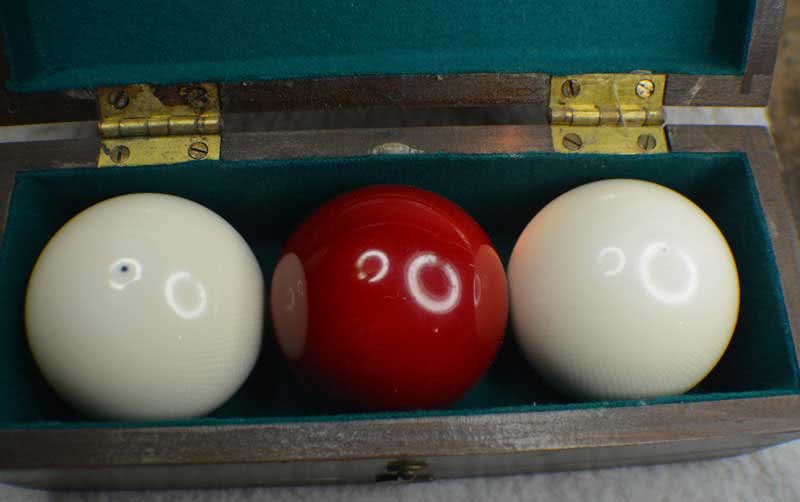

(Item 34) Antique Zanzibar Clear Grade Ivory Billiard Ball Set (#1) This is a premier #1 set of Zanzibar Clear Grade ivory billiard balls, representing the highest tier of material quality available in the 1880s. Zanzibar ivory was historically the most coveted variety in the billiard trade, prized for its "clear" quality—a reference to its remarkably consistent density and lack of visual imperfections. Measuring 2 3/8", these balls are the standard size for the professional-grade tables of the late 19th century. As the #1 set in this collection, these pieces exhibit a superior luster and a fine, tight grain, making them a cornerstone acquisition for a serious collector or a museum-quality restoration project. Grade: Zanzibar Clear Grade Ivory Set Number: #1 Era: c. 1880s Size: 2 3/8" Condition: Museum grade; exceptional color and weight consistency Inquiry Information: This set represents the pinnacle of 19th-century material luxury. Interested parties are encouraged to reach out for a detailed condition report. Please email for more information.
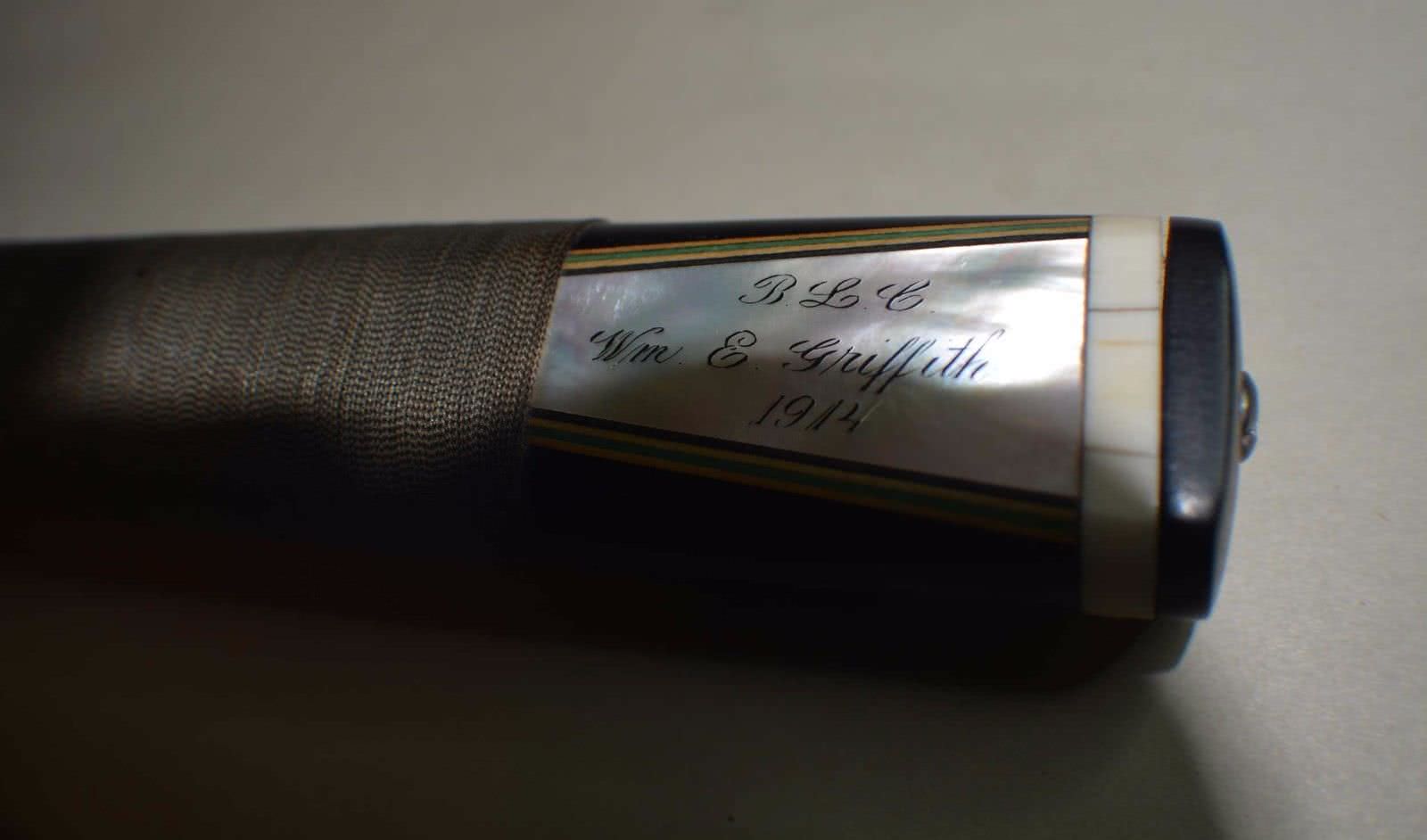


(Item 9) Own a legendary piece of competitive history with this W.H. Griffith N.Y. Tournament Prize Cue, circa 1914. W.H. Griffith was a premier New York maker known for elite craftsmanship, and this specific two-piece ebony cue was likely commissioned as a high-stakes trophy or a professional’s custom instrument. Featuring a sophisticated four-point construction and an exquisite Mother of Pearl (MOP) inset, this cue is a pinnacle of early 20th-century billiard artistry. Item Details: Maker: W.H. Griffith (New York) Era: Circa 1914 (Pre-WWI Tournament Era) Materials: Solid Ebony, Genuine Ivory, Mother of Pearl, and Colored Veneers Length: 57" Standard Tournament Length Special Features: Mother of Pearl Inset reading: “B. L. C. William E. Griffith c1914” Construction: Ebony spliced shaft, Linen wrap, Ivory joint, Ivory ferrule, and Ivory/Ebony butt cap The level of detail in this cue is extraordinary, from the vibrant colored veneers surrounding the custom inscription to the heavy use of ivory at the joint, ferrule, and butt cap. The ebony-to-ebony spliced shaft provides a stiff, professional hit that was the gold standard for tournament play in 1914. This is more than a cue; it is a documented historical artifact representing the peak of the New York billiard scene. Pricing & Inquiries: Please email.


(Item 7) Antique Rieper N.Y. Carved Butt Pool Cue (c. 1900) This remarkable one-piece pool cue was produced by Rieper of New York around the turn of the century. Known for their distinctive craftsmanship, this specimen features an ebony four-point carved butt that showcases the artistry of the era. The highlight of this piece is a "second to none" carved butt featuring a unique and intricate dot pattern. This specific texture not only provides a striking visual aesthetic but also offers a superior tactile grip that feels exceptional during play. The cue is finished with an ivory ferrule, consistent with the high-quality materials used by Rieper at the height of their production. Specifications Maker: Rieper N.Y. Era: c. 1900 Construction: One-piece antique cue Materials: Ebony butt, ivory ferrule Design: Four-point carving with unique textured dot pattern Condition: Excellent vintage craftsmanship Please email for price.
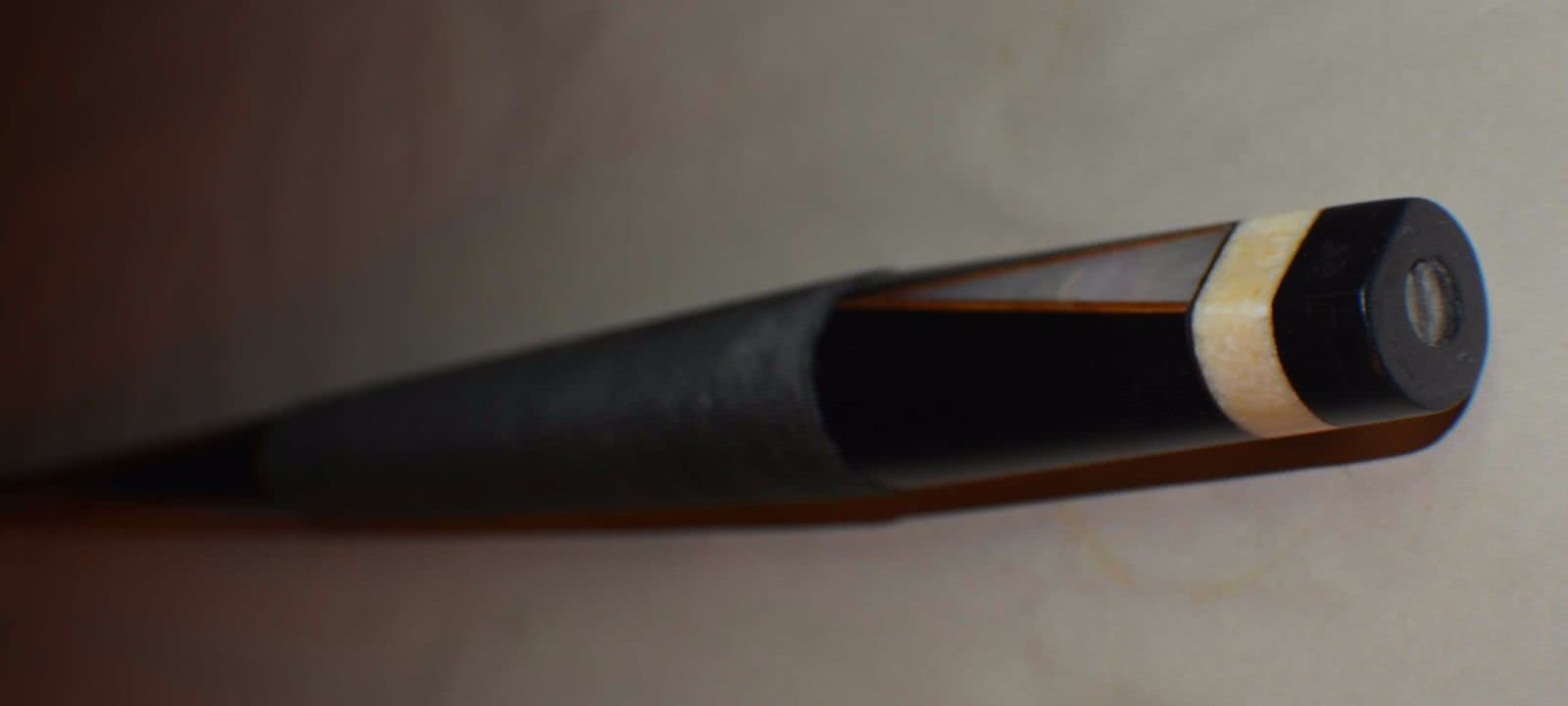

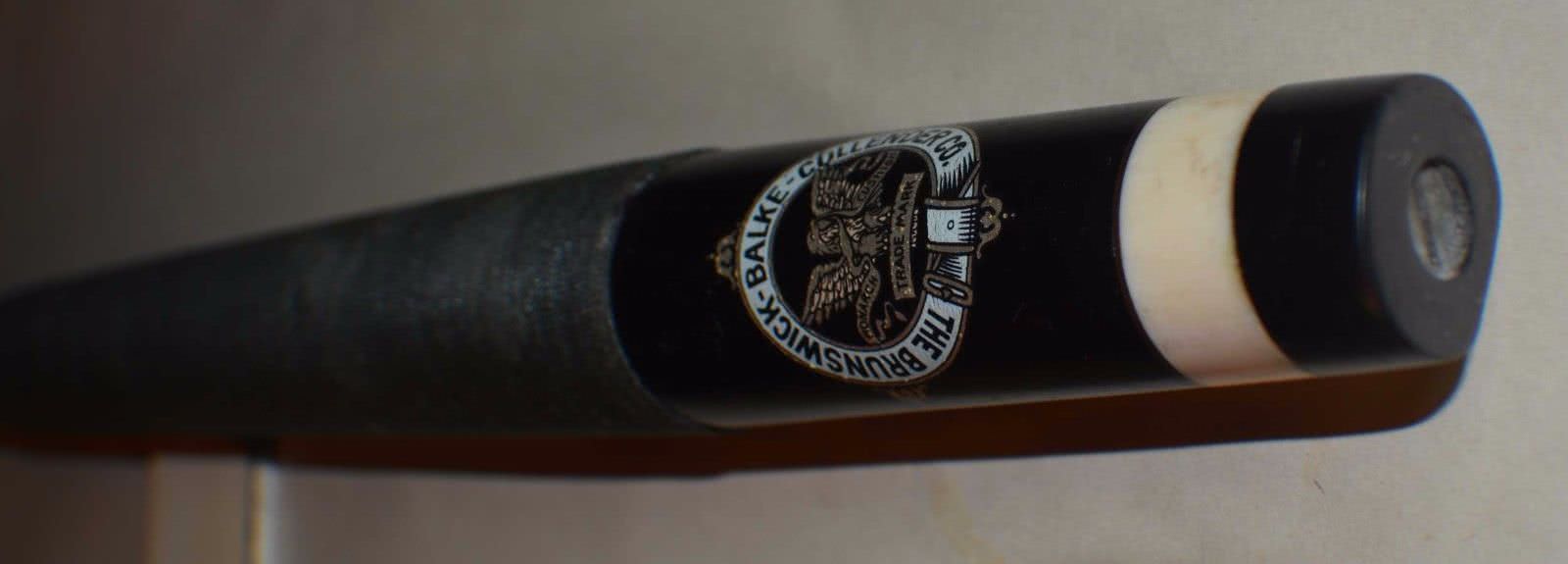

(Item 6) Antique Brunswick #220 "Fish Pole" Pool Cue (c. 1915) This exceptional one-piece pool cue is a classic Brunswick #220, commonly referred to as the "Fish Pole" model due to its elegant, tapered profile. Dating to approximately 1915, this cue represents the peak of pre-war craftsmanship, utilizing a sophisticated combination of exotic materials and intricate inlay work. The cue features a four-point ebony butt and is highly distinguished by its decorative Mother of Pearl (MOP) inset wedge, which is beautifully highlighted by a series of colored veneers. The design is further elevated by a specialized ebony and ivory butt cap and a linen wrap, providing a professional-grade grip and balance. Technical Specifications Model: Brunswick #220 "Fish Pole" Era: c. 1915 Length: 56 3/4" Construction: One-piece antique cue Materials: Ebony points, ivory ferrule, and ivory/ebony butt cap Inlays: Mother of Pearl (MOP) wedge with colored veneers Grip: Authentic linen wrap Collector's Note The "Fish Pole" series is highly sought after by Brunswick enthusiasts for its unique aesthetic and historical place in the evolution of the modern cue. To find an example featuring the original MOP wedge and colored veneer work in this condition is a significant opportunity for any serious collection. Please email for price.
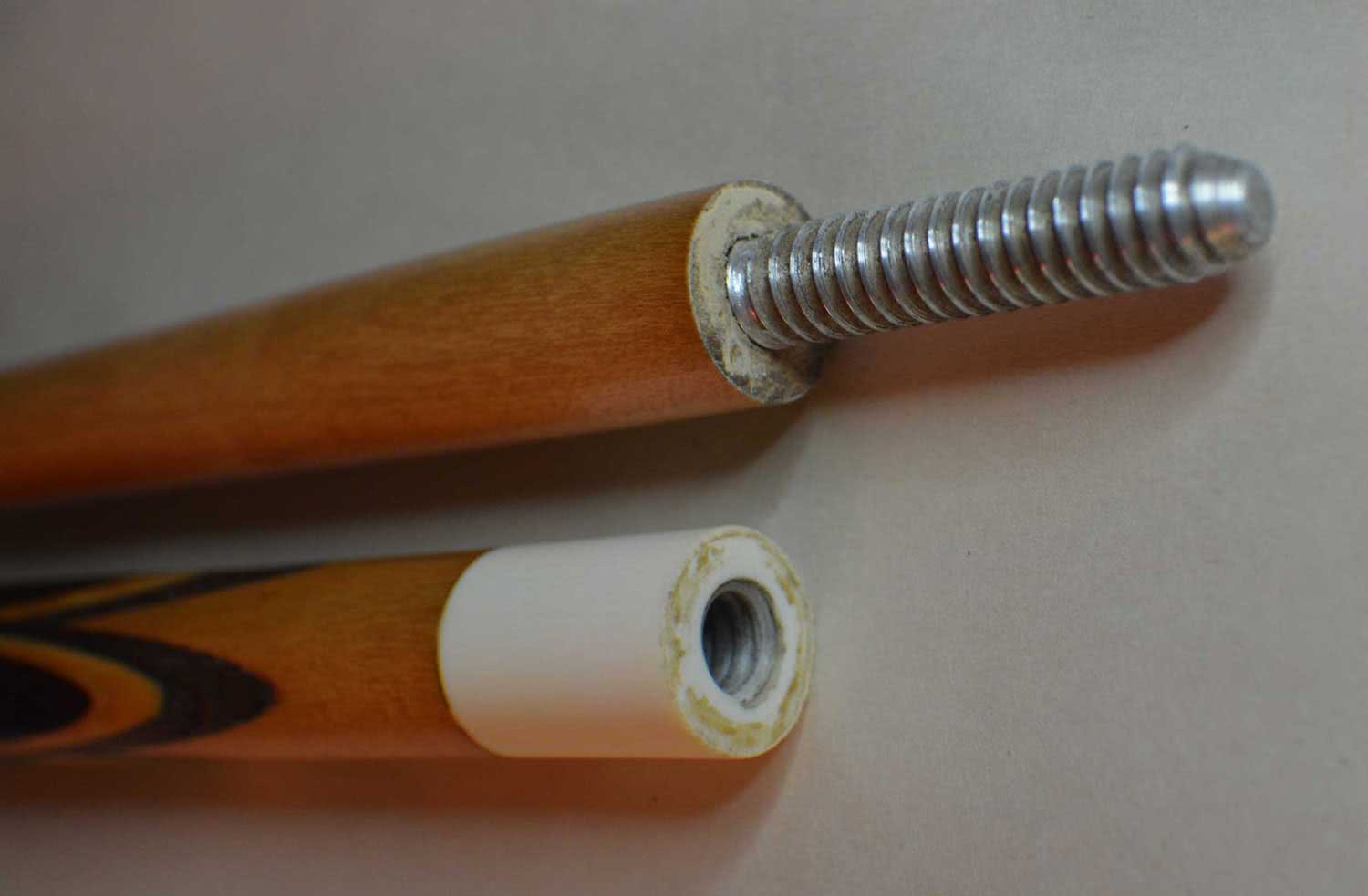
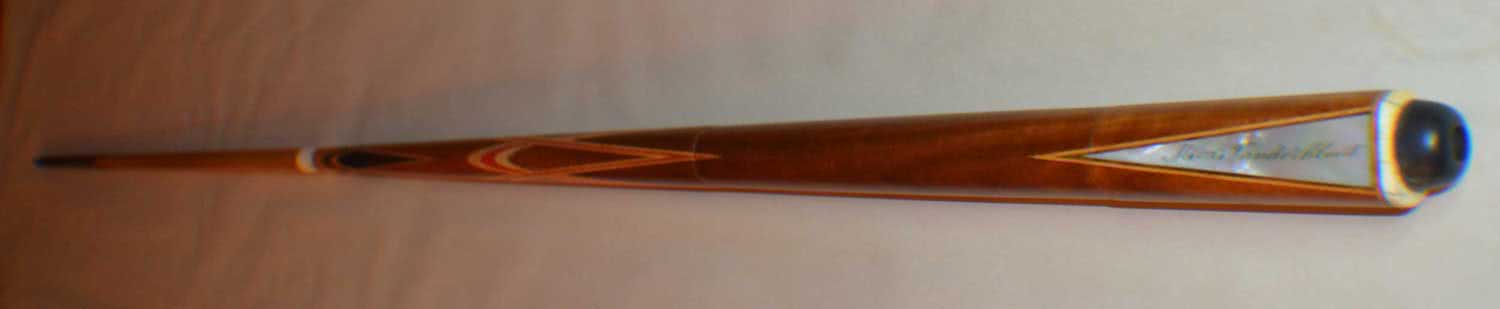

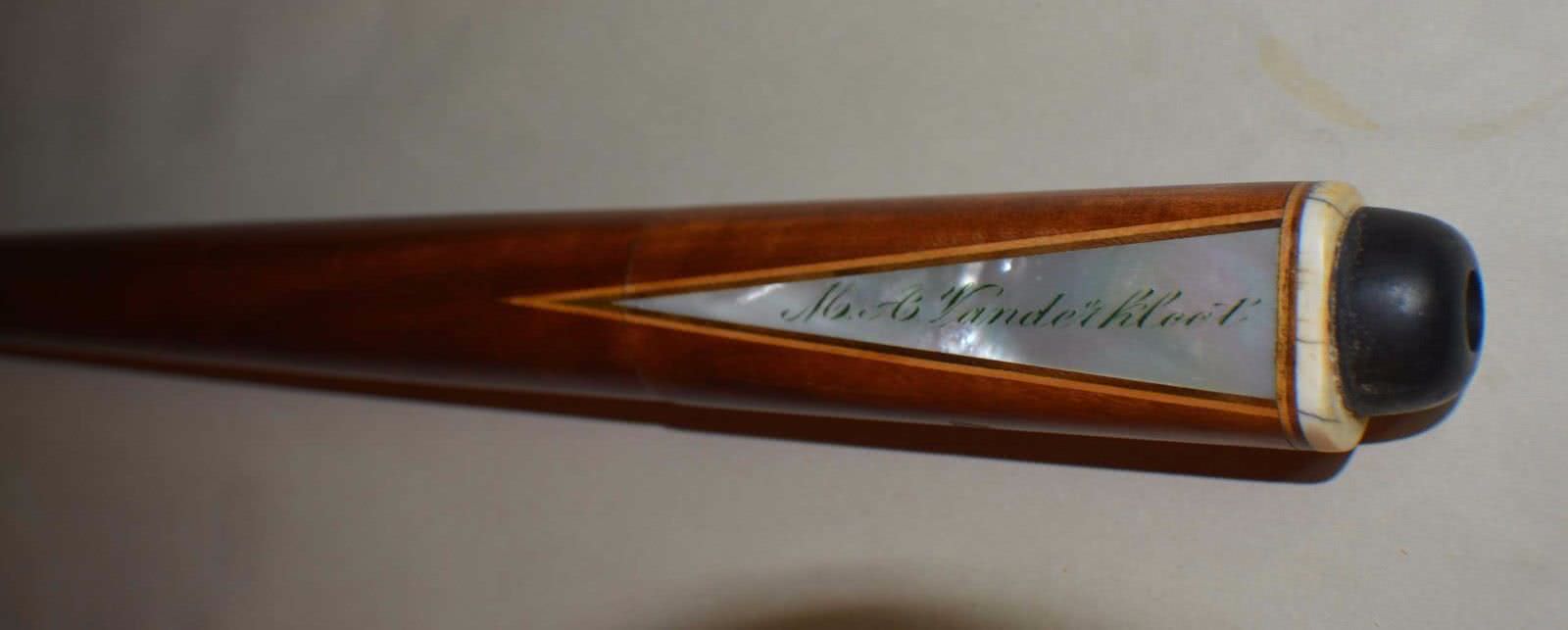
(Item 5) Antique Brunswick Personal Cue: Signed M.A. Vanderhloot (c. 1915) This is an extraordinarily rare and highly decorated two-piece Brunswick billiard cue, dating to approximately 1915. It is a premier collector’s piece, distinguished by the personal signature of M.A. Vanderhloot. The level of craftsmanship displayed in the woodwork represents the pinnacle of early 20th-century "splicing" techniques. The cue features an intricate array of two triple sets of spliced colored points, complemented by butterfly points in reverse—a technically demanding design rarely seen in standard production models. The rosewood shaft is also spliced, a hallmark of high-performance cues of this era. This masterpiece is currently being outfitted with a professional linen wrap on the handle to restore its original playing feel and aesthetic. Technical Specifications & Artistry Signatory: M.A. Vanderhloot (Personalized Signature) Era: c. 1915 Length: 60 1/2" (Extended Length) Woodwork: Spliced Rosewood shaft, triple-spliced colored points, and reverse butterfly points Inlays: Mother of Pearl (MOP) inset surrounded by multi-colored veneers Fittings: * Ivory Butt Cap Ivory Joint Ivory Ferrule Grip: Pending New Linen Wrap Historical Significance Custom-signed Brunswick cues from this era were typically reserved for professional players, high-ranking company officials, or elite private commissions. The combination of the 60 1/2" length and the complex reverse butterfly splicing suggests this was a highly specialized tool for a master of the game. Please email for price.

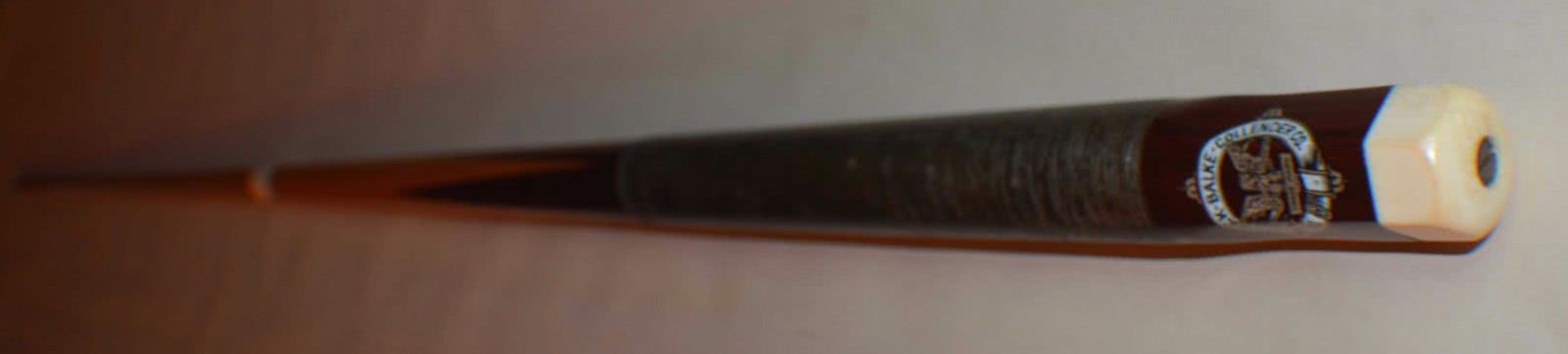


(Item 4) Antique Brunswick #210 Hexagonal Pool Cue (c. 1915) This is a rare and highly sought-after two-piece Brunswick #210, distinguished by its unique hexagonal construction. Dating to approximately 1915, the #210 was part of Brunswick’s innovative line of geometrically shaped cues, designed to offer a distinct feel and to prevent the cue from rolling when placed on a flat surface. The craftsmanship is classic Brunswick excellence, featuring a four-point rosewood butt that provides a warm, rich aesthetic. This high-grade model is heavily appointed with ivory fittings, including an ivory butt cap, a two-piece ivory joint, and an ivory ferrule. At 56 3/4" long, it remains a balanced and formidable example of early 20th-century billiard engineering. Technical Specifications Model: Brunswick #210 (Hexagonal) Era: c. 1915 Length: 56 3/4" Construction: Two-piece antique cue Handle/Butt: Four-point Rosewood Fittings: * Ivory Butt Cap Two-piece Ivory Joint Ivory Ferrule Grip: Authentic linen wrap Collector's Note The hexagonal series represents a fascinating era of Brunswick's experimentation with cue ergonomics. While most cues transitioned to purely round profiles, the #210 remains a favorite among collectors for its "flats," which provide a unique reference point for the player's bridge and stroke hand. Please email for price.

(Item 3) Antique Brunswick #360 "Tournament Prize" Billiard Cue (c. 1906) This is a world-class historical artifact: a Brunswick #360 Tournament Prize cue, dating to 1906. Beyond its exquisite construction, this cue serves as a physical trophy of billiard history. It features a Mother of Pearl (MOP) inset inscribed with: "Won by H. J. MacPherson Champion." The craftsmanship of the #360 represents the absolute pinnacle of Brunswick’s artistic capabilities at the turn of the century. The design utilizes three triple sets of hand-spliced points and highly complex butterfly points in reverse. The architectural difficulty of executing reverse butterflies across multiple splice sets makes this one of the most technically advanced cues of the Edwardian era. Specifications & Artistry Model: Brunswick #360 (Tournament Prize Edition) Era: c. 1906 Provenance: Inscribed to Champion H. J. MacPherson Point Work: Three triple sets of hand-spliced points with reverse butterflies Inlays: Inscribed Mother of Pearl (MOP) surrounded by multi-colored veneers Fittings: * Two-piece ivory joint Ivory ferrule Historical Significance Tournament Prize cues were the "Formula 1" cars of the billiard world. They were not mass-produced but were specifically commissioned by Brunswick-Balke-Collender to be awarded to winners of major regional and national championships. The #360 is widely considered one of the most beautiful and collectible models ever featured in a Brunswick catalog. Please email for price.

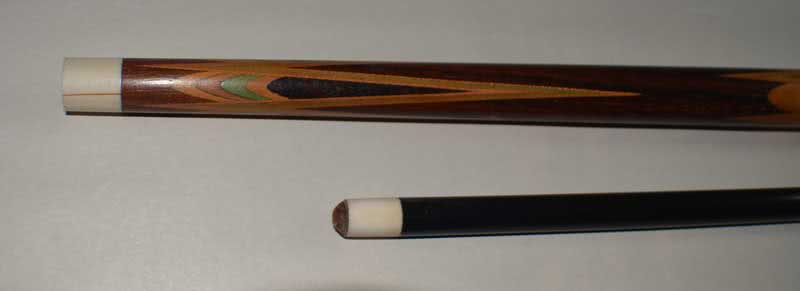

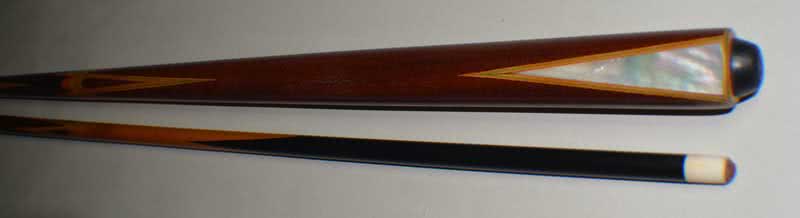

(Item 2) Antique Brunswick #360 Billiard Cue, c.1900 This antique #360 billiard cue is a remarkable specimen of the elite craftsmanship offered by the Brunswick-Balke-Collender Company at the turn of the century. Measuring 57 inches and weighing 20 oz, this cue is expertly constructed from a sophisticated blend of Mahogany, Brazilian Rosewood, and Ebony, representing the finest materials available in the era. The cue features an extraordinary level of detail, including three sets of hand-spliced points and reverse butterflies. The butt is further distinguished by a Mother of Pearl (MOP) inset surrounded by intricate colored veneers. This professional-grade vintage cue is equipped with an authentic joint and ferrule, paired with a rare Ebony shaft that highlights the luxury status of the #360 model. Specifications: Model: #360 Materials: Mahogany, Brazilian Rosewood, and Ebony Features: Ebony shaft, hand-spliced points, reverse butterflies, and MOP inset with colored veneers Length: 57" Weight: 20 oz Please email for more information on this high-end Brunswick #360 cue.

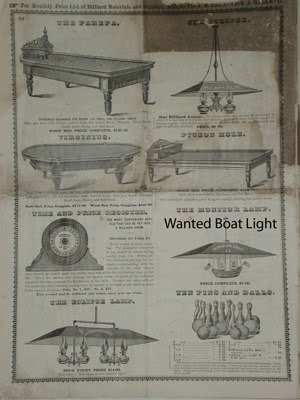
(Item 2) J.M. Brunswick & Balke Co. Billiard Tables and General Billiard Merchandise Catalog, c.1870s This antique 12-page catalog is a premier example of 19th-century billiard ephemera, representing the J.M. Brunswick & Balke Co. during one of its most influential eras. In remarkably nice condition for its age, this original publication serves as a vital historical record of the exquisite billiard tables and high-end accessories offered to the Victorian-era market. The catalog provides detailed insights into the "General Billiard Merchandise" of the 1870s, showcasing the craftsmanship and variety that defined the Brunswick brand before the 1884 merger with the Phelan & Collender company. This vintage document is an essential reference for serious collectors, restorers, and historians of the game. Specifications: Era: c.1870s Content: 12 pages of billiard tables and accessories Format: Original softcover Size: 10 1/4" x 13 3/4" . For reference only. WANTED!

(Item 3) Antique Glo-Dial "Make Love Not War" Neon Clock This is an extraordinary 28" architectural neon clock manufactured by the renowned Glo-Dial Clock Co. of Los Angeles. A true centerpiece for a high-end game room or gallery, this 1950s-era timepiece features a bold, vintage "Make Love Not War" motif, bridging the gap between classic Mid-Century design and iconic 1960s social history. The clock has been meticulously restored to its original brilliance, featuring a professional re-chromed bezel that perfectly complements the vibrant lemon yellow housing. The neon display is a masterclass in mid-century glasswork, utilizing a rare and sophisticated three-color palette: Ruby Red coated glass Cobalt Blue coated glass Novial Gold coated glass At 28 inches in diameter, this is the largest and most desirable size produced by Glo-Dial, offering a massive visual presence and a deep, multi-layered glow that remains sharp and saturated. This is a premier example of American neon advertising and a rare opportunity for the serious collector of vintage Americana. Specifications: Manufacturer: Glo-Dial Clock Co. Era: 1950s (Clock) / 1960s Theme Diameter: 28" Finish: Lemon Yellow with Re-Chromed Bezel Glass: Triple-coated Ruby Red, Cobalt Blue, and Novial Gold Please email for price.

(Item 5) Antique Brunswick Archie Gunn Girls Original Watercolor Prints & Frames, c.1910 This exquisite set of three vintage prints features the celebrated artwork of Archie Gunn, commissioned by the Brunswick-Balke-Collender Company at the turn of the century to promote their diverse line of billiard tables. These prints are highly prized for their stylish depiction of early 20th-century social life and the growing popularity of the game among women during the era. The set includes three distinct scenes (from left to right): "A Graceful Stroke" "Beauty of Billiards" "Avoiding a Kiss" Each piece is presented in its period-appropriate frame, preserving the elegant aesthetic of these antique watercolor-style reproductions. This complete trio represents a rare opportunity to acquire a matched set of one of the most iconic advertising campaigns in billiard history. Specifications: Artist: Archie Gunn Quantity: Set of three (3) Era: c.1910 Size: 27 1/8" x 21 1/8" (each) Please email for more information on the condition and framing details of this original set.
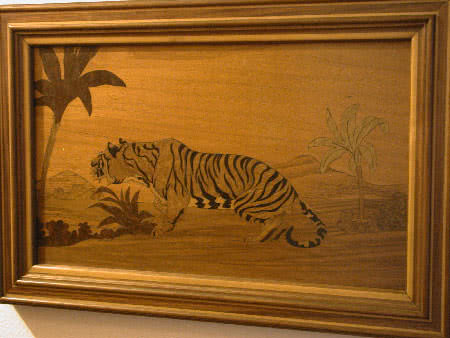
(Item 8) Brunswick-Balke-Collender Co. Wooden Marquetry Picture – Tiger This striking piece of industrial artistry features a detailed depiction of a tiger, expertly rendered through the traditional technique of wooden marquetry. Produced by the renowned Brunswick-Balke-Collender Co., this panel showcases a sophisticated inlay process where various wood veneers are meticulously fitted together to create the form, texture, and shading of the subject. Historically, such high-quality marquetry pieces were often commissioned by Brunswick to decorate their most opulent billiard rooms or were featured in their premier equipment catalogs during the late 19th and early 20th centuries. The craftsmanship highlights the natural grain and contrasting tones of the wood, bringing a sense of movement and depth to the feline's portrait. Manufacturer: Brunswick-Balke-Collender Co. Subject: Tiger Medium: Wooden Marquetry Dimensions: 21 1/4" x 14" Please email for more information.

(Item 9) Antique German Engraving: "Billiard Champions" (c. 1883) This rare and historically significant 19th-century engraving captures a definitive moment in the "Golden Age" of professional billiards. Published by the renowned firm of Keppler & Schwarzmann (copyright 1881), this piece serves as a sophisticated visual record of the era's most elite international players. The engraving depicts a gathering of five legendary champions whose names defined the sport in the 1880s: William Sexton, the French master Maurice Vignaux, the "Wizard" Jacob Schaefer, Maurice Daly, and Joseph Dion. These men were the titans of the balkline and rail games, frequently competing in high-stakes matches that drew thousands of spectators across Europe and America. Measuring 20 3/4" x 17", this antique artwork is a premier example of 19th-century sports ephemera. The level of detail in the portraiture reflects the high production standards of Keppler & Schwarzmann, who were famous for their work in Puck magazine and other high-quality lithographic publications of the period. This is an essential acquisition for any serious collector of pedigreed billiard history or Victorian-era sporting art. Specifications: Subject: Elite Billiard Champions (Sexton, Vignaux, Schaefer, Daly, and Dion) Date: Circa 1883 (Copyright 1881) Publisher: Keppler & Schwarzmann Dimensions: 20 3/4" x 17" Origin: Germany/USA This is a rare piece of billiard history. Please email for price and additional details.
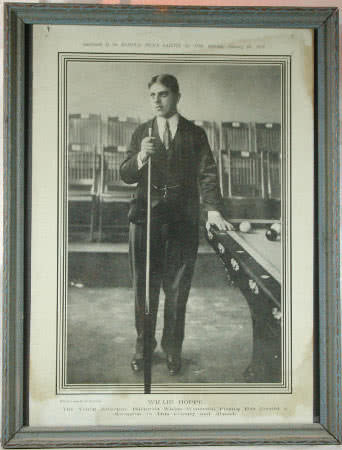
(Item 11) Antique Willie Hoppe "National Police Gazette" Portrait (1908) This exceptionally rare portrait features a youthful Willie Hoppe, widely considered the greatest billiard player of all time, at the very dawn of his legendary career. Published in the National Police Gazette (No. 1594) on Saturday, February 29, 1908, this piece captures the "Boy Wonder" during the pivotal year he was solidifying his dominance in the 18.1 and 18.2 balkline games. The image is a high-quality period reproduction of an original photograph by the celebrated Vander Weyde of New York, a studio known for its masterful use of lighting and portraiture of early 20th-century icons. The caption beneath the image reads: "Willie Hoppe—The Young American Billiardist Whose Wonderful Playing Has Created a Sensation in This Country and Abroad." Measuring 17 1/4" x 13 1/4", this vintage sporting broadsheet is a significant piece of archival billiard history. It serves as a primary source documenting the meteoric rise of an American sports idol whose career would eventually span six decades and 51 world titles. Specifications: Subject: Willie Hoppe (The Young American Billiardist) Publication: National Police Gazette, No. 1594 Date: February 29, 1908 Photographer: Vander Weyde, New York Dimensions: 17 1/4" x 13 1/4" A rare and pedigreed piece of early 20th-century billiard ephemera. Please email for more information.

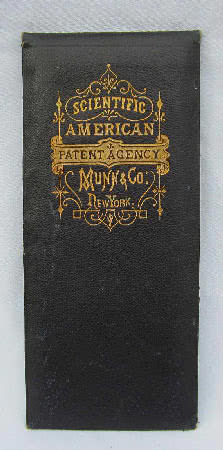
(Item 12) Cue Tip Fastener Patent (c. 1886) This original 19th-century document represents a fascinating chapter in the mechanical evolution of the billiard cue. Dated circa 1886, this patent illustrates a specialized Billiard Cue Tip Fastener, a device engineered during a period of intense innovation when players and manufacturers were seeking more reliable alternatives to traditional adhesive methods. The late 1880s saw a surge in "improved" cue technology, as the transition from simple wooden shafts to high-performance equipment necessitated more sophisticated tip-retention systems. This patent is a prime example of the industrial ingenuity of the Victorian era, capturing the technical specifications and diagrams of a tool designed to ensure the perfect, secure seat for a leather tip. As an authentic piece of billiard history, it is an essential acquisition for collectors of patent models, technical ephemera, or those specializing in the development of the modern cue. Specifications: Subject: Billiard Cue Tip Fastener Era: Circa 1886 Category: Antique Technical Patent / Billiard Ephemera Significance: Early mechanical innovation in cue maintenance A rare and technical look into the craftsmanship of the 1880s. Please email for more information on this unique archival piece.

(Item 13) Antique J.E. Came Company Time Price Register (c. 1868) This is an exceptionally rare and sophisticated Time Price Register manufactured by the J.E. Came Company of Boston. Carved from rich, high-grade mahogany, this mantel-style clock is not merely a timepiece but a specialized mechanical calculator designed for the management of upscale billiard clubs during the mid-19th century. In the 1860s, these registers were the gold standard for high-end establishments. Beyond simply keeping time, they featured integrated dials or scales to precisely calculate the "price of time" for a game of billiards, ensuring accurate billing for the table's use. The J.E. Came Company was a premier New England manufacturer of billiard tables and accessories, and this register represents the pinnacle of their auxiliary equipment. Standing 17" tall by 21" wide, this piece is a monumental example of Victorian industrial design. Its presence in a collection or game room offers a direct connection to the business side of 19th-century billiard culture, where precision and luxury were equally prioritized. Specifications: Manufacturer: J.E. Came Company, Boston Era: Circa 1868 Material: Solid Mahogany Dimensions: 17" H x 21" W Function: Billiard Room Time Keeper and Rate Calculator A rare and pedigreed piece of billiard room furniture. Please email for more information.

(Item 15) Antique Brunswick-Balke-Collender Co. Home Billiard Table Promotion, c.1903 This antique promotional piece offers a rare and intimate glimpse into the marketing of domestic billiard tables at the turn of the century. Produced by Thompson & Brown, this exceptional item features a rare black-and-white photograph that has been meticulously hand-colored by the photographer, a technique that provides a unique, painterly depth to the scene. The piece is both signed and dated by the photographer, with a formal copyright by "T&B 1903." This vintage photograph was designed to showcase the elegance and social prestige of owning a Brunswick-Balke-Collender home table, capturing the refined lifestyle associated with the brand during the early 1900s. Its large format and artisanal coloring make it a significant crossover piece for collectors of both photography and billiard history. Specifications: Date: Copyright 1903 Producer: Thompson & Brown Medium: Hand-colored black-and-white photograph Features: Signed and dated by the photographer Size: 27 3/4" x 23 1/2" Please email for more information on the condition and provenance of this rare hand-colored promotion.

(Item 16) Antique Grain Belt Beer Neon Sign This antique Grain Belt Beer neon sign is a rare, early specimen originally recovered from the front window of an old billiard hall. Featuring a classic three-color neon configuration in orange, green, and blue, this sign is a standout piece of mid-century breweriana. The unit is distinguished by its early-style round transformer mounted on top, a design element highly sought after by collectors of vintage advertising. Its compact depth and vibrant tri-color display make it an iconic example of historical storefront illumination. Specifications: Type: Early Neon Window Sign Colors: Orange, Green, and Blue Features: Original round top-mounted transformer Size: 23" x 15" x 3" Status: Sold WANTED: We are actively looking to purchase another Grain Belt Beer neon sign identical to this one. We pay top dollar for this specific model! If you have one available, please call or text 320-552-8188.
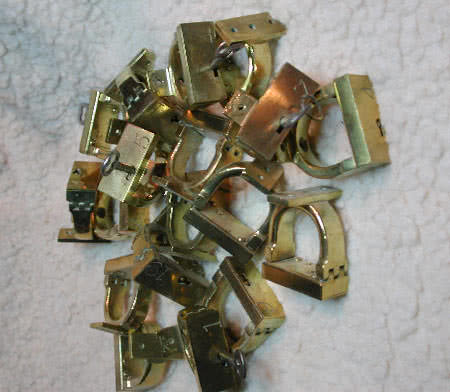
(Item 17) Antique Cast Brass Billiard Cue Rack Locks. Size: 1 7/8" X 1 3/8". You can key all twelve locks to work for the same key if desired. Please call for more information. Quick Specs & Considerations Dimensions: 1 7/8" x 1 3/8". This is a standard compact size for wall-mounted cue racks. Keying: The ability to "keyed alike" (one key for all 12) is a massive quality-of-life win. Managing 12 different tiny keys in a pool hall or home bar is a nightmare you definitely want to avoid. Material: Cast Brass is ideal because it develops a natural patina over time, though it can be polished back to a high shine if you prefer the "gold" look. Questions You Should Ask the Seller "Item 17," you might want to confirm these details when you call: Mounting Hardware: Do they come with matching brass screws? (Finding matching aged brass screws can be surprisingly annoying). Key Material: Are the keys also brass, or are they modern steel replacements? Mechanical Condition: Since they are "antique," do the internal leaf springs still have a "snap," or are they a bit sticky? Backset: Ask for the distance from the edge of the lock to the center of the keyhole to ensure it aligns with any existing holes in your rack. Please email for price.

Item. 18 This is a phenomenal piece of billiard history. Before the advent of modern climate control and electric table heaters, these heavy cast iron irons were essential for maintaining the playability of a table. By heating the iron on a stove and passing it over the cloth, players could remove moisture from the wool fibers, ensuring the cloth stayed "fast" and the balls rolled true. Key Details & Specifications Manufacturer: The Brunswick-Balke-Collender Co. Era: Circa 1880s Material: Heavy Cast Iron Markings: High-relief embossed lettering featuring the full company name. Dimensions: 10 1/2" L x 5" W x 5 1/2" H Weight: Approximately 19 lbs. Historical Significance During the late 19th century, Brunswick-Balke-Collender was the titan of the industry. This iron isn't just a functional tool; it's a decorative antique that showcases the ornate industrial design of the Victorian era. The 19-lb weight was intentional—it provided the necessary pressure to flatten the nap of the cloth without requiring the operator to press down manually. Condition & Display Tips If you are adding this to a collection or a period-correct game room: Preservation: To maintain the "fancy embossed lettering" and prevent rust, a light coat of high-quality clear wax can help preserve the dark iron finish. Surface Protection: Given the 19-lb weight, if you display this on a glass case or a finished wooden sideboard, be sure to use a felt or leather pad underneath to prevent scratching. Please call for more information regarding this rare 1880s Brunswick billiard iron.

Item 19 This is an extraordinary specimen of early billiard engineering. Finding a mechanical pocket from the late 1700s or early 1800s is a rare occurrence, as these preceded the standardized leather-and-fringe pockets that became common in the mid-19th century. Specifications & Material Origin: European Era: Circa late 18th to early 19th Century Material: Heavy Cast Brass / Bronze Dimensions: 9" x 7" Historical Context During this era, European table design was undergoing a transition from simple "holes" in the bed to more sophisticated mechanical catch systems. These pockets were often integrated into the rail and frame as structural elements rather than just hanging nets. The use of cast brass and bronze suggests a high-end, custom-built table. At this time, billiard tables were exclusively found in the estates of the aristocracy or high-end social clubs, and the "mechanical" nature of the pocket likely involved a specific gravity-feed or gated system to retain the balls. Restoration & Display Notes Material Care: Bronze and brass from this period often carry a deep, dark "chocolate" patina. To preserve the historical value, it is generally recommended to avoid aggressive polishing, which can strip away two centuries of natural oxidation. Technical Detail: Collectors often look for the mounting points on these units. Given the 9" x 7" size, this is a substantial casting that would have required a heavy-duty rail assembly to support it. Please call for more information on this rare European mechanical billiard pocket.

Item 20 This is a quintessential example of 19th-century British billiard maintenance. While the American market was dominated by Brunswick, Thurston of London was the premier name in the United Kingdom, having been established in 1799 and eventually becoming the official table maker to the British Royalty. Specifications & Weight Manufacturer: Thurston & Co. (London) Era: Circa 1880s Material: Heavy Cast Iron Markings: Embossed "Thurston London" in classic Victorian-style lettering. Dimensions: 10 1/2" L x 5" W x 5 1/2" H Weight: Approximately 17 lbs. Historical Context This iron represents the pinnacle of Victorian billiard technology. In the late 1800s, British tables typically used heavy wool cloths that were prone to "lifting" or holding moisture in the damp English climate. A heated iron like this was a daily necessity for a "marker" (the room attendant) to press the nap flat and ensure the table played fast and consistent for high-level matches. Design Features Ergonomics: The 5 1/2" height allows for a substantial, solid handle grip, providing the leverage needed to guide the 17-lb weight smoothly across the slate. Industrial Branding: The embossed "Thurston London" branding serves as a mark of quality from one of the oldest and most respected names in the history of the game. Comparison Note Compared to American irons of the same period, British irons like this one often show slight variations in the handle casting and the specific font styles used in the embossing, making them highly collectible for those focusing on European billiard history. Please call for more information on this rare Thurston London antique billiard iron.

Item 21 This represents an exceptional find for collectors of early European billiard history. Dating to the late 18th or early 19th century, this mechanical billiard table pocket predates the standardized leather-and-net configurations that became the industry norm by the mid-1800s. Specifications & Material Origin: European Era: Circa late 1700s to early 1800s Material: Heavy Cast Brass / Bronze Dimensions: 9" long x 7" wide Historical Significance During the Georgian and Napoleonic eras, billiard tables were bespoke luxury items found in the grand estates of Europe. The use of cast brass or bronze for the pocket assembly signifies a high-caliber table of the period. Unlike modern pockets, these mechanical units were often integrated directly into the wooden rail structure, serving as both a functional ball-catch and a decorative architectural element of the table’s frame. Collector’s Note Artistry: The 9" x 7" footprint indicates a substantial casting. These early pieces often feature unique tool marks and variations in the alloy, reflecting the hand-finished nature of late 18th-century metalwork. Restoration Potential: For those restoring a period-correct European table, finding an original casting from this era is a rare opportunity to maintain the historical integrity and "pedigree" of a world-class antique.

Item 22 This is a charming piece of early 20th-century billiard Americana. Souvenir plates like this were often commissioned by high-traffic pool parlors in the early 1900s as promotional items or commemorative gifts for regular patrons, making them excellent "crossover" collectibles for both billiard enthusiasts and antique porcelain collectors. Specifications & Condition Origin: Milo's Pool Parlor on back. Wichita Kansas Dated 11905 Era: Circa 1905 Size: 10" diameter Condition: Features a few small dings, which are consistent with an authentic souvenir piece of this age. Historical Context By 1905, the "Pool Parlor" had become a staple of American social life. Establishments like Milo's would often use decorative items to elevate their brand and distinguish themselves from the rougher "pool rooms" of the mid-19th century. A 10-inch plate was a substantial size, likely intended for display on a plate rail or in a glass-front cabinet within the parlor itself or a patron's home. Collector's Appeal Ephemera Value: Unlike cues or tables, parlor-specific souvenirs are unique to a single location, making them rare snapshots of local history. Aesthetic: Even with "small dings," the wear on the plate adds a layer of character that tells the story of its 120-year history. It serves as a perfect companion piece for a period-correct game room or a collection of billiard-related ephemera. Please call for more information regarding this 1905 Milo's Pool Parlor souvenir plate.

Item 23 This is a robust and highly collectible example of late 19th to early 20th-century billiard maintenance equipment. Produced by the well-known London firm W. Jelks & Sons, this iron is a testament to the specialized tools required to maintain professional-grade billiard tables during the pre-electric era. Specifications & Origin Manufacturer: W. Jelks & Sons (Holloway, London) Material: Heavy Cast Iron Dimensions: 10" long x 4 1/2" wide x 6" high Function: Used for drying damp billiard cloth and pressing the nap after heating on a wood stove. Historical Context: W. Jelks & Sons W. Jelks & Sons were prominent London-based furniture makers and billiard table specialists, famously located on Holloway Road. Known for their "Challenge" billiard tables, they supplied equipment across the British Empire. This iron is a physical link to that era of craftsmanship, featuring the substantial weight and durability necessary to flatten the heavy wool cloth used on traditional English tables. Design & Utility Impressive Height: At 6 inches tall, this iron features a high-clearance handle, which helped protect the user's hand from the heat of the cast iron base after it was removed from the stove. Branding: Items featuring the Holloway location and the Jelks name are particularly sought after by collectors of British billiard ephemera and industrial antiques. Condition for Use: If being used for restoration today, these irons are prized for their ability to retain heat for a significant amount of time, allowing for a smooth, consistent finish across the length of a 12-foot table. Please call for more information on this antique W. Jelks & Sons billiard iron.
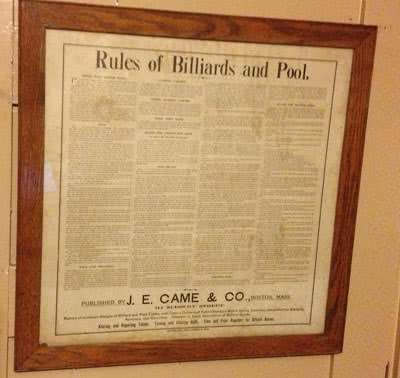
Item 24 This is a premier piece of 19th-century billiard ephemera. J.E. Came & Company was a prestigious Boston-based manufacturer known for high-quality tables and equipment, and finding an original rules poster—especially one still in its original frame—is a rare opportunity for a serious collector. Specifications & Display Manufacturer: J.E. Came Co. (Boston, MA) Format: Official Billiard Rules Poster Framing: Housed in its original period frame Size: 22 3/4" (Total dimensions including frame) Historical Context Founded in the mid-1800s, the J.E. Came Company was one of the most respected names in the New England billiard trade. Rules posters like this were mandatory fixtures in upscale billiard parlors and private gentlemen’s clubs. They served a dual purpose: providing a quick reference for tournament play and acting as a decorative "pedigreed" endorsement of the room's professional standards. Collector’s Appeal Originality: The presence of the original frame is significant. Period framing from the late 1800s often utilized unique wood grains and joinery that complement the aesthetic of the poster itself, preserving its historical integrity. Typography & Design: Posters from this era typically feature elegant Victorian typography and intricate border work, making them striking focal points for a vintage-style game room or library. Regional Rarity: While Brunswick dominated the national market, J.E. Came items are a specific point of pride for collectors of East Coast and New England billiard history. Please call for more information regarding this rare framed J.E. Came Co. billiard rules poster.

Item 26 This is a truly unique crossover piece—combining the world of professional billiards with Edwardian formal dining. A Cruet Set (traditionally used to hold oil, vinegar, salt, and pepper) commissioned or awarded by G. Cornthwaite in 1904 is a rare example of personalized billiard memorabilia from the early 20th century. Specifications & Materials Inscription/Badge: "G. Cornthwaite Billiards 1904" (Front Badge) Hallmarks: "E.P.N.S." (Electroplated Nickel Silver) Components: Silver-plated frame with original cut glass containers. Dimensions: 8" tall x 6" square Historical Context: G. Cornthwaite In 1904, personalized items like this were often presented as high-stakes tournament prizes or commissioned for the private dining room of an upscale Billiard Hall proprietor. The Cornthwaite name is tied to English billiard history, and a piece like this would have sat on a sideboard or dining table, signifying the owner’s status within the sporting community. Design & Material Detail E.P.N.S. Construction: The "E.P.N.S." mark on the bottom confirms it is Electroplated Nickel Silver, a high-quality Victorian and Edwardian method for creating durable, brilliant silver finishes over a strong nickel base. Cut Glass: The presence of the original glass containers—likely featuring intricate period patterns—adds significant value, as these are often broken or lost over the last 120 years. Aesthetic: The 1904 date places this at the height of the Edwardian era, characterized by a transition from heavy Victorian ornamentation to more refined, elegant lines. Collector’s Note Items like this are highly sought after by "niche" collectors who look for billiard-related items that aren't just tools (like cues or irons), but rather lifestyle pieces that show how integrated the game was into the social fabric of the era. Please call for more information regarding this rare G. Cornthwaite 1904 Billiards Cruet Set.

Item 27 These oval chalk holders are ingenious examples of mid-Victorian billiard engineering. Dating to the 1870s, they represent a time when table accessories were designed to be as durable and ornate as the tables themselves. Specifications & Design Era: Circa 1870s Material: Heavy Cast Iron Shape: Classic Oval Mounting: Under-rail screw mount Action: Mechanical swing (pivots left or right) Format: Sold in pairs Historical & Functional Context In the 1870s, before chalk was consistently sold in the standardized cubes we see today, billiard rooms needed a dedicated place to keep chalk accessible but out of the way of the player's stroke. These swing-away holders were the perfect solution: Discreet Storage: Tucked under the rail, they maintained the clean lines of the table. Mechanical Elegance: The swivel action allowed a player to pull the chalk out for use and then tuck it back under the rail with a simple flick, preventing it from being knocked onto the floor or the table's cloth. Industrial Design: The cast iron construction ensured these would survive decades of use in high-traffic commercial parlors. Collector’s Note Pairs: Finding these in original pairs is highly desirable for restorers looking to maintain symmetry on a 19th-century table. Versatility: Because they mount under the rail, these can be added to almost any vintage or antique table to enhance its period-correct appearance without interfering with the existing rail hardware. Patina: As with most 1870s cast iron, the age-appropriate wear on the metal adds a level of "pedigreed" authenticity that modern reproductions cannot match. Please call for more information on these rare 1870s cast iron oval chalk holders.

Item 28 This is a premier example of 19th-century billiard room equipment. Produced by the Brunswick-Balke-Collender Co. during their most innovative era, this Pin Pool Scorekeeper is a sophisticated mechanical record-keeper designed for one of the most popular social games of the Victorian age. Specifications & Features Manufacturer: Brunswick-Balke-Collender Co. (BBC) Era: Circa 1870s Material: Fine Wood Construction with Brass Components Unique Hardware: Features rare numbered brass pea cups with top-opening lids. Storage: Integrated lower shelf designed to hold "billiard smalls" (chalk, tips, or markers). Dimensions: 23 1/4" wide by 21 1/2" high Historical & Game Context Pin Pool was a high-stakes, strategic game often played in upscale 19th-century parlors. It utilized "peas" or "pills" (small numbered balls) kept in a shaker bottle to assign secret numbers to players. The Pea Cups: These numbered brass cups were essential for the game, allowing players to securely store their private numbers or track their progress during a match. Mechanical Design: The top-opening lids on the brass cups are a hallmark of high-end 1870s craftsmanship, providing a tactile and durable solution for busy billiard rooms. Collector’s Appeal Rarity: Complete Pin Pool scorekeepers from the 1870s are increasingly difficult to find, especially those retaining their original brass hardware and functional top-loading cups. Functional Decor: The combination of rich wood and polished brass makes this a standout wall-mounted piece. The addition of the lower shelf adds a layer of utility that is often missing from later, more simplified scoreboards. BBC Provenance: As an authentic Brunswick-Balke-Collender piece, this item carries the "pedigreed" status that defines the golden age of American billiard manufacturing. Please call for more information on this rare 1870s BBC Pin Pool scorekeeper.

Item 29 Antique Cast Iron Billiard Table Chalk Holders (c. 1870s) These rare, antique cast iron chalk holders are quintessential examples of 19th-century billiard room hardware. Designed to be both functional and unobtrusive, this vintage pair was engineered to screw directly into the underside of the table rails. This placement allowed players easy access to their cue chalk while keeping it tucked away from the playing surface and preventing accidental contact with clothing. Dating to the 1870s, these holders likely feature the ornate, heavy-casting style popularized by leading manufacturers of the era. The durable cast iron construction ensures they have survived the decades, making them an ideal addition for a period-correct restoration or as a standalone collectible for a billiard enthusiast. Era: c. 1870s Material: Cast Iron Configuration: Sold in pairs Mounting: Under-rail screw-on design Please call for more information.

Item 31 Antique H.W. Collender Cast Iron Billiard Table Chalk Holders (Dated 1877) This is a premier pair of H.W. Collender chalk holders, representing the gold standard of American billiard engineering from the late 19th century. Hugh W. Collender was a titan of the industry, known for his innovative patents and his eventual merger to form the legendary Brunswick-Balke-Collender Co. in 1884. These holders are specifically dated 1877, a period when Collender was producing some of the most sophisticated "heavy-style" tables in the world. Designed to be discreet yet elegant, they screw directly into the underside of the table rails, keeping the chalk secure and off the cloth. Specifications & Features Manufacturer: H.W. Collender (New York) Date of Origin: 1877 (Stamped) Material: High-quality Victorian cast iron Design: Pivot or "swing-out" style for under-rail mounting Quantity: Sold in pairs Collector’s Note Items with a clear 1877 date stamp are highly sought after by historians and restorers. They are the perfect finishing touch for a Collender "Standard" or "Narragansett" style table from the same decade. Please call for more information.
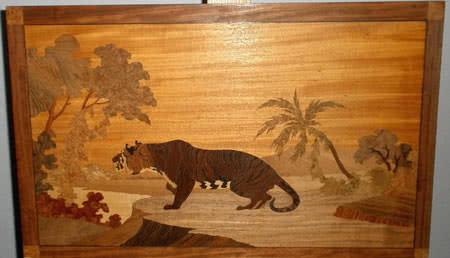
Item 32 Antique Brunswick-Balke-Collender - Tiger Marquetry Picture This exceptional antique marquetry picture is a rare piece of 19th-century showroom history. Produced by the Brunswick-Balke-Collender Co., these artistic panels served a dual purpose: they were both high-end decorative pieces for a billiard hall and functional sales tools. Brunswick created various marquetry pictures to showcase the diverse range of exotic wood veneers available for their custom billiard tables. This specific piece features the striking "Tiger" grain patterns, allowing a potential client of the era to visualize and select the exact aesthetic for their commission. It is a testament to the "Golden Age" of billiard manufacturing, where craftsmanship and material variety were paramount. Specifications & Features Manufacturer: Brunswick-Balke-Collender Co. Subject: Tiger Marquetry / Veneer Showcase Function: Historical Sales/Display Sample Dimensions: 24 1/2" x 15 1/2" Era: Late 19th to early 20th Century Collector’s Note This vintage panel is highly sought after by those documenting the history of American woodworking and billiard manufacturing. Because these were often discarded when showrooms updated their styles, surviving examples in this size are increasingly difficult to locate. Please call for more information.

Item 35 Antique Brunswick-Balke-Collender - Billiard Cue Tipping Tools (Dated 1884) These antique cue tipping tools are a remarkable surviving example of 19th-century billiard maintenance equipment. Precision-engineered by the Brunswick-Balke-Collender Co. and clearly dated 1884, these specialty tools were essential for the professional maintenance of high-end cues. During this era, the transition from simple leather tabs to sophisticated layered tips required specialized clamping mechanisms. These tools were designed to apply consistent, even pressure to a newly glued cue tip, holding it perfectly in place while the adhesive dried. Their 1884 date coincides with the monumental merger of the Brunswick-Balke and H.W. Collender companies, making these a significant piece of industry history from the company’s earliest years. Specifications & Features Manufacturer: Brunswick-Balke-Collender Co. Date of Origin: 1884 (Stamped) Function: Professional cue tip clamping/drying tool Material: Period-correct vintage hardware Historical Context: Early post-merger era production Collector’s Note While tables and cues are often the centerpieces of a collection, these functional maintenance tools are far rarer. They are a must-have for a complete historical display of 19th-century billiard room accessories. Please call for more information.

Item 37 Antique Billiard Pocket Sewing Glove (c. 1870s) This rare antique sewing glove is a specialized piece of 19th-century trade equipment, essential for the maintenance and repair of high-end billiard tables. Dating to the 1870s, this functional tool was used by professional mechanics to hand-stitch leather billiard pockets using heavy waxed thread and large, industrial-grade needles. The ergonomic design features a large opening for the fingers and a smaller opening specifically for the thumb, providing the grip and leverage necessary for working with thick, reinforced leather. The integrated thimble allowed the craftsman to safely and effectively push a large needle through multiple layers of pocket material, ensuring a durable and seamless repair. Specifications & Features Era: c. 1870s Function: Professional billiard pocket hand-stitching and repair Design: Ergonomic finger and thumb openings with integrated thimble Usage: Compatible with heavy waxed thread and large-bore needles Historical Context: A vital tool from the "heavy-architecture" era of billiard table manufacturing. Collector’s Note Vintage maintenance tools like this sewing glove are exceptionally rare, as they were often used until they were worn out and discarded. This is a unique opportunity for a serious collector to acquire an authentic piece of 19th-century billiard craftsmanship history. Please call for more information.

Item 38 Antique Brunswick-Balke-Collender T-Shaped Cue Tip Cutting Tool (c. 1880s) This specialized antique maintenance tool is a quintessential example of the precision instruments produced by the Brunswick-Balke-Collender Co. during the late 19th century. Dating to the 1880s, this T-shaped cutter was a staple for billiard room operators and professional cue technicians. The "T" design provided the necessary leverage and grip to trim and shape leather cue tips with exacting accuracy. In an era where cue maintenance was considered a fine craft, this tool allowed for the clean, flush cuts required to ensure a perfect hit on the ball. Its cast construction and functional geometry reflect the industrial elegance synonymous with Brunswick’s post-merger era. Specifications & Features Manufacturer: Brunswick-Balke-Collender Co. Era: c. 1880s Design: Ergonomic T-shape for manual cutting leverage Function: Professional trimming and shaping of leather billiard cue tips Collector’s Note While this specific unit has been sold, these T-shaped cutters remain highly collectible artifacts of billiard history. Their robust design means they often survive in excellent functional condition, making them a favorite for display alongside period-correct cue racks.

Item 39 Antique "Billiard Experts of the World" Poster (1915) This magnificent antique cardboard poster is a premier piece of early 20th-century sports memorabilia. Commissioned by the Brunswick-Balke-Collender Co. in 1915, it serves as a historical roll call of the greatest billiard masters from around the globe during the sport's golden age. As an original lithograph, it captures the era when professional billiards commanded massive public interest and international prestige. The poster features detailed portraits of the world's most renowned players, framed within the high-quality craftsmanship Brunswick was known for. It is rare to find these cardboard posters surviving in such a complete state, as many were subject to wear in high-traffic billiard halls. Specifications & Features Manufacturer: Brunswick-Balke-Collender Co. Date of Origin: 1915 Material: Original cardboard lithograph Subject: Billiard Experts of the World (International Masters) Dimensions: 40 3/4" x 29 1/2" (including frame) Status: Original poster and frame Collector’s Note This vintage 1915 poster is a cornerstone piece for any serious billiard historian. Its impressive scale and historical accuracy regarding the players of the time make it a centerpiece for a gallery or a high-end billiard room. Finding this original cardboard version still in its period frame is a significant discovery for the marketplace. Please call for more information.
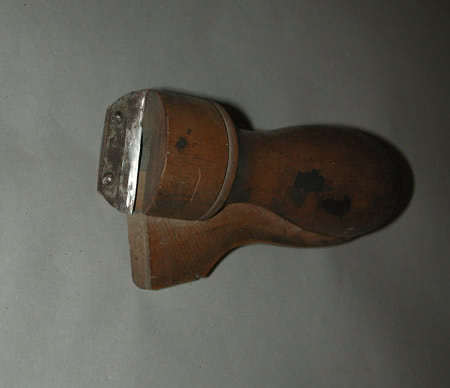
Item 40 Antique Billiard Cue Tip Cutting Tool (c. 1880s) This antique maintenance tool is a fine example of the specialized hardware required to maintain professional-grade equipment during the late 19th century. Dating to the 1880s, this cutter was designed to provide clean, precision trimming of leather cue tips, ensuring the perfectly flush edge necessary for consistent play. Constructed during the "Golden Age" of billiards, this vintage tool reflects the era's commitment to durability and mechanical accuracy. Its robust design allowed for repeated use in high-volume billiard parlors, where maintaining the "crown" and edge of a cue tip was a daily necessity for serious players. Specifications & Features Era: c. 1880s Function: Precision trimming and squaring of leather cue tips Material: Period-correct metal construction Historical Context: An essential accessory for the professional billiard room maintenance kit of the Victorian era. Collector’s Note While often smaller than other table accessories, these antique cutting tools are vital for a complete historical display. They represent the specialized craftsmanship that defined the billiard industry before the advent of modern, disposable maintenance plastics. Please call for more information.

Item 43 Antique J.M. Brunswick Chicago Billiard Table Brush (c. 1860s – 1870s) This remarkably rare antique billiard table brush is a cornerstone piece of American billiard history. Manufactured by J.M. Brunswick in Chicago during the late 1860s to early 1870s, it predates the major mergers that eventually formed the Brunswick-Balke-Collender Co. The brush features its original patina and a stunning, intact gold leaf label, which identifies it as an authentic product of the original J.M. Brunswick factory. Constructed with high-quality horsehair, this vintage tool was designed to maintain the delicate wool cloth of mid-19th-century tables. Given its age and the fragility of early labels, finding an example with the gold leaf branding still visible makes this a premier display piece. +1 Specifications & Features Maker: J.M. Brunswick (Chicago) Era: Circa late 1860s – early 1870s Material: Original horsehair bristles Detailing: Original gold leaf manufacturer label Dimensions: 11" x 3 1/2" Condition: Excellent original patina; intended for display Collector’s Note Early J.M. Brunswick items from the Chicago era are highly coveted, as they represent the foundation of the Brunswick empire. The presence of the gold leaf label on a functional maintenance tool like this horsehair brush is an exceptional find for any serious museum-quality collection. Wanted! - J.M. Brunswick billiard brushes. Please call for more information.

Item 44 Antique Billiard Table Bridge Hooks (c. 1870s) These antique bridge hooks are essential hardware components from the "heavy-architecture" era of billiard table design. Dating to the 1870s, these hooks were engineered to be mounted to the side of the table frame or legs, providing a dedicated resting place for the bridge (or "rake") when not in use. Crafted during a period known for high-quality metalwork, these vintage hooks reflect the Victorian commitment to both utility and style. In the 1870s, even the most functional accessories were often cast with elegant curves or decorative flourishes to match the ornate woodwork of the tables they served. Maintaining a set of original hooks is vital for any authentic period restoration, ensuring the bridge remains accessible to the player while keeping it safely off the floor. Specifications & Features Era: c. 1870s Function: Under-rail or frame-mounted support for billiard bridges Material: Period-correct cast metal Historical Context: Designed for the substantial, ornate tables of the mid-to-late 19th century. Collector’s Note Original hardware from the 1870s is increasingly difficult to source, as these small components were frequently lost or replaced during table moves over the last century. Finding a set of authentic hooks is a significant win for a collector aiming for 100% historical accuracy in a restoration project. Please call for more information.

Item 46 Antique Brunswick-Balke-Collender Cue Chalk Holder (c. 1880s) This antique chalk holder is a prime example of the specialized billiard hardware produced by the Brunswick-Balke-Collender Co. during the late 19th century. Dating to the 1880s, this accessory was designed to provide a dedicated, accessible station for players to chalk their cues while protecting the table’s woodwork and cloth from excess dust. Crafted during the era of "heavy-architecture" billiard design, this vintage holder reflects the high standards of the post-merger Brunswick firm. Whether designed as a wall-mounted unit or a rail-integrated piece, these holders were essential for maintaining the decorum and cleanliness of a professional Victorian-era billiard parlor. Specifications & Features Manufacturer: Brunswick-Balke-Collender Co. Era: c. 1880s Function: Dedicated cue chalk storage and accessibility Material: Period-correct metal construction Historical Context: Produced during the peak of Brunswick’s 19th-century manufacturing dominance. Collector’s Note While often overlooked, original antique chalk holders are the finishing touches that complete a museum-quality billiard room. Finding authentic Brunswick hardware from the 1880s is increasingly rare, making this a valuable acquisition for a serious restoration project. Please call for more information.

Enhance the historical integrity of your collection with this rare, circa 1870s antique billiard table brush, manufactured by the legendary J.M. Brunswick & Balke Co. of Cincinnati, Ohio. This museum-quality piece retains its authentic, original patina and the iconic gold-leaf label, marking it as a premier example of 19th-century billiard craftsmanship. Featuring genuine, age-warmed horsehair bristles, it is a stunning, period-correct display item for any serious enthusiast of early American gaming history. Item Details: Manufacturer: J.M. Brunswick & Balke Co. (Cincinnati, OH) Material: Period Wood, Gold-Leaf Label, and Horse Hair Bristles Era: Circa 1870s Condition: Excellent Antique (Sold) Item Reference: [Please assign an Item ID] While this particular artifact has been acquired by a collector, it represents the high standard of vintage billiard memorabilia we strive to maintain. Finding original Brunswick accessories with the gold-leaf label intact is increasingly rare, and these pieces are highly sought after for both high-end game room displays and private collections. If you are searching for similar heirloom-quality brushes or other 19th-century pool table accessories, we invite you to reach out to our team. Pricing & Inquiries: This specific item is sold. Please contact us to inquire about other available antique billiard brushes or to be placed on our notification list for rare, period-correct findings. Wanted! J.M. Brunswick billiard brushes.
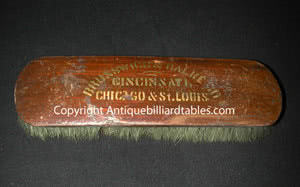
Item 49 Antique Brunswick & Balke Co. Billiard Table Brush (c. 1870s) This antique horsehair brush is a significant artifact from the pre-merger era of the Brunswick & Balke Co. Featuring a rare manufacturer label from the firm's major hubs in Cincinnati, Chicago, and St. Louis, this piece dates to the 1870s. This specific branding represents the company’s massive expansion across the American Midwest prior to their 1884 merger with H.W. Collender. The brush retains its original patina and a remarkably preserved gold leaf label, making it a premier choice for historical display. In the 19th century, horsehair brushes were the standard for maintaining the high-quality wool cloth of professional billiard tables, and surviving examples with intact gold-leaf branding are increasingly difficult to locate. Specifications & Features Manufacturer: Brunswick & Balke Co. (Cincinnati, Chicago & St. Louis) Era: Circa 1870s Material: Original horsehair bristles Detailing: Original gold leaf manufacturer label Dimensions: 11" x 3 3/8" Status: SOLD Collector’s Note Vintage maintenance tools with the "Brunswick & Balke" name are highly coveted by historians. The presence of the three-city label marks this as a piece from the decade of Brunswick's most aggressive domestic growth. While this specific unit has been sold, it remains a gold standard for the type of provenance collectors look for in billiard ephemera. Wanted! J.M. Brunswick billiard brushes. Sold. Please call us on others we may have.
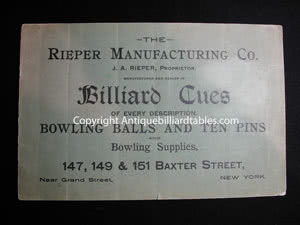
Item 50 J.A. Rieper Billiard Cues Catalog (March 20, 1902) This is a remarkably preserved original 1902 catalog from the workshop of J.A. Rieper, a premier manufacturer and dealer located at 147–151 Baxter Street, New York. During the turn of the century, New York was the epicenter of American billiard craftsmanship, and Rieper was a respected "proprietor" known for producing "Billiard Cues of Every Description." Dated specifically to March 20, 1902, this 11-page catalog (plus covers) serves as a vital historical record of early 20th-century cue artistry. It showcases a complete line of their finest offerings, including highly sought-after carved cues and sophisticated reverse-spliced designs. For the serious collector, this catalog provides the necessary provenance to identify and authenticate rare Rieper cues that occasionally surface in the market. Specifications & Features Manufacturer: J.A. Rieper (Baxter St., New York) Date: March 20, 1902 Size: 10 1/4" x 6 3/4" Contents: 11 Pages plus original covers Highlights: Detailed illustrations of carved and reverse-spliced cues Condition: Very nice, complete, and historically intact Collector’s Note Antique catalogs of this caliber are often rarer than the cues themselves. Because they were printed on paper and intended for short-term use, very few complete copies survived the last 120+ years. This is an essential reference for any library focused on the "Golden Age" of American billiards. Please call for more information.

Item 53 Antique Copper Wire Billiard Chairs These antique copper wire chairs are a superb example of specialized seating designed for the high-end billiard rooms of the late 19th and early 20th centuries. Often referred to as "spectator chairs," these pieces were engineered with a higher seat height to allow players and observers an unobstructed view of the table surface over the height of the rails. The use of copper wire construction reflects the "industrial elegance" of the era, offering a lightweight yet incredibly durable alternative to traditional heavy wood furniture. The intricate wire-work patterns were both a feat of engineering and a decorative statement, often appearing in the most prestigious billiard parlors across the country. Specifications & Features Era: Late 19th to early 20th Century Material: Decorative and structural copper wire Design: High-profile "Spectator" style seating Historical Context: A classic fixture of the "Golden Age" of billiards, designed for durability in high-traffic commercial environments. Collector’s Note Vintage copper wire furniture is highly prized by collectors for its unique patina and architectural silhouette. While many of these chairs were lost to scrap drives or heavy commercial wear, finding authentic billiard-height examples is a significant addition to any period-correct game room or gallery. Please call for more information.

Item 54 Antique American Chestnut Bentwood Billiard Chairs (Pair) This is a rare and striking pair of antique bentwood spectator chairs, masterfully crafted from American Chestnut. Prior to the early 20th-century blight that decimated the species, American Chestnut was prized by furniture makers for its incredible durability, straight grain, and warm, honey-toned appearance. Designed specifically for the billiard room, these "high-seat" chairs provide the elevated perspective necessary for observers and players to see over the table rails. The bentwood construction represents a peak in late 19th-century woodworking technology, utilizing steam to curve the chestnut into elegant, ergonomic forms that remain remarkably strong and lightweight. Specifications & Features Material: Rare American Chestnut Construction: Steam-bent "Bentwood" frames Design: Elevated "Spectator" height for billiard room use Configuration: Sold as a pair Era: Late 19th to early 20th Century Collector’s Note Finding vintage billiard furniture in American Chestnut is an exceptional opportunity. Because this wood is now commercially extinct due to the historic chestnut blight, these chairs are not just functional pieces of billiard history, but also rare botanical artifacts of the American landscape. Please call for more information.

Item 55 Antique J&J Kohn Bent-Wood Billiard Chairs, c1910 This is an exceptional and rare matching set of four antique bent-wood billiard chairs, crafted circa 1910 by the renowned makers Jacob & Josef Kohn. Produced in Czechoslovakia and retailed through their New York location, these chairs represent a significant find for the serious collector; several pieces in this set still retain the original paper maker's tags affixed beneath the seats. The set has been meticulously restored to maintain its historical integrity while ensuring longevity. The seats feature new, high-quality chocolate leather hides and fresh loin cloth covers, expertly installed over the well-preserved original horse hair padding. Finding a complete, signed set of four vintage bent-wood chairs in this condition is a true rarity in the billiard trade. Each chair stands 36" tall, offering a classic silhouette and sophisticated seating for any period-correct billiard room.
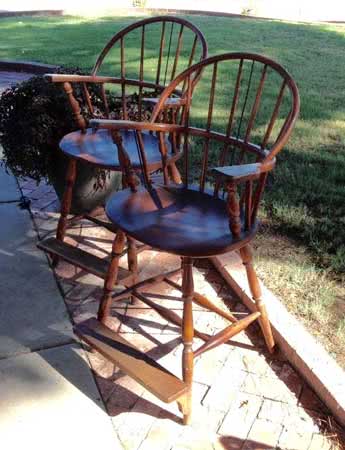
Item 1 Antique Bentwood Billiard Chairs (Pair) This is a stately pair of antique bentwood billiard chairs, standing at an impressive 42" tall. These vintage pieces offer the traditional elevated height essential for a clear, unobstructed view of the table during play. The classic bentwood construction provides both the durability and the timeless aesthetic sought after for period-correct billiard rooms. This matching pair serves as a sophisticated seating solution for players and spectators alike. Please call for more information regarding the specific history, finish, or restoration details of this pair.
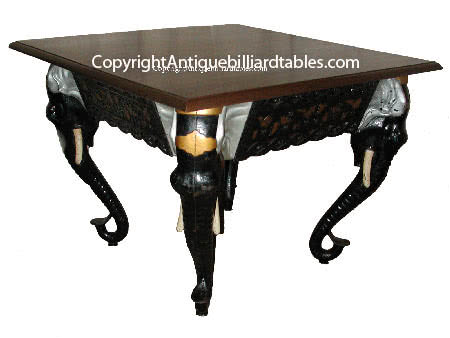
Item 57 Aesthetic Elephant Table (Club House & Hotel Reading Room) Attributed to C.G. Akam Mfg. Company & Akam and Skinner This historically significant and eccentric piece is a "Museum-Grade" cast iron utility table, dating to the late 1860s to 1870s. Originally designed for the high-traffic environments of Victorian-era club houses and hotel reading rooms, this table is a premier example of the ornate ironwork produced by C.G. Akam (Chicago) and Akam and Skinner (New York). The "Elephant" motif was a hallmark of high-Victorian design, symbolizing strength and exoticism. While C.G. Akam was legendary for manufacturing full-sized cast iron parlor billiard tables, this specific reading room model is a rare survival of their complementary furniture line. Specifications & Features: Top: 40" square, 1" thick solid walnut plank. Base: Four detailed cast iron elephants supporting the structure. Artistry: Side panels are intricately decorated with gold leaf butterflies in flight, adding a delicate "Folk Art" contrast to the heavy industrial frame. Dimensions: 40" W x 40" D x 28.5" H. Weight: Approximately 160 lbs. Provenance suggests this rare table originated from an old Montana hotel lobby during the "horse and buggy" era, making it a spectacular centerpiece for a luxury game room or a serious collection of billiard-related ephemera. Please call for more information.

Item 58 Antique R. Rothschild's Old West Saloon Poker Table, c. 1880s This is an exceptionally rare and authentic antique saloon poker table, manufactured by the renowned R. Rothschild during the late 19th century. A quintessential piece of Old West history, this table captures the rugged elegance of a high-stakes 1880s gaming hall. The table stands 28" tall and features a solid wood plank top measuring 34" x 35". It is supported by classic, early wooden spun poker table legs, maintaining the sturdy profile required for frontier use. Notable Period Features: Cast Iron Appointments: Outfitted with four fancy cast iron drink holders that suspend from the underside at each corner. Integrated Accessories: Includes original cast iron swing-out ashtray and cigar holders at all four corners, a hallmark of high-end vintage gaming furniture from this era. Manufacturer Provenance: Produced by R. Rothschild, a name synonymous with premium saloon and billiard hall furnishings of the 19th century. This piece represents a significant find for collectors of Western Americana or those looking to anchor a period-correct billiard room with authentic gaming history. Please call for more information.
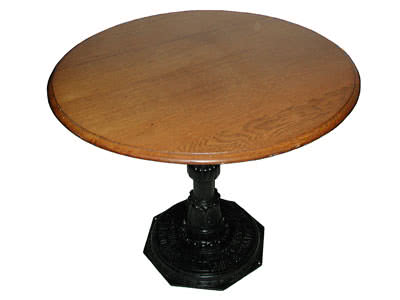

Item 59 Antique R. Rothschild's & Sons Saloon Table, c. 1880s Featuring Embossed Cast Iron Base & Quarter-Sawn Oak This is a premier example of an authentic Old West saloon table, manufactured by the prestigious R. Rothschild’s Sons Co. of Cincinnati, Ohio. Dating to the 1880s, this table is a rugged yet refined piece of American frontier history, specifically designed for the high-traffic environment of 19th-century billiard halls and saloons. The heavy cast iron base is a standout feature, serving as a "signature" for the maker with bold, embossed lettering that confirms its heritage: "The R. Rothschild's Sons . Co - Bar Fixtures - Pool & Billiard Tables - Cincinnati O. USA" Specifications & Features Table Top: 36" diameter, crafted from original quarter-sawn oak. The wood is in remarkable condition, showcasing the beautiful "fleck" or "flake" grain patterns typical of high-end Victorian furniture. Base: Ornate, heavy-duty cast iron, ensuring maximum stability for a bustling saloon environment. Dimensions: 30" tall x 36" across the top. Rarity: While Rothschild is famous for their full-sized billiard tables, finding these smaller, branded saloon tables with the original embossed ironwork intact is a rare opportunity for collectors of Western Americana. This table is the perfect companion piece to a period-correct pool room or a dedicated "Old West" gallery. Please call for more information.

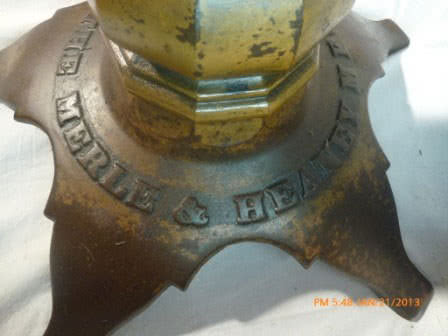
Item 60 Antique Merle & Heaney Poker Table Base, c. 1880s This is a rare and substantial antique saloon poker table base, manufactured by The Merle & Heaney Mfg. Co. of Chicago during the late 19th century. Merle & Heaney were prominent contemporaries of the major billiard manufacturers, and their cast iron work from the 1880s is highly prized for its durability and industrial artistry. The heavy-duty cast iron base features clear, embossed lettering that reads: "The Merle & Heaney MFG Co. Chicago" This vintage base stands 29" tall and was originally designed to support a 42" diameter top, making it a perfect foundation for a custom restoration project or a historically accurate saloon-style gaming table. While this specific item features the Merle & Heaney branding, it represents a category of high-end cast iron saloon furniture that includes rare examples from other legendary makers of the era, such as The Brunswick-Balke-Collender Company and The R. Rothschild’s Sons Co. Price: Please call.

Item 62 Antique Bentwood Billiard Spectator Chairs, c. 1880s This is a rare and highly sought-after matching set of four antique billiard room spectator chairs. Dating to the 1880s, this complete set features the classic bentwood construction that defined the high-end billiard parlors of the late 19th century. Finished in a handsome Oak/Ash tone, these vintage chairs are designed specifically for the pool room environment. With a seat height of 24", they provide the elevated perspective necessary for players and spectators to maintain a clear view of the table surface during play. Finding a unified set of four matching chairs from this period is an exceptional opportunity for a collector looking to complete a historically accurate Victorian billiard room. Three of these chairs need the seats cained. Please call.
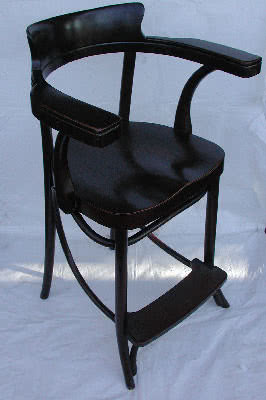
Item 63 Antique Bentwood Mahogany Billiard Chairs, c. 1890s This is a rare opportunity to acquire a matching set of four antique bentwood billiard room spectator chairs dating to the 1890s. This set features the elegant curves and durable construction characteristic of high-end vintage billiard parlor furniture from the late Victorian era. Finished in a classic mahogany, these chairs are designed with a 24" seat height, providing the traditional elevated vantage point required for players and spectators to view the table surface clearly during a match. Condition Note: This set is being offered in its original state and needs restoring. This is an ideal project for a collector or restorer looking to bring a rare, unified set of 19th-century seating back to its former glory. Once restored, a matching set of four mahogany-finished chairs would serve as a centerpiece for any period-correct billiard room. Please call for more information.

Item 64 Antique Bentwood Billiard Chair, c. 1870s This is a rare and early example of a single antique bentwood billiard chair, dating back to the 1870s. This vintage piece features a distinctive slatted-back design, a styling hallmark of the mid-to-late 19th-century billiard room. The chair is finished in a warm Ash/Oak tone and is specifically engineered for the game room with a 24" seat height. This elevation allowed players of the era a superior view of the table while awaiting their next shot. As a single, early specimen, it is an excellent find for a collector of foundational billiard furniture or someone looking to fill a specific gap in a period-correct seating arrangement. Please call.

Item 66 Antique Billiard Chair with Woven Seat & Footrest, c. 1880s Custom Restoration Opportunity This is a rare and substantial antique single spectator chair from the 1880s, featuring a classic design optimized for comfort during long matches. This vintage piece includes a built-in footrest, a premium feature for high-end billiard room seating of the late 19th century. Currently offered in its original state, this chair is slated for a full restoration. This provides a unique opportunity for the buyer to customize the final look to perfectly match their existing billiard room decor. Customization & Specs: Seat: Designed for a traditional woven seat, providing both durability and a period-correct aesthetic. Dimensions: * Height: 41 1/2" Total Width: 25" Seat Height: 22 1/2" (Standard spectator height) Footrest: Protrudes 4 1/2" for ergonomic support. This single chair is a sturdy, wide-profile piece that serves as a commanding presence in any historical game room. Price: Please call.
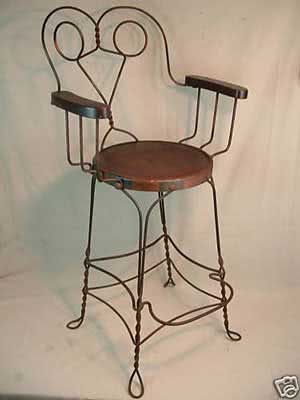
Item 67 Antique Bent-Wire Billiard Chairs Featuring Oxidized Copper Finish & Quarter-Sawn Oak This is a rare opportunity to acquire a set of antique "bent-wire" billiard chairs, a distinctive and industrial-chic style from the late 19th to early 20th century. These chairs are available for purchase as either a pair (2) or a full set of four (4). The design is a masterclass in period materials, combining the durability of metalwork with the refined elegance of high-end woodwork. Each chair is finished in a striking oxidized copper, providing a unique patina that complements the rich textures of a traditional billiard room. Key Features & Specifications Seating: Features quarter-sawn oak "dished out" wooden seats and matching armrests. The quarter-sawn milling ensures both structural stability and the highly desirable "tiger stripe" grain pattern. Ergonomics: Designed specifically for spectators, these chairs include an integrated footrest that protrudes 4.5" for added comfort during long matches. Dimensions: Total Height: 41" Seat Height: 23.5" (The ideal vantage point for viewing the table bed) Width: 21" Versatility: These vintage chairs are lightweight yet incredibly sturdy, making them a practical and stylish choice for high-traffic game rooms. Please call for more information regarding pricing for the pair or the set of four.

Item 70 Antique Pool Hall Flange Sign, Circa 1900 This rare antique pool hall flange sign is a striking piece of early 20th-century Americana. Measuring 15" x 6", the sign features a dual-sided design intended to project from a wall, capturing the attention of passersby with its bold, period-authentic typography. Dating to the circa 1900 era, this vintage advertising piece reflects the classic aesthetic of a turn-of-the-century billiard parlor. Its compact size and double-sided visibility make it a highly collectible artifact for any serious enthusiast of billiard history or early industrial signage. Note: This specific item is currently marked as Sold. Wanted to Purchase: I am actively seeking similar original flange signs, porcelain advertising, or early 1900s billiard hall memorabilia for my collection. If you have a similar piece available, please let me know.

Item 74 Antique Jayne Mansfield Billiard Calendar, 1962 This is a rare and striking piece of 1960s billiard memorabilia featuring the iconic Jayne Mansfield. Measuring 21.5" x 12", this original 1962 calendar captures a classic moment of mid-century Americana and billiards culture. Details & Condition Dimensions: 21.5" wide x 12" high. Condition: Excellent vintage condition. It shows a few very light fold marks that are difficult to detect under normal lighting. Note: The white mark visible in the image above the word "January" is strictly camera glare and is not present on the physical item. Acquisition Price: Please Call for pricing and availability.
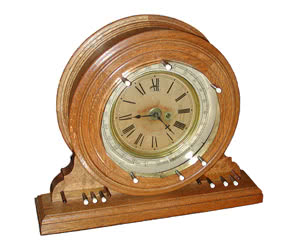
Item 75 Antique Brunswick-Balke-Collender Co. Billiard Time Clock This is an exceptional example of late 19th-century billiard room technology, dating to the circa 1880s. Manufactured by the renowned Brunswick-Balke-Collender Co., these mechanical time clocks were the standard for tracking play in upscale billiard parlors of the era. Details & Specifications Dimensions: 17" wide x 21" high x 6" deep. Period: Circa 1880s. Manufacturer: Brunswick-Balke-Collender Co. Condition: This unit is currently in "to be restored" condition, offering a prime opportunity to bring a rare piece of mechanical history back to its original 19th-century glory. Acquisition Price: Please call for pricing and restoration details.

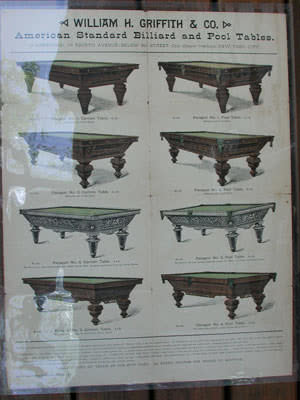
Antique W. H. Griffith Company Original 2 Sided Catalog. Some old fold marks. Circa 1870's. Size: 28" x 21 3/4". Please call for price. (Item 78)

Capture the authentic spirit of early 20th-century marketing with this unique set of three antique bronze advertising stamps. These vintage implements were originally used by the industry-leading Brunswick-Balke-Collender Co. and other premier manufacturers to promote their iconic equipment. Each stamp is a functional piece of art, showcasing the detailed metalwork and historical branding that defined the golden age of the American billiard industry. Item Details: Material: Aged Bronze and Wood Contents: * Brunswick B.B.C. Lady Shooting Pool Stamp (2 1/2" x 2") Billiard Room Scene Stamp (Table, Light, Racks) (5" x 4") Hyatt Zig-Zag Pool Ball Set Stamp (2" x 2") Condition: Excellent Antique Item Reference: #80 These stamps are more than just office tools; they are essential, museum-grade artifacts for a serious collector of vintage billiard memorabilia. The "Billiard Room Scene" stamp offers a remarkable visual narrative of a period-correct pool hall, while the Brunswick and Hyatt branding represent the manufacturing pioneers of their time. These rare pieces are perfect for display in a professional game room, a private study, or as the centerpiece of a curated collection of antique gaming history. Pricing & Inquiries: Please contact us for lot pricing and shipping details on Item #80.

Antique Jennings 25c Slot Machine - Restored. Wooden quarter - sawn oak sides and base. Size: 26" tall x 14" x 15" base. Due to laws regulating the sale of antique slot machines we will not sell to anyone in the states of Alabama, Connecticut, Hawaii, Indiana, Nebraska, South Carolina and Tennessee. Please call for more pictures and price. Game Room. (Item 85)

Antique H. W. Collender Company Imperial Table Fancy Cast Brass Billiard Table Rail Bolt Set. Very early H. W. Collender Co fancy cast brass headed billiard table bolt set. There are #16 matching bolts measuring 4 1/4" long not including the head, 3/8" diameter, 26 threads. Please call for more information and price. (Item 86)
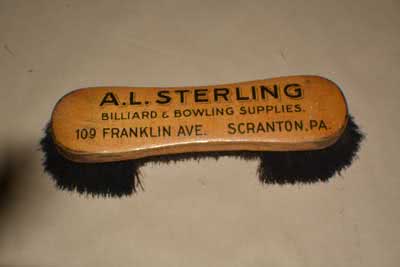
Antique A. L. Sterling Pool Table Brush, Size: 9" x 2 1/2". Please call for price. (Item 89)

Enhance your game room with this authentic antique billiard table brush, meticulously crafted from solid rosewood. This is a rare find for serious collectors of vintage pool table accessories and billiard memorabilia. Item Details: Material: Genuine Rosewood (rich grain and durable finish) Dimensions: 12 3/8" L x 2 1/4" W Condition: Antique Item Reference: #90 Rosewood was the premier choice for luxury billiard accessories during the late 19th and early 20th centuries. Unlike modern plastic alternatives, this brush offers the weight and hand-feel consistent with high-end craftsmanship. It is designed to maintain the delicate cloth of a snooker or pool table while serving as a stunning display piece. Pricing & Inquiries: Please contact us for pricing and shipping details on Item #90

Antique Brunswick Balke Collender Company Billiard Table Brush. Pointed on one end. Size: 8 1/2" x 2 1/4". Please call for price. (Item 91)

Antique J. Macann Co. Pool Table Brush, Rare. Size: 9 1/4" x 2 3/4". Please call for price. (Item 94)

Antique Mutal Co Billiard Table Brush. Holds water. Size: 5' x 2". Please call for price. (Item 95)
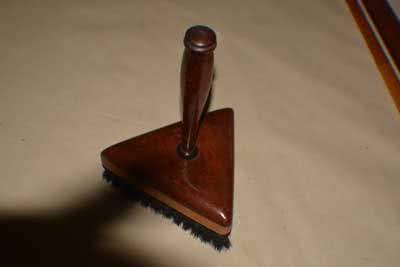
Antique Pool Table Brush, Triangle shaped mahogany. Size: 6" x 6" x 8 1/2" tall. Please call for more information. (Item 97)

Antique BBC Billiard Wooden Triangle 10 Ball Rack, Circa 1890/1900's. Wooden pegged corners. Please call for price. (Item 99)

Antique Pool Ball Wooden Triangle 10 Ball Rack, Circa 1890's/1900's. Brass straps on outside corners. Please call for a restored price. (Item 100)

Enhance your collection with this exceptionally rare 21-ball billiard rack, dating to the late 19th century. While the standard 15-ball rack is more common, this oversized 21-ball variant is a prized find for enthusiasts of historical games like Life Pool or Pyramid Pool, which were staples of high-society billiard parlors in the 1870s and 1880s. Item Details: Capacity: 21-Ball Rack (Oversized) Era: Circa 1870s–1880s (Victorian Era) Construction: Hardwood with Rare Overlaid Wooden Corner Straps Condition: Antique / Professional Restoration Available Item Reference: #101 The standout feature of this rack is the rare wooden overlay corner straps. During the Gilded Age, these overlays provided essential structural reinforcement to withstand the rigors of commercial use while adding a layer of sophisticated, hand-crafted detail that modern racks lack. Finding a 21-ball configuration with this specific reinforced joinery is a significant discovery for the museum-grade collector. Restoration & Inquiries: This piece is available to be professionally restored to match the wood species and finish of your antique billiard table. Please contact us for a restored price and shipping details on Item #101.

Antique Pool Table Triangle, Circa 1915. Please call for price. (Item 104)
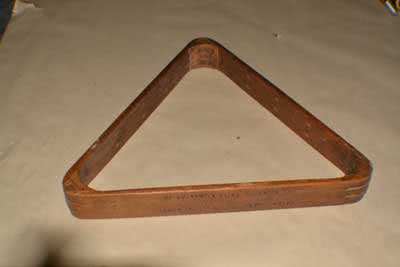
Antique BBC Pool Ball Wooden Triangle 15 Ball Rack, Circa 1890's/1900's. Wooden flat spleen corners. Please call for a restored price. (Item 105)

Antique BBC Billiard Wooden Triangle, Circa 1890's/1900's. Brass corner straps. Please call for a restored price. (Item 106)
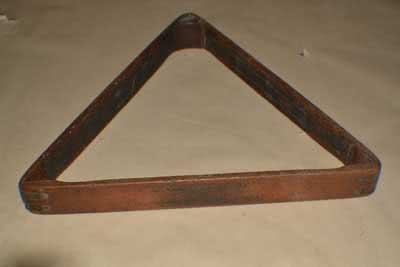
Antique BBC Billiards Triangle, Circa 1890's/1900's. Brass corner straps. Please call for a price. (Item 107)

.Antique BBC Billiard Wooden Triangle 15 Ball Rack, Circa 1890's/1900's. Wooden pegged corners. Please call for price. (Item 108)
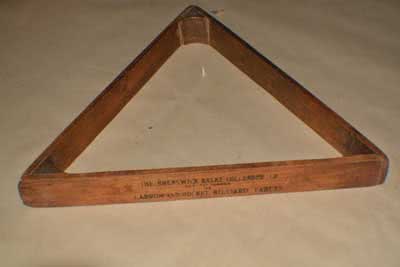
Antique BBC Billiards Wooden Triangle, Circa 1890's/1900's. Pointed corners. Please call for a restored price. (Item 109)

Antique Pool Ball Wooden Bentwood Triangle, Circa 1870's/1880's. Rosewood overlay on the flats. Please call for a restored price. (Item 110)

Elevate your vintage billiard table setup with this exceptional, circa 1870s–1880s bentwood 15-ball rack. Representing the pinnacle of late-19th-century craftsmanship, this wooden triangle features the classic steam-bent construction that predates modern joined frames. This rare accessory is a must-have for any collector aiming for a period-correct restoration of a Victorian-era pool room. Item Details: Material: Period Hardwood (Steam-Bent Construction) Capacity: Standard 15-Ball Rack Era: Circa 1870s–1880s Condition: Antique (Available for Restoration) Item Reference: #111 Finding original bentwood triangles from the Gilded Age is increasingly difficult, as many were lost to time or heavy commercial use. This piece offers a unique opportunity to own a functional artifact that mirrors the elegant curves and durable design of the legendary Brunswick tables of the same period. Whether displayed as wall art or used for play on a restored antique table, this rack provides an unmatched level of historical authenticity. Restoration & Inquiries: We offer professional restoration services to bring this piece back to its original luster. Please contact us for a restored price and shipping details on Item #111.
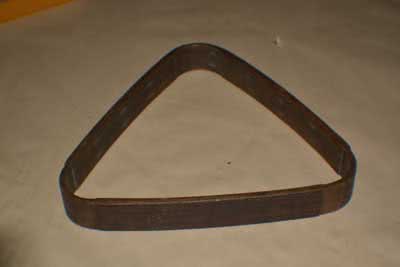
Antique Billiards Wooden Bentwood Triangle 15 Ball Rack, Circa 1870's/1880's. Rosewood overlay on the flats. Please call for a restored price. (Item 112)

Antique Billiard Wooden Triangle 15 Ball Rack, Circa 1870's/1880's. Rosewood overlays on the flats. Please call for a restored price. (Item 113)

Antique BBC Pool Ball Wooden Triangle 15 Ball Rack, Circa 1890's/1900's. Brass corner straps. Please call for a restored price. (Item 114)
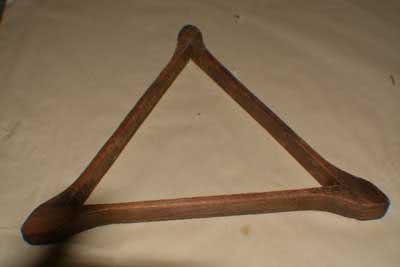
Antique Spliced Billiard Triangle, Circa 1860's. Please call for more info. (Item 115)

Antique Billiards Wooden Folding Triangle, Circa 1910/1915. Please call for more info. (Item 116)

Antique Billiard Wooden Triangle, Circa 1890's/1900's. Harrington Billiards PA. Brass corner straps. Please call for price. (Item 117)

Complete your high-end Victorian billiard restoration with this remarkably rare, circa 1870s antique triangle. Distinguishable by its unique wooden overlay corner straps, this 15-ball rack showcases the specialized joinery and reinforced construction typical of mid-to-late 19th-century craftsmanship. This is an essential accessory for the collector who demands absolute period accuracy for their Brunswick-Balke-Collender or similar era table. Item Details: Material: Period Hardwood with Decorative Wooden Overlays Features: Unique Reinforced Corner Strap Design Era: Circa 1870s Condition: Antique / Professional Restoration Available Item Reference: #119 Finding a triangle from the 1870s with its original structural character intact is an uncommon find. The wooden overlay straps not only provided durability during the rough-and-tumble era of early pool rooms but also added a layer of visual sophistication that modern plastic or simple wood racks cannot replicate. This piece serves as both a functional gaming tool and a museum-quality artifact of American sporting history. Restoration & Inquiries: This item is available for custom restoration to match the finish of your specific antique table. Please contact us for a restored price and shipping details on Item #119.

Antique BBC Billiards Wooden Triangle, Circa 1890's/1900's. Brass corner straps. Please call for a restored price. (Item 120)

Antique BBC Billiard Wooden Triangle, Circa 1890's/1900's. Brass corner straps. Please call for a restored price. (Item 121)

Antique Pool Ball Wooden Triangle, Circa 1910. Flat wooden spliced spleen corners. Please call for price. (Item 122)
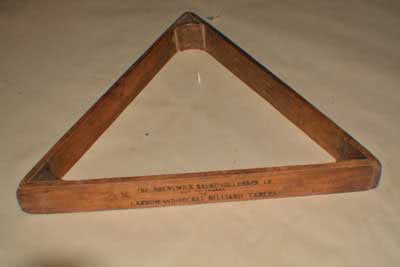
Antique BBC Billiard Wooden Triangle, Circa 1890's/1900's. Pointed corners. Please call for price. (Item 124)

Antique Billiards Triangle Rack, Circa 1910. Spliced wooden corner straps. Please call for price. (Item 123)

Antique Billiard Table Light Tin Shades c1860s/1870s - Stephani & Hart Co. - W. H. Griffith Co. - H. W. Collender Co. - J. M. Brunswick & Balke Co. Four very rare billiard light tin shades in great used condition. Sizes: Top inside opening 4 1/4" x 4 1/4", top outside opening 6 9/16" x 6 9/16", Bottom opening 10 1/2" x 14 5/16". Please call for more information. (Item 125)

Antique Billiard Print Two Ladies Playing Pool, Circa 1900. Gold Ornamental Framed. Print is original. Professionally framed. Print itself is 12" x 15", Frame is 16" x 20". Please call for more info. (Item 127)
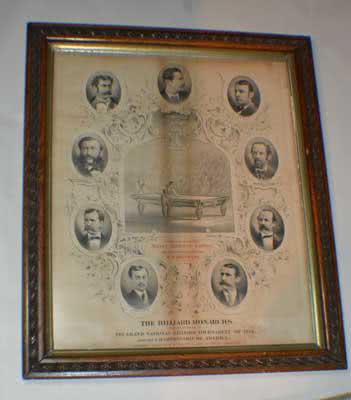
Item 128 The Billiard Monarchs Original Lithograph Poster, Circa 1874 This is a museum-quality original lithograph by W. H. Griffith & Co. of New York, capturing a seminal moment in 19th-century American billiard history. The piece commemorates the Grand National Tournament of 1874, held at the historic Tammany Hall in New York City from November 4th to 13th. Historical Significance The tournament decided the Championship of America and featured the era's most legendary figures. The lithograph depicts the "Billiard Monarchs," including the tournament champion Maurice Vignaux. Featured Contestants: Maurice Vignaux (Champion) Albert Garnier Maurice Daly A.P. Rudolphe Francois Ubassy Joseph Dion Cyrille Dion George F. Slosson Edward Daniels Dimensions & Presentation Print Size: 18" x 22" Frame Size: 21 1/2" x 25 1/2" Origin: W. H. Griffith & Co., New York Inquiry Price: Please call for more information and details regarding the provenance of this rare 1870s lithograph.

Antique H.W. Collender Co, W.H Griffith & Co, J. M. Brunswick & Balke Co, B. A Stevens Co - Rare! Cue Tip Cutter Dated 1868. Please call for more information. (Item 130)

Antique Pool Cue Chalk Holder. Please call. (Item 133)
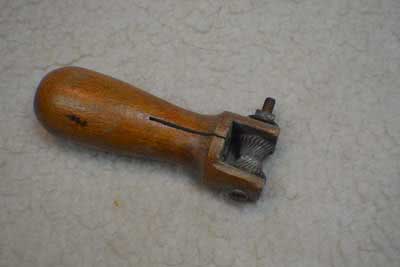
Antique BBC Pool Cue Tip Shaper. (Item 134)

Antique Ivory Poker Chips With Bone Chips In Wooden Box. (Item 136)

Antique Box Wood Pool Cue Tipping Tool. Please call for more information. (Item 137)

Antique Clark Herd Co Leather Tally Pool Bottle Rare. Marked Clark Herd on the bottom of the bottle. Please call for more info. (Item 138)
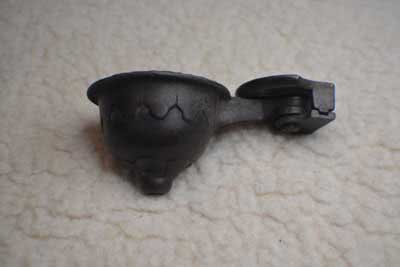
Antique J. M. Brunswick & Balke Co Cast Iron Billiard Table Chalk Holder. Please call for more information. (Item 140)

Step back into the golden age of billiards with this authentic, circa 1925 official rules booklet from the industry’s most storied manufacturer: the Brunswick-Balke-Collender Co. This pocket-sized piece of history served as the final word on fair play in pool halls and private estates across Prohibition-era America. Perfectly preserved, it is an essential addition for the collector of vintage sporting manuals or anyone looking to add "library-style" depth to their billiard room decor. Item Details: Manufacturer: Brunswick-Balke-Collender Co. Format: Original Printed Booklet Era: Circa 1925 Condition: Excellent Vintage / Antique Item Reference: #141 By the mid-1920s, Brunswick had solidified its dominance in the market, and this booklet reflects the refined branding and standardized play of the time. It contains the era-specific regulations for a variety of games, providing a fascinating look at how the sport was governed a century ago. Whether displayed on a mantle, kept in a cue cabinet, or framed as part of a larger Brunswick memorabilia wall, this item offers a tangible connection to the Jazz Age billiard scene. Pricing & Inquiries: Please contact us for pricing and shipping details on this rare 1925 document (Item #141).

A GunKlach & Co Billiard Tables Catalog, c1880's. #32 pages, Please call for more information. (Item 142)

Original Cleveland 1947 Say Pepsi Please Neon Clock With Lighted Marquee. Very rare! Size: 36" x 31" x 7.5". (Item 143)

Antique Retractable Pool Cue Chalk Holder. Please call for price. (Item 144)

Antique Burroughes & Watts Marked Billiard Table Brush. Rare signed billiard brush mahogany base with brass pined Brazilian rosewood top. Size: 12" x 3 1/2". Please call for more info. (Item 145)
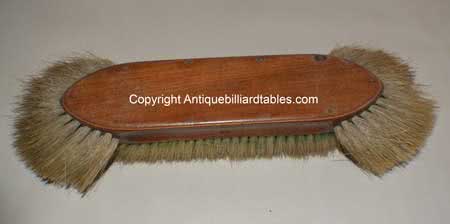
Antique F.J. Chapman Marked Billiard Table Brush. Mahogany and horsehair. A very quality top of the line billiard table brush measuring about: 13 x 4 1/2". Please call for more info. (Item 146)
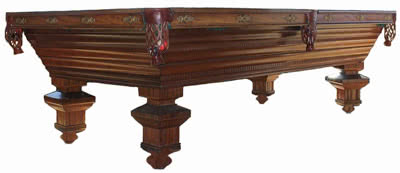
Antique Brunswick Balke Collender Co, Chicago 9' Pool Table, c1894. This table features deep dark rich mahogany carved woods with fine dental moldings. Please call for more information. (Item 1)
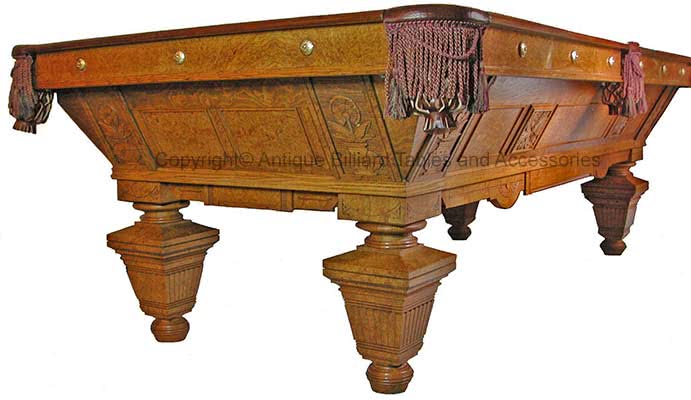

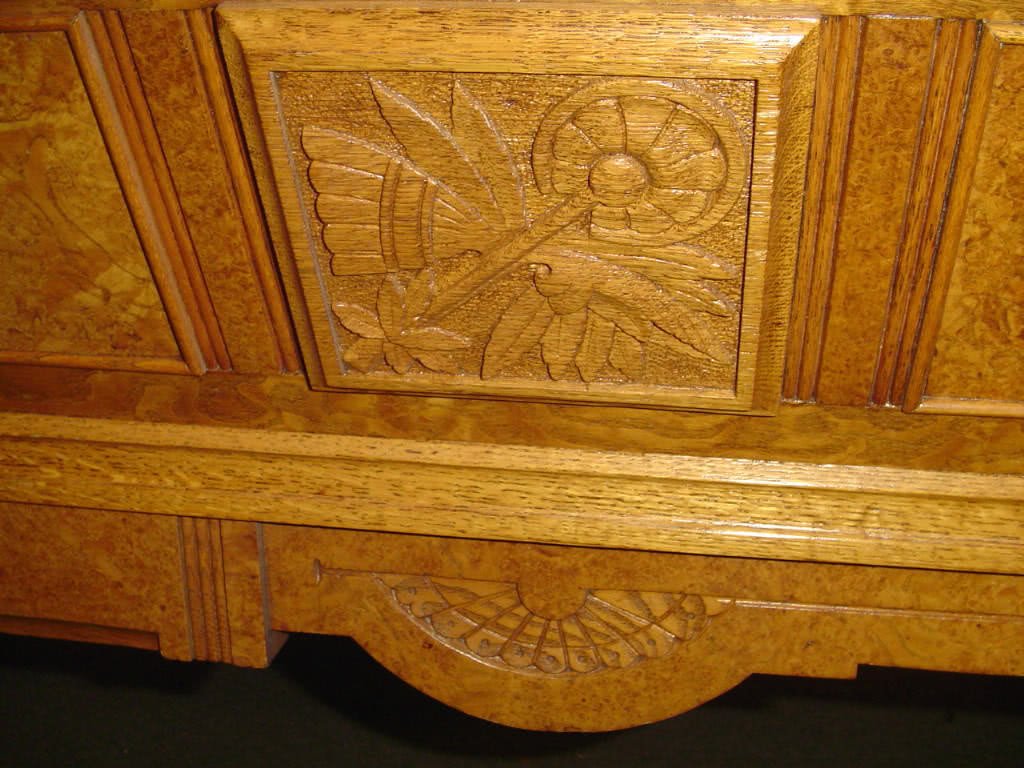
Antique Brunswick-Balke-Collender Co, Manhattan 8' Pool Table. Antique matching Manhattan cue rack also available. (Item 2)
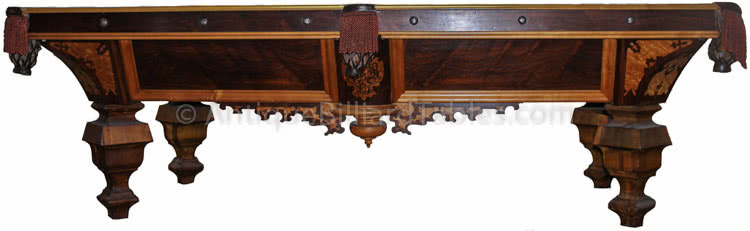
Antique J M Brunswick & Balke Co. Nonpareil Novelty Pool Table, c1874. This table features a deep dark rosewood background with birds eye maple marquetry inlays. Please call for more information. (Item 4)
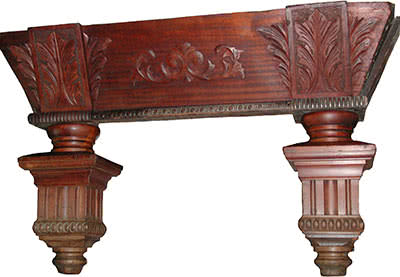
Antique Brunswick Balke Collender Co carved mahogany pool table. 8'. Please call for a restored price. (Item 5)


Antique Brunswick Balke Collender Co Brilliant Novelty, 9' Pool Table. (Item 6)

Antique J.E. McIntosh Billiard Company, New York, Walnut Carved 9' Billiard Table. Please call for a restored price. (Item 7)

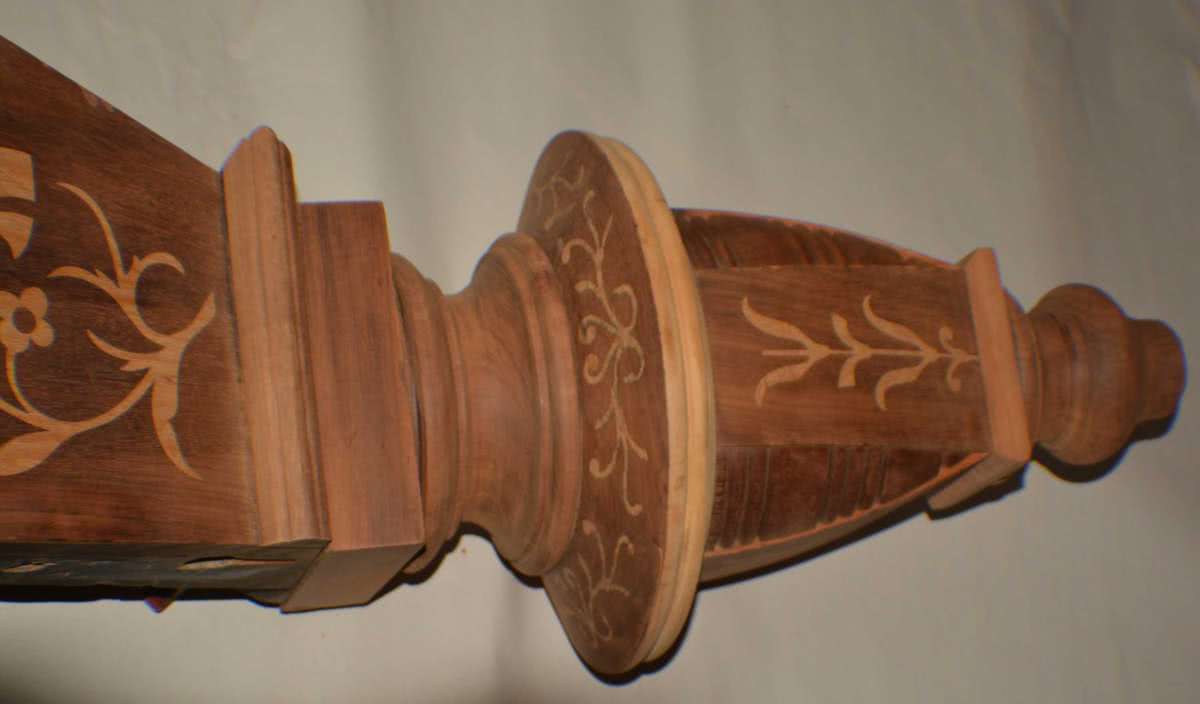
Antique Brunswick Balke Collender Co one of a kind and inlaid to death marquetry 9’ pool table, walnut background with rare chestnut inlays. This rare table features carved legs with inlaid marquetry on the tops and sides of the legs, cabinet and rails. Please call for more information. (Item 8)

Antique Brunswick Balke Collender Co, burl walnut 9 foot pool table. (Item 9)
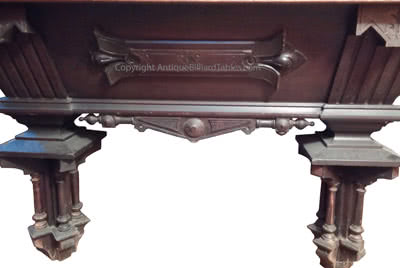


Antique H. W. Collender Co "World Renown" Circa 1870's 9’ Carved Pool Table. This rare one of a kind carved table features a dark Brazilian rosewood background with chestnut plaques and has scallop legs with four pillars, carved ribbon plaques on the cabinet sides, and fancy spindle skirting on all four lower cabinet sides. Please call for more information. (Item 10)
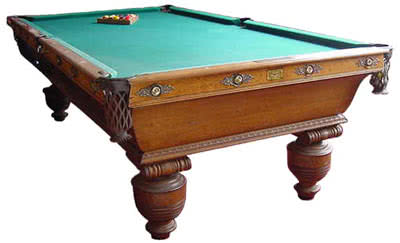

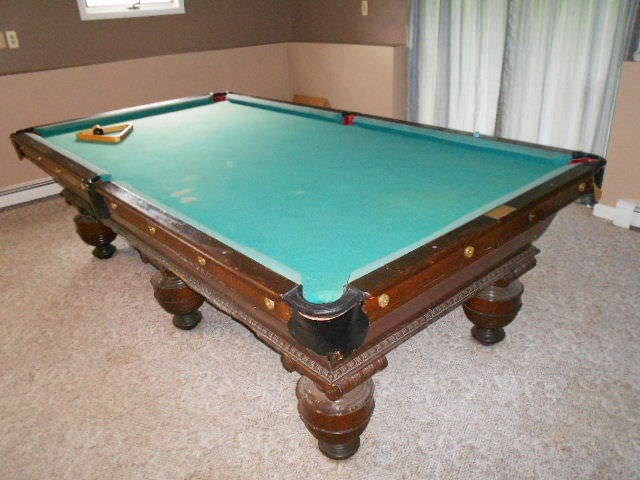
Antique Brunswick Balke Collender Co Cambridge carved six leg pool table in quarter-sawn oak. Please call for a restored price. (Item 11)
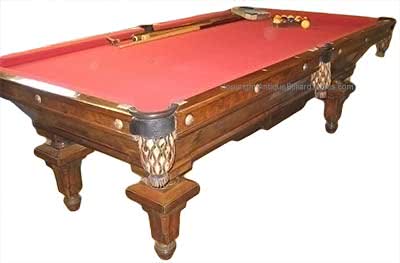
Antique L. Decker Billiard Company Carved 7’ Pool Table. Walnut with fancy scallop legs. Please call for a restored price. (Item 12)
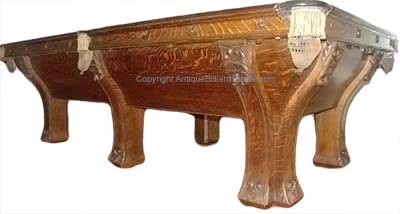


Antique Brunswick Balke Collender Co Mahogany Pfister, Six Leg, 10' Pocket Table. (Item 15)
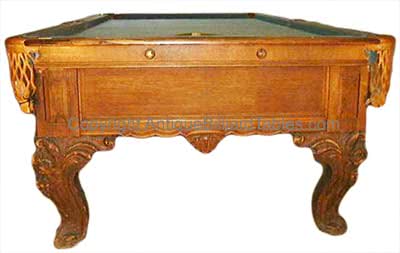
Antique Phelan & Collender - Carved Mahogany, six leg, 9' pool table. (Item 16)

Antique Brunswick Balke Collender Co - Centennial - Rosewood with cast aluminum, 8' pool table. Please call for more information. (Item 17)
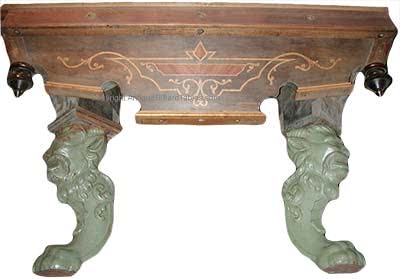
Antique Charles Schulenburg 9' Pool Table, inlaid with ebonized background and cast iron legs. (Item 19)

Old Yum Neon Clock From Bakery. Massive 37" across. Excellent condition. Please call for more info. (Item 148)


Antique B. A. Stevens Billiard and Bar Catalog c1896. A nice section on Ivory Pool Balls and Burt Stripe Pool Balls. This catalog has a little of everything. Super rare! Size: 7 1/2" x 10" and about #500 plus pages. Please call for more information. (Item 149)

Aztec Sun Drop Neon Clock 22". Powder coated yellow with black wrinkle collar. Twin tube, Red & Cream, Full Contrast bounce lighting. Pull chain on/off switch 110 volt. American made. Please call for more information. (Item 150)

Antique Brunswick Balke Collender Co, Ruby Time Recorder Stamp, c1915. WANTED! (Item 151)
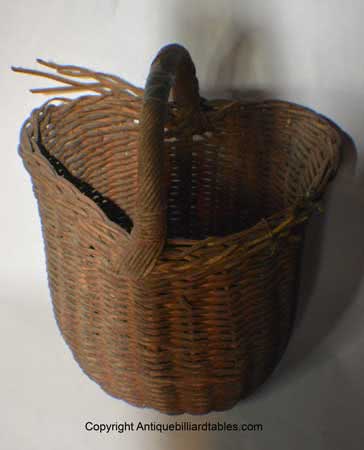
Antique Wicker Helmet Shaped Pool Ball Basket. Very early wicker helmet shaped pool ball storage basket used on some early ball return pocket billiard tables and early wall hung pool ball racks. Size: 12" tall x 10" wide. Please call for more information. (Item 153)

Vendo 81-A Coke Machine c1955 Original Paint. Some light scratches and a few small dents. Size: 58" high without the casters, 27" wide and 16" deep. Weight 238 LBS. This is the most sought after of all the coke machines with the round top and lever on coin mec. This is the first coke machine that actually vends full size bottles or beer bottles and keeps them ice cold. Quality game room piece. Please call for more information. (Item 154)


.Antique Pyramid Pool Game Bottle & Peas #5 - #100 - c1860s/1870s. Very rare Pyramid Pool original game leather bottle with hand scrimshaw numbered peas #5 - #100. Sizes: Bottle 9 1/2", Peas 3/4" OD. WANTED! (Item 155)

Antique JM Brunswick & Balke Co Bentwood Triangle 2 1/4", Patented June 15th, c1880. Quarter Sawn Oak in original good condition. Please call for more information. (Item 156)
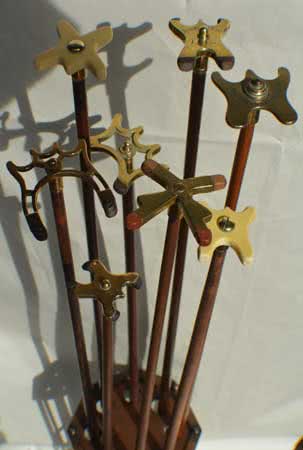
Antique Billiard Bridge Stick Collection From Around The World. The bridge stick heads are ivory and bronze. (Item 3)


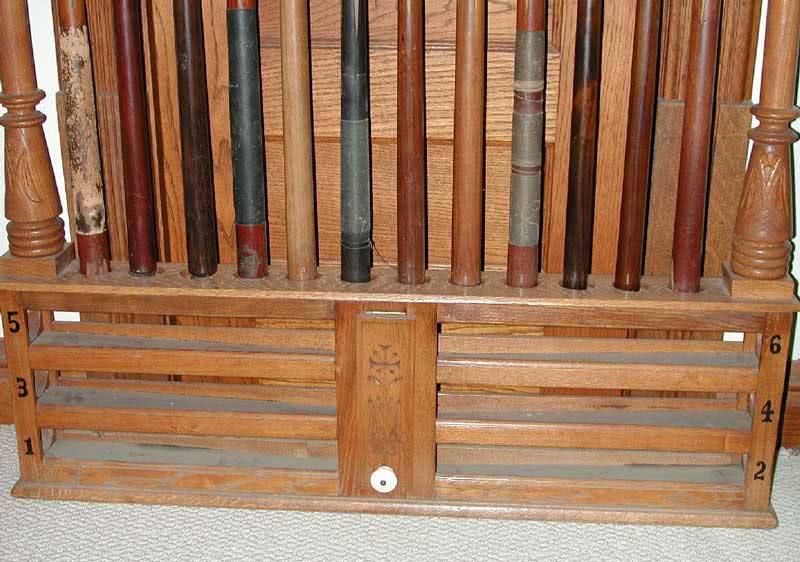
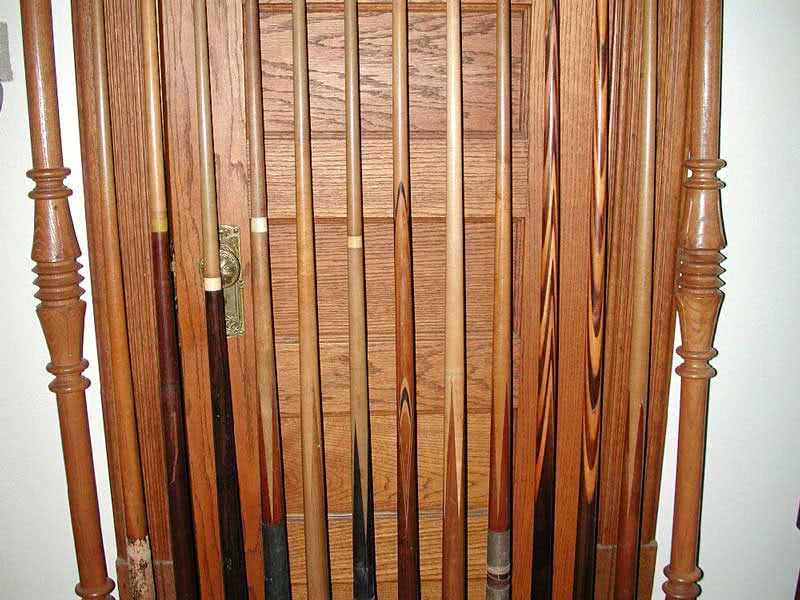

Antique Brunswick Combination cue rack with built in mechanical pool ball rack. The pool balls load from both sides, bottom door opens and the balls release into pool ball carrier box or basket. This rare cue rack features carvings on the tops, centers and bottoms of the uprights, also on the bottom pool ball release door. Size: 70" x 41". Please call for more information. (Item 5)

Antique Brunswick Balke Collender Company Walnut Free Standing Billiard Cue Racks. They measure 66" tall x 14" wide at the bottom and display #12 billiard cues. Hard to find antique free standing very sturdy walnut cue racks out of an old California saloon pool hall. Please call for more information. Three of four are sold. (Items 7, 8, 9, & 10)

Antique 1880's Brunswick Balke Collender Co Victorian free standing oak billiard cue rack. This rack displays #12 billiard cues, it measures 67" tall x 17" wide at the base and 9" across the top. Please call for more information. (Item 12)

Antique J. M. Brunswick & Balke Company c1870's free standing corner pool cue rack in walnut. This is a very hard to find corner cue rack displaying #13 billiard cues. This rack will hold any size cue and measures 30 1/4" tall. Being pictured at time of purchase in un-restored condition. Please call for a restored price. (Item 15)

Antique J.M. Brunswick & Balke Co Zig-Zag Mechanical Billiard Ball Rack. Top crown being made for this rack. Please call for price. (Item 20)

Antique Samuel May & Co - Pool Cue Rack. c1880's. (Item 21)

Antique Circa - 1884 P. W. Farley & A. L. Trowbridge Company Mechanical Billiard Ball Rack. Please call for pricing. (Item 26)
Antique Circa - 1880's/1890's O. L. Briggs Company Billiard Cue Rack. This rack is made of carved oak and displays #12 billiard cues. Please call for price. (Item 27)
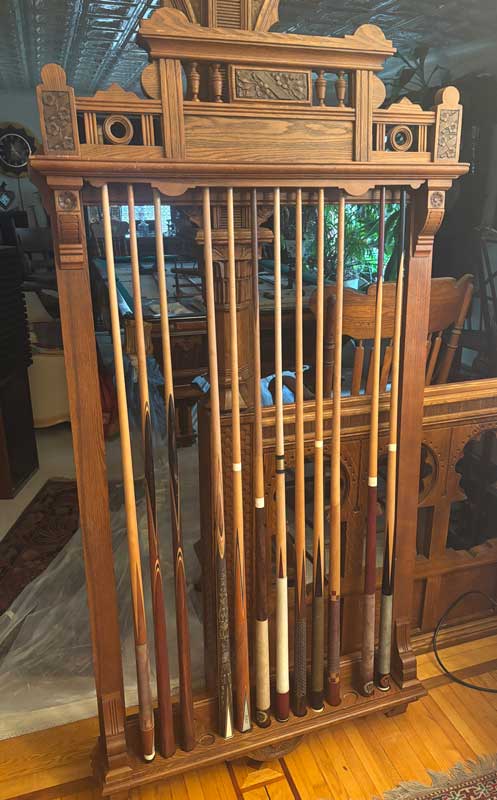
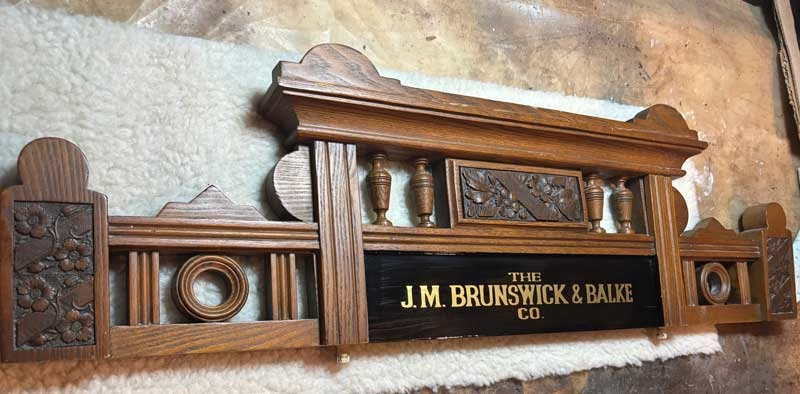
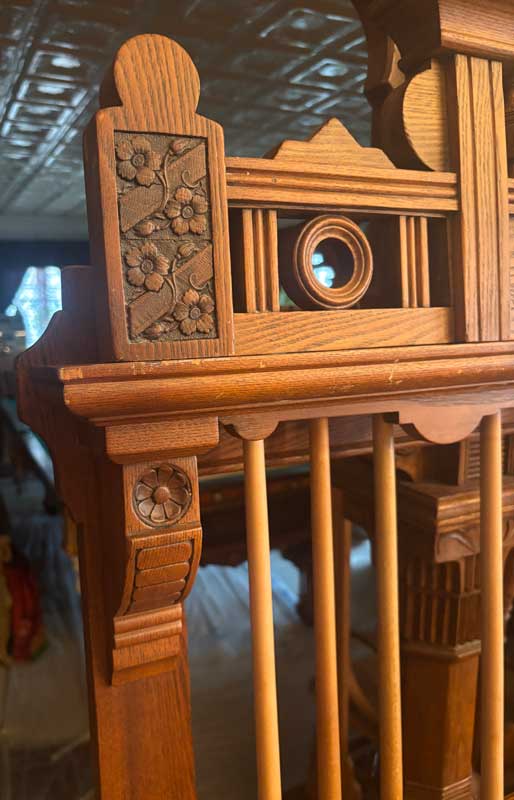
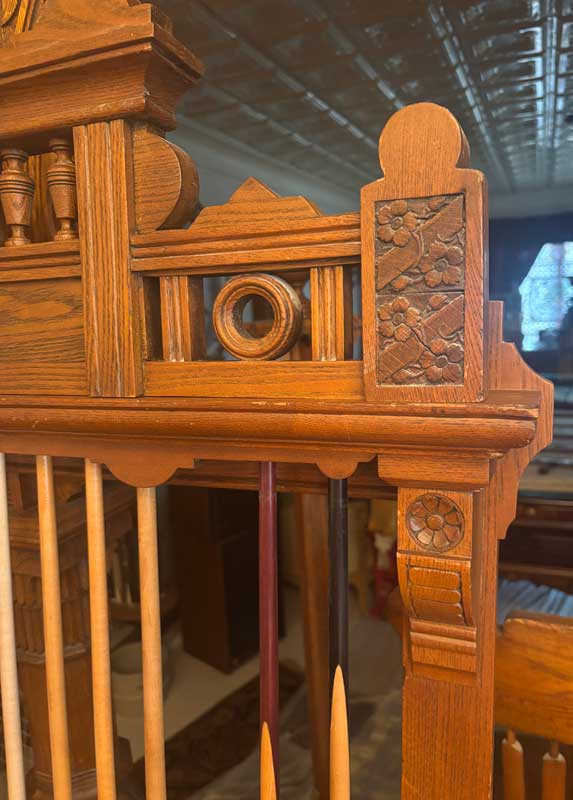
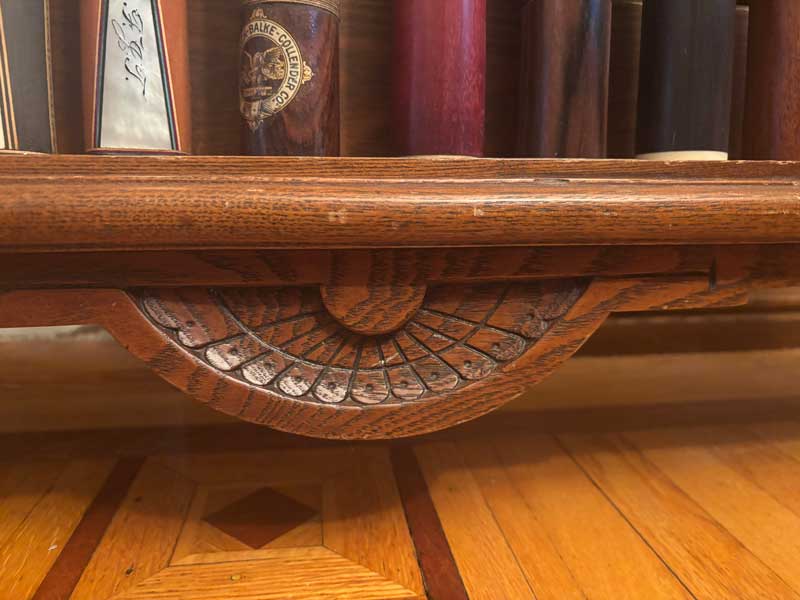
Item 30. Enhance your vintage game room with this rare, museum-quality antique Brunswick Manhattan cue rack, manufactured by the legendary Brunswick-Balke-Collender Co. during the 1890s. This "Manhattan" model serves as a stunning example of late-19th-century woodworking, featuring rich, aged oak and intricate period-correct carvings that reflect the golden age of billiards. Item Details: Material: Solid Oak Capacity: 14 Billiard Cues Dimensions: 68"x 36" Condition: Excellent Antique Item Reference: #30 This vintage rack is not merely functional; it is a piece of billiard history. Designed to house a complete set of 14 cues, its sturdy construction and classic aesthetic make it a perfect complement to any antique pool table or high-end private collection. Finding original, well-preserved Brunswick-Balke-Collender accessories from this era is increasingly difficult, making this an essential acquisition for the serious enthusiast of vintage gaming memorabilia. Pricing & Inquiries: Please contact us for pricing and shipping details on Item #30.

Antique Original Circa - 1870s H. W. Collender Company Very Rare Billiard Cue Rack. This rack is made of carved oak with a burl veneer label - displaying #14 billiard cues. "We also have the same rare cue rack in walnut". Size: 74" tall x 39" wide. Please call for price. (Items 31)

Antique J. E. Came Standard Tables Billiard Cue Rack c1870s/1880s. This wall mount rack is made of oak and displays #13 billiard cues. It measures 66" tall x 34 1/2" wide. Please call for a restored price. (Item 32)

Antique Brunswick Balke Collender Company Pool Cue Rack c1880s. This wall mount rack is made of red elm and displays #14 billiard cues. It measures 68" tall x 34 1/8" wide. (Item 33)
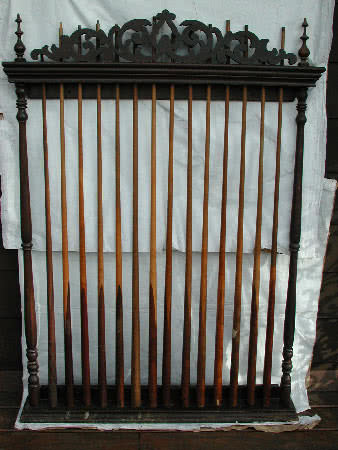
Antique Julius Balke Billiard Cue Rack c1858. This rack is wall mounted and displays #14 billiard cues. Early painted grain finish measuring 60" tall x 43" wide. Please call for a restored price. (Item 35)

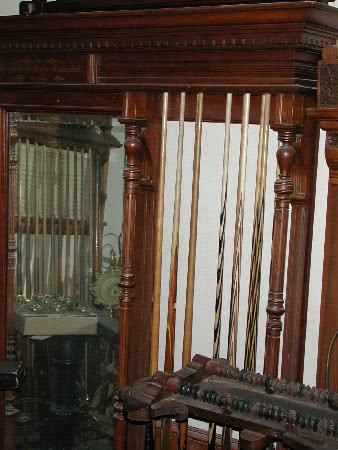
Antique Brunswick Balke Collender Company "One Of A Kind" Billiard Cue Rack - Private Club Rack c1880s. This rack is made of black cherry and displays #24 billiard cues. This rare cue rack features a beveled mirror in the center with four spun & fluted columns and locking doors on both sides, also carving on the lower skirt and dental molding at the top. This rack measures 69" tall x 72" wide. Please call for more information. (Item 36)


Antique Brunswick Balke Collender Co Private Club Cue Rack c1880s. This rare wall mounted rack retains its original stenciled label and displays #18 billiard cues. It is made of (birds eye maple) and measures 65" tall x 48" wide. Cue locks not presently on the rack, along with needing to be finished. (Item 38)
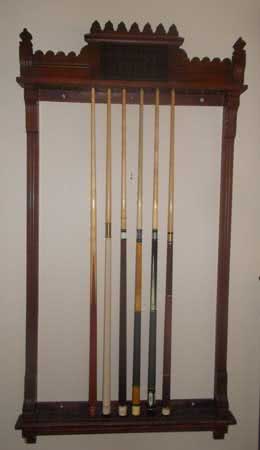
Antique Oliver L. Briggs Pool Cue Rack c1880s. This wall mounted pool cue rack retains its original finish with nice gold leaf silkscreen label. Nice takk top crown. Size: 67" x 32 1/2". Hard to find cue rack. Please call for more pictures and information. (Item 40)
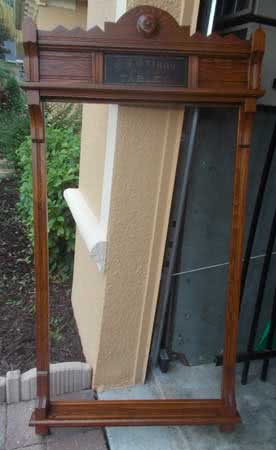
Antique Oliver L. Briggs Pool Cue Rack c1880's. This wall mounted cue rack has been refinished and retains it's original silkscreen label. Nice tall top crown. Hard to find cue rack. Size: 67" x 32 1/2". (Item 41)

Antique L Decker Company New York Pool Cue Rack c1868. Rare L Decker Queen Anne wall mounted pool cue rack displaying #14 billiard cues. Please call for more information. (Item 43)


Antique J. M. Brunswick & Balke Company East Lake Pool Cue Rack c1870s. Nice original condition and label. Size: 68" tall x 34" wide. (Item 45)
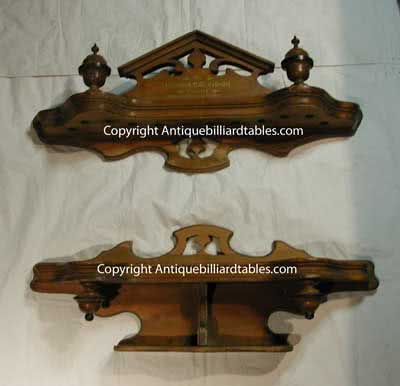
Antique J. M. Brunswick & Balke Company Monarch Billiard Cue Rack c1880s. This two piece rack is wall mounted and displays #12 billiard cues, made of hard rock maple. The top measures 13" tall x 34" wide, and the bottom measures 14" tall x 34" wide. Please call for a restored price. (Item 48)

Antique Brunswick Balke Collender Monarch Pool Cue Rack c1880s. This two piece rack is wall mounted and displays #12 billiard cues, made of red elm. The top measures 13" tall x 34" wide, and the bottom measures 14" tall x 34" wide. Please call for a restored price. (Item 49)

Antique J. M. Brunswick & Balke Co Monarch Pool Cue Rack c1870s. This rare two piece cue rack is wall mounted and displays #12 billiard cues. The top measures 13" tall x 34" wide, the bottom measures 14" tall x 34" wide. (Item 50)

Antique Original Circa 1870s Brunswick & Balke Company Nonpareil Novelty Step Banner Two Piece Pool Cue Rack. Displays #12 billiard cues and measures 38" wide. (Sold to SW) (Item 52)

Antique J. M. Brunswick & Balke Co Nonpariel Novelty Two Piece Billiard Cue Rack, Displaying #12 Billiard Cues. Please call for more information. (Item 60)

Antique A GunkCach & Company Victorian Cue Rack. This two piece cue rack is made of quarter sawn oak displaying #12 billiard cues. The top piece measures 32" x 12" and the bottom piece is 34" x 12". Please call for more information. (Item 55)
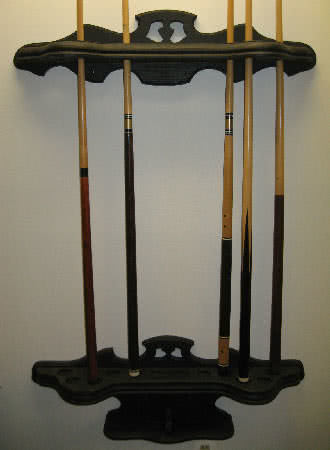
Antique Victorian Two Piece Pool Cue Rack. This wall mounted cue rack is made of quarter-sawn oak and displays #12 billiard cues. The top piece measures 33" x 9", bottom measures 33" x 12". Being pictured in unrestored condition without it's Victorian spindles on it and currently painted black. Please call for a restored price. (Item 56)
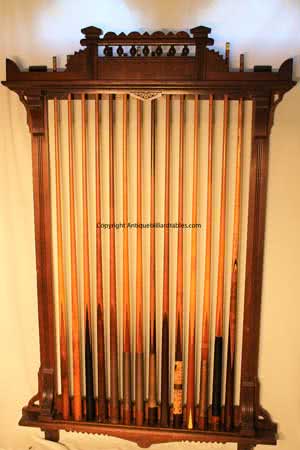
Antique J M Brunswick & Balke Co Pool Cue Rack, c1870s. Carved walnut pool cue rack displaying #12 cues.

Antique J M Brunswick & Balke Co "Exposition Novelty" Inlaid Cue & Ball Racks c1870's. The cue rack measures 67" x 41" x 5" and the ball rack measures 39 1/2" x 25" x 5 1/2". Please call for more information. (Item 59)

Antique Brunswick Balke Collender Company "Jewel" Cue Rack c1890s. This rare carved quarter sawn oak Jewel pool cue rack is stripped and ready for finishes. Size: 71" x 34" x 5 1/2". We also have the matching "Jewel" pool ball rack - (Item 60)

Antique L. Decker Company New York Pool Ball Rack c1868. Please call for more information on this rare wall mounted pool ball rack. (Item 61)
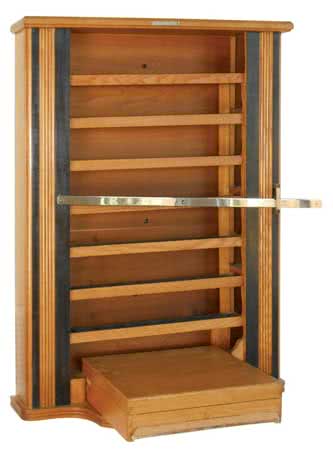
Antique Brunswick Balke Collender Company Mechanical Pool Ball Rack, Circa 1884. When the release bar is lowered slightly the shelves tip to let the balls roll side to side until they reach the bottom where they are gathered into an oak triangle. Patent tag at the top with nickel plated release bar. Size: 32" tall x 24.5" wide. Please call for more information. (Item 63)

Antique Merle & Heaney Co Pool Ball Rack, c1880's. This is a very quality made rack measuring 37" x 27". Please call for more information. (Item 64)

Antique J. D. Holt & Company, Tamaqua, PA - Billiard Ball Rack. This wall mounted pool ball rack is made of quarter sawn oak with the same upper moldings as the Union League pool table. This rack measures 34" tall x 26" wide. Please call for more information. (Item 67)

Antique Brunswick Balke Collender Pool Ball Rack. This wall mounted side loading ball rack measures 31" tall x 22" wide with a nice dental crown molding and fluted uprights. Please call for more information. (Item 68)

Antique Victorian mahogany billiard ball rack. c1870's. This rack measures 26" x 18 1/2". Please call for more information. (Item 69)

Complete your 19th-century billiard room with this exceptionally rare Brunswick & Balke / Brunswick-Balke-Collender Co. oak pool ball rack. Dating to the 1870s, this wall-mounted masterpiece represents the transition period of the world’s most famous billiard manufacturer. Crafted from premium quartersawn oak, this rack is a quintessential example of the heavy, durable, and elegant woodwork that defined the Gilded Age of American billiards. Item Details: Manufacturer: J.M. Brunswick & Balke / B.B.C. Co. Material: Period Solid Oak Dimensions: 36" H x 21 3/4" W Era: Circa 1870s Mounting: Wall-Mounted Vertical Display Condition: Antique / Authentic Original Finish Item Reference: #72 Finding an original 1870s wall rack in these dimensions is a significant challenge for collectors. Most commercial ball racks from this era were subjected to decades of hard use in public billiard parlors; finding one preserved with such structural integrity is a rarity. This piece is the perfect companion for a Brunswick "Nonpareil" or "Novelty" table, providing both functional storage and a commanding historical presence on your game room wall. Pricing & Inquiries: Authentic 19th-century wall racks are highly sought after by museum curators and private restorers. Please contact us for pricing and detailed shipping information for Item #72.

Antique Victorian Billiard Ball Rack. This rack is heavy, made from solid walnut and is a side loading ball rack. Size: 37 1/2" x 25". Please call for a restored price. (Item 75)

Antique Jacob Strahle & Co. Billiard Ball Rack c1880s, 533 Market St, S. F. Solid mahogany/gold leaf label wall mounted pool ball rack with ten shelves for displaying pool balls. Original patina. Please call for more information. (Item 76)

Antique Oliver L. Briggs Pool Ball Rack, c1880s. This wall mounted oak ball rack has ten shelves for displaying pool balls and retains it's original label. Please call for more information. (Item 77)

Antique Oliver L. Briggs Pool Ball Rack c1880's. This wall mounted oak ball rack has ten shelves for displaying pool balls and retains it's original label. Please call for price. (Item 78)
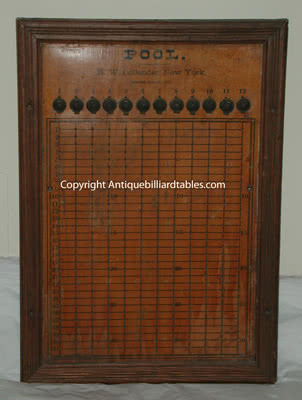
Antique H. W. Collender Company - Pin Pool Board. Size: 28" tall x 20" wide. Please call for more information on this rare piece of American billiard history. (Item 80)

Antique H. W. Collender Co Early Pin Pool Board, c1875 dated. Please call for a restored price. (Item 81)

Antique L. Decker Company New York Pin Pool Board, c1868. Please call for more information. (Item 83)

Antique J. Magann Billiard Co wall mounted ball rack, The Buffalo. Size: 33" tall. Please call for more information. (Item 84)
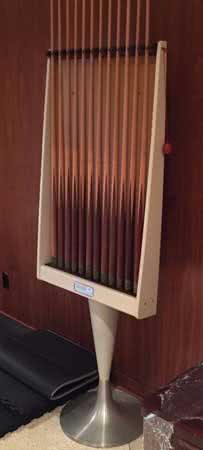

Brunswick Gold Crown One Free Standing Pool Cue Rack. It is my understanding that these upright free standing cue racks were only in the Brunswick Bowling Centers. The one we have looks just like this but has two racks back to back holding #12 billiard cues on each side for a total of #24 billiard cues. Please call for more information. (Item 85)

Antique W. H. Griffith Company Victorian Score Keeper. Rare billiard score keeper made of black walnut & mahogany. Size: 46" long x 15 1/2" tall. Please call for a restored price. (Item 87)

Antique Original Circa - 1870's W. H. Griffith & Co Victorian Score Keeper. Rare Victorian score keeper made of quarter sawn chestnut and black walnut. Size: 38" long x 20" tall. For reference only.

Antique J. M. Brunswick & Balke Co Eastlake Billiard Score Keeper, c1870s. Size: 30" wide. (Sold) Please call us on others we may have. (Item 93)
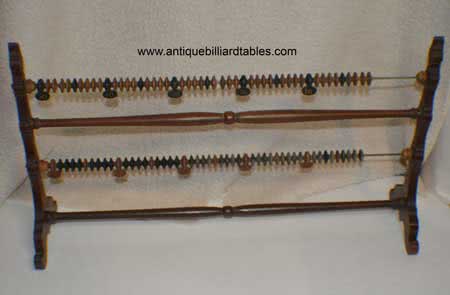
Antique Mantel Top Walnut Score Keeper, c1880's. There are two rows of #50 scoring beads with all numbers present. Original unrestored condition. Size: 30" long x 18" tall and 7 1/2" deep. Please call for more information and price. (Item 95)

Antique Copper Japanned Finish Two Arm Billiard Chandelier, c1890. This billiard chandelier features heavy cast mission chain, finials, arm ends with japanned finish shades. It measures 48" wide including the shades x 40" tall. This light has more matching chain if need be depending on your ceiling height. (Sold) (Item 1)
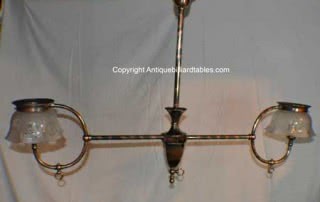
Antique Copper Finish Pool Table Light, c1890's. Gas, Converted to electric with antique etched glass shades. Size: 44" edge of shade to edge of shade. (Item 3)
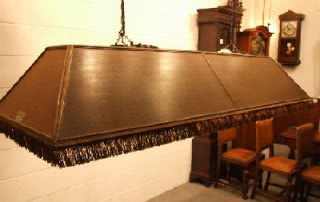
Antique Burroughs & Watts LTD Billiard Light, Original quarter sawn oak shade. Size: 75.5" long x 28" wide and 12" tall. Please call for more information. (Item 9)
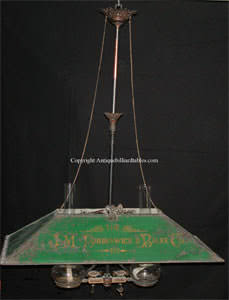
Antique J.M. Brunswick & Balke Co Kerosene Billiard Light, c1860's. This museum quality billiard light has both original glass fonts that are embossed on the bottoms with the name: J M Brunswick & Balke Co. The original No. 2 Queen Anne burners are in good working order. The tin shade retains it's original graphics and patina. WANTED! (Item 22)

Antique Julius Balke Kerosene Billiard Lights c1858. There are two billiard lights like this one. Please call for more information. (Item 23)
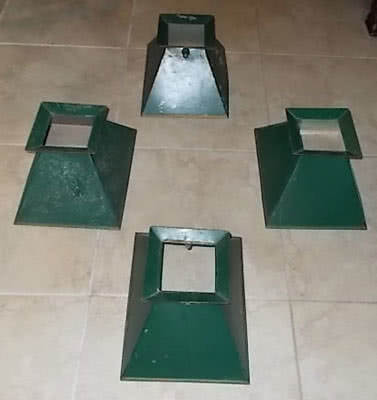


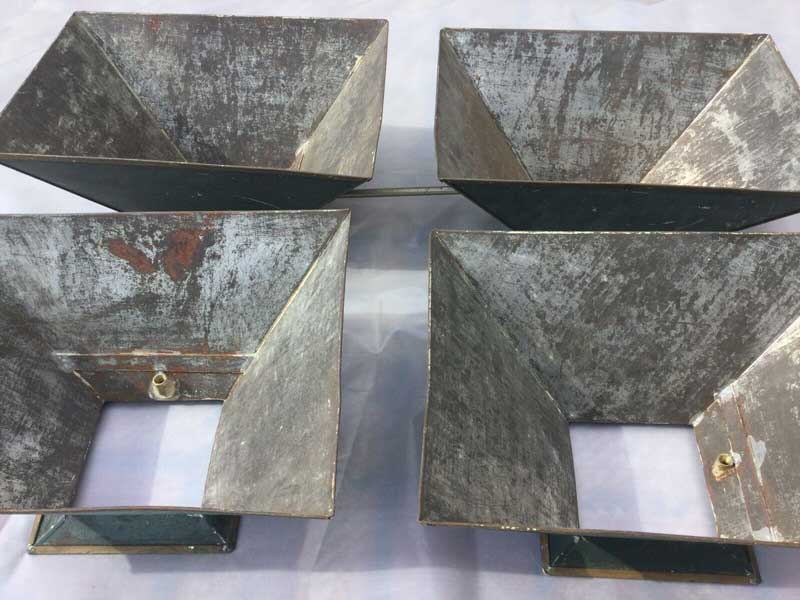
Antique J M Brunswick & Balke Co Billiard Light Shades c1870s. We have two complete original sets of 4, tin gas lighting billiard shades. Please call for more information. (Item 25)
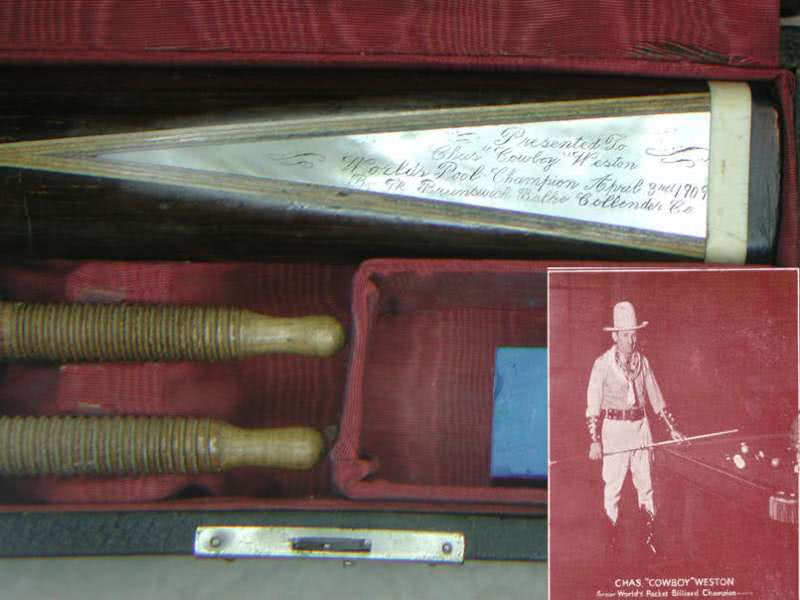


Antique World's Pool Champion Chas "Cowboy" Weston Presentation #360 billiard Cue & Case, Worlds Pool Champion - 1909 - From: Brunswick Balke Collender Company. Rare worlds pool champion pool cue surfaces after 110 years. It retains it's original patina. This is indeed a rare find for the serious billiard cue collector. This antique Brunswick Balke Collender Co manufactured early #360 cue features hand spliced butterflies and points throughout, two shafts with wooden dowel pins, ebony & ivory everywhere. The MOP inset reads: Presented To Chas "Cowboy" Weston - Worlds Pool Champion, April 1909 - From Brunswick Balke Collender Company. This cue is in amazing condition after 110 years. Both shafts are true. Chas "Cowboy" Weston was known to dress in full cowboy gear when playing pool. Provenace: We recently purchased this cue from Mrs. Jack Grismer. This cue was given to Jerome Grismer (His Father) by Chas "Cowboy" Weston in the 1930's. Jerome was a pool shooting friend of Chas "Cowboy" Weston.
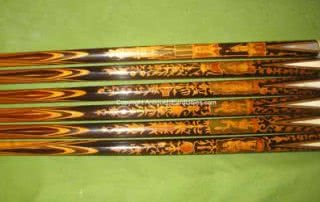
Antique French Marquetry Billiard Cues, c1830's. Set of #6. They were made for Royalty by old world craftsman inlaying different fruit woods, ivory and MOP into rosewood. It took hundreds of hours to create a single cue. Please call for more information.
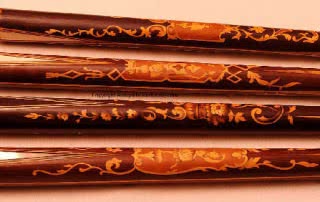
Antique Marquetry Billiard Cues, c1830's. Made for royalty by old world craftsman taking hundreds of hours to create a single cue. The materials used were ebony & rosewood with inlaid fruit woods, ivory and silver. Please call for more information.
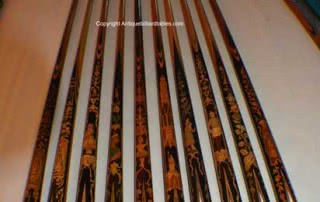
Antique European Marquetry Billiard Cues, c1830's - 1860's. Made for royalty by old world craftsman taking hundreds of hours to create a single cue. Excellent investment.
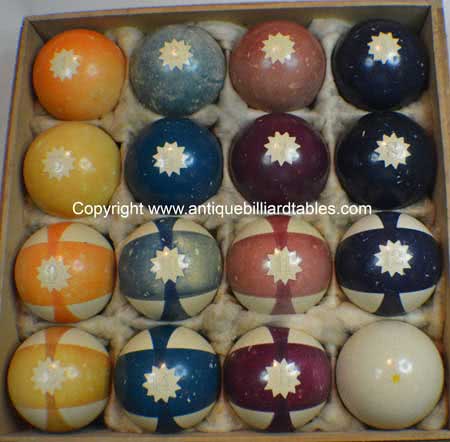
Antique Clay Burt double stripe pool ball set with star pattern, c1880s. Size: 2 1/4". Nice crisp set of double stripe pool balls with a star pattern surround. Surface dyed colors and hand scrimshaw numbers. For reference only. WANTED!
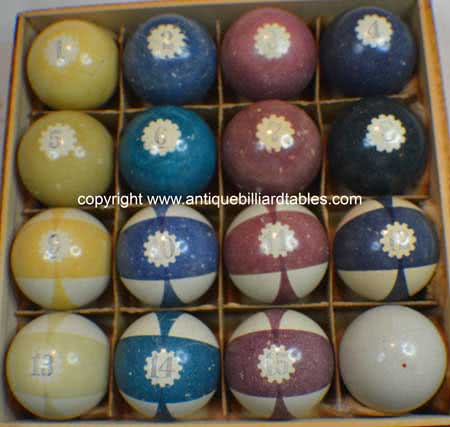
Antique Clay Burt double stripe pool ball set with a gear pattern surround, c1880s. Size: 2 1/4". Surface dyed colors and hand scrimshaw numbers. For reference only. WANTED!

Antique Brunswick Balke Collender Co Zanzibar Ivory Pool Ball Set. Double stripe surface dyed colors with hand scrimshaw numbers In the original labeled box. c1880's. For reference only. WANTED!
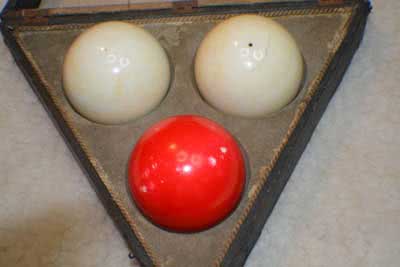
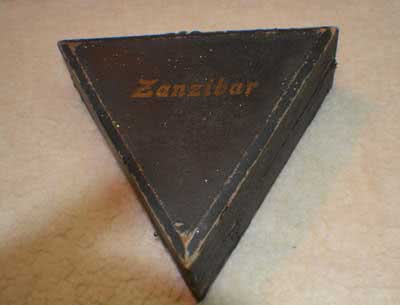
Antique Zanzibar Ivory Three Ball Set With Original Triangle Box. A rare ivory 3 ball set measuring 2 3/8". Please call for more information. For reference only. WANTED!
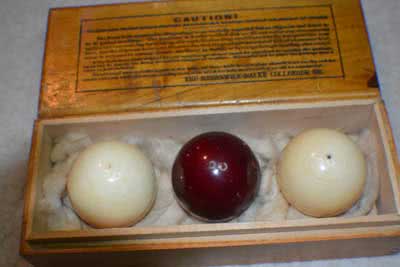
Antique Ivory Three Ball Set With Box. Size: 2". (Item 7)

Antique Zanzibar Ivory Three Ball Set With Box. Excellent Condition. Size: 2 3/8". Please call for more information. (Item 8)

Antique Mixed Ivory Numbered Pool Balls In Original Wooden Box - The Brunswick Balke Collender Company. Surface dyed colors with hand scrimshawed numbers, c1880's. WANTED To Buy! single ivory numbered pool balls. (Item 9)


Antique Brunswick Balke Collender Co Ivory Numbered Pool Ball Set. Size: 2 1/4". For reference only. WANTED!
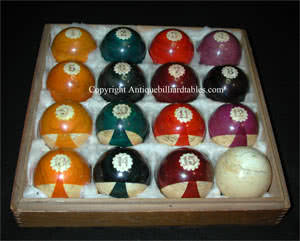
Antique Ivory Burt Double Stripe Pool Ball Set, c1880s. This ivory 15 ball set has the numbers hand engraved on both sides of the balls inside a flower pedal design. The fancy Burt beach ball double stripe is one of the rarest styles made. Size: 2 1/8". For reference only. WANTED!

Antique Brunswick Balke Collender Co Clay Wave O Lene Pool Ball Set, c1890s/1910. Size: 2 1/4". WANTED TO PURCHASE!!

Antique Red Ivory Pool Ball Set, c1880s-1890s. This ivory 15 ball set has the numbers hand engraved on both sides of the balls. Size: 2 1/4". For reference only. WANTED!

We Buy & Sell Antique Billiard Cues - Brunswick models with hand spliced points & butterfly points in reverse, Brunswick Model #36, Brunswick Model #360, Brunswick Model #28, Brunswick Merry Widow, Brunswick Model #20, Brunswick Model Hub, Brunswick Model #30, Brunswick Model #210 Hexagonal, Brunswick Model #27 Chinese carved butt, Brunswick Model #220 Fish pole. Other US makers include: The Albert Pick Co, Rieper Manufacturing Co. Antique European billiard cues include: Antique French marquetry, Antique Henin Aine Co, B Finck Co. Please call for more information.

Antique Ivory Snooker Ball Set With Wooden Case. (Item 22)

Antique Ivory Burt Triple Stripe Pool Ball Set, Circa 1876. This Burt triple stripe set was colored for the 1876 Philadelphia World Expo. Size: 2". For reference only. WANTED!
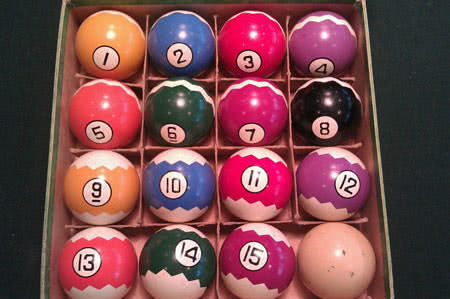
Antique Clay Zig Zag Pool Ball Set With Original Cardboard Box. Size: 2 1/4". Please call for price. (Item 24)
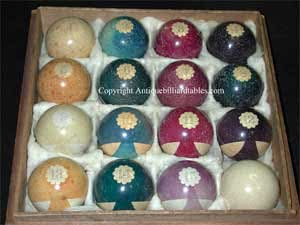
Antique Burt Clay Double Stripe Pool Ball Set, Circa 1880's. Size: 2 1/8". For reference only. WANTED! (Item 25)
Antique Alonzo Burt Clay Cue Balls With Box, c1890's. Size: 2 5/16. Please call for price. (Item 26)
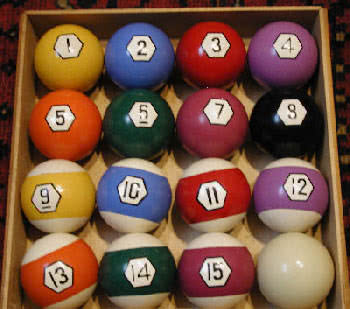
Antique Clay Direct Site Pool Ball Set With Original Wooden Box. For reference only. WANTED! (Item 27)

Antique Ivory Burt Double Stripe Pool Ball Set, 2 1/8". A very rare set of ivory pool balls with surface dyed colors and hand scrimshaw numbers. This set has a scallop around the numbers that is a combination star/flower pattern that is seldom seen. For reference only. WANTED ! (Item 33)
We have many additional beautiful antique pool tables available for sale. Some examples are below. Please call for availability. Phelan & Collender Co, Jacob Strahle, Brunswick & Balke Co, Exposition Novelty, H W Collender Bevel, Brunswick Monarch, H. W. Collender, H. W. Griffith Co, Collender Eclipse, Oliver Briggs, Isaac Taylor, Charles Schulenburg, The Decker, Brunswick Popular, Pride Of Cleveland, New Improved Union League, Sunburst Union League, The Jewel, The Chicago, B. A. Stevens, National, Brunswick Southern, Brunswick Northern, Brunswick Cambridge, Brunswick Pfister, C. G. Akam Co, H. W. Collender Imperial, H. W. Collender Oxcidental, French Marquetry, Brunswick Chicago, Brunswick Northern, Brunswick Brilliant Novelty, Brunswick Alexandria, August Jungblut, B. A. Stevens, Benedict Billiard Co, Brunswick & Company, Brunswick New Acme, Brunswick Cabinet No. 1, Brunswick Cabinet No. 2, Brunswick Cabinet No. 3, Brunswick Centennial, Clark Herd, E. Gerdere, Brunswick Eclipse, H. W. Collender Co Narragansett, J. E. Came Co, Brunswick Manhattan, Brunswick Nonpareil Novelty, Brunswick St Bernard Mission, Brunswick Rochester, Brunswick Marquette, Brunswick York, Brunswick Westminster, Brunswick Pendennis, Brunswick Plaza, Brunswick Amaranth, Brunswick Popular, Brunswick Auditorium, Brunswick Monterey Mission,, Brunswick Old Mission, Brunswick Empire, Brunswick Federal Pool Tables.