(Item 238)
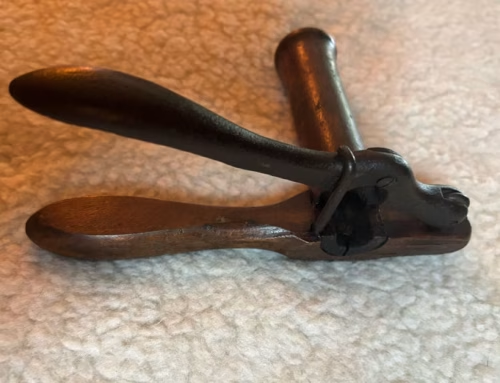
This is the “unsung hero” of the billiard room. While the cues and chandeliers get all the glory, a Rosewood-handled rail bolt wrench This is a sophisticated piece of specialized tool history.
In the 1890s, a billiard table wasn’t just furniture; it was a precision instrument. These wrenches were essential for tightening the massive bolts that secured the heavy slate rails to the table frame.
Why the Rosewood Handle Matters
Today, we use utilitarian steel wrenches, but in the late 19th century, even the tools were designed to match the luxury of the room.
Material Synergy: High-end tables of the era (like the Brunswick Brilliant or Nonpareil) were often crafted from Rosewood. Providing a matching wrench was the ultimate “white-glove” touch from the manufacturer.
Ergonomics: Rosewood is incredibly dense and naturally oily. It doesn’t just look good; it provides a superior grip and resists the sweat and oils from a mechanic’s hands, preventing the wood from cracking over decades of use.
The “Made in USA” Stamp: This is a hallmark of the American industrial boom. Companies like Brunswick-Balke-Collender or The Narragansett Machine Co. often commissioned these tools to be as durable as the tables themselves.
Collector Insight: The “Hidden” Tool
Because these wrenches were often kept in the “billiard drawer” or the technician’s kit, they were frequently lost during moves or discarded when a table was sold. Finding one with the original Rosewood handle intact—without heavy scarring or “chewing” on the metal head—is a significant find for a complete “period-correct” room setup.
Usage in the 1890s
These wrenches typically feature a specific “socket” or “hook” end designed to fit the unique square-headed bolts used on 19th-century rails.
Technical Note: If the metal head shows a dark, “gun-metal” blue or a chocolate patina, it likely hasn’t been over-cleaned. Keeping that original oxidation is key to its value as a companion piece to an antique table.
Please email for price.