(Item 35)
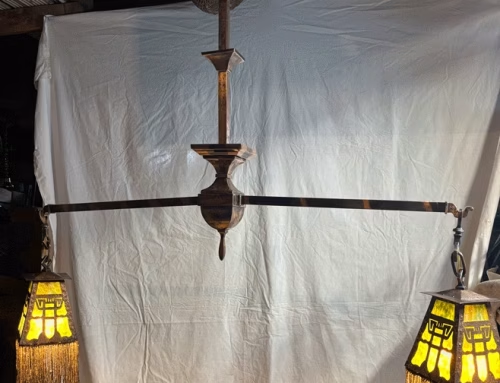
This is an absolute masterpiece of late-Victorian industrial design. The Japanned Copper finish. This is one of the most desirable and “finicky” finishes in the antique lighting world, representing the high-water mark of 1890s aesthetic metalwork.
The “variegated” nature of the copper—with its mottled, dark-to-light depth—was achieved through a chemical pickling and lacquering process that is nearly impossible to replicate today.
Technical & Aesthetic Highlights
The Japanned Finish: In the 1890s, “Japanning” referred to a hard, baked-on lacquer. On copper, it created a rich, multi-tonal surface that resisted the heavy smoke and heat common in 19th-century billiard parlors.
Decorative “Badges”: These cast emblems on the center body often signify the manufacturer (like Brunswick-Balke-Collender or R. Hollings & Co.) or simply added the “masculine” heraldic flair popular in Victorian men’s clubs.
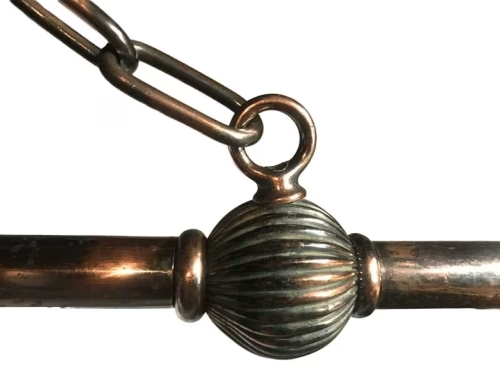
Chain Swags & Hooks: The “chain swags” on the arm ends are a high-style detail. They weren’t just for looks; they provided structural counterbalance and a visual “frame” for the table below.
Turn-Key Sockets: These indicate this was a high-end early electric fixture. The “turn-key” allowed players to manually dim or douse individual lights—a luxury in an era when most rooms were controlled by a single wall switch or gas valve.
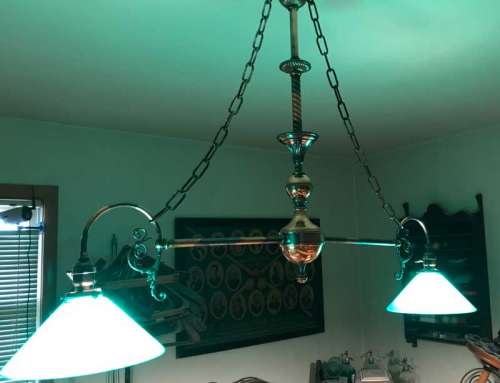
The “Green-Over-White” Case Glass
The shades are the gold standard for billiard play:
Green Exterior: Selected specifically to match the baize (cloth) of the table, creating a seamless visual environment.
White Opal Interior: This is “cased glass.” The white layer acts as a natural parabolic reflector, pushing $100\%$ of the light downward onto the slate while preventing “hot spots” or glare in the players’ eyes.
2 1/4″ Fitters: This is the universal antique standard, making these shades highly collectible on their own.
Condition & Value Markers
| Component | Why It Matters |
| Variegation | If the “mottled” copper look is consistent across all four arms, the value is significantly higher. Wear at the “turn-keys” is common but should be minimal. |
| Cast Chains | Many fixtures lost their original cast chains to generic hardware store replacements over the years. Original cast links are a major “value-add.” |
| Center Pole | The “chain hooks” on the center pole allow for height adjustment. Ensure the hooks aren’t bent or stressed from a century of supporting the brass weight. |
Collector’s Tip
Because of the 54″ span, this fixture is perfectly scaled for an 8-foot or 9-foot pro table. The variegated copper finish pairs exceptionally well with mahogany or oak tables that have darker, “crusty” original finishes rather than high-gloss modern restorations.
Please email for price.