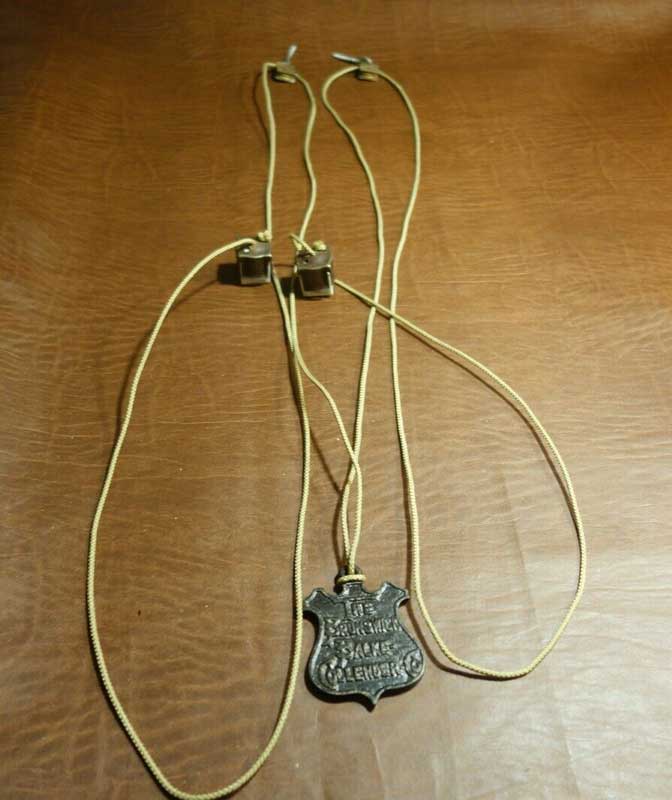
(Item 223)
The Brunswick-Balke-Collender (BBC) Chalk Counterweight Suspension System is a classic piece of Victorian engineering. Before modern retractable “zingers” or simple plastic cones, this was the high-end solution for keeping chalk available but off the table’s felt.
How the System Works
The system was designed to solve a messy problem: players leaving chalk on the rails, where it would smudge sleeves or get knocked onto the floor.
The Counterweight: This is typically a heavy, ornate cast-iron or brass weight (often shaped like a shield, bell, or a teardrop). It usually bears the “Brunswick-Balke-Collender Co.” name in raised lettering.
The Gravity-Feed: The weight is attached to a cord that runs through a pulley system mounted to the ceiling or a wall bracket above the table.
The Action: When you need to chalk your cue, you pull the chalk holder down to table level. When you let go, the counterweight pulls the chalk back up into a “hovering” position—just high enough to be out of the way of the cues, but low enough to grab easily for the next shot.
Why It’s a Collector’s Favorite
Significance: In the world of antique billiard auctions (specifically those associated with catalogs like the ones found in the Antique Billiard Tables archives), “Item 223” frequently refers to the Double-Sided Hanging Chalk Holder. These are prized because they feature branding on both sides of the cast-iron weight, making them perfect for “center-room” display.
Durability: Unlike modern spring-loaded retractors that snap over time, these are purely mechanical. If you have the original weight and pulley, the system can still function perfectly today—though most collectors replace the old, brittle silk or cotton cord with a modern braided line for safety.
Patina: These were often nickel-plated or finished in “variegated copper.” Finding one where the original plating hasn’t completely worn away to the base iron is a significant find.
- Please email for price.