
(Item 224)
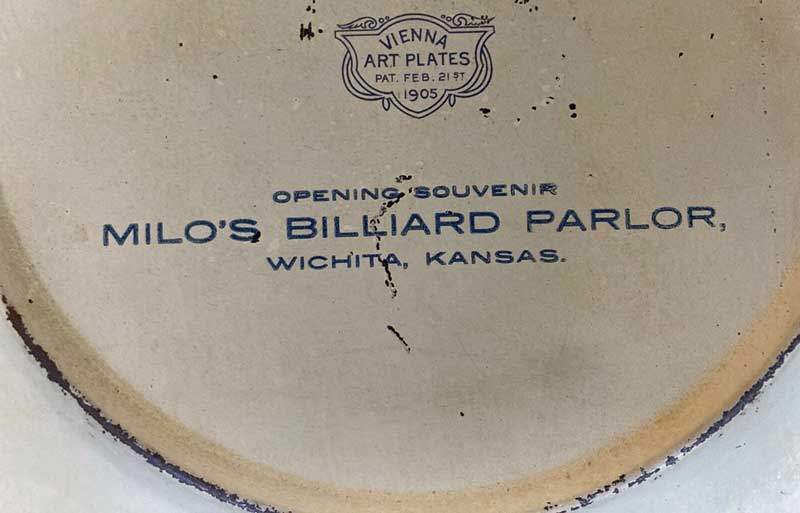
That is a fantastic piece of breweriana/tobacciana history. These Vienna Art Plates were the high-end promotional giveaways of the early 20th century, bridging the gap between fine art and industrial advertising.
The plate you’re describing was essentially a “luxury” souvenir intended to commemorate the opening of Milo’s Billiard Parlor. Because billiards was a social staple of the era, these plates were often displayed in homes or other parlors as decorative trophies.
Historical Context & Manufacturer
The Maker: Despite the name “Vienna,” these were manufactured in the United States by the H.D. Beach Company of Coshocton, Ohio.
The Patent (Feb. 21, 1905): This patent refers to the manufacturing process developed by Harry Beach. He figured out how to create a “rigid and practically non-bendable” plate by crimping two layers of tin together. This gave them the weight and feel of porcelain, which is why they are often mistaken for ceramic at first glance.
The Aesthetic: They were designed to mimic expensive Royal Vienna porcelain. The lithography used a high-quality process to replicate fine paintings, usually featuring Art Nouveau maidens, historical figures, or classical scenes.
Milo’s Billiard Parlor Connection
Wichita, Kansas, was a booming hub in 1905. Billiard parlors of that time weren’t just “pool halls”; they were often elaborate “men’s clubs” with ornate woodwork, fine cigars, and high-stakes social networking.
This specific designation suggests it was part of a numbered series of promotional items or a specific catalog entry from a dealer specializing in antique billiard accessories.
The Grand Opening: Being a “Grand Opening” souvenir makes it rarer than the standard commercial versions of these plates, as it was likely produced in a limited run specifically for the parlor’s debut.
- Please email for price.