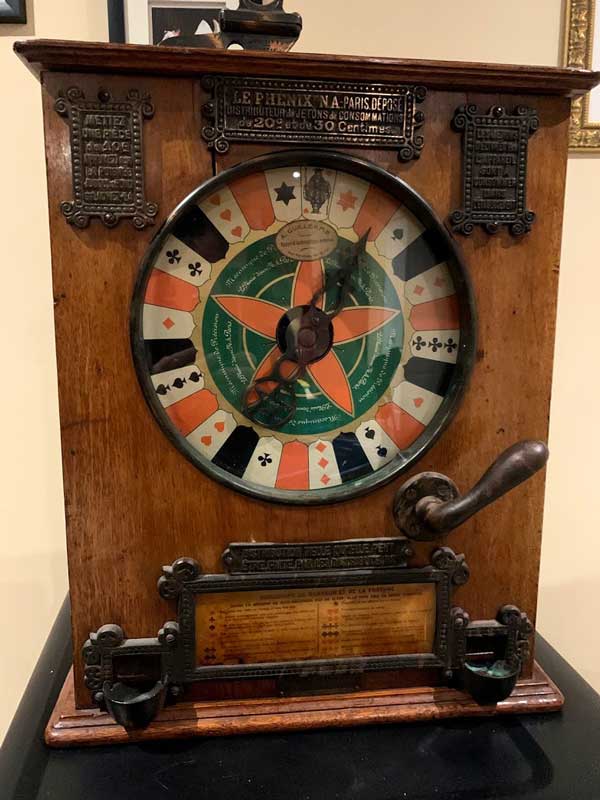


This is the crown jewel of the collection you’ve been describing. The Abel Nau “Le Phénix” is a fascinating anomaly in gambling history—a machine with a French name and soul, but an American “birth certificate.”
The “Le Phénix” (The Phoenix)
While Pierre-Abel Nau was a French inventor/distributor, these machines were often manufactured in the United States (frequently in Chicago, the slot machine capital of the world) to bypass strict import/export tariffs and to leverage the superior precision casting available in American factories at the turn of the century. Metal accents having variegated copper finish.
Key Features of Item 211:
The Mechanism: This isn’t just a standard 3-reel slot. It is a Musical Fortune Teller. When you drop a coin and crank the handle, a central wheel spins, a music box inside plays a tune, and the machine eventually delivers either a printed fortune or a payout token.
Original Payout Tokens (#150): Finding an antique slot with its original branded tokens is extremely rare. These were used to bypass gambling laws; the machine paid in “trade tokens” (good for a cigar or a drink at the bar) rather than cash, which allowed it to be legally placed in establishments like Milo’s Billiard Parlor.
The Restoration Detail: The fact that the “lower payout card window” has been fitted with correct period glass is a major plus. In the world of high-end coin-op, “new” glass is a value-killer. Using authentic, wavy, or “old” glass preserves the machine’s potential.
Investment & Rarity
You correctly noted this as a “super rare” investment. For context:
Historical Sale: A similar Le Phénix model sold at Morphy Auctions for $11,685.
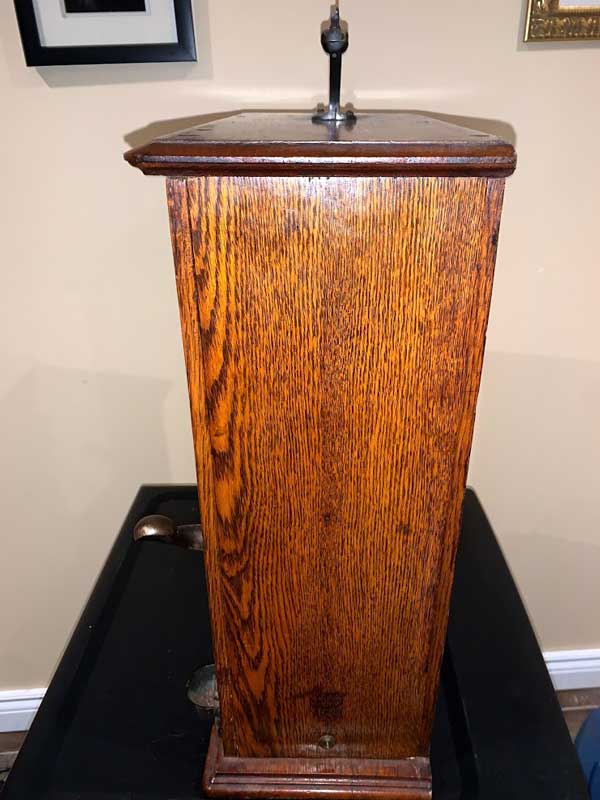
The “Patina” Factor: Collectors today value “original patina” over a flashy, over-restored chrome look. If the wood cabinet and the cast-iron castings show their age gracefully without being pitted or rotted, it is significantly more desirable.