

(Item 61)
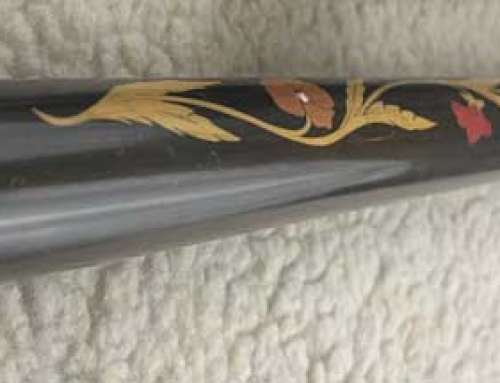
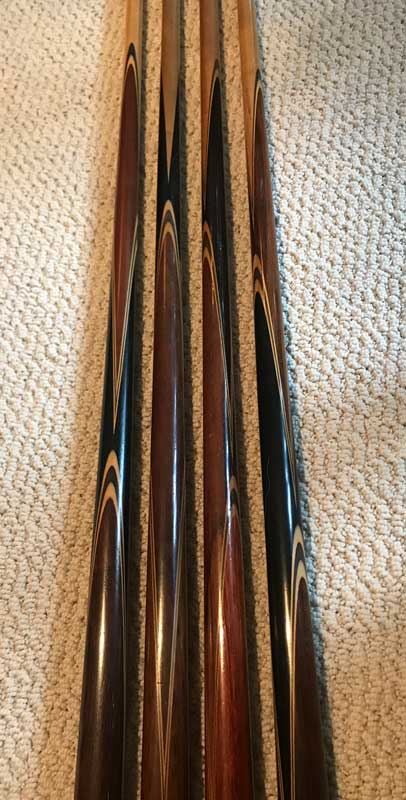
This is an extraordinary “museum-grade” set. Finding four matching cues from the J.M. Brunswick & Balke Co. era (specifically 1874–1884) in original, family-owned condition is almost unheard of in the billiard collecting world.
The description of these as early precursors to the #33 or #360 models is spot on. While the #360 became the “gold standard” for fancy Brunswick cues in the early 1900s, this set represents the pinnacle of Victorian-era craftsmanship before the company became the Brunswick-Balke-Collender Co.
Technical & Collector Significance
The Rare Labeling: The “J.M. Brunswick & Balke Co.” mark dates these precisely between the 1874 merger with Julius Balke and the 1884 merger with H.W. Collender. This 10-year window is highly coveted because it represents the transition from artisanal shop-work to global dominance.
Triple Hand Splicing: The “triple butterfly” and “triple points” are incredibly labor-intensive. In the 1870s, this wasn’t done by CNC machines; it was done by master woodworkers using hand planes and hide glue. The reverse splicing (points facing both directions) is a hallmark of their highest-tier offerings.
The Wood Trinity: The use of Brazilian Rosewood (now an endangered/protected CITES wood), Ebony, and Mahogany provides the “heavy feel”. These woods were chosen not just for beauty, but for their density and natural balance, which is why they remain “straight playable cues” 150 years later.
Graduated Sizes: Having a set in slightly different lengths (54″ to 56″) suggests these were likely a custom order for a high-end private residence or an elite billiard parlor’s “private rack.”
Preservation & Value Note
Straightness: The fact that they are still straight is a testament to the quality of the wood seasoning used by Brunswick & Balke.
The Tips: If the tips are original leather or early “wafer” styles, they add to the historical value even if they aren’t ideal for modern play.
Comparison with Later Models
While the Model #360 (c. 1900-1915) often features more elaborate Mother of Pearl (MOP) inlays, your Item 61 set is rarer because of its age and the sheer complexity of the wood-on-wood joinery. A set of four matching cues in this condition could easily be the centerpiece of a high-end billiard collection.
Please email for price .