(Item 48)
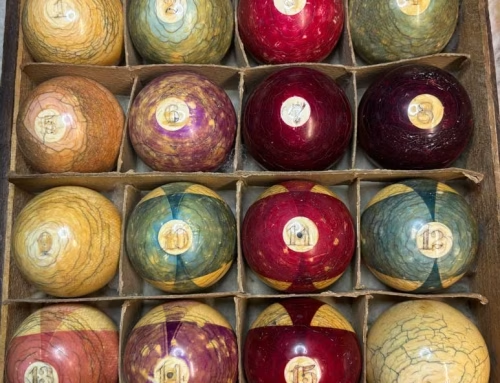
c1880s is a significantly more rare and “high-tier” collector’s item than a standard ivory ball set. The Brunswick “Zanzibar” series represents the absolute pinnacle of 19th-century billiard luxury.
1. The “Zanzibar” Distinction
In the 1880s, the Brunswick-Balke-Collender Co. marketed the Zanzibar line as their premium ivory offering.
Aesthetic: Unlike plain ivory balls, Zanzibars are famous for their “Beach Ball” or “Double Stripe” patterns.
The Scrimshaw: The hand-scrimshawed numbers are a major value-add. Each number was hand-engraved into the ivory and then filled with pigment (often black or dark blue), making each ball a unique piece of folk art.
Surface Dyeing: The “nicely faded colors” you noted are actually a sign of authenticity. 19th-century organic dyes mellow over time into soft pastels (pinks, pale blues, and yellows), which collectors find far more desirable than the harsh, bright colors of modern resins.
2. Investment Potential vs. Reality
While these are “investment grade,” the term comes with a few caveats:
Scarcity: A full, numbered 15-ball set of 2 1/4″ Zanzibars is incredibly rare. Many sets were broken up or lost to “exploding” (a nickname for when old ivory or early celluloid balls shattered upon high-impact contact).
The “Ceiling”: High-end sets like this can fetch $10,000 to $15,000+ at specialized auctions. However, your buyer pool is limited to serious billiards historians and high-net-worth antique collectors.
Condition is King: For these to hold “investment” value, they must be free of deep “checking” (spiderweb cracks) and must be “in round.” If they have warped into ovals over the last 140 years, their value is purely decorative.
3. Critical Verification: Ivory vs. “Composition”
In the 1880s, Brunswick was also experimenting with “Composition” balls (early plastics like Hyatt’s celluloid) to save money.
Weight: At 2 1/4″, a genuine ivory ball should feel significantly heavier and “clack” with a higher, more metallic pitch than plastic.
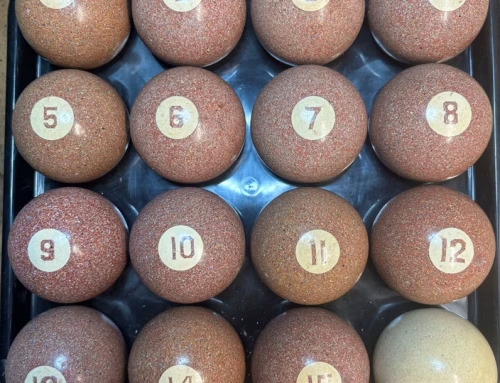
The Nerve Center: Look for a small “plug” or a circular pattern on one side of the ball. This is where the center of the elephant tusk was. If the grain is perfectly uniform all the way around, it might be a very high-quality 19th-century composite rather than solid ivory.
- Please email for price.