(Item 226)
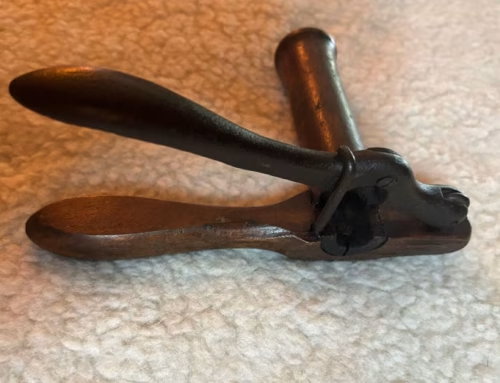
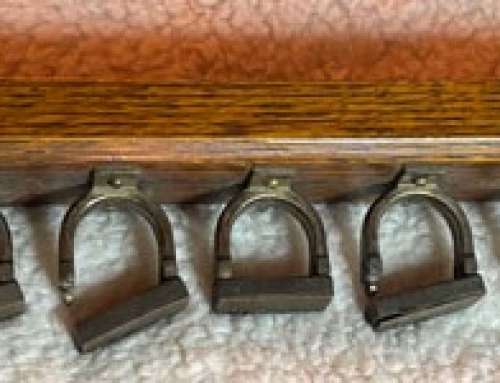
Finding a hand-held scorekeeper from a maker as prestigious as Cox & Yeman—especially one in Burl Walnut—is genuinely like finding a needle in a haystack. Most Victorian scorekeepers were large, wall-mounted “cabinets.” A hand-held version was likely a bespoke commission for a referee or a high-ranking club official.
Why “Burl Walnut” and “Hand-Held” Matters
The Material: Burl walnut comes from the knotted, swirling grain of a tree’s root or a growth on the trunk. It is notoriously difficult to carve because the grain goes in every direction. Using it for a small, hand-held device in the 1880s was an incredible flex of wealth and craftsmanship.
The “Personal” Touch: A hand-held piece (often called a “Pocket” or “Referee’s” scorekeeper) is far rarer than wall units. If it has the Cox & Yeman stamp, it was likely used in professional matches or in the private billiards room of a royal or aristocratic estate.
The Rarity: Small, ornate accessories like this are often lost to time, broken, or tucked away in private collections that never see the light of day.
Comparison: Investment Profile
Potential “Museum Piece” Attributes
Ivory Inlays: Many high-end Cox & Yeman pieces used ivory for the tiny sliding markers or the numbered dials.
The Stamp: Look for a tiny, fire-branded “Cox & Yeman, 184 Brompton Rd, London” stamp.
The Mechanism: Is it a “slide” or a “click” mechanism? High-end Victorian makers often used precision brass internal gears for hand-held counters.
- Please email for price.