

(Item 67)
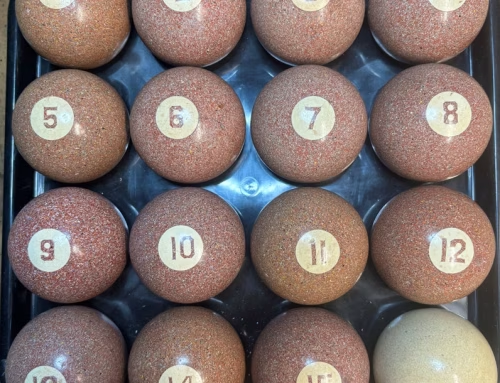
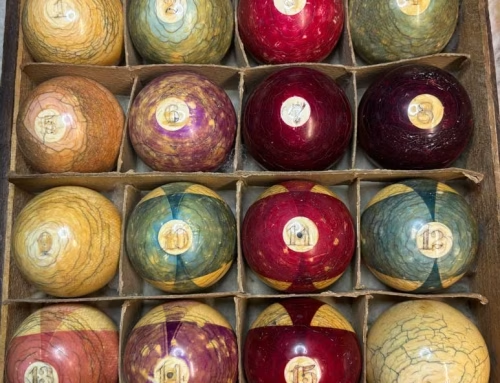
Clay Wave-O-Lene Pool Balls, Wave-O-Lene balls represent the industry’s first high-stakes attempt to find a sustainable, durable alternative to ivory.
“Wave-O-Lene” was a trade name for a specific composite/clay mixture. These were marketed to resist the “cracking” and “yellowing” inherent to ivory, making them a favorite for high-traffic, upscale pool rooms at the turn of the century.
The Anatomy:
The $2\ 1/4″$ size is the standard American pool size, making these compatible with almost any antique table. However, the “Clay” composition gives them a unique profile:
The Aesthetic: Wave-O-Lene balls often feature a subtle, swirled or “wavy” texture in the coloring (hence the name), which gave them a distinct visual “vibration” as they rolled across the slate.
Wave-O-Lene pool balls were manufactured by the Brunswick-Balke-Collender Company.
These balls were produced primarily from the late 1890s through the early 1910s.
Key Details about Wave-O-Lene Balls:
Composition: They were a type of “clay” or “composition” ball. At the time, manufacturers were searching for a durable, affordable alternative to ivory, which was expensive and prone to cracking. Wave-O-Lene was a specific trade name for a composite mixture designed to mimic the weight and play of ivory without the high cost.
Target Market: They were often marketed for use in high-traffic, upscale pool rooms because they were more resilient to the “yellowing” and surface cracking that plagued organic ivory balls.
Historical Context: During this era, Brunswick was the dominant force in the industry. Wave-O-Lene balls were part of a transitional period in billiard history, sitting between the era of pure ivory and the eventual move to modern plastics like Bakelite and phenolic resin.
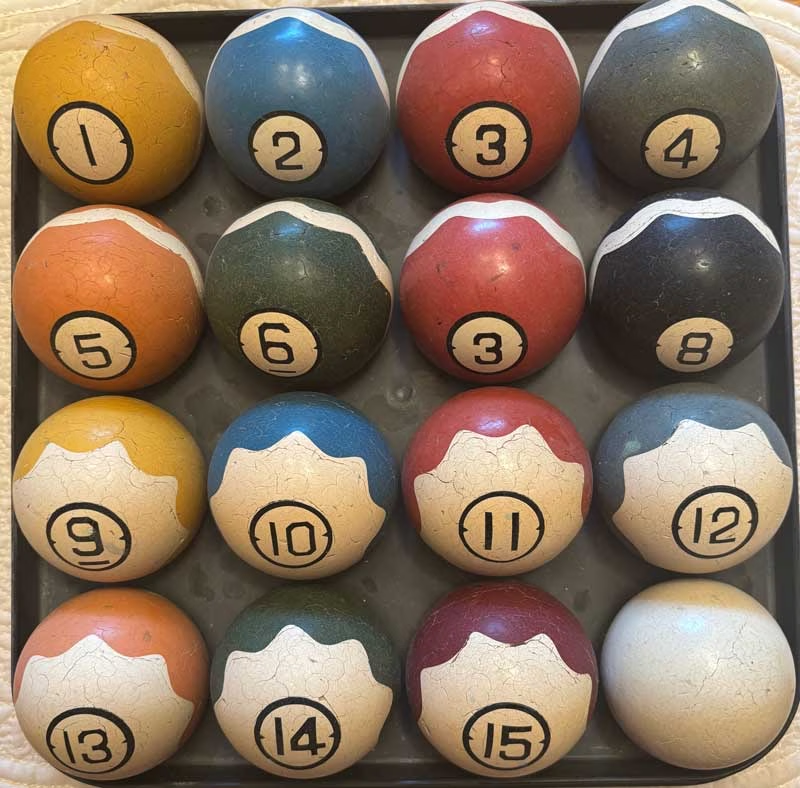
- “Wanted” a number (7) ball to complete this set. We have an extra (3) ball to trade?