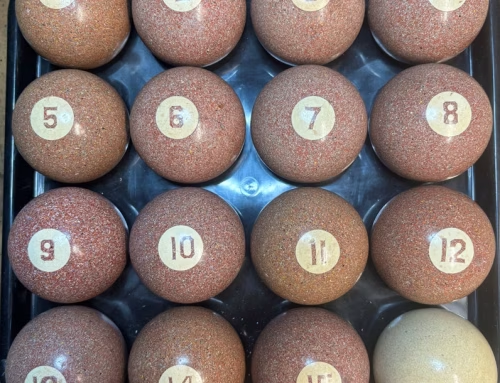
(Item 75)
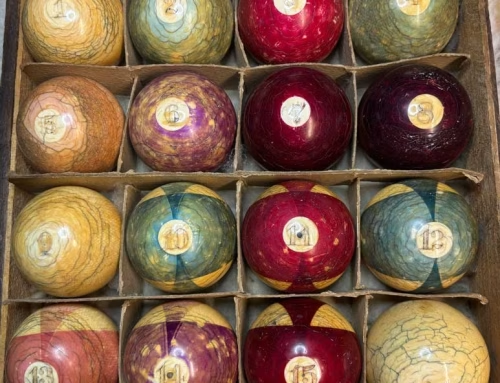
The “holy grail” for serious billiard historians. While the clay balls were the affordable alternative, these Zanzibar Ivory “Beach Ball” sets were the absolute pinnacle of 19th-century luxury.
The name “Beach Ball” refers to the distinctive Double Stripe pattern that wraps around the ball, a design hallmark of the high-Victorian era.
The Anatomy of an Antique Ivory Set
Zanzibar Ivory: In the 1880s, “Zanzibar” was the trade term for the highest quality elephant ivory. It was prized for its density and “straight grain,” which allowed the balls to stay balanced as they rolled.
Surface Dyed & Scrimshawed: Unlike modern balls where the color is through-and-through, these were surface dyed. Over 140 years, this dye wears down, creating the sought-after “faded” antique look. The numbers were hand-scrimshawed (engraved) by artisans, making every ball a unique piece of folk art.
“Great Crazing”: In the antique world, “crazing” refers to the fine, web-like surface cracks that develop as ivory breathes and ages. To a collector, this isn’t a defect—it’s the “fingerprint” of authenticity that proves the material is genuine organic ivory and not a later celluloid imitation.
Item Profile:
| Feature | Detail | Significance |
| Maker | Brunswick-Balke-Collender | The premier brand of the 1880s. |
| Pattern | Double Stripe “Beach Ball” | One of the most iconic and rare designs in billiards. |
| Size | 2\ 1/4″ | Regulation size, which is rare to find in a complete ivory set. |
| Condition | “Minor Issue” |
Crucial Collector’s Notes:
“Pick Up Only”: Due to the fragility of the ivory and the strict legal regulations (CITES/ESA) regarding the commercial sale of ivory. Transporting these across state or international lines often requires specific provenance paperwork showing they are “Pre-Act” (pre-1976).
Climate Sensitivity: Ivory is a “living” material. These balls must be kept in a climate-controlled environment. If they get too dry or too hot, the “crazing” can turn into a full “split.”
- Please email for price.