(Item 121)
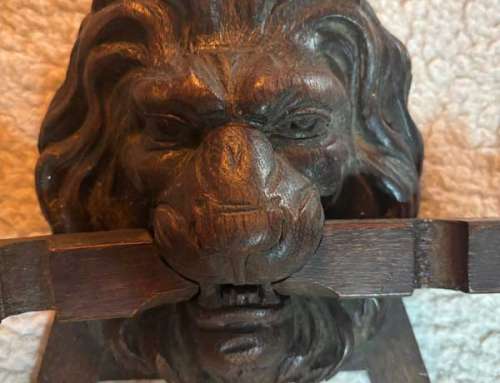
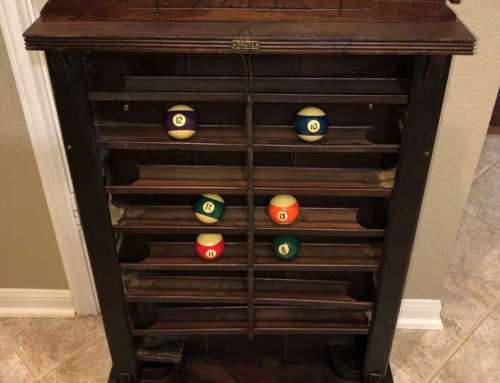
This Eastlake-style Pool Cue Rack is a fantastic example of the “High Victorian” aesthetic that dominated the 1880s. Named after the influential architect and writer Charles Eastlake, this style was a reaction against the overly “fussy” and curvy French-influenced furniture of the mid-19th century.
The Eastlake Aesthetic
Unlike the “Novelty” or “Brilliant” styles, Eastlake furniture is defined by incised carvings, geometric shapes, and structural honesty.
Incised Detail: Instead of rounded, high-relief carvings, you will likely see shallow “spoon carvings” or linear grooves cut directly into the Red Elm. This was considered more “modern” and intellectual in the 1880s.
Architectural Influence: These racks often look like miniature buildings, featuring flat pediments at the top and sturdy, squared-off proportions.
The “Turned” Elements: The supports for the #12 cue notches likely feature “lathe-turned” spindles that are more architectural than floral.
Material: Red Elm
The choice of Red Elm (also known as Slippery Elm) is significant for a piece from this era:
Durability: Red Elm is famously tough and resistant to splitting. In a cue rack—where cues are constantly being pulled in and out—this durability was a major selling point.
The Grain: Red Elm has a beautiful, coarse texture and a reddish-brown heartwood that takes 19th-century stains exceptionally well. It provides a more “rugged” and masculine look compared to the “faux” finishes of other models.
Condition & Collector Value
| Feature | Significance |
| Sharpness of Carving | In Eastlake pieces, the “crispness” of the incised lines determines value. If the lines are filled with 140 years of wax or paint, the geometric intent is lost. |
| Capacity (#12) | The 12-cue count suggests this was a premium residential or small-club fixture. |
| Original Hardware | Look at the clips or “notches” that hold the cue necks. If they are original wood or brass, they add a great deal of historical “purity” to the piece. |
Why This Style Stands Out
The Eastlake style was the bridge between the heavy Victorian era and the simpler Arts & Crafts (Mission) style that followed. It is highly sought after by collectors who appreciate geometric precision over flamboyant curves. In a room with an 1880s table, an Eastlake rack provides a sophisticated, “learned” atmosphere.
Please email for price.