(Item 62)
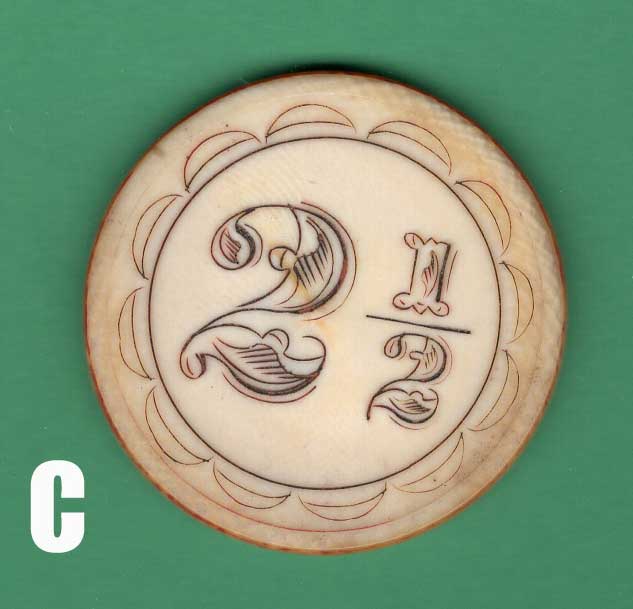
This Antique Ivory Poker Chip is a fascinating crossover piece between the world of 19th-century high-stakes gambling and fine scrimshaw art.
The $2 \frac{1}{2}$ denomination is particularly rare and intriguing. In the 1880s, poker chips were often denominated to match specific gold coins. A $\$2.50$ chip would correspond directly to the Quarter Eagle gold coin, which was in circulation at the time. This suggests the chip was part of a “hard currency” game where the chips represented the exact weight and value of the gold on the table.
Historical & Material Details
Material Value: Like your other ivory items, this chip features the characteristic “Schreger lines” (cross-hatch grain) of authentic ivory. At 1 9/16″, it is a substantial size, providing the “clack” and weight that gamblers of the Gilded Age associated with high-status gaming.
Hand Scrimshawing: The fact that it is scrimshawed on both sides elevates it from a mere gaming counter to a piece of folk art. In the 1880s, these were hand-etched with a needle and rubbed with ink or soot—a labor-intensive process that predates the clay-pressed chips of the 20th century.
The Denomination ($2 \frac{1}{2}$): While $\$5, \$10,$ and $\$25$ chips were common, “fractional” denominations like this are highly sought after by collectors of Western Americana and gambling memorabilia because they were produced in much smaller quantities.
Trading & Collector Perspective
Looking to trade for a crisp $100 or $50 poker chip of same.
The Hierarchy: High-denomination ivory chips ($50+) are the “whales” of the hobby. They were often kept in the cashier’s cage of elite clubs rather than circulated heavily, meaning they sometimes survive in even crisper condition.
Preservation Tip
Because ivory chips were handled constantly, they can absorb oils and dirt into the etched grooves.
Note: Resist the urge to “scrub” the chip. A gentle wipe with a dry microfiber cloth is best. Any moisture can cause the ivory to expand slightly, which might “pop” the original pigment out of the scrimshawed lines.
Please email for price.