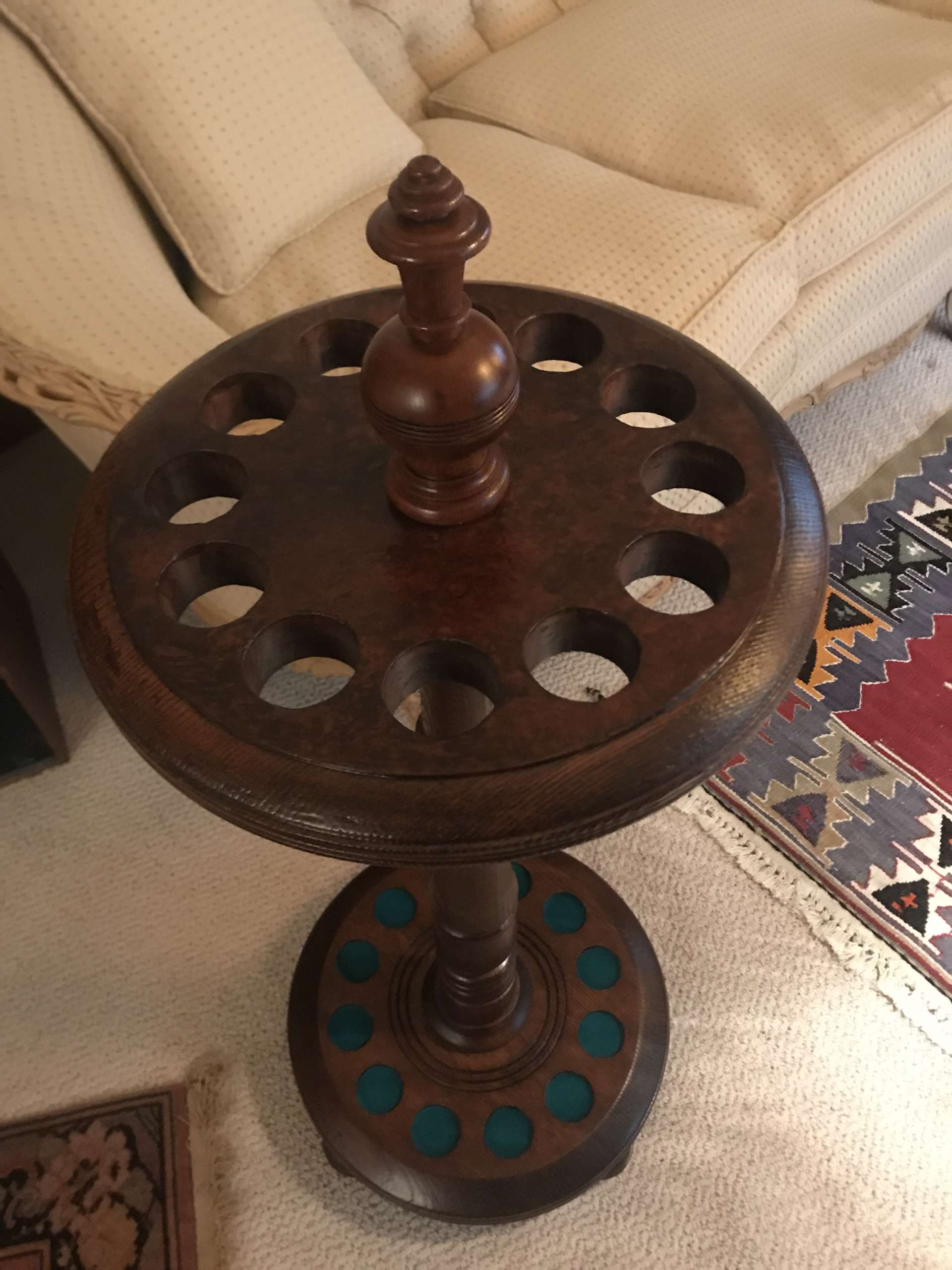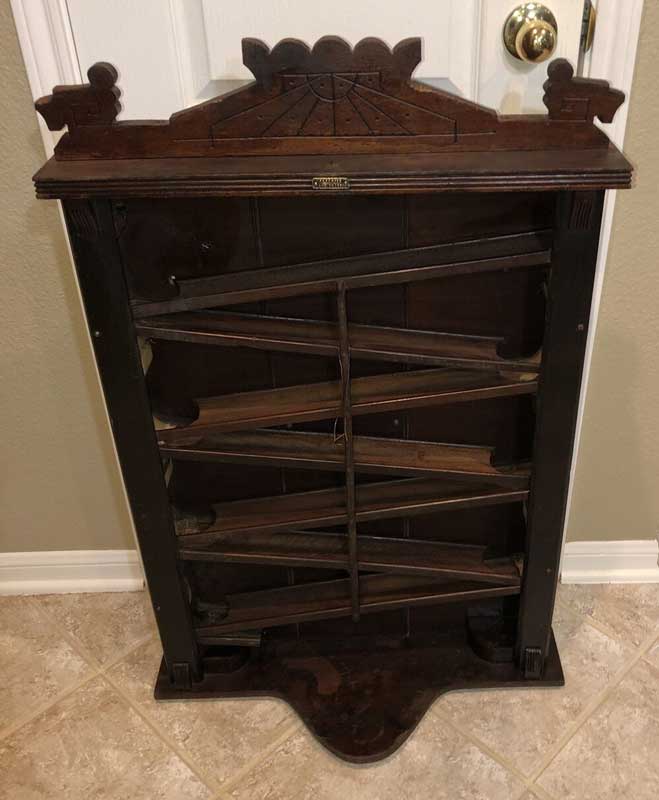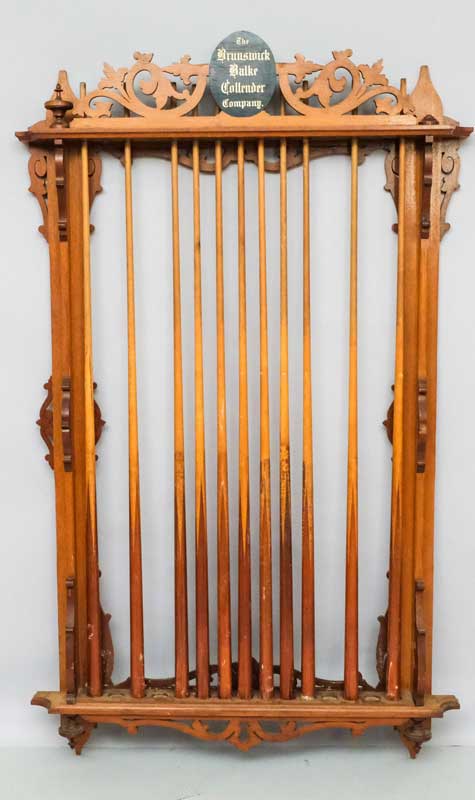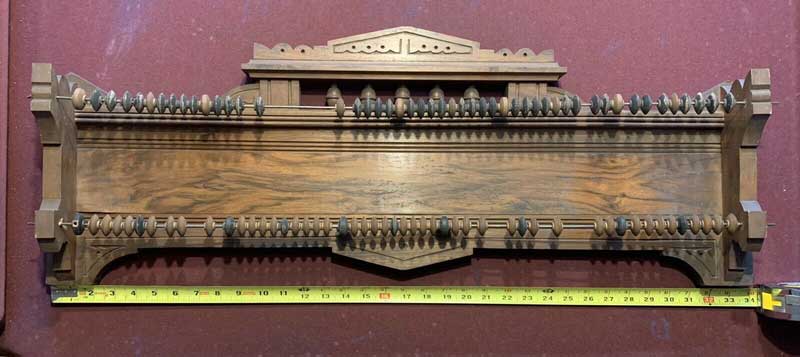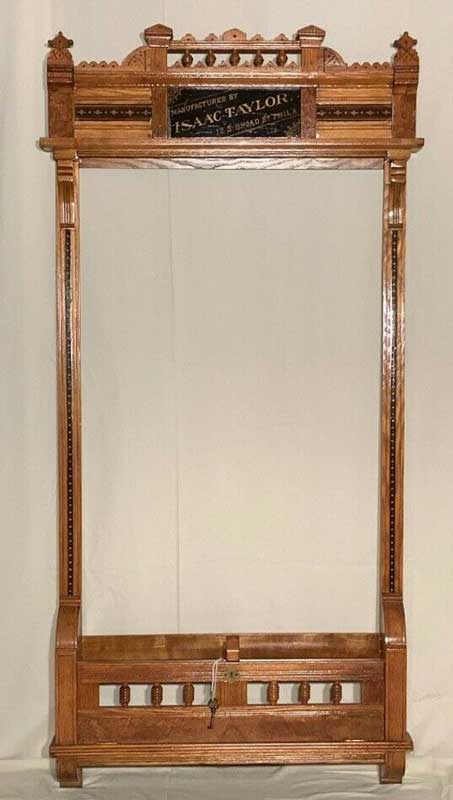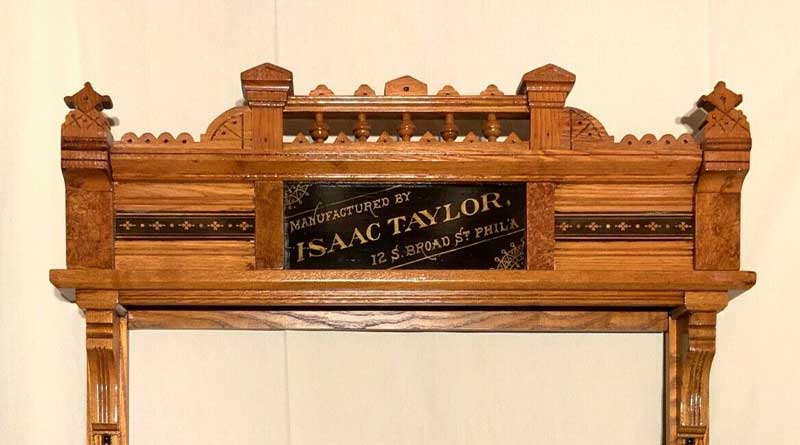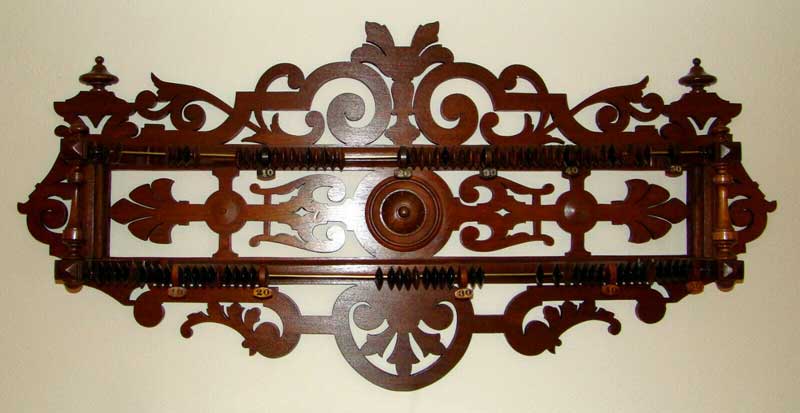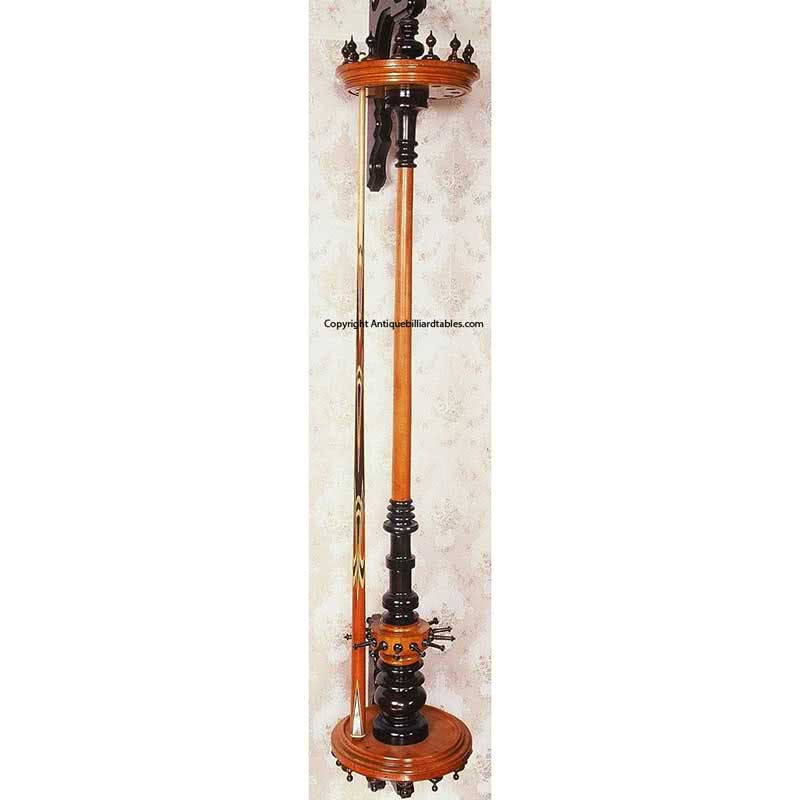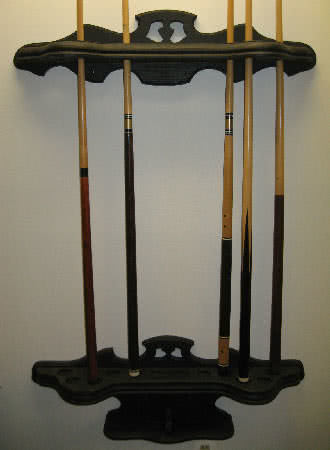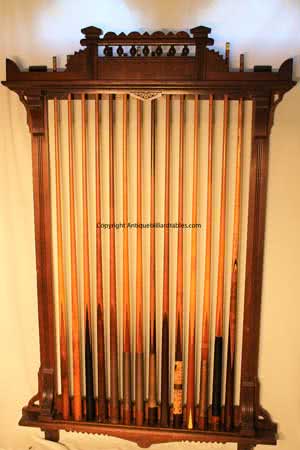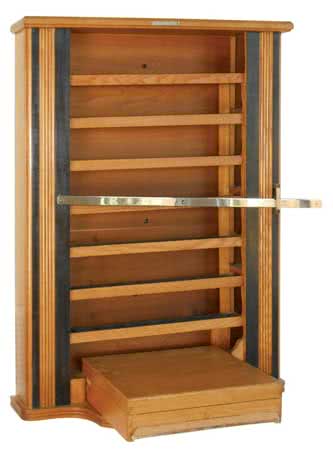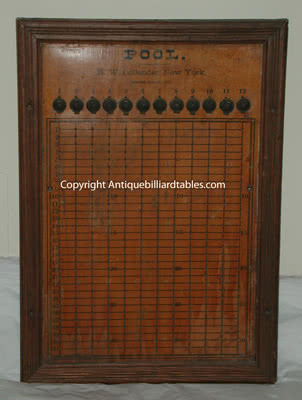
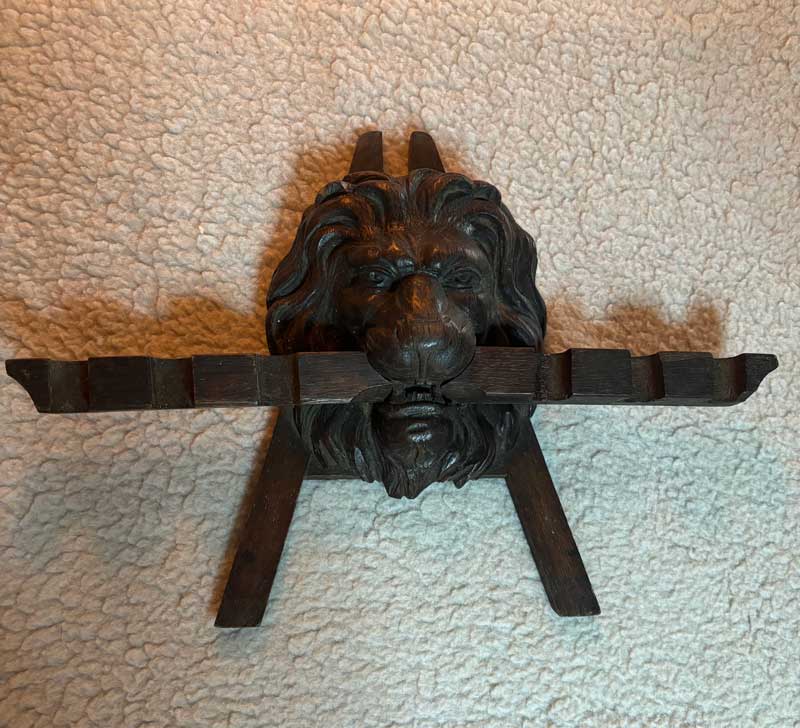
Antique European Lion Head Hand Carved Cue Rack
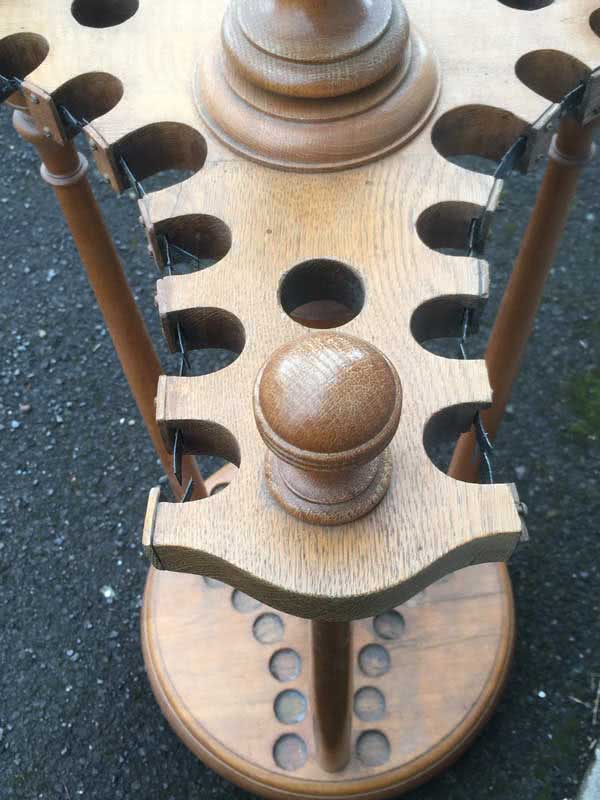
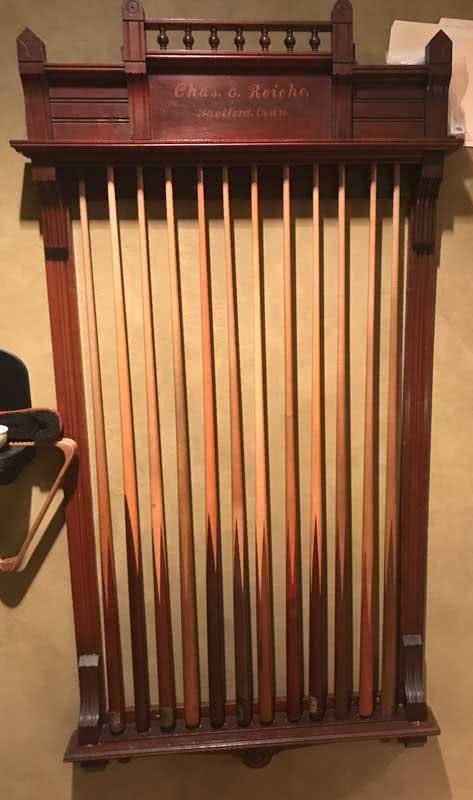
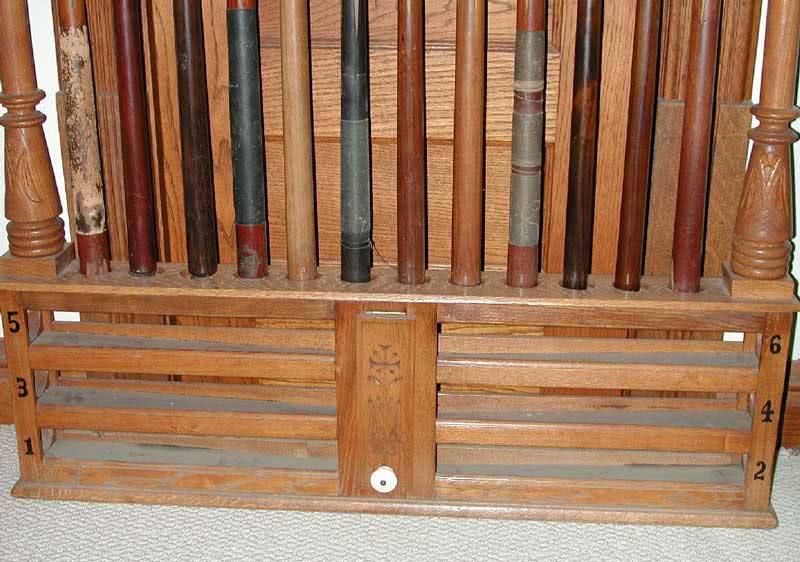
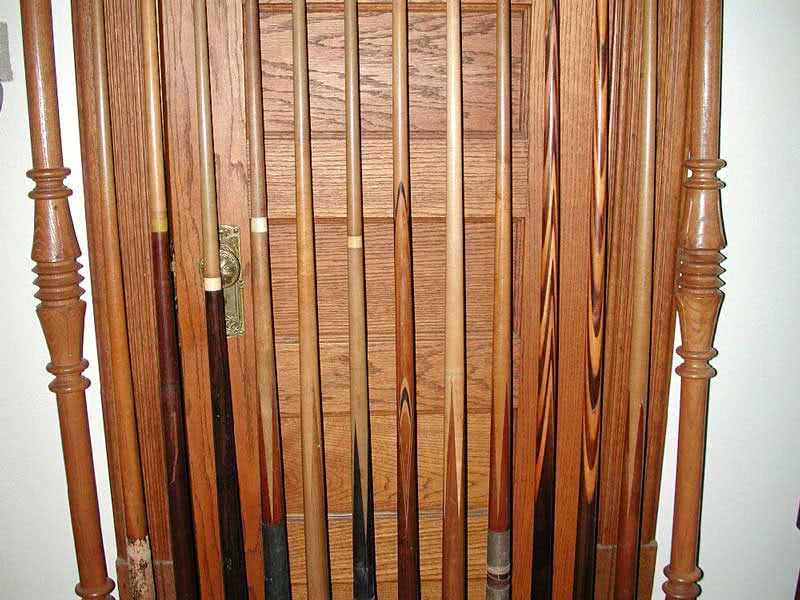
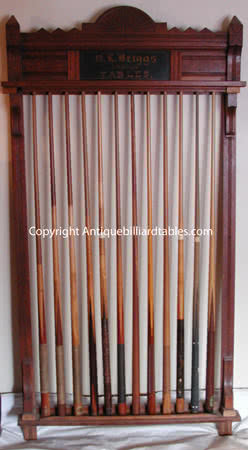
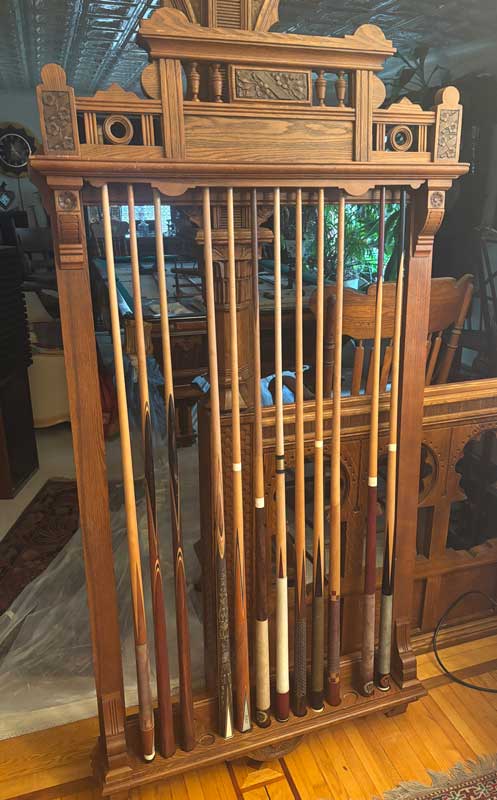
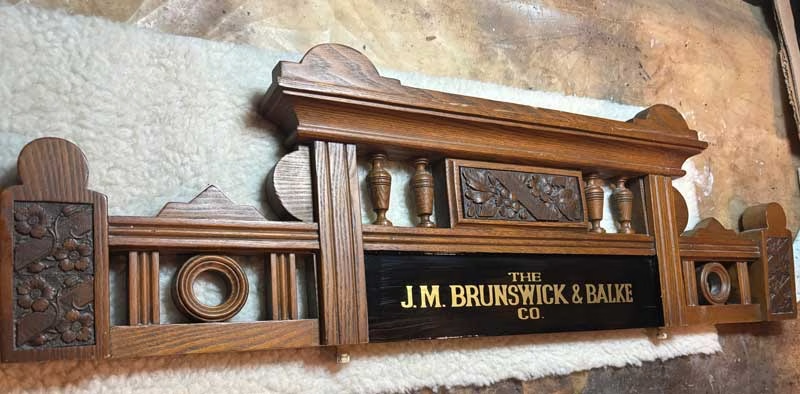
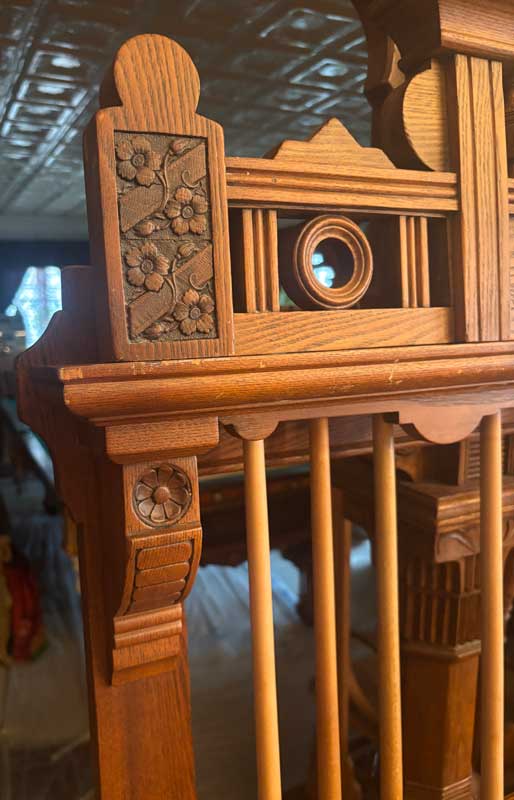
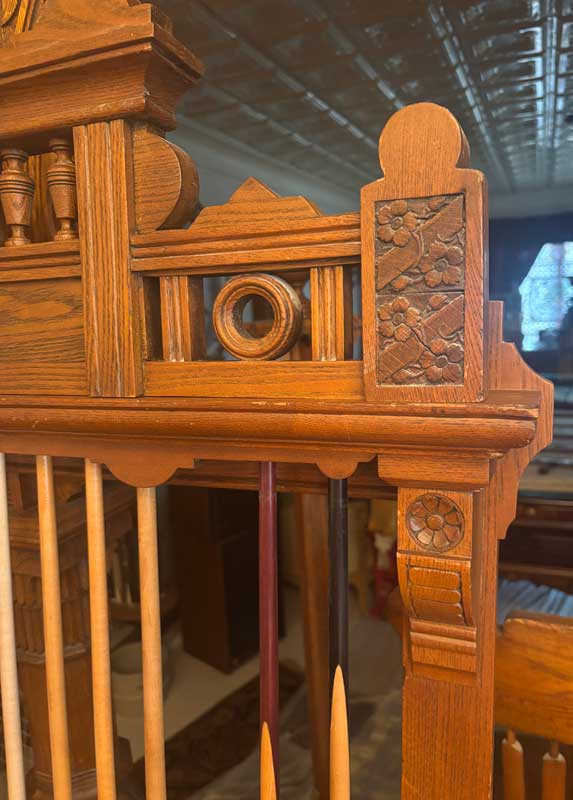
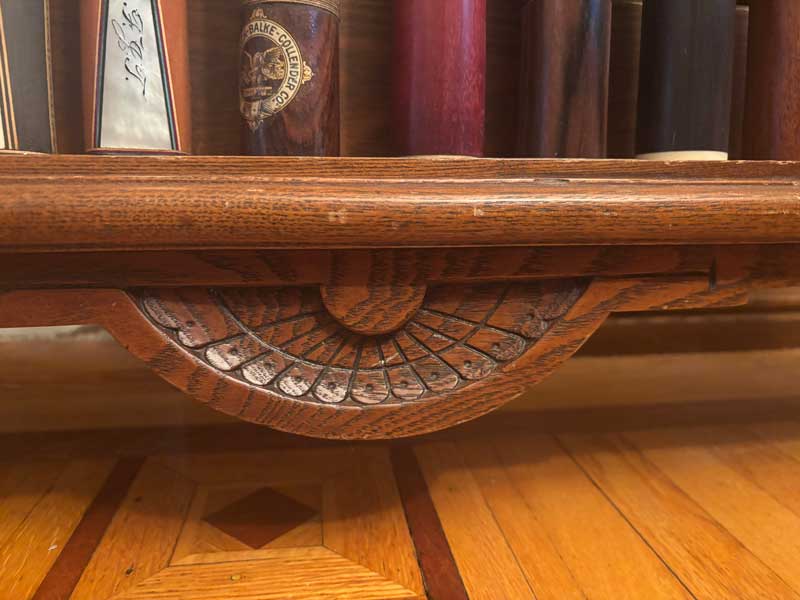
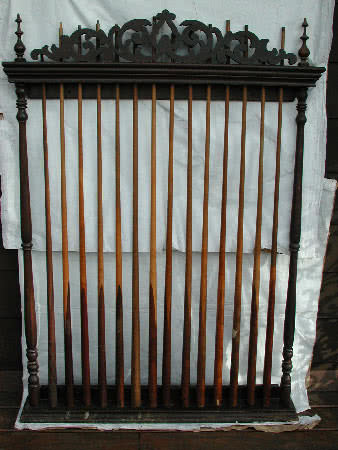
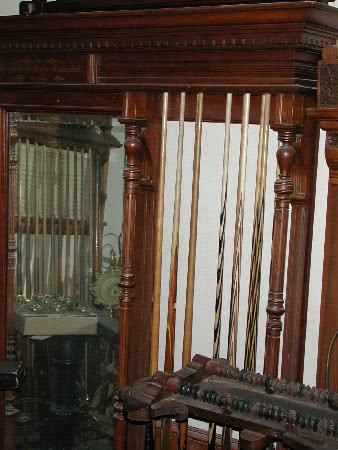
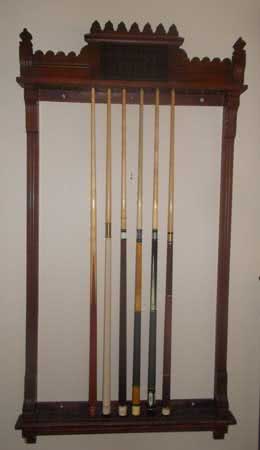
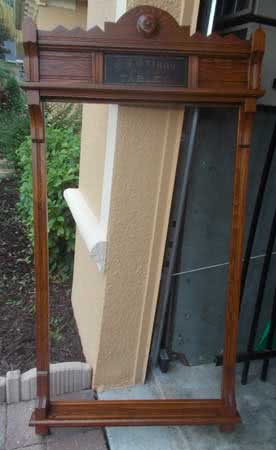
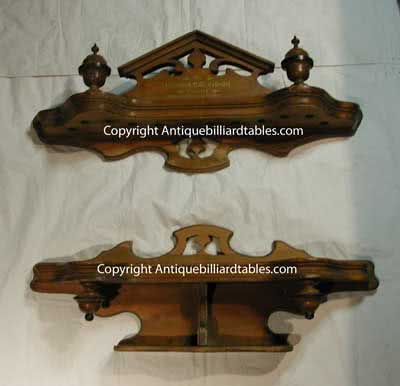
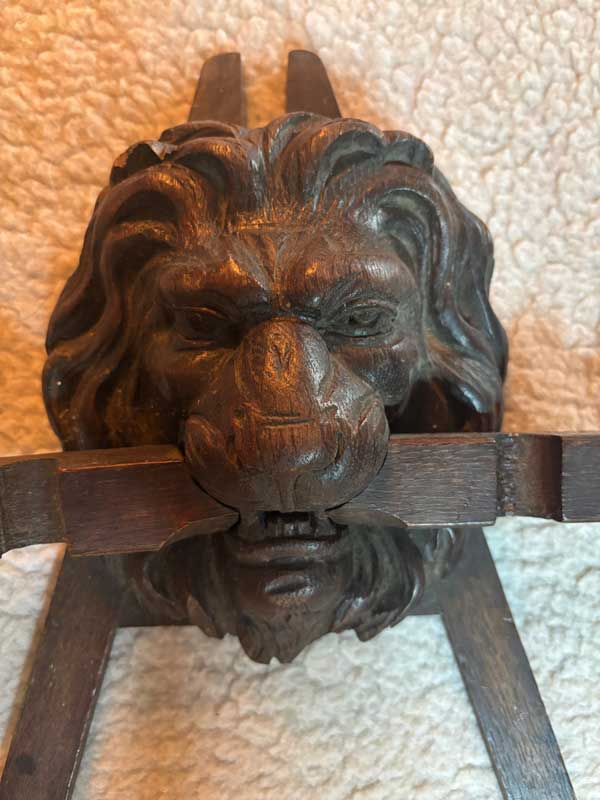
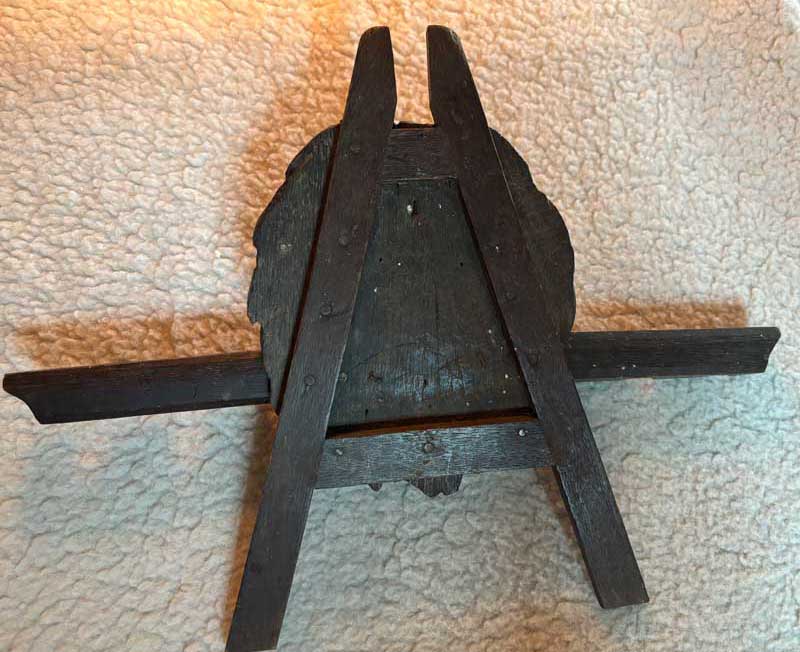
(Item 128) Artistic & Functional Analysis The Lion Head Motif: In European woodcarving—particularly from the German or Belgian traditions—the lion symbolized strength and guardianship. In a billiards context, it acts as a "sentinel" for a player’s most prized tools. The "Gravity" Design: Unlike American wall racks that typically use spring clips to hold cues vertically, this European style is a lean-in rack. By letting the butts rest on the floor and leaning the tips into the $6$ deep slots, there is less tension on the wood of the cue, which purists believe helps prevent warping over a century of use. Scale ($16" \times 12"$): This is a remarkably compact and efficient design. it packs a heavy visual punch without occupying the massive wall space required by full-sized floor-to-ceiling racks. Condition & Rarity Factors Feature Importance Antique Oak Oak was the wood of choice for its "open grain," which holds deep, detailed carvings (like the texture of a mane) much better than softer woods. Wall-Hung Freestanding racks are common; original wall-hung carved brackets are rarer and often survived in better condition because they were mounted away from foot traffic. Six-Cue Capacity This capacity suggests a private estate or a high-end "gentleman’s club" setting rather than a commercial pool hall. Preservation Tip For hand-carved oak of this age, the deep crevices of the carving can collect dust that hardens into "grime" over time. A soft-bristle brush (like a natural hair paintbrush) is the best way to clean it without rounding off the sharp, hand-carved edges that give the piece its antique value. Please email for price.