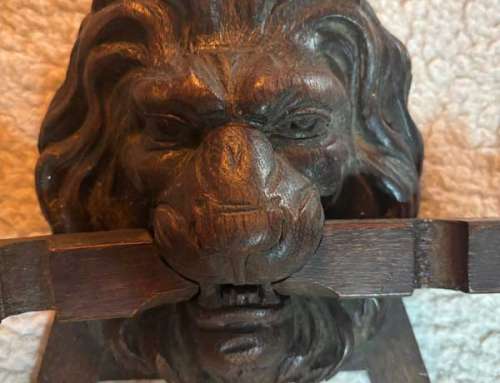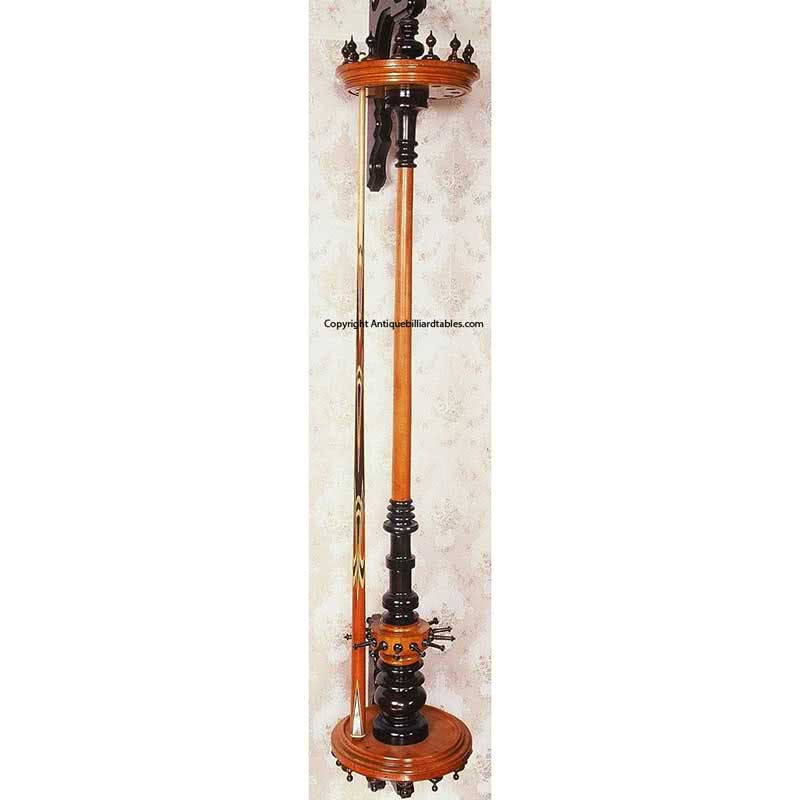
Emanuel Brunswick (the brother of J.M. Brunswick, who founded the company we now know as Brunswick-Billiards) was a master craftsman in his own right. His Chicago-based firm was known for elevating utilitarian items—like a simple cue rack—into high-art furniture.
Historical Highlights
The Patent: The date January 7th, 1868, refers to Brunswick’s specific rotary mechanism. Before this, wall racks were often static; the rotary design allowed players to easily spin the rack to access their preferred cue without bumping into others.
The Woodwork: The use of Rosewood and Maple is a classic Victorian-era hallmark. Rosewood was prized for its deep, rich grain, while the Maple provided a durable, bright contrast.
Rarity: Most 19th-century pool halls were smoke-filled, high-traffic environments. For a wall-mounted piece with its original metal plate and delicate rotary components to survive over 150 years is exceptional.
Why the #13?
Interestingly, 19th-century cue racks were often built for odd numbers or specific sets. A 13-cue capacity is somewhat unique—it’s possible this was custom-ordered for a private club or a specific room layout where a standard 12 or 16-cue rack didn’t fit the aesthetic or the math of the house.
Note on Value: Pieces with the original “E. Brunswick’s Patent” brass plate are highly sought after by collectors of “Americana” and sporting memorabilia. If the rosewood hasn’t been over-restored and still has its original patina, it is a significant find.
Please email for price.