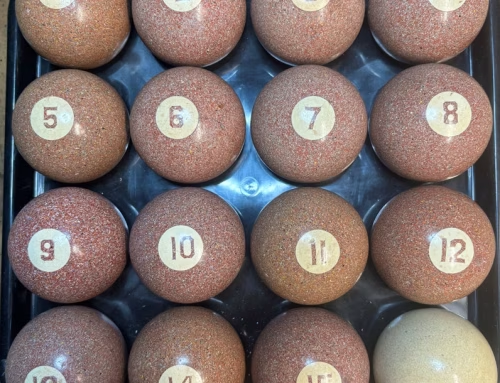
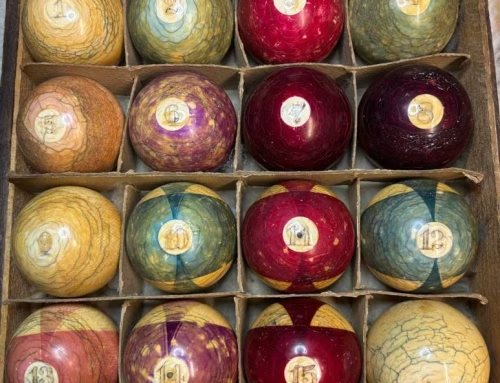
(Item 50)
Why the “Four-Ball Set” is Historically Significant
The Game: Before “Three-Cushion” or “Pocket Billiards” (Pool) became the standards, the American Four-Ball Game was the most popular game in the mid-to-late 19th century. It utilized two white balls and two red balls (usually a light red/pink and a deep dark red).
The Size (): This smaller diameter is characteristic of the mid-Victorian era. As tables and cushions evolved to be faster and more “active” toward the 1880s, ball sizes generally increased to the and standards we see in later sets.
The Box: Finding the original box for a four-ball set is significantly harder than finding a standard 3-ball or 16-ball box. These were often custom-slotted to prevent the ivory from knocking together and chipping during transport.
Condition & Investment Value
Since these are from the 1870s/1880s, they sit right in the sweet spot for collectors of “Early Americana” billiard gear.
Collector’s Note: The Color Palette
In a four-ball ivory set, you typically look for:
The Plain White
The Spot White (A small black dot or “spot” carved/inked to distinguish it)
The Light Red (often faded to a soft pinkish-orange)
The Dark Red (often a deep “Oxblood” or “Cherry” color)
Preservation Warning: Ivory of this age is highly susceptible to “Checking” (fine cracks along the grain) if exposed to dry heat or sudden temperature drops. Keep these in a stable, room-temperature environment inside their box.
Please email for price.