
(Item 30)
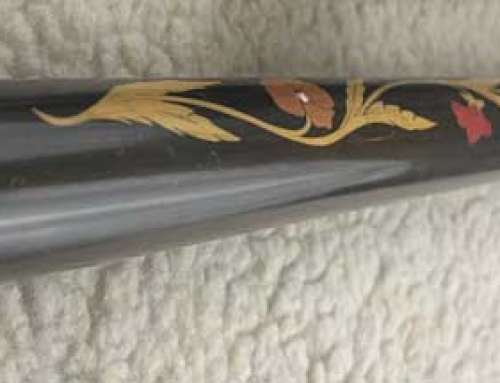
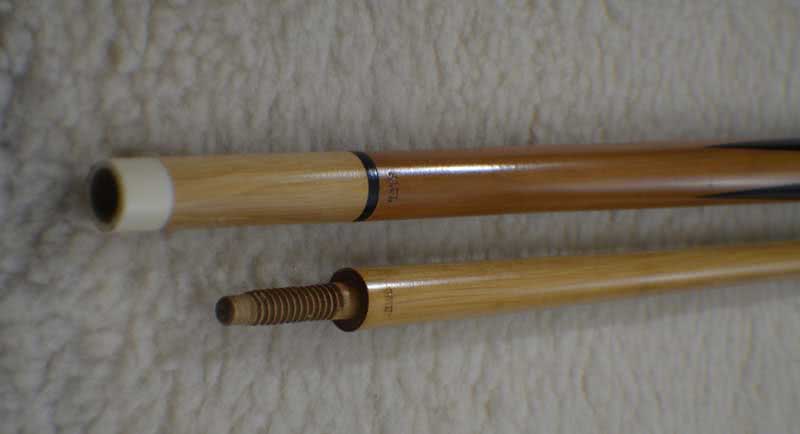
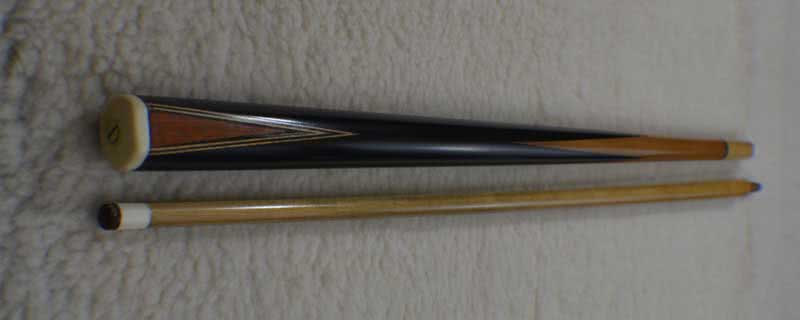
Antique European pool cue. This two piece cue features an ebony four point butt, inset wedges, ivory butt cap, ivory joint, and ivory ferrule. 55 1/8″.
Historical & Technical Context
The Construction: An ebony four-point butt is a hallmark of traditional “splice” construction. In that era, those points weren’t just decorative; they provided structural integrity and balance to the dense ebony wood.
The Length: At 55 1/8″, this cue is slightly shorter than the modern standard of 58″. This is very common for antique European cues, which were often tailored for different styles of billiards (like Carom or English Billiards) rather than modern American pocket pool.
The Joint: An ivory-to-ivory joint provides a very specific “hit” or feedback—vibrations travel differently through organic material than they do through modern steel or phenolic resins.
Important Considerations
| Feature | Significance |
| Material Value | Ebony and ivory were the “gold standard” for luxury cues. The use of ivory in three distinct locations indicates this was a premium professional or custom order. |
| Maintenance | Ivory is prone to “checking” (tiny hairline cracks) if the humidity fluctuates. It’s best kept in a climate-controlled environment to prevent the ferrule or joint from cracking. Please email for price. |