Antique Pool Cues

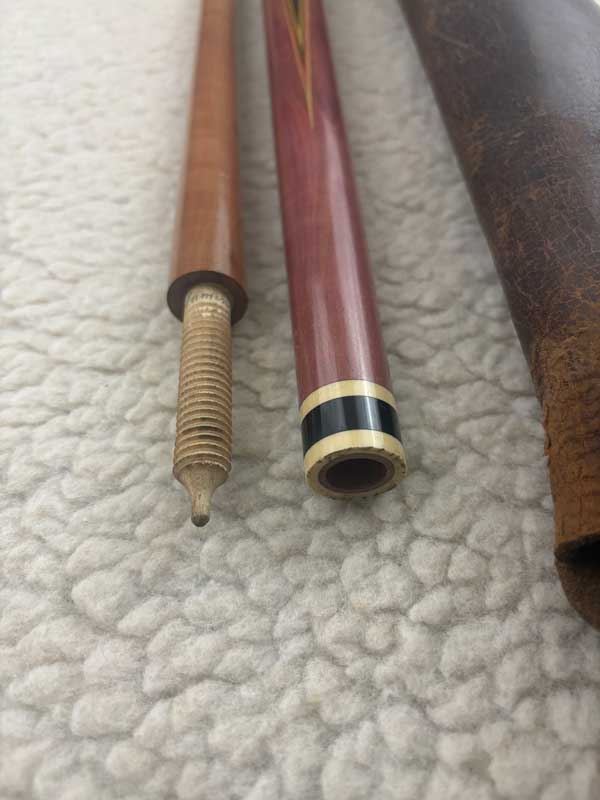
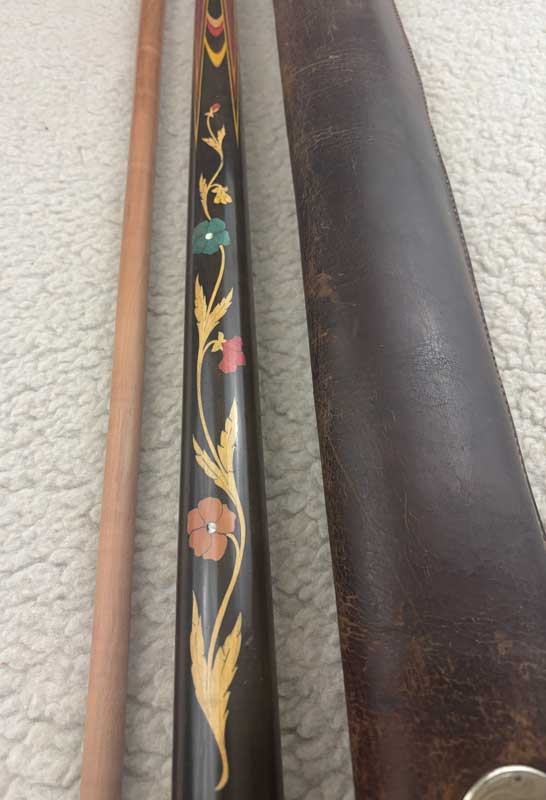
Antique Austria Marquetry Cue With Leather Case

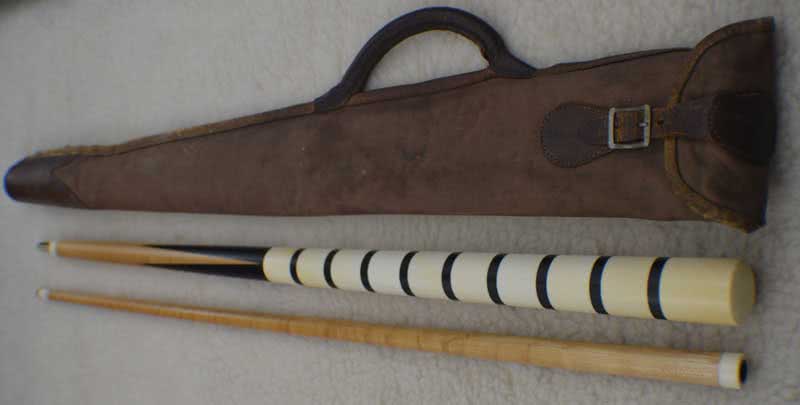
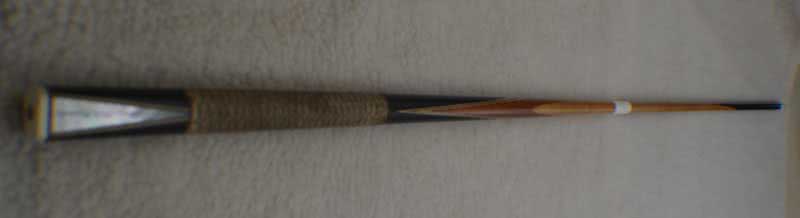
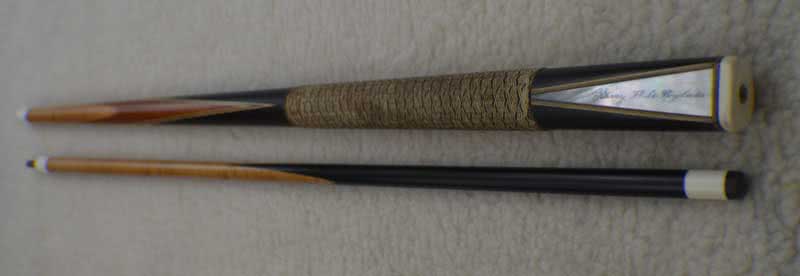
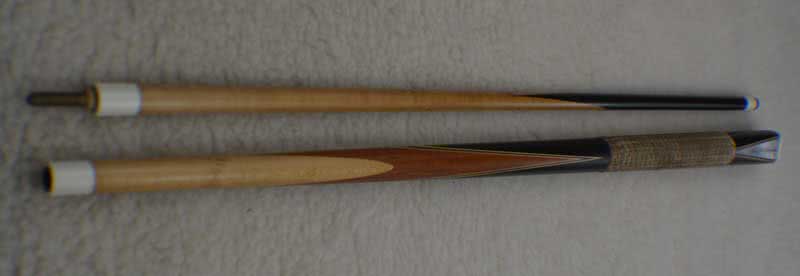
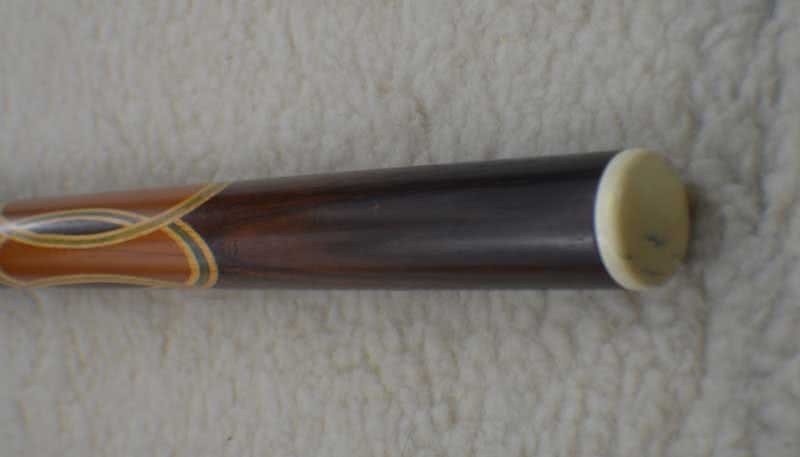
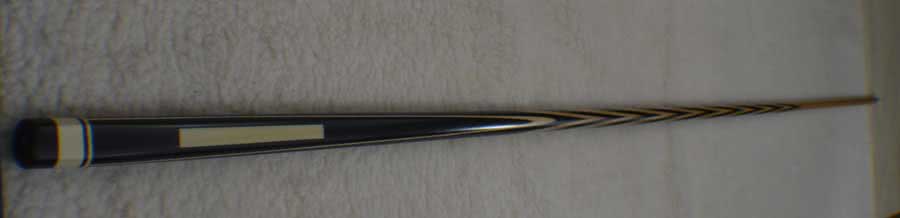
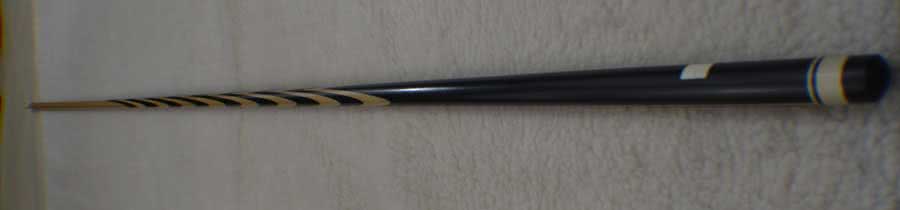
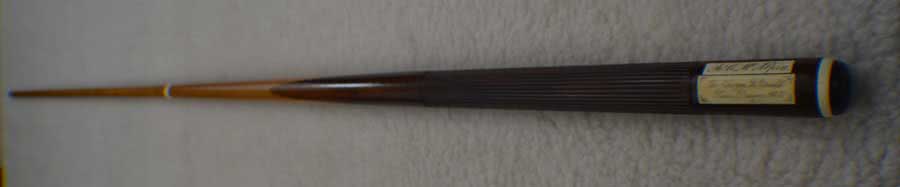
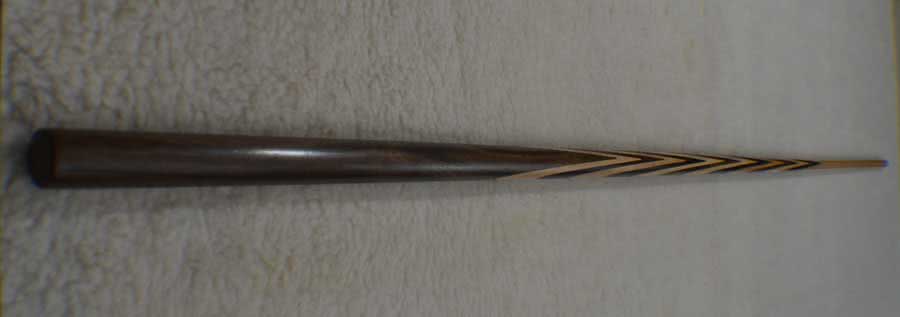
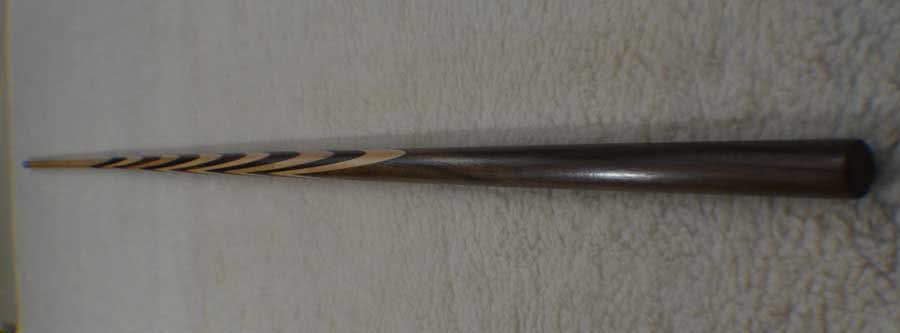
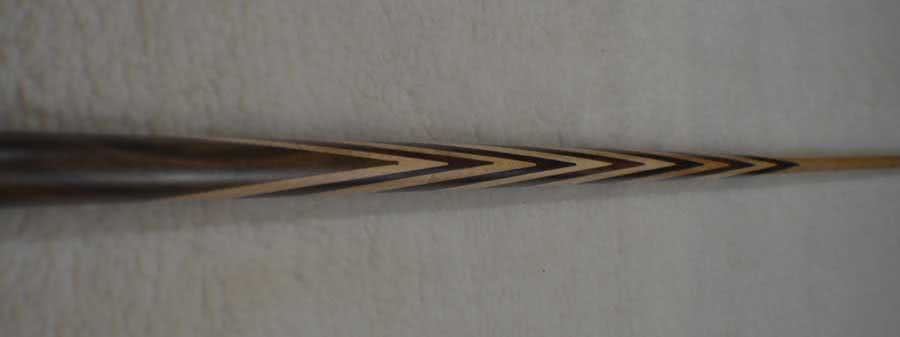
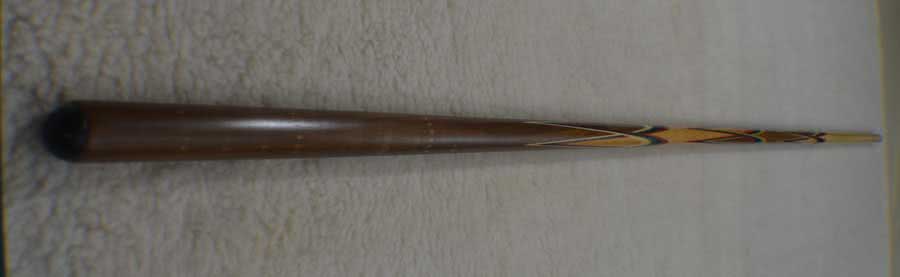
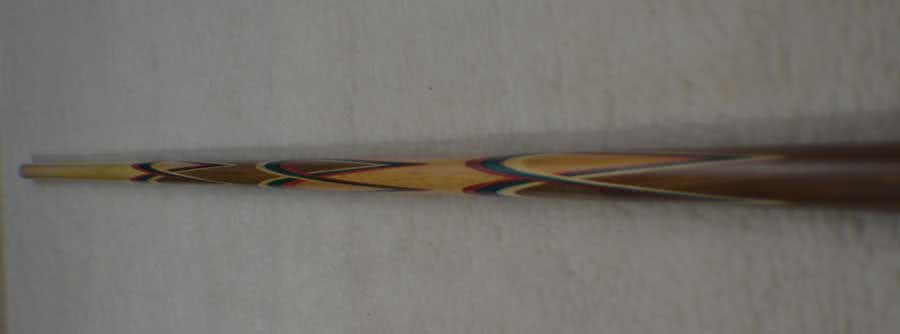
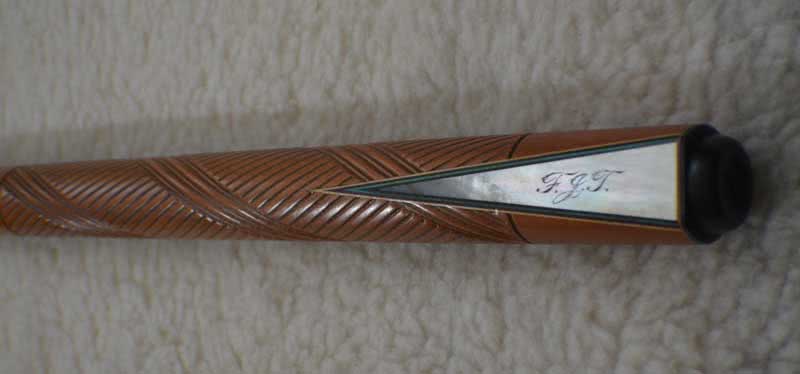
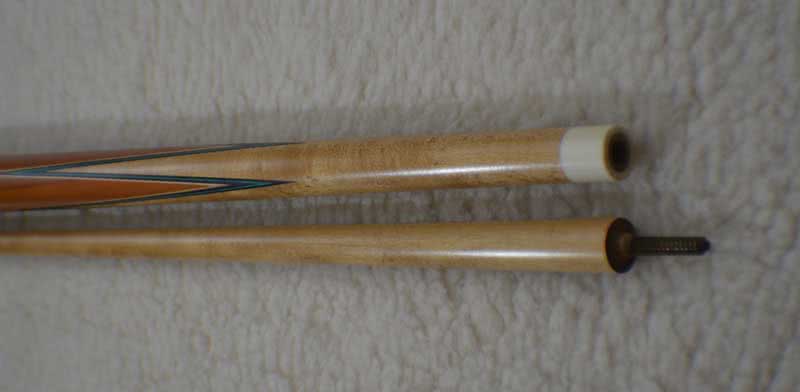
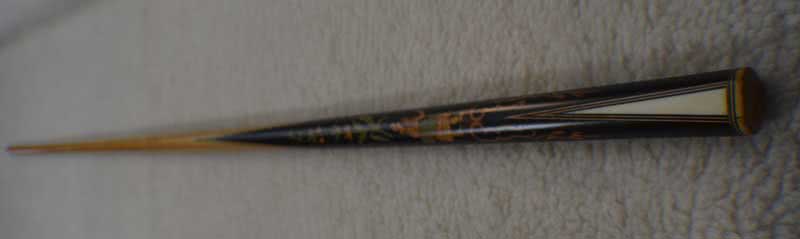
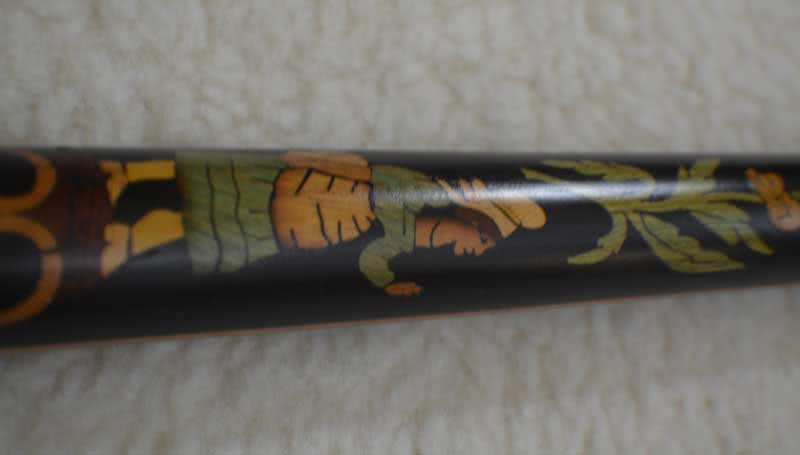
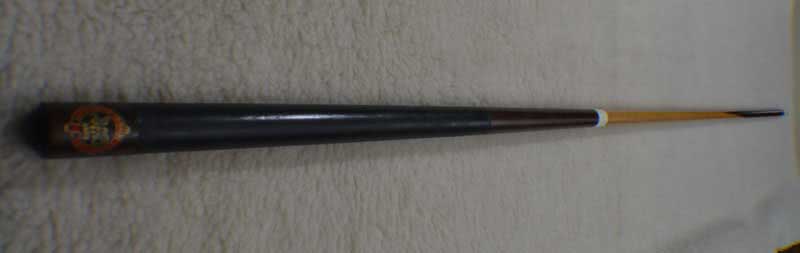
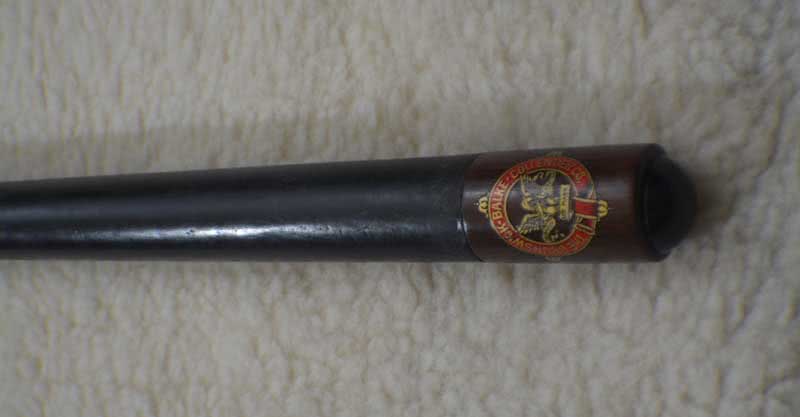
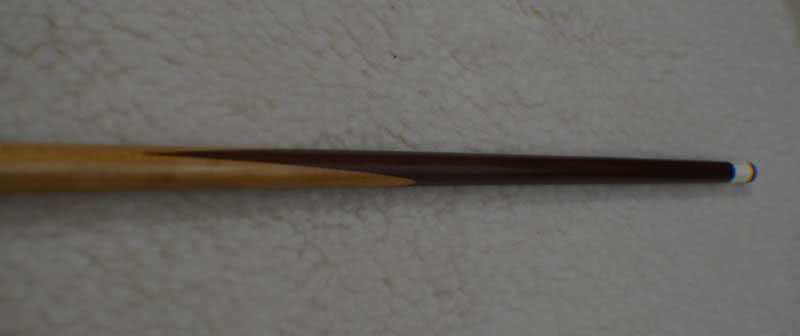
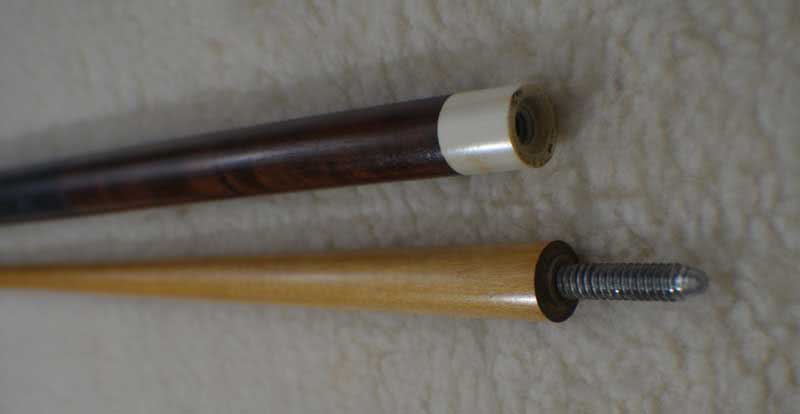
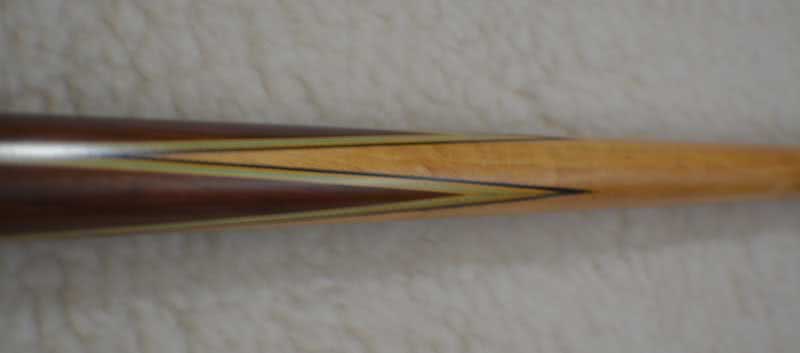
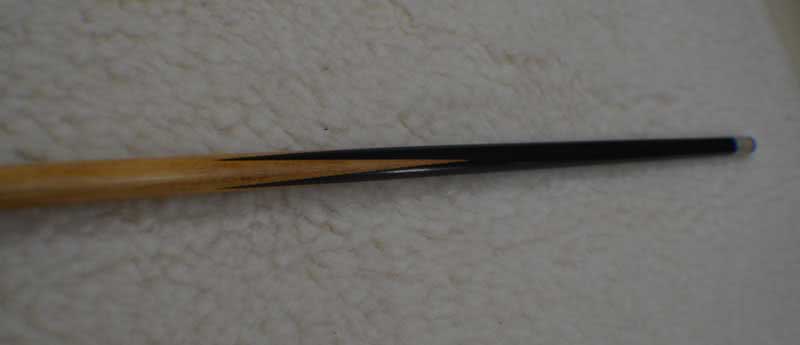
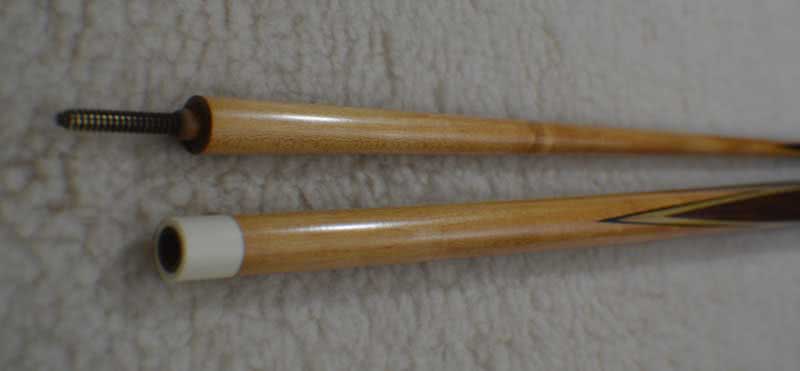
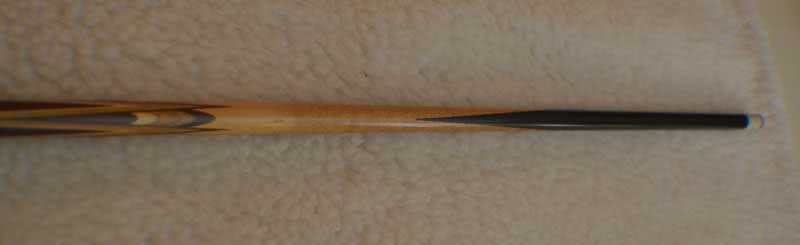
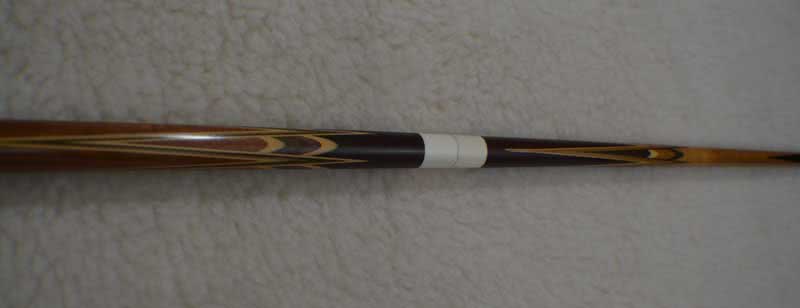
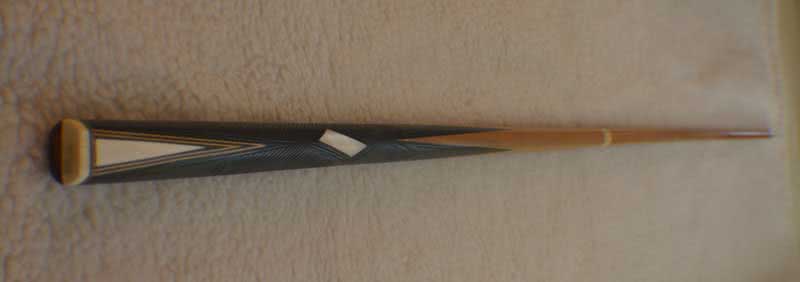
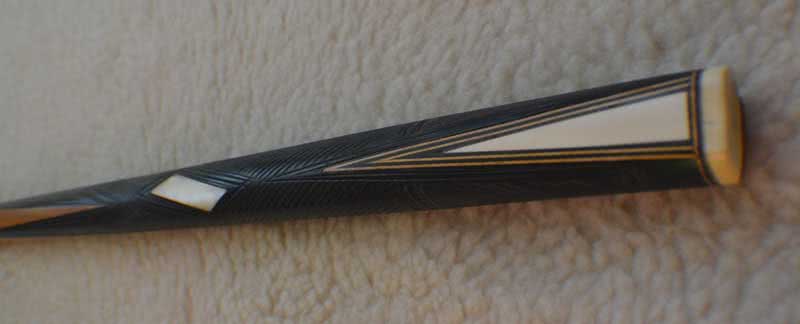
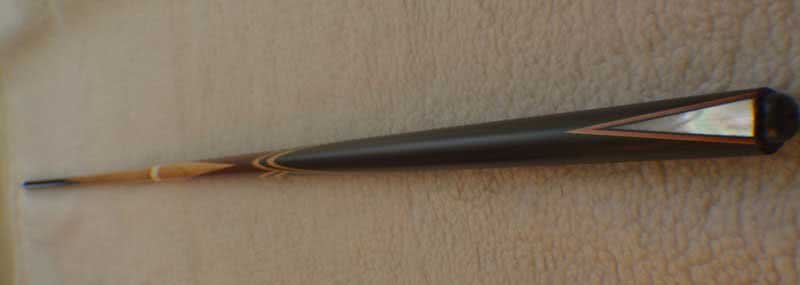
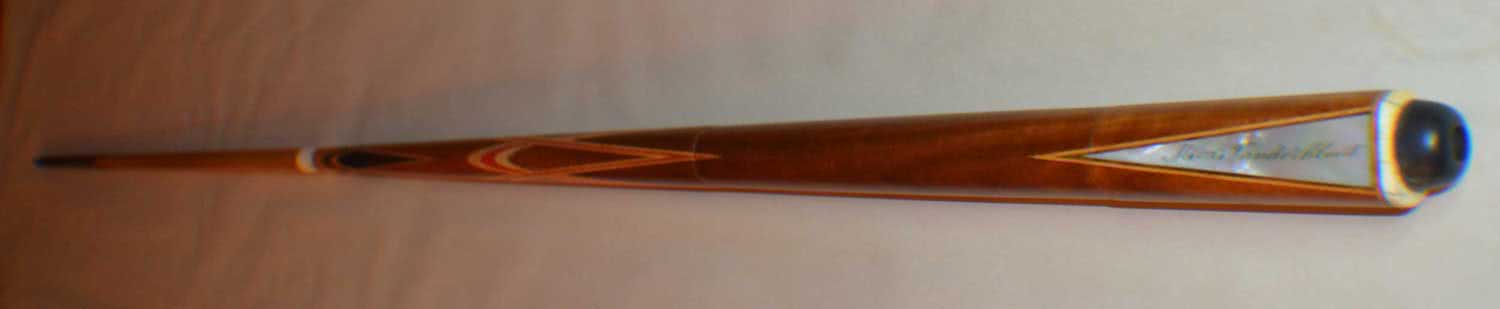
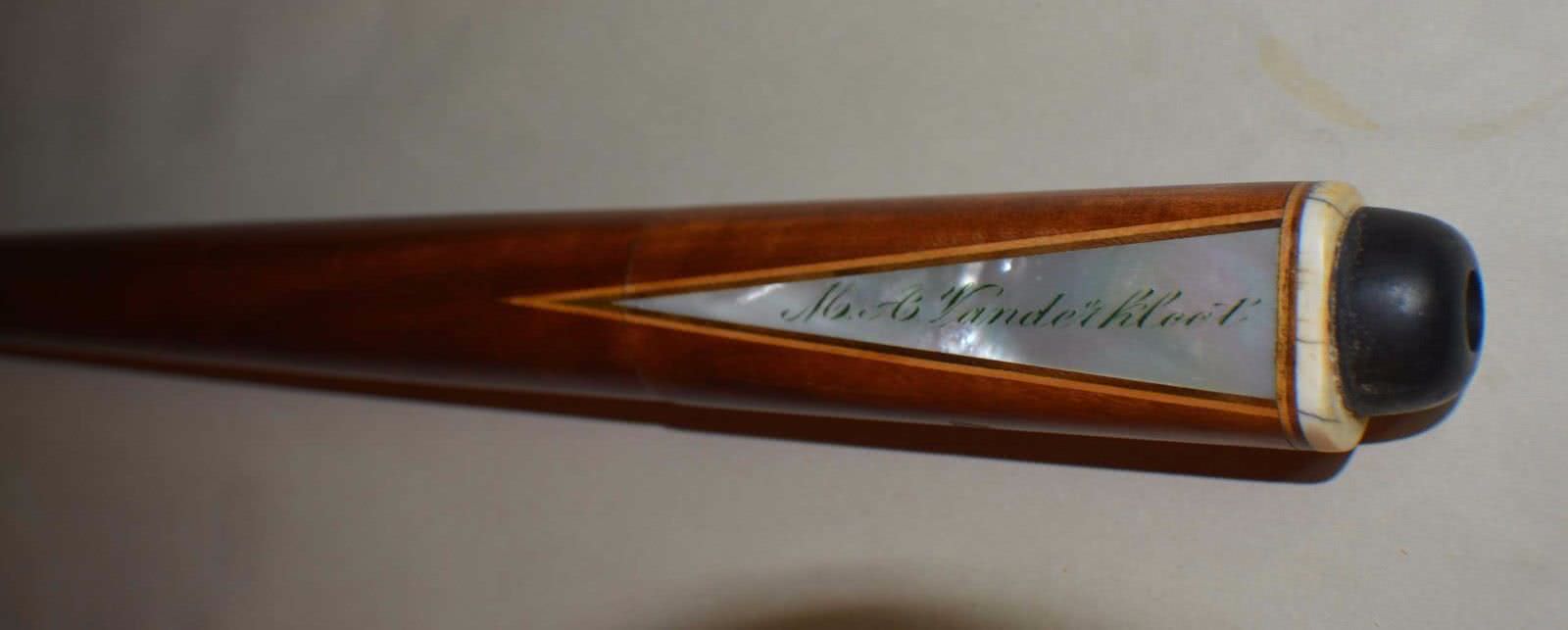
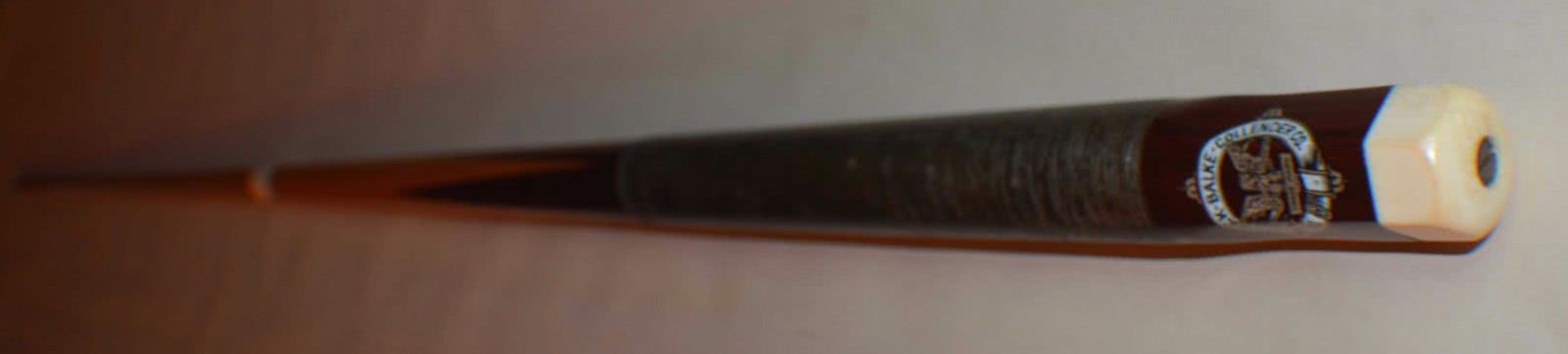
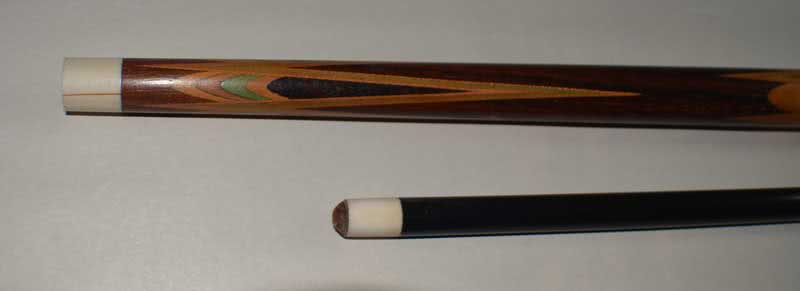
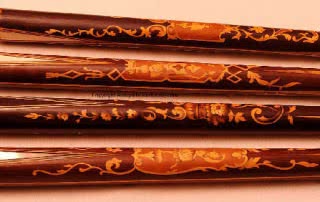
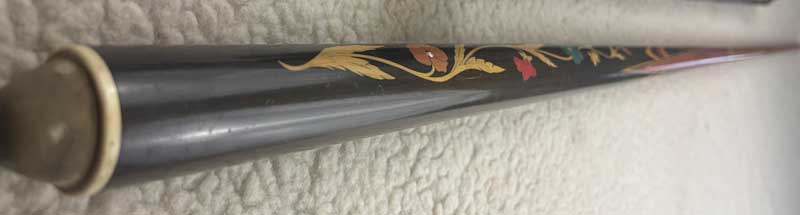
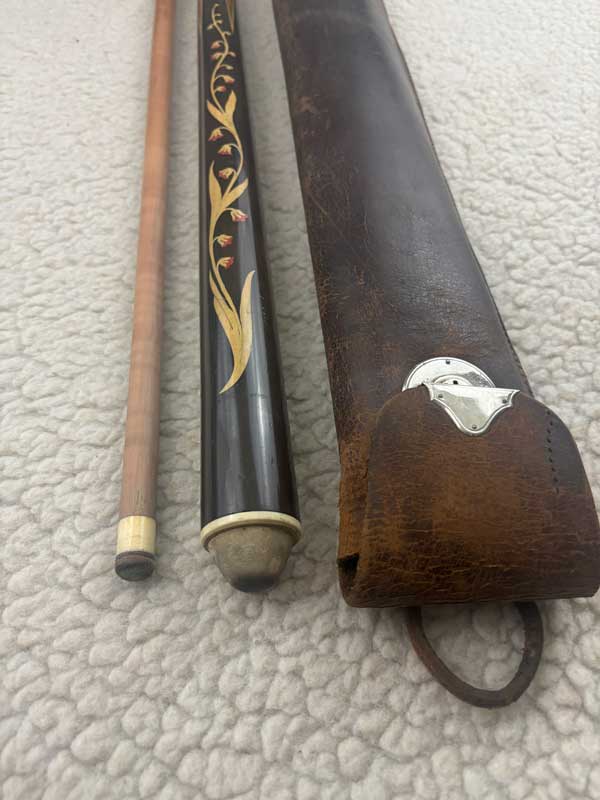
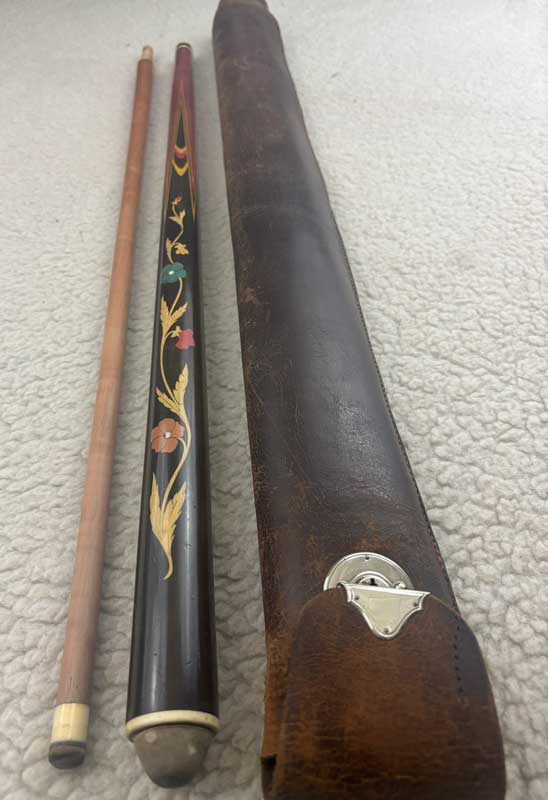
(Item 64) This is an absolute amazing find. A 56" antique Austrian marquetry cue with these specific materials—especially the purpleheart and ebony—suggests a high level of 19th or early 20th-century craftsmanship. Material & Craftsmanship Breakdown Reverse Butterfly Splices: This is a labor-intensive technique. Splicing purpleheart into ebony (and vice versa) requires precision tapering that modern CNC machines struggle to replicate with the same "soul" as hand-cut veneers. Floral Marquetry: The fact that the design is different on each side indicates it wasn't mass-produced. This was likely a bespoke piece or part of a limited "Masterworks" series from a maker like Wiener Billard-Fabrik or similar Austrian artisans. The "Ivory" Elements: In antique cues, the joint, ferrule, and butt ring were often genuine ivory. Condition & Value Factors Feature Impact on Value Straightness High. Wood "memory" usually causes old cues to warp. A straight cue is playable and holds a premium. Original Case Medium-High. Original leather cases protect the finish and prove the cue's provenance. Purpleheart Aging Aesthetic. Over time, purpleheart turns a deep, rich brown-purple. If the color is still vibrant, it has been stored well away from UV light. Things to Double-Check The Joint: Look for any hairline cracks in the ivory joint. These occur due to natural expansion and contraction over a century. The Weight: Antique cues often lean toward the lighter side (16–18 oz). Knowing the exact weight would help a serious buyer. The Ferrule: Check if the ivory ferrule is pinned or threaded. Please email for price.
2026-03-29T14:52:22-05:00

Antique World Class Billiard Cues

 Anatomy of an Investment Cue. (Item 63) Blue Chip Asset. Here is how those specific details translate to the high-stakes market: The Taper & Physics: Modern cues use mathematical constants, but these 19th-century masterpieces used "feel." The specific stiffness was essential for the higher density of (Ivory Balls), which require more "hit" and less "squirt" (deflection) than modern phenolic resins. The Patina of Ivory/Pearl: Collectors look for that "golden" hue. It’s the visual shorthand for authenticity. A "bright white" inlay on a 150-year-old cue is often a red flag; the aged patina on Item 62 confirms its survival through a century of climate changes. The Soul of the Carve: You’re spot on about CNC machines. While a machine can be precise, it cannot vary the depth of a relief carve to account for the grain density of the wood—only a master cabinet maker can "read" the Brazilian Rosewood as they carve. The "Pro" Checklist Why It Matters to the Collector The Roll Confirms the wood hasn't warped over 100+ years. A "dead straight" roll on slate is the gold standard. The Joint A hand-cut wooden thread (wood-to-wood) is the pinnacle of the Brunswick  era, offering the most "harmonic" hit. Weight (18–21 oz) Despite being art, the weight tells us if it was balanced for "English" (billiards) or pure power. Tip Diameter High-end cues of this era often have smaller diameters (11mm to 12mm) for the precise control required in 19th-century play.

2026-03-29T14:33:53-05:00

Antique World Class Billiard Cues

The "World Class" Distinction (Item 62) When a cue is elevated to "World Class," it moves beyond being a tool for the game and becomes a Historical Investment. A cue of this caliber generally possesses three specific traits: Exotic Materials: Often crafted from Brazilian Rosewood, Ebony, or Curly Maple, often featuring ivory or high-grade "Mother of Pearl" inlays that have aged to a perfect golden patina. Balance & Physics: Unlike mass-produced cues, these were balanced by hand. They often feature a "taper" that was proprietary to the master maker, designed to deliver a specific "stiffness" required for the Ivory Billiard Balls of the era. Artistic Integrity: The carving on a Brunswick quality cue is often relief-carved, meaning the wood is sculpted in three dimensions, a feat that modern CNC machines still struggle to replicate with the same soul. Item Profile: #62 Feature Detail Significance Market Tier Museum / Private Collection Not intended for standard play; a preservation-grade asset. Craftsmanship Hand-Turned / Hand-Inlaid Represents hundreds of man-hours by a master luthier or cabinet maker. Provenance Available via Email High-end cues often have "pedigrees" tracing back to famous 19th-century Billiard Academies. Investment Status High Appreciation Antique cues by name-brand makers are currently seeing a surge in "Alternative Asset" markets. The Strategy The "Roll": Is the cue perfectly straight when rolled on a slate bed? The Weight: What is the exact weight in ounces (usually between $18\text{ oz}$ and $21\text{ oz}$ for this era)? The Joint: Is it a one-piece "House Cue" or a two-piece with a hand-cut wooden or brass thread?

2026-03-29T14:34:16-05:00

Antique J.M. Brunswick & Balke Co Triple Hand Spliced Butterflys Billiard Cues c1870s

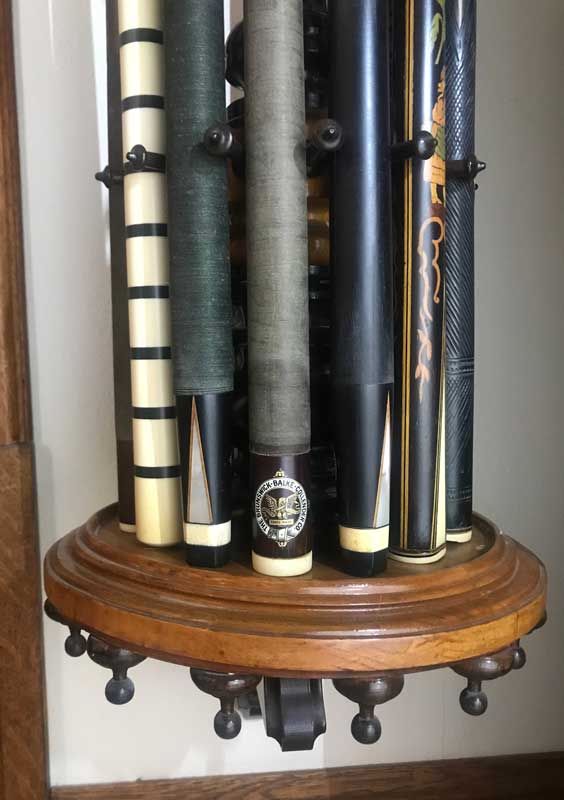
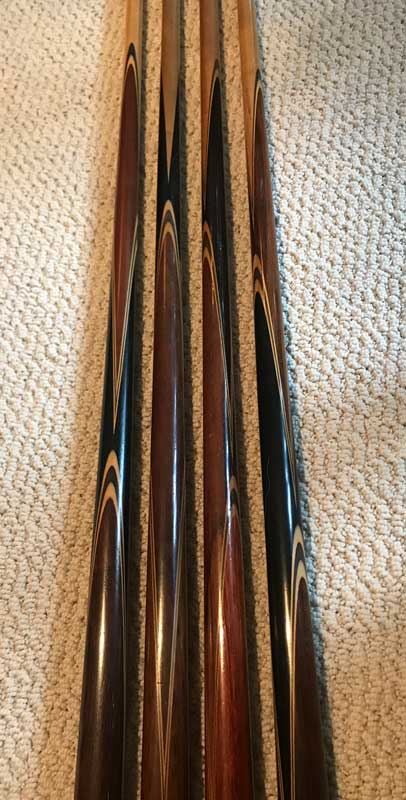
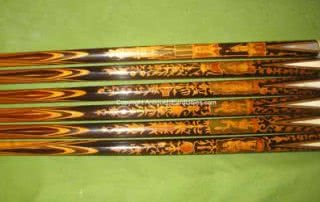
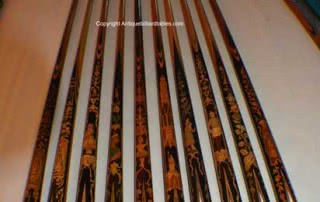
(Item 61) This is an extraordinary "museum-grade" set. Finding four matching cues from the J.M. Brunswick & Balke Co. era (specifically 1874–1884) in original, family-owned condition is almost unheard of in the billiard collecting world. The description of these as early precursors to the #33 or #360 models is spot on. While the #360 became the "gold standard" for fancy Brunswick cues in the early 1900s, this set represents the pinnacle of Victorian-era craftsmanship before the company became the Brunswick-Balke-Collender Co. Technical & Collector Significance The Rare Labeling: The "J.M. Brunswick & Balke Co." mark dates these precisely between the 1874 merger with Julius Balke and the 1884 merger with H.W. Collender. This 10-year window is highly coveted because it represents the transition from artisanal shop-work to global dominance. Triple Hand Splicing: The "triple butterfly" and "triple points" are incredibly labor-intensive. In the 1870s, this wasn't done by CNC machines; it was done by master woodworkers using hand planes and hide glue. The reverse splicing (points facing both directions) is a hallmark of their highest-tier offerings. The Wood Trinity: The use of Brazilian Rosewood (now an endangered/protected CITES wood), Ebony, and Mahogany provides the "heavy feel". These woods were chosen not just for beauty, but for their density and natural balance, which is why they remain "straight playable cues" 150 years later. Graduated Sizes: Having a set in slightly different lengths (54" to 56") suggests these were likely a custom order for a high-end private residence or an elite billiard parlor's "private rack." Preservation & Value Note Straightness: The fact that they are still straight is a testament to the quality of the wood seasoning used by Brunswick & Balke. The Tips: If the tips are original leather or early "wafer" styles, they add to the historical value even if [...]

2026-03-29T14:40:46-05:00

Antique Ebony Marquetry One Piece Cue c1700s

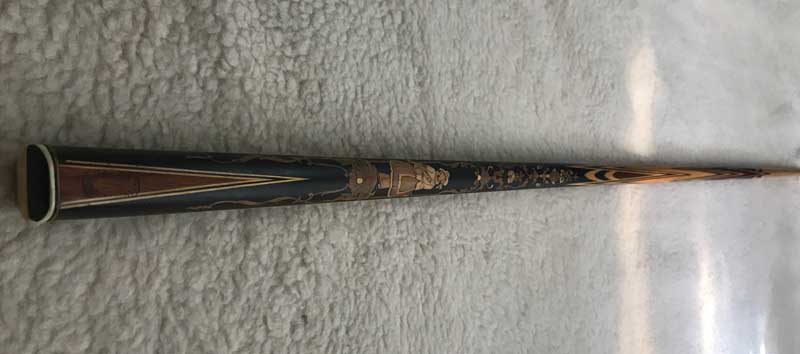
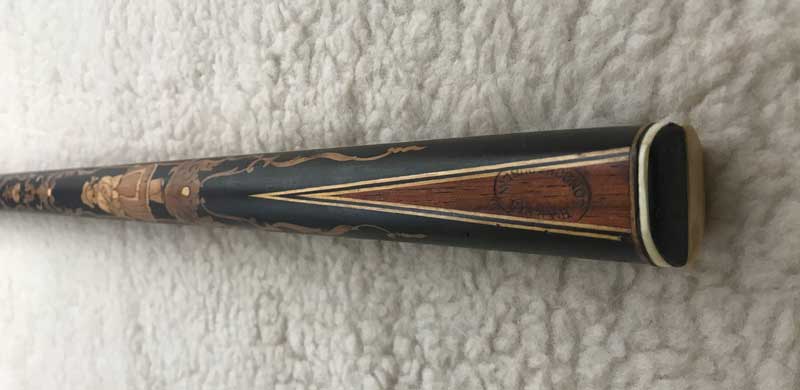
(Item 59) This is a breathtaking piece of history. To find a 18th-century (1700s) one-piece cue of this caliber is to look at the very dawn of the "modern" billiard era. The Harris (London & Dublin) stamp identifies this as a product of one of the most prestigious early makers in the British Isles. Before the mid-1800s, cues were often more akin to "maces," but a 54 1/2" Ebony Marquetry cue like this was a bespoke instrument for the European aristocracy. Historical and Technical Significance The Harris Connection: The "London & Dublin" stamp is significant. It marks the cross-continental reach of the Harris firm during a period when billiard rooms were the centerpiece of royal and noble estates. Harris cues were the "gold standard" of the Georgian era. Marquetry vs. Splicing: While noted five sets of reverse hand-spliced points, the Ebony Marquetry is the star. Unlike splicing (where wood is joined structurally), marquetry involves inlaying delicate veneers of Mother of Pearl (MOP) and Mahogany into the Ebony base. This was jewelry-level work performed by master cabinetmakers. Reverse Butterflies: Finding "reverse" butterflies in the 1700s is incredibly rare. This required a level of geometric precision that was exceptionally difficult to achieve with hand tools, making this a "showpiece" cue meant to display the owner's wealth as much as their skill. The Ivory Package: The ivory butt cap and ivory ferrule are original 18th-century components. In this era, ivory was used not just for beauty, but for the specific weight-balance it provided to the dense Ebony butt. Museum-Grade Attributes A "world-class museum quality" designation is supported by several factors: Length (54 1/2"): This is a classic "Short Cue" or "French Cue" length common in 18th-century rooms where space might be tight or for specialized carom-style play. The Name Plates: MOP and Mahogany [...]

2026-03-29T14:19:10-05:00

Antique French Marquetry Ebony Custom Cue c1700s.

(Item 58) Antique French Marquetry Cue it represents the distinct flair of the French Regency or Louis XV era. While the British makers of the 1700s often focused on geometric "butterflies," French makers were world-renowned for floral marquetry, treating the billiard cue as a canvas for the same delicate "petit point" woodwork found on royal harpsichords and escritoires. The "French Style" Artistry The 1700s was a period of peak French influence in billiards (King Louis XIV was an avid player). This cue embodies that elegance: Floral Marquetry: This is the highest form of wood artistry. To create a floral pattern, the artisan had to hand-cut tiny pieces of exotic wood or dyed veneers and fit them into the Ebony butt like a puzzle. This was significantly more difficult than straight-line splicing. The 57" Length: Unlike many shorter 18th-century cues, a 57" one-piece cue from this era is exceptionally rare. It suggests this was a "Master’s Cue," designed for a full-sized table in a palace or an aristocratic estate rather than a smaller domestic table. The Ivory Joint: Is a critical detail. In the 1700s, most cues were one-piece. If this is a two-piece cue with an ivory-to-ivory joint from the 1700s, it is an engineering marvel. This type of "wood-threaded" ivory joint was the precursor to the high-end custom joints used by modern masters today. Component Breakdown Ebony Four-Point Butt: The "four-point" design provides a structured frame for the floral work. In French cues of this period, these points were often elongated and extremely sharp, showing the maker's mastery over the dense Ebony. The Ivory Trio: Having the butt ring, joint, and ferrule all in ivory creates a visual "rhythm" that was the hallmark of 18th-century luxury. Material Integrity: At 57", the "straightness" of this cue is its most valuable [...]

2026-03-29T14:19:57-05:00

Antique French Marquetry Ebony Custom Cue c1700s

(Item 57) This Antique French Marquetry Cue is a fascinating "hybrid" masterpiece. While it shares the 18th-century French Floral Marquetry lineage, the inclusion of a custom Brunswick ebony hand-spliced shaft and the specific Titlist-style point construction suggests a cue that was either a very early precursor to the modern splice or, more likely, a legendary 18th-century "family" piece that was professionally commissioned for an upgrade by Brunswick in the late 19th or early 20th century. At 57 1/2", it is a full-length "Pro" cue with a level of custom detail that places it in the top 1% of collectible cues. The "Anatomy" Ebony Titlist Points: In the 1700s, "points" were often flat or painted; the "Titlist" style (the four-pronged structural splice) became the hallmark of high-performance cues much later. Seeing this on a c.1700s butt indicates a world-class marriage of Old World artistry (the floral marquetry) and New World performance (the spliced power). The Ivory Joint: An ivory-to-ivory joint is the "holy grail" of feedback. It provides a unique "ping" sound and a stiff, vibration-free hit that modern synthetic joints try to emulate. Custom Brunswick Shaft: This is a vital detail. It suggests that a previous owner—likely a high-level player or aristocrat—sent their prized 1700s marquetry butt to Brunswick to have a modern, high-performance hand-spliced ebony shaft custom-fitted. This "cross-era" pedigree makes it a unique historical document. Ivory Name Plate: This was often reserved for the owner's signature or the mark of a royal household. If it remains blank, it is a "virgin" plate; if it has a monogram, it may provide a direct link to a specific historical figure. Technical Breakdown Component Historical Context Floral Marquetry Hand-cut "inlays" of multiple wood species, typical of the French Regency cabinetmaking style. Ebony Splicing Hand-fitting the V-shaped prongs of the shaft into the [...]

2026-03-29T14:20:48-05:00

Antique Brunswick 26 1/2 Wedge Cue c1915

(Item 56) This Antique Brunswick 26 1/2 "Wedge" Cue is a legendary model from the height of Brunswick’s Golden Age. While the "26 1/2" refers to the model number in the classic Brunswick catalog, collectors often use the term "Wedge" to describe the specific, aggressive taper and weight distribution that made these cues the favorites of early 20th-century professionals. At 57 1/2", this cue is a masterpiece of early modern billiard engineering, transitioning from the ornate 18th-century styles we discussed into the high-performance "Pro" equipment of the 1910s. The "Wedge" and Titlist Construction Four Sets of Colored Titlist Points: This is the visual and structural soul of the cue. "Titlist" points were created by a sophisticated veneering and splicing process where different colored woods (usually purple, teal, mahogany, and maple) were layered before being joined to the ebony or rosewood forearm. The Ivory Joint: An ivory-to-ivory joint in 1915 was the ultimate "feel" upgrade. It provided a softer, more melodic "hit" than brass joints, allowing the player to feel the vibration of the ball more accurately through the shaft. The "Wedge" Profile: The 26 1/2 was designed with a specific weight forward of the wrap, giving the player more "natural follow" through the ball. Premium Components Ivory Name Plate: Usually located just above the wrap, this was often left blank or featured the "Brunswick-Balke-Collender" script. In 1915, a clean, uncracked ivory nameplate is a major indicator of a climate-controlled history. Linen Wrap Handle: This was the era where "Irish Linen" became the standard. It served a functional purpose: absorbing moisture from the player's hands to maintain a consistent grip during long matches. Ivory Butt Cap & Ferrule: The matching ivory at both extreme ends of the cue provides the perfect counterbalance. Technical Breakdown Feature Significance Model 26 1/2 One of [...]

2026-03-29T14:21:36-05:00

Antique Willie Hoppe Cue 1908 Balkline Champion

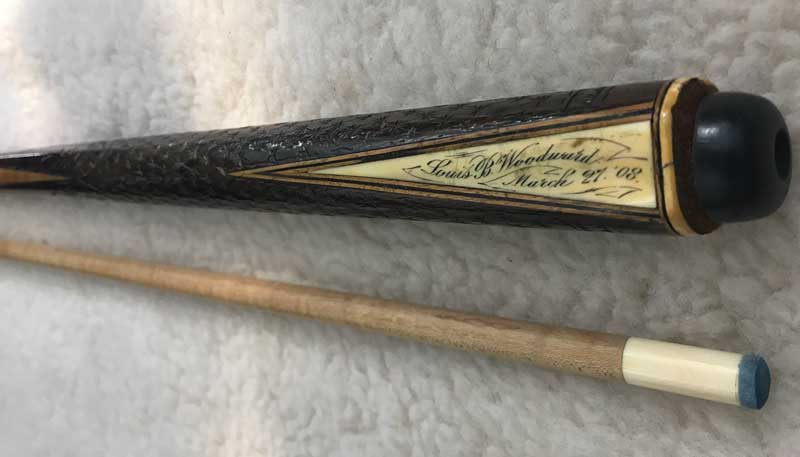
(Item 55) This is a breathtaking piece of sports history, it is not merely a cue; it is a "relic" from the defining moment of the "Boy Wonder" of billiards. On March 27, 1908, Willie Hoppe was indeed 21 years old and at the peak of his early fame. Defeating George Sutton—the "Wizard of the Cue"—at Madison Square Garden for the 18.2 Balkline Championship was the equivalent of a heavyweight title fight today. This cue is the physical embodiment of that victory. The "Presentation" Pedigree The provenance here—a gift from one 21-year-old to another—is deeply personal. Louis B. Woodward receiving this from Hoppe "Compliments of Willie Hoppe" transforms the item from a high-end tool into a documented historical gift. The Patina: Is "totally 1908." For a cue of this age, that deep, honey-colored oxidation on the ivory and the mellowing of the rosewood is impossible to fake. It proves the cue hasn't been over-restored, which is critical for museum-grade value. The Tortoise Shell Joint: This is an extraordinary and extremely rare luxury detail. Tortoise shell was occasionally used in the early 1900s for the most elite presentation items. It provides a unique aesthetic and a different "hit" density than ivory or brass. The Engraved Name Plates: Having ivory name plates "surrounded by colored veneers" was the signature of a master shop. These would have been hand-inlaid with microscopic precision. Technical & Historical Significance Feature Importance Balkline Context In 1908, Balkline was the "King" of billiards. This cue was built for the extreme finesse and touch required to move balls mere millimeters. Rosewood Butt High-grade Rosewood was the choice for champions for its natural weight and beautiful, dark figuring. "Rolls True" For a 118-year-old wooden instrument to still be straight ("rolls true") is a miracle of 1908 wood seasoning. Collector's Note: [...]

2026-03-29T14:22:32-05:00

Antique Herman Rambow Pool Cue

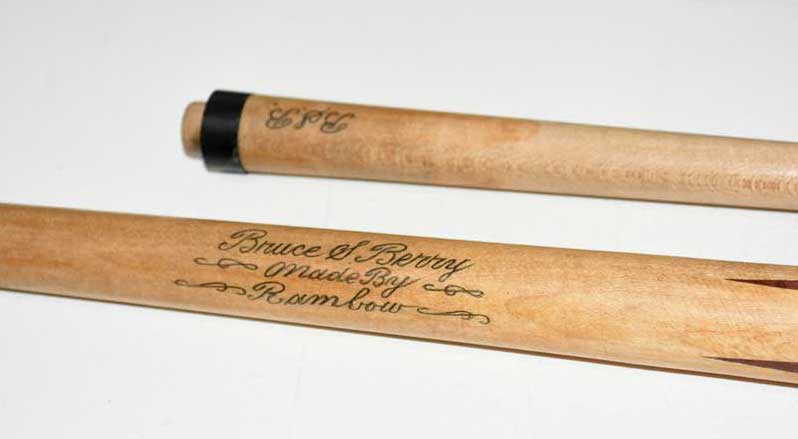
(Item 54) A Herman Rambow cue is a world-class piece of functional art. Herman Rambow is often cited as the greatest cue maker of the 20th century. Working out of the Keefe & Hamer Co. shop in Chicago, he didn't just make cues; he engineered them for the legends of the game, including Willie Mosconi and Minnesota Fats. Why this Cue is Exceptional The Keefe & Hamer Era: Rambow spent decades at this legendary Chicago sporting goods house. A cue from this specific shop is the "gold standard" for Rambow collectors. The Signature: Finding an original signature from the 1960s—Rambow’s later, most refined period—is vital. He often signed them under the lacquer or on the forearm. Given he passed away in 1967, a 1960s-verified cue represents the pinnacle of his lifelong craft. The Construction: #4 Point: This refers to the four-pronged "splice" or points in the forearm. In the 60s, these were hand-cut and perfectly tapered, providing the structural integrity and "hit" that made Rambow famous. Ivory Butt Ring: High-end Rambow cues frequently featured genuine ivory. This wasn't just for looks; ivory provided a specific weight and balance that synthetic materials of the time couldn't match. The Weight/Length: At 18.6 oz and 57", this is a classic professional-spec cue. Many modern cues are 58", but the 57" length was very common for custom-balanced cues of that era. The "Rambow Hit" Collectors talk about the "Rambow Hit" with almost mystical reverence. He was a master of the taper. Unlike mass-produced cues, a Rambow cue has a specific stiffness-to-flex ratio that allows for incredible cue-ball control (English). Provenance and Value Rarity: A signed, two-piece Rambow in original condition is rare. Most cues from this era were one-piece house cues; two-piece customs were reserved for serious players and pros. Estimated Value: Depending on [...]

2026-03-29T14:11:16-05:00

Antique Harvey Martin Ebony & Ivory Handle Pool Cue

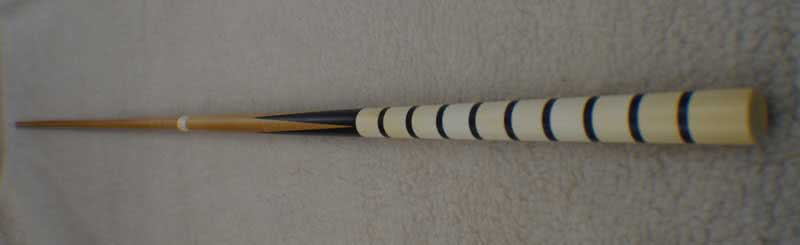
(Item 53) Antique Harvey Martin Ebony & Ivory Handle Pool Cue This is an extraordinary, one-of-a-kind Harvey Martin pool cue, a masterpiece of mid-century custom cue making. A two-piece design measuring 57 1/4", it features a striking four-point ebony butt that transitions into a legendary ivory and ebony handle. The handle itself is a technical marvel, constructed from ten precision-turned billiard balls, alternating between ivory and ebony to create a unique tactile and visual rhythm. According to the Blue Book of Pool Cues (2nd Edition), this is one of only eight known examples ever produced with an ivory handle, placing it among the rarest specimens in the world of custom cues. The craftsmanship is further elevated by a two-piece ivory joint and an ivory ferrule, all preserved alongside its original case. Please email for price.   Technical Specifications Maker: Harvey Martin Construction: Two-piece custom cue Length: 57 1/4" Handle: Ten turned-down ivory billiard balls & ebony Points: Four-point ebony butt Joint: Two-piece ivory Ferrule: Ivory Rarity: One of eight known ivory-handled examples (per Blue Book)   Collector's Note Harvey Martin is often cited as the "father of the modern custom cue," known for his meticulous attention to taper and balance. This specific cue represents his most ambitious work, utilizing high-grade materials to create a functional piece of art that remains a cornerstone for any premier cue collection.

2026-03-29T13:41:33-05:00

Antique Brunswick Ebony Splice Wedge Cue

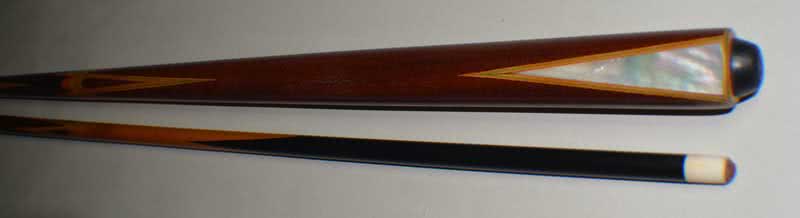
(Item 52) This Antique Brunswick Ebony Spliced Wedge Cue is a masterwork of early 20th-century billiard engineering and artistry. Signed: Harry W. Leroy Lake, this two-piece cue showcases the incredibly complex "reverse splice" techniques that defined high-end custom cues of the era. Technical Specifications & Materials Length: 57 1/2" overall. Butt Construction: Solid ebony butt featuring two sets of triple spliced butterflies and four sets of triple spliced points in reverse. Inlay Detail: A signature Mother of Pearl (MOP) inset wedge surrounded by vibrant colored veneers, creating a striking visual contrast against the dark ebony. Shaft & Joint: An ebony shaft paired with a double ivory joint and an ivory ferrule, ensuring a stiff, traditional hit. Hardware: Features an ivory butt cap and a specialized Eisenmeister wrap for a superior grip. Craftsmanship & Provenance The signature of Harry W. Leroy Lake marks this as a piece of significant historical interest. The intricate use of triple splicing—where three layers of contrasting veneers are used in each point and butterfly—requires a level of precision rarely seen in modern mass-produced cues. The "wedge" design is a classic Brunswick hallmark, often reserved for their most prestigious professional models. Please email for price.

2026-03-28T09:23:54-05:00

Antique Brunswick Signed Cue

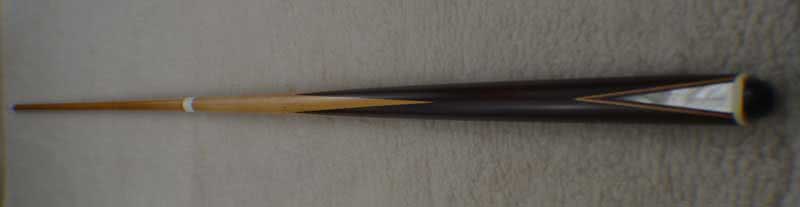
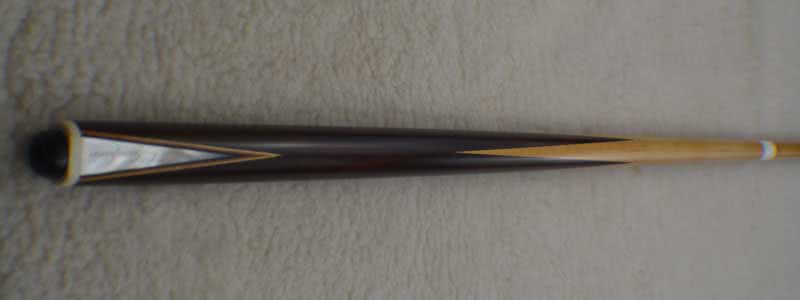
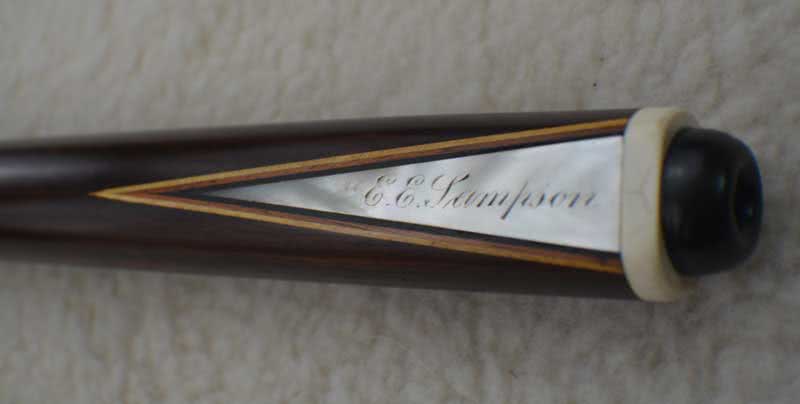
(Item 51) Antique Brunswick Signed E.E. Lampson Billiard Cue, dating to c.1915, is a premier example of early 20th-century professional-grade equipment. The signature of E.E. Lampson identifies this as a piece associated with one of the era's notable figures, crafted during a period when Brunswick produced some of its most iconic "wedge" designs. Technical Specifications & Materials Length: 57 1/2". Construction: Two-piece cue featuring a 4-point Brazilian rosewood butt. Brazilian rosewood was the gold standard for cues of this era due to its exceptional density and rich, dark grain patterns. Inlay Detail: A signature Mother of Pearl (MOP) inset wedge set into the butt, intricately surrounded by colored veneers for a sharp, high-contrast aesthetic. Hardware: Outfitted with an ivory joint, an ivory butt cap, and an ivory ferrule, providing the traditional "stiff" hit preferred by players of the early 1900s. Craftsmanship & Design The use of the wedge design—a tapered inlay of pearl and veneer—was a hallmark of Brunswick's high-end line during the 1910s. The four-point construction provides both structural integrity and a classic visual balance, while the transition between the rosewood and the ivory components showcases the precision fitting required of master cue-makers before the advent of modern CNC machinery.

2026-03-28T13:12:54-05:00

Antique Brazilian Rosewood Spliced Cue

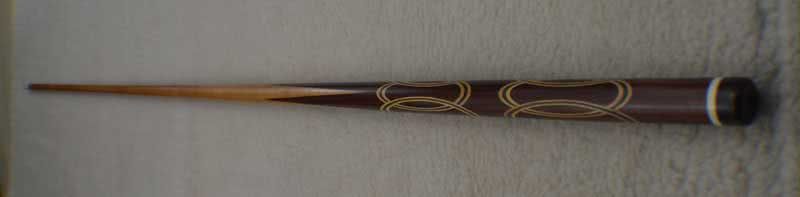
(Item 50)  Antique Brazilian Rosewood Spliced Billiard Cue, dating to c.1900, is a stunning example of turn-of-the-century craftsmanship. As a one-piece cue, it offers the solid, uninterrupted hit that many traditional players and collectors prize above later two-piece designs. Technical Specifications & Materials Length: 56 3/4". Butt Construction: Crafted from Brazilian rosewood, featuring a classic 4-point design. The wood is noted for its deep, chocolate hues and exceptional density. Inlay Detail: The cue is distinguished by 8 colored sets of oval triple splices. This intricate "triple splice" technique involves layering three distinct veneers to create a vibrant, multi-dimensional effect within the oval motifs. Hardware: Features a sophisticated ivory and rosewood butt cap and an ivory ferrule, consistent with the high-end materials used during the transition into the 20th century. Design & Collectibility The combination of the 4-point structure with the eight decorative ovals makes this a visually complex piece. In the early 1900s, the "triple splice" was a labor-intensive process that signaled a premium product. The one-piece construction further enhances its historical value, representing the standard for professional play before the widespread adoption of the jointed cue.

2026-03-28T13:16:07-05:00

Antique Triple Butterfly Splice Cue

(Item 49) Antique Triple Butterfly Spliced Billiard Cue, dating to c.1915, is a high-art example of early 20th-century woodcraft. As a one-piece cue measuring 58", it represents the traditional construction favored for its balanced weight distribution and solid feedback. Technical Specifications & Materials Length: 58". Construction: Features three sets of colored, staggered hand-spliced points and butterflies. The "butterfly" splice is a complex decorative technique where the wood is cut and joined to resemble the wings of a butterfly, a hallmark of master cue-making. Inlay Detail: Includes a Mother of Pearl (MOP) inset wedge beautifully framed by multiple colored veneers, creating a vivid focal point in the butt section. Hardware: Finished with an ivory butt cap and an ivory ferrule, consistent with the premium appointments of the era. Craftsmanship & Aesthetic The use of "staggered" points adds a layer of visual depth, as the hand-spliced elements are set at varying heights. This level of hand-work, particularly the alignment of the colored veneers within the butterfly splices, marks this as a top-tier professional cue from the 1910s. It stands as a testament to the era when aesthetic beauty was as important as functional performance on the table.

2026-03-28T13:18:40-05:00

Antique Brazilian Rosewood Spliced Cue

(Item 48)  Antique Brazilian Rosewood Hand-Spliced Billiard Cue, dating to c.1900, is an exceptionally ornate one-piece cue from the turn of the century. Measuring 57 3/4", it showcases an advanced level of inlay work that distinguishes it from more standard professional cues of the era. Technical Specifications & Materials Length: 57 3/4". Construction: A one-piece, 4-point cue crafted from premium Brazilian rosewood, known for its superior density and deep, rich grain. Inlay & Splicing Detail: 8 sets of colored oval triple splices integrated into the butt. 2 upper colored triple splices located further up the shaft, adding a rare vertical complexity to the design. Hardware: Outfitted with an ivory butt cap and an ivory ferrule, maintaining the high material standards of the early 1900s. Craftsmanship & Rarity The inclusion of "upper" triple splices in addition to the eight oval sets makes this a visually dense and technically difficult piece to manufacture. The hand-splicing process for triple-layered veneers requires extreme precision to ensure the colors remain crisp and the structural integrity of the one-piece shaft is preserved. This cue represents the peak of decorative utility, where the weight of the rosewood and the placement of the splices work together to provide a balanced, professional-grade hit.

2026-03-28T13:21:56-05:00

Antique B Finck Co Germany Spliced Pool Cue

(Item 47) Antique B. Finck Co. Hand-Spliced Ebony Pool Cue (c. 1839) This extraordinary one-piece pool cue is a masterwork of mid-19th-century European craftsmanship. Manufactured by B. Finck Co. in Germany around 1839, it represents the pinnacle of early billiard cue artistry, featuring an incredible density of hand-spliced detail rarely seen in surviving specimens from this era. Construction & Artistry Hand-Spliced Complexity: This cue features an astounding 34 sets of hand-spliced points and 34 sets of hand-spliced butterflies, showcasing the immense labor and precision required before the age of modern machinery. Premium Materials: The butt is crafted from solid ebony, providing a substantial feel and the deep, dark aesthetic prized by Victorian players. Inlays & Accents: Butt Cap: Crafted from a combination of ebony and ivory. Name Plates: Features ivory inlaid name plates on both sides of the butt. Ferrule: Equipped with an original ivory ferrule. Dimensions: Measures a specialized 62 3/4" in length. Museum Quality As a one-piece cue from the late 1830s, this item is a significant historical artifact. The sheer volume of splices makes it a premier display piece for a high-end billiard room or a sophisticated private collection focusing on the evolution of cue technology. Please email for price.

2026-03-29T12:50:53-05:00

Antique Brunswick Presentation Billiard Cue

(Item 46) Antique Brunswick Presentation Billiard Cue (c. 1900) This remarkable two-piece presentation cue is a significant piece of social and billiard history, commissioned for Elwyn B. Gould of the San Diego Elks Club around 1900. As a custom presentation piece from the turn of the century, it showcases the high-level artistry and personalized craftsmanship that the Brunswick legacy was built upon. Construction & Artistry Brazilian Rosewood Butt: The butt is crafted from premium Brazilian rosewood, featuring intricate carvings that distinguish it as a high-status presentation gift rather than a standard rack cue. Exquisite Inlays & Appointments: Butt Cap & Joint: Features a matching ivory butt cap and ivory joint, a hallmark of top-tier Victorian and Edwardian cues. Name Plates: Equipped with ivory name plates, custom-inscribed to document the provenance and the relationship between the San Diego Elks Club and Elwyn B. Gould. Ferrule: Finished with an original ivory ferrule. Dimensions: Measures a standard 57" in length. Historical Provenance This cue is more than a professional-grade instrument; it is a "time capsule" from the fraternal culture of the early 20th century. Its association with a specific individual and a prestigious club makes it a museum-quality artifact for collectors of localized history or high-end Brunswick memorabilia. Please email for price.

2026-03-29T12:53:37-05:00

Antique Ivory & Ebony Spliced Billiard Cue

(Item 45) Antique Brunswick Ivory and Ebony Spliced Billiard Cue (c. 1915) This sophisticated two-piece cue from approximately 1915 is a prime example of the high-end craftsmanship synonymous with the Brunswick name during the early 20th century. It features a striking contrast of materials and a specialized construction that bridges the gap between traditional Victorian aesthetics and the emerging technical innovations of the era. Construction & Artistry Ebony Butt: The butt is constructed with a classic four-point ebony design, providing the density and balance preferred by professional players of the period. Specialized Materials: Butt Cap: Features a distinctive Rambow-style ivory butt cap, a design element highly sought after by collectors for its clean, architectural look. Joint & Ferrule: Equipped with an ivory joint and an ivory ferrule, ensuring a traditional hit and consistent feel. Spliced Shaft: The shaft is uniquely constructed with rosewood splicing, adding both structural integrity and a rare visual detail to the upper portion of the cue. Dimensions: Measures 56 1/4" in length. Collector's Note The combination of ebony, rosewood, and ivory in a two-piece format makes this cue an exceptional display piece. Its "Rambow-style" features mark it as a sophisticated example of early 20th-century cue evolution, perfect for a museum-quality collection or a high-end period billiard room. Please email for price.

2026-03-29T12:56:39-05:00

Antique Brunswick Fish Pole Pool Cue

(Item 44) Antique Brunswick #220 "Fish Pole" Pool Cue (c. 1915) This original Brunswick #220 one-piece cue, often referred to by collectors as the "Fish Pole" style, is a standout example of early 20th-century craftsmanship. Dating to approximately 1915, the #220 model is celebrated for its distinctive tapering and the vibrant, artistic use of veneers and exotic materials. Construction & Artistry Mahogany Butt: The cue features a classic four-point mahogany butt, providing a warm color and a solid, traditional feel. Intricate Inlay Work: A central Mother of Pearl (MOP) inset wedge is the focal point of the butt, beautifully framed by a series of colored veneers that provide a striking visual contrast. Premium Appointments: * Butt Cap: A sophisticated ebony and ivory butt cap finishes the piece, adding a layer of architectural detail. Ferrule: Equipped with an original ivory ferrule. Dimensions: Measures 56" in length. Collector's Note The #220 is a highly recognizable model from the Brunswick catalog, prized for its combination of elegant wood grains and ornate decorative inlays. As a one-piece cue in this condition, it is a premier artifact for a museum-quality display or a high-end billiard room collection. Please email for price.

2026-03-29T12:58:41-05:00

Antique European Spliced Billiard Cue

(Item 43) Antique European Spliced Billiard Cue (c. 1900) This remarkable one-piece cue represents the intricate "high-art" craftsmanship of European cue makers at the turn of the century. Dated circa 1900, the piece is a masterclass in geometric complexity, featuring an elaborate series of splices and veneers that distinguish it as a premier example of Edwardian-era billiard equipment. Construction & Artistry Complex Splicing: The cue features a traditional four-point butt enhanced by triple-colored butterfly splices set in reverse between the points, creating a sophisticated visual rhythm and structural depth. Exotic Inlays: Primary Inlays: A striking ivory inset wedge is balanced by a tulip wood inset wedge on the opposite side. Veneer Detail: Both wedges are meticulously surrounded by colored veneers, a hallmark of premium custom cues from this period. Appointments: Butt Cap: Finished with a specialized veneered butt cap. Ferrule: Equipped with an original ivory ferrule. Dimensions: Measures 55 1/4" in length. Collector's Note The use of tulip wood alongside ivory and multi-colored butterflies marks this as a sophisticated European import. Its one-piece construction and dense decorative work make it an ideal centerpiece for a museum-quality display or a high-end private collection focusing on the evolution of cue artistry. Please email for price.

2026-03-29T13:02:09-05:00

Antique B Finck Co Berlin Germany Spliced Billiard Cue

(Item 41) Antique B. Finck Co. "Zebra Style #20" Hand-Spliced Billiard Cue (c. 1839) This extraordinary one-piece cue is a premier example of early 19th-century European cue artistry. Manufactured by the renowned B. Finck Co. in Berlin, Germany, around 1839, this "#20" model is a masterclass in hand-spliced geometry, predating the industrial automation of cue manufacturing. Construction & Artistry Hand-Spliced Complexity: The cue features a staggering total of 26 hand-spliced points and 26 hand-spliced butterflies (counting both sides). The sheer density of these splices requires immense skill, resulting in the iconic "Zebra Style" visual rhythm that is highly sought after by collectors of early German cues. Master Craftsmanship: As a product of Berlin’s elite mid-19th-century billiard trade, this piece reflects the transition from simple utilitarian instruments to highly decorative works of art. One-Piece Construction: The cue is a solid, one-piece unit, preserved in its original form to showcase the integrity of the wood and the precision of the hand-cut joints. Dimensions: Measures 55 1/4" in length. Museum Quality Given its age and the high volume of intricate splicing, this B. Finck Co. cue is a significant historical artifact. It serves as a definitive example of pre-Victorian era craftsmanship, making it an ideal centerpiece for a museum-grade collection or a high-end period billiard room. Please email for price.

2026-03-29T13:04:08-05:00

Older Collectible European Triple Butterfly Pool Cue

(Item 40) Older Collectible European Triple Butterfly Spliced Pool Cue This one-piece European cue is a remarkable example of geometric precision and vibrant woodcraft. Defined by its complex "in reverse" splicing technique, this artifact showcases the high level of artistry found in continental cue manufacturing during the late 19th and early 20th centuries. Construction & Artistry Triple Splicing Complexity: The cue features three triple sets of colored spliced points and butterflies. These are expertly set in reverse, creating a sophisticated visual symmetry that highlights the contrast between the various wood tones and colored veneers. Stamped Design Handle: Unlike standard smooth or wrapped cues, this specimen features a unique stamped design handle. This decorative treatment provides a distinctive tactile grip and adds a layer of artisanal character to the butt section. One-Piece Integrity: As a solid one-piece instrument, it has been preserved to showcase the original taper and the seamless integration of the intricate butterfly splices. Dimensions: Measures 56 3/4" in length. Collector's Note The use of triple-colored splices in a reverse pattern makes this a high-interest item for collectors of European billiard ephemera. The addition of the stamped handle design further distinguishes it as a specialized piece of equipment, perfect for a museum-quality display or a high-end period billiard room. Please email for price.

2026-03-29T13:07:10-05:00

Antique Brunswick Hexagonal Billiard Cue

(Item 39) Antique Brunswick Hexagonal Billiard Cue This original one-piece Brunswick cue is a remarkable example of early 20th-century geometry and design. Moving away from the traditional round profile, this model features a hexagonal shaped butt, a specialized architectural form that provided players with a distinct grip and ensured the cue would not roll when placed on a flat surface. Construction & Artistry Ebony Hexagonal Butt: The butt is crafted from solid ebony and precision-cut into a six-sided hexagonal profile. It features a classic four-point design, seamlessly integrated into the faceted shape of the wood. Linen Wrap: Unlike many cues of this era that relied solely on polished wood, this specimen includes a linen wrap, providing a textured grip and a professional aesthetic. Premium Appointments: * Butt Cap: Finished with a substantial ivory butt cap, providing a clean, high-contrast end to the dark ebony. Ferrule: Equipped with an original ivory ferrule. Dimensions: Measures a standard 57" in length. Collector's Note The hexagonal Brunswick cue is a highly sought-after variation for collectors of unique billiard forms. Its combination of the rare faceted butt, premium ebony, and ivory appointments makes it a standout museum-quality piece for any serious collection. Please email for price.

2026-03-29T13:10:01-05:00

Antique Brunswick Merry Widow Pool Cue

(Item 37) Antique Brunswick "Merry Widow" Pool Cue This two-piece Brunswick cue is a classic example of the "Merry Widow" style, a design celebrated for its understated elegance and focus on the natural beauty of high-quality wood grains. Dating to the early 20th century, this model remains one of the most iconic and recognizable silhouettes in the history of cue manufacturing. Construction & Artistry Rosewood Butt: The butt is crafted from premium rosewood, showcasing a deep, rich color and straight grain patterns that characterize the traditional "widow" aesthetic. Refined Appointments: * Joint: Features a substantial ivory joint, providing the traditional hit and balance prized by players of this era. Handle: Equipped with a classic linen wrap, offering a comfortable, professional-grade grip. Spliced Shaft: The shaft includes a rosewood spliced section, a high-end detail that ensures visual continuity with the butt and adds structural integrity. Ferrule: Finished with an original ivory ferrule. Dimensions: Measures 55" in length. Collector's Note The Brunswick Merry Widow is a staple for any serious collection of early 20th-century billiard equipment. Its clean lines and superior material choice make it an ideal display piece for a museum-quality collection or a sophisticated addition to a period-correct billiard room. Please email for price.

2026-03-29T13:12:17-05:00

Antique Brunswick Spliced Billiard Cue

(Item 35) Antique Brunswick Spliced Billiard Cue This sophisticated two-piece Brunswick cue is a premier example of the material innovation occurring in the early 20th century. It features a rare combination of exotic hardwoods and specialized grip materials, designed for the player who demanded both high-end performance and a distinct visual aesthetic. Construction & Artistry Mahogany Butt: The butt is crafted from rich mahogany, providing a classic foundation and a warm, natural luster. Brazilian Rosewood Spliced Shaft: A standout feature of this cue is the spliced Brazilian rosewood shaft, a high-end structural detail that offers exceptional density and visual continuity. Specialized Appointments: * Butt Cap: Features a clean, architectural Rambow-style ivory butt cap. Handle: Equipped with a cork handle, a period-correct grip choice known for its lightweight feel and moisture-wicking properties. Joint: Features a sophisticated two-piece ivory joint, a hallmark of premium custom-ordered cues from this era. Ferrule: Finished with an original ivory ferrule. Dimensions: Measures 55 3/4" in length. Collector's Note The integration of a cork handle with a two-piece ivory joint and Brazilian rosewood splicing makes this a highly technical and aesthetically unique specimen. It is an ideal acquisition for a museum-quality collection or for display in a high-end period billiard room. Please email for price.

2026-03-29T13:14:35-05:00

Antique European Spliced Points Pool Cue

(Item 34) Antique European Spliced Points Pool Cue This exceptional one-piece cue is a testament to the intricate "high-art" craftsmanship characteristic of European cue makers at the turn of the century. Featuring a sophisticated arrangement of geometric splices and exotic inlays, this artifact showcases the technical mastery required to create premium billiard instruments during the late 19th and early 20th centuries. Construction & Artistry Spliced Design: The cue features a traditional four-point butt enhanced by triple-colored butterfly splices positioned between the points, creating a vibrant and complex visual rhythm. Exotic Inlays & Veneers: Primary Inlays: A striking ivory inset wedge is featured on one side of the butt, balanced by a mahogany inset wedge on the opposite side. Veneer Work: Both wedges are meticulously framed by colored veneers, a hallmark of high-end custom craftsmanship that adds depth and contrast to the wood grain. Appointments: Ferrule: Equipped with an original ivory ferrule. Dimensions: Measures 54 1/2" in length. Collector's Note The use of mahogany and ivory wedges surrounded by multi-colored veneers marks this as a sophisticated European specimen. Its one-piece construction and dense decorative work make it an ideal centerpiece for a museum-quality display or a high-end private collection focusing on the evolution of cue artistry. Please email for price.

2026-03-29T13:16:50-05:00

Antique Albert Pick Co Billiard Cue

Item 33 Antique Albert Pick Co. Billiard Cue This original one-piece cue was manufactured by the Albert Pick Co., a prominent 19th and early 20th-century outfitter known for providing high-quality equipment to the finest billiard halls and hotels in America. This specimen is a masterclass in textures and wood choice, highlighting the company's commitment to both form and function. Construction & Artistry Carved Brazilian Rosewood Butt: The butt is crafted from premium Brazilian rosewood, featuring ornate carvings that provide both a sophisticated aesthetic and a superior tactile grip. Checkerboard Inlays: Distinguishing this cue from standard models are the intricate checkerboard inlays located on both ends of the butt section. These geometric accents offer a striking contrast to the organic flow of the carved rosewood. Ebony Ferrule: In a rare departure from the more common ivory, this cue is equipped with a professional ebony ferrule, providing a distinct feel and a sleek, unified look to the tip end. Dimensions: Measures 56 3/4" in length. Collector's Note Albert Pick Co. items are highly regarded for their durability and classic American styling. The combination of hand-carved Brazilian rosewood and precision checkerboard inlay work makes this a museum-quality centerpiece for any collection of early 20th-century billiard memorabilia. Please call for more information.

2026-03-08T13:07:04-05:00

Antique European Pool Cue

(Item 30) Antique European  pool cue. This two piece cue features an ebony four point butt,  inset wedges, ivory butt cap, ivory joint, and ivory ferrule.  55 1/8". That sounds like an exquisite piece of craftsmanship. Based on your description, this cue is a classic example of high-end European billiard artistry, likely dating from the late 19th to early 20th century. Historical & Technical Context The Construction: An ebony four-point butt is a hallmark of traditional "splice" construction. In that era, those points weren't just decorative; they provided structural integrity and balance to the dense ebony wood. The Length: At 55 1/8", this cue is slightly shorter than the modern standard of 58". This is very common for antique European cues, which were often tailored for different styles of billiards (like Carom or English Billiards) rather than modern American pocket pool. The Joint: An ivory-to-ivory joint provides a very specific "hit" or feedback—vibrations travel differently through organic material than they do through modern steel or phenolic resins. Important Considerations Feature Significance Material Value Ebony and ivory were the "gold standard" for luxury cues. The use of ivory in three distinct locations indicates this was a premium professional or custom order. Maintenance Ivory is prone to "checking" (tiny hairline cracks) if the humidity fluctuates. It’s best kept in a climate-controlled environment to prevent the ferrule or joint from cracking. Please email for price.

2026-03-29T15:22:01-05:00

Antique Jules Adorjan Billiard Cue

(Item 29) Antique Jules Adorjan Billiard Cue, c.1912 This is an exceptional example of European billiard engineering from the early 20th century. Jules (Julius) Adorjan was a highly regarded Austro-Hungarian cue maker and inventor based in Paris, known for his innovative "Adorján System"—a patented weight-adjustable method that predates many modern balancing technologies. Adorjan cues, such as the famous "La Royale" model, were often featured in prestigious French catalogues like those of Gobin Frères and ESKA during the 1910s and 1920s. Specifications & Features Butt: Hand-carved Ebony, showcasing the intricate detail typical of Adorjan's premium output. Joint & Ferrule: Genuine ivory, providing the distinctive feedback and "hit" favored by elite players of the era. Length: 55", a traditional length for European carom or balkline billiards. Provenance: This maker’s work was so well-regarded that custom commissions were often produced for European nobility and high-ranking dignitaries Collector's Note The carved ebony butt on this model represents a higher tier of artistry compared to standard spliced cues of the same period. Since Adorjan held specific patents for cue improvements (notably in 1906), these pieces are valued not just for their materials, but for their role in the technological evolution of the game. Please email for price.  

2026-03-29T15:23:20-05:00

Antique Brunswick Model #28 Pool Cue

(Item 28) Antique Brunswick-Balke-Collender Co. Model #28 Pool Cue, c.1915 The Model #28 is a classic representation of Brunswick’s professional-grade equipment from the early 20th century. This two-piece cue is particularly notable for its use of premium Brazilian rosewood and its specialized construction, which was designed for the serious player of the era. Material & Construction Details Butt: Crafted from dark, high-grade Brazilian rosewood. During this period, Brunswick sourced the finest exotic hardwoods to ensure both density and a rich, natural aesthetic. Shaft: Features a spliced Brazilian rosewood design. Splicing the shaft was a technique used to enhance the structural integrity and provide a consistent flex and "hit" that players demanded for technical games like Balkline or Three-Cushion Billiards. Components: Equipped with a genuine ivory joint and ivory ferrule. These organic materials were the industry standard for high-end cues, offering a distinct acoustic feedback and vibration transfer that modern synthetic materials strive to replicate. Length: 55", the traditional professional length for this era, offering a balanced feel for various billiard disciplines. Historical Context By 1915, the Brunswick-Balke-Collender Co. had solidified its position as the world’s premier billiard manufacturer. The Model #28 appeared in catalogs during a "Golden Age" of the game, where cues were often hand-finished and materials like rosewood and ivory were used without the modern scarcity concerns we see today. Technical Summary Component Material Forearm/Butt Dark Brazilian Rosewood Shaft Type Spliced Brazilian Rosewood Joint Type Ivory-to-Ivory Ferrule Ivory Era Circa 1915

2026-03-29T15:24:56-05:00

Antique European Pool Cue

(Item 26) Antique One-Piece Rosewood Pool Cue This exceptional 54-inch antique cue is a standout example of late 19th-century craftsmanship. Meticulously constructed for both performance and aesthetic appeal, it features a rich four-point rosewood butt that showcases the deep, natural grain of the wood. The cue is further distinguished by its high-quality accents, including: Ivory Inset Wedge: A classic structural and decorative element found in premium period cues. Ivory Butt Cap: Providing a polished, durable finish to the base of the handle. Ivory Ferrule: Ensuring a traditional hit and consistent playability at the tip. At a standard 54-inch length, this one-piece cue represents the elegant simplicity and material quality favored by serious players and collectors of the era. Please email for price.

2026-03-29T15:26:14-05:00

Antique Brunswick Ivory & Ebony Pool Cue

(Item 25) Antique Brunswick Ebony & Ivory Pool Cue, c. 1915 This rare and sophisticated two-piece cue is a premier example of early 20th-century billiard artistry. Dating to approximately 1915, it reflects the high manufacturing standards and premium materials characteristic of the Brunswick-Balke-Collender Co. era. Construction & Materials The cue is built with a focus on density and balance, utilizing high-grade black ebony for a sleek, authoritative feel. Its 54 1/2-inch length provides a classic profile for precise play or display. Ebony Spliced Shaft: A hallmark of quality, the shaft features an ebony splice that ensures structural integrity and a striking visual transition. Ivory Joint: This two-piece design is centered around a traditional ivory joint, prized by collectors for its historical accuracy and the distinct "hit" it provides during a stroke. Ivory Butt Cap & Ferrule: The cue is bookended by ivory components, from the protective butt cap at the base to the ferrule at the tip, maintaining a consistent aesthetic throughout the piece. Please email for price.

2026-03-29T15:27:37-05:00

Antique Brunswick Ebony Pool Cue

(Item 24) Antique Brunswick Ebony Eight-Point Pool Cue, c. 1915 This exceptional three-piece cue represents the pinnacle of early 20th-century billiard engineering and custom artistry. Measuring 57 1/4 inches, this Brunswick piece is a sophisticated example of the craftsmanship produced during the height of the Brunswick-Balke-Collender Co. era. Design & Materials The cue is built for stability and striking visual contrast, utilizing high-grade ebony as its primary foundation. Eight-Point Two-Part Ebony Butt: A rare and intricate construction featuring an eight-point design that transitions into a two-part butt, providing a balanced weight and a commanding presence. Mother of Pearl (MOP) Personalized Name Plate: Centered in the butt, the personalized initials set in mother of pearl offer a glimpse into the cue's bespoke history and original ownership. Ivory Butt Cap & Ferrule: The cue is finished with traditional ivory components at both extremities, maintaining the high-material standards of the period. Ebony Joint: As a three-piece model, it utilizes a precision ebony joint to connect the sections, a detail favored for its seamless feel and aesthetic continuity with the rest of the dark wood. Please email for price.

2026-03-29T15:28:38-05:00

Antique Brunswick Carved Butt 26 1/2 Titlist Points Billiard Cue

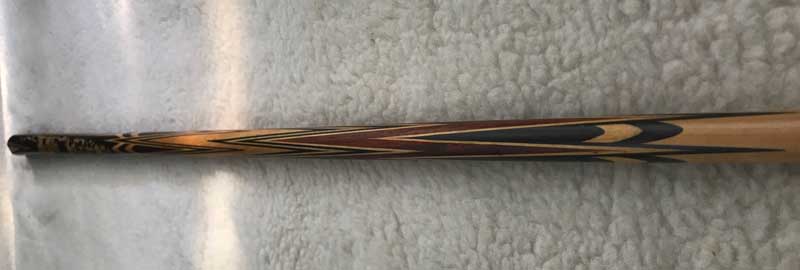
(Item 23) Antique Brunswick Carved Butt "Titlist" Billiard Cue This is a spectacular example of the "Titlist" era, a name synonymous with the gold standard of pool cue construction. Measuring a full 57 inches, this two-piece cue combines the iconic Brunswick veneer work with rare, ornate carving, making it a high-tier collector's piece. Master Craftsmanship & Ornamentation What sets this cue apart is the fusion of the classic Titlist points with custom decorative elements rarely seen in standard production models. Four-Point Carved Butt: Unlike smooth-tapered cues, this features a carved butt section that provides a unique tactile feel and a highly distinguished "Victorian-era" aesthetic. Colored Titlist Points: The legendary four-point "Titlist" splice, known for its structural strength and vibrant colored veneers, is the centerpiece of the forearm. Mother of Pearl (MOP) Inset Wedge: A luxurious decorative wedge featuring personalized initials, framed by intricate colored veneers that mirror the complexity of the points. Ivory Joint & Ferrule: As expected of a premium Brunswick of this vintage, it utilizes an ivory joint for a soft, responsive hit and a matching ivory ferrule for traditional tip support. Collector's Note: The "Titlist" blanks produced by Brunswick were so well-regarded for their balance and density that many legendary custom cue makers (like Herman Rambow) used them as the foundation for their own custom builds. Please email for price.
2026-03-29T15:30:00-05:00

Antique French Marquetry Billiard Cue

(Item 22) Antique French Marquetry Billiard Cue, c. 1830s This extraordinary one-piece cue is a masterpiece of Romantic-era craftsmanship, predating the industrial boom of the billiard industry. Originating from France during the 1830s, it showcases the delicate "ébénisterie" (cabinet-making) techniques that made French cues the envy of European nobility. Artistry & Inlay Work While later cues focused on power and mass production, this 55-inch piece is defined by its intricate marquetry, a technique of creating pictures or patterns by inserting thin layers of wood into a surface. Ebony Butt with Fruitwood Inlays: The dense, black ebony provides a stark, dramatic canvas for the hand-cut fruitwood designs. These inlays likely feature floral or geometric motifs typical of the French Restoration period. Ivory Inset Wedge & Colored Veneers: The ivory wedge is framed by vibrant colored veneers, a labor-intensive process that signifies a high-status custom commission. Ivory Butt Cap & Ferrule: Consistent with the luxury materials of the early 19th century, the cue is capped in ivory at both the handle and the tip. Historical Significance At the time this cue was made, billiards was shifting from a game of "pushing" the ball to the modern "striking" game. A one-piece cue from the 1830s with this level of ornamentation is a rare survivor of the pre-mechanical age of cue making. Please email for price.

2026-03-29T15:31:31-05:00

Antique Brunswick Hub Pool Cue

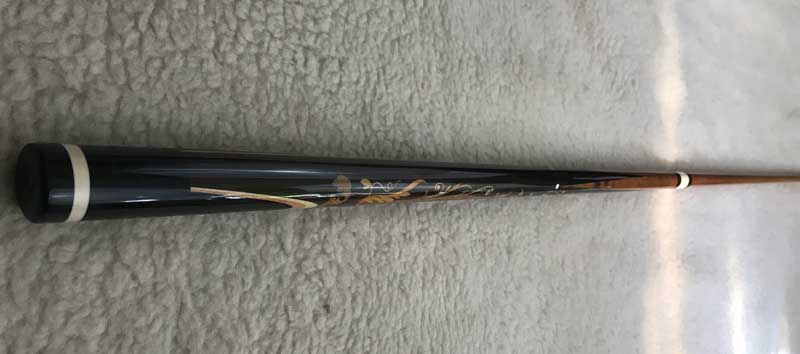
(Item 21) Antique Brunswick "Hub" Pool Cue This sophisticated three-piece model is a prime example of the innovative engineering and high-end materials used by the Brunswick-Balke-Collender Co. measuring a substantial 56 3/4 inches. The "Hub" design was specifically engineered for portability and precision, making it a sought-after piece for the traveling professional or serious amateur of the early 20th century. Technical Specifications & Features The cue’s construction highlights a transition toward the modern "professional" aesthetic while maintaining the traditional luxury materials of the era. Four-Point Splice: The forearm features a classic four-point splice, providing the structural integrity and forward-weighted balance necessary for consistent play. Double Ivory Joints: As a three-piece cue, it utilizes two precision-machined ivory joints. This setup was favored for its unique feedback and the seamless energy transfer it provided through the length of the cue. Linen Wrap: Unlike many of the all-wood butts of this period, this model features a linen wrap, offering a superior grip and moisture absorption for the player. Ivory Butt Cap & Ferrule: The cue is elegantly finished with an ivory butt cap and a matching ivory ferrule, ensuring a cohesive and high-tier appearance from top to bottom. Please email for price.
2026-03-29T15:33:07-05:00

Antique Brunswick Ebony With Ivory Cue

(Item 20) Antique Brunswick Ebony "Rambow Style" Pool Cue This 57-inch two-piece cue is a stunning example of the transition into the "Golden Era" of custom cue design. Featuring a heavy influence from the legendary cuemaker Herman Rambow, this Brunswick model combines high-density tropical hardwoods with the classic aesthetic hallmarks of a professional player's instrument. Construction & Custom Details The use of ebony and ivory in this configuration suggests a top-of-the-line catalog offering or a semi-custom order from the early to mid-20th century. Ebony Four-Point Butt: The deep, black ebony points provide maximum natural weight and a rigid hit, favored by straight-pool and billiards masters for superior cue ball control. "Rambow Style" Ivory Butt Cap: This oversized or distinctively shaped ivory cap is a tribute to the style popularized by Herman Rambow, the resident cuemaker at Brunswick’s Chicago headquarters. Ivory Name Plate: A dedicated ivory inset for the owner's name or initials, marking this as a personalized, premium piece of equipment. Ivory Joint & Ferrule: The ivory-to-ivory connection at the joint provides the "soft" yet communicative feedback that modern synthetic joints struggle to replicate. Linen Wrap Handle: A high-quality pressed linen wrap provides the professional-grade grip necessary for high-stakes play. Did you know? Herman Rambow was so influential at Brunswick that his specific "formula" for balance and taper became the blueprint for what many consider the greatest playing cues ever made. Please email for price.

2026-03-29T15:34:10-05:00

Antique Brunswick Rosewood Shaft Cue

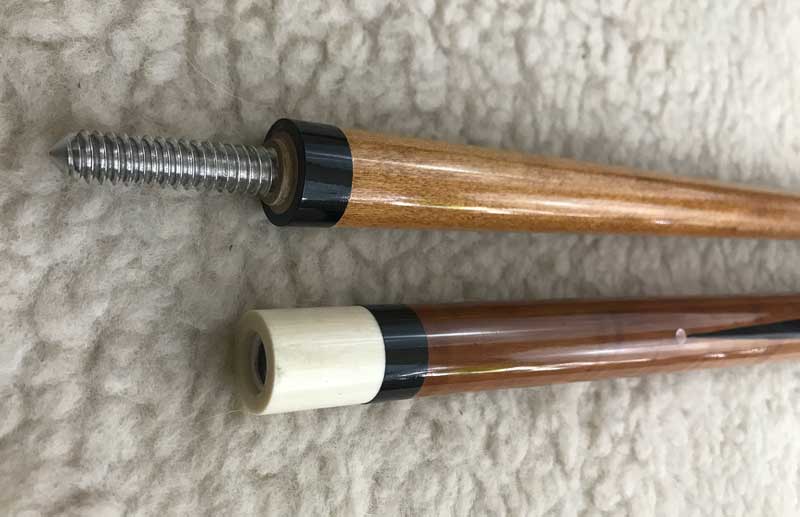
(Item 19) Antique Brunswick Rosewood Spliced-Shaft Pool Cue This distinctive 55 1/4-inch two-piece cue is a testament to the specialized woodworking techniques of the Brunswick-Balke-Collender Co. era. It stands out for its cohesive use of high-grade rosewood across both the butt and the shaft, a hallmark of premium custom construction from the early 20th century. Construction & Key Features The choice of rosewood throughout this cue provides a warm, classic aesthetic and a dense, consistent density that players of the era highly valued. Rosewood Butt & Spliced Shaft: The most notable feature of this cue is the rosewood spliced shaft, which mirrors the material of the butt. Splicing a dense hardwood like rosewood into the shaft was a technique used to enhance structural stiffness and provide a unique, forward-weighted balance. Leather Wrap Handle: Unlike the more common linen or bare wood handles, this cue features a leather wrap. This provides a soft, tacky grip preferred by players who desired maximum control and comfort during a long session. Ivory Joint: The two pieces are connected by a precision-machined ivory joint. This traditional connection is favored by collectors for its historical accuracy and the specific acoustic feedback it provides upon contact with the cue ball. Ivory Ferrule: The cue is finished with a matching ivory ferrule at the tip, ensuring material consistency and a classic "hit" typical of Brunswick’s top-tier offerings. Please email for price.
2026-03-29T15:35:20-05:00

Antique Brunswick Rosewood Carved Butt Cue

(Item 18) Antique Brunswick Carved Brazilian Rosewood Pool Cue This 56 1/2-inch two-piece cue is a masterpiece of late 19th or early 20th-century craftsmanship, combining rare exotic timber with intricate hand-detailing. As a Brunswick piece featuring carved elements, it represents the higher tier of their historical catalog, where athletic equipment met fine furniture design. Materials & Artistry The use of Brazilian Rosewood—highly prized for its density, varied grain patterns, and resonance—marks this as a premium instrument from the pre-restriction era. Carved Brazilian Rosewood Butt: The butt section features hand-carved details that provide a sophisticated aesthetic and a unique tactile grip, distinguishing it from the standard smooth-tapered cues of the period. Rosewood Spliced Shaft: Matching the elegance of the handle, the shaft includes a rosewood splice. This construction method was utilized to increase the stiffness of the hit and create a seamless visual flow from the joint to the tip. Ivory Joint: The ivory-to-ivory connection at the joint is a hallmark of elite Brunswick cues, offering the distinct, soft feedback and "click" sought after by purists. Ivory Butt Cap & Ferrule: The cue is bookended by ivory components, providing a polished finish to the carved butt and a traditional foundation for the tip. The presence of both a carved butt and a spliced rosewood shaft makes this one of the more technically complex Brunswick models of its time. Please email for price.

2026-03-29T15:36:34-05:00

Antique Brunswick H A Hill Ebony Billiard Cue

(Item 17) Antique Brunswick H.A. Hill Ebony Billiard Cue This 57-inch two-piece cue is a premier example of a signature professional instrument from the Brunswick-Balke-Collender Co. era. Bearing the name of H.A. Hill, a notable figure in the early 20th-century billiard world, this cue represents the intersection of high-performance engineering and bespoke artistry. Artistry & Signature Details The use of dense black ebony and intricate inlay work marks this as a top-tier catalog offering, designed for a player who demanded both prestige and precision. Ebony Four-Point Butt: The butt is constructed from high-grade black ebony, featuring a traditional four-point splice that provides a rigid, authoritative hit and natural rear-weighting. H.A. Hill Signature: The cue is prominently signed "H.A. Hill," a mark of quality and historical significance that identifies it as a specific model or custom build associated with the professional player and Brunswick representative. Mother of Pearl (MOP) Wedge & Colored Veneers: A luxurious Mother of Pearl wedge is inset into the butt, framed by multiple colored veneers. This labor-intensive decorative detail provides a vibrant contrast against the dark ebony grain. Ivory Joint & Ferrule: Maintaining the highest material standards of the period, the cue features a precision-machined ivory joint for superior feedback and a matching ivory ferrule at the tip. Historical Perspective Cues signed by or named after era professionals like H.A. Hill were the "pro-models" of their day, often featuring the exact specifications—such as taper and balance—preferred by the champions of the early 1900s. Please email for price.

2026-03-29T15:38:00-05:00

Antique Hiolle Pool Cue

(Item 16) Antique Hiolle Fancy Carved Ebony Pool Cue This 55-inch two-piece masterpiece is a rare and exquisite example of European cue artistry, likely originating from the renowned French maker Hiolle. Known for pushing the boundaries of ornamental design in the 19th and early 20th centuries, Hiolle cues are highly coveted by collectors for their "furniture-grade" carving and lavish use of exotic materials. Ornate Craftsmanship & Detailing This cue stands out for its high-relief artistry, moving beyond the simple splices of standard professional cues into the realm of decorative fine art. Fancy Carved Four-Point Ebony Butt: The dense, jet-black ebony is hand-carved with intricate patterns, providing a sophisticated tactile grip and a visual depth that was the hallmark of the Hiolle workshop. Mother of Pearl (MOP) Inlays: Shimmering MOP accents are precision-set into the ebony, creating a brilliant contrast against the dark wood and highlighting the cue’s custom nature. Ivory Joint & Butt Cap: The ivory-to-ivory joint ensures the classic, crisp "click" upon impact, while the ivory butt cap provides a durable and elegant counterweight to the carved handle. Ebony and Ivory Ferrule: A particularly rare and distinctive feature; the bi-material ferrule is a signature of high-end custom work, offering a unique aesthetic transition at the tip of the cue. Collector's Note The House of Hiolle was famous for supplying cues to European royalty and billiard academies. Finding a piece with both elaborate carving and a bi-material ferrule (ebony/ivory) is a significant rarity in the current market. Please email for price.

2026-03-29T15:39:05-05:00

Antique Brunswick Monarch Pool Cue

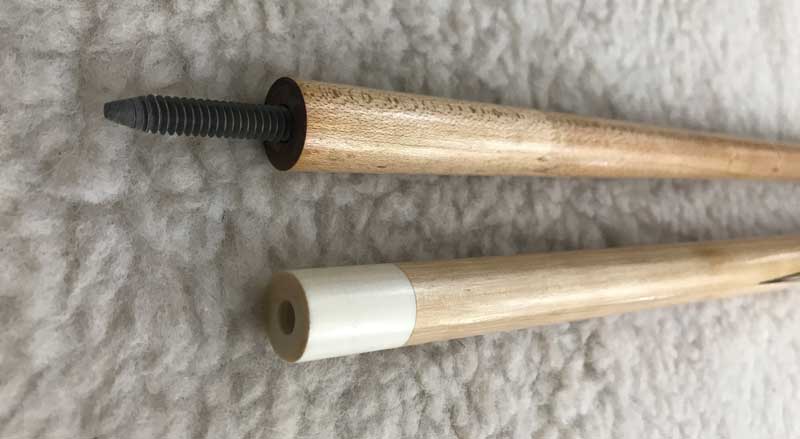
(Item 15) Antique Brunswick "Monarch" Pool Cue, c. 1900 This 53 1/2-inch four-piece cue is a premier artifact from the Brunswick-Balke-Collender Co., specifically associated with their legendary "Monarch" line. Produced around the turn of the century, the Monarch series represented the pinnacle of luxury and technical innovation, often designed to complement the iconic Monarch cushion billiard tables of the era. Artistry & Rare Four-Piece Construction The four-piece design is a rare engineering feat for the period, offering a unique level of portability and precision balancing that was highly advanced for 1900. Carved Brazilian Rosewood Butt: The handle is crafted from high-grade Brazilian rosewood, featuring ornate hand-carving that provides both a sophisticated aesthetic and a functional, non-slip grip. Brunswick Monarch Stamp: This cue bears the authentic "Monarch" stamp, a mark of elite provenance that distinguishes it from standard production models and links it directly to Brunswick's flagship luxury line. Mother of Pearl (MOP) Inlays: Precision-set MOP accents are interspersed throughout the carved sections, catching the light and highlighting the intricate woodwork. Two-Piece Ivory Joint: A specialized ivory-to-ivory joint system connects the sections, ensuring the crisp, communicative "hit" that professional players of the Gilded Age demanded. Ivory Butt Cap & Ferrule: The cue is bookended by high-quality ivory components, providing a polished finish to the carved butt and a traditional, durable foundation at the tip. Historical Significance The Monarch name was reserved for Brunswick's most prestigious offerings. Finding a matching Monarch cue in a four-piece configuration—complete with original carving and MOP inlays—is an exceptional rarity for a serious billiard historian. Please email for price.
2026-03-29T15:40:10-05:00

Antique Brunswick 26 1/2 Billiard Cue

(Item 14) Antique Brunswick-Balke-Collender Co. 26 1/2 Billiard Cue This 57-inch two-piece cue is a premier example of the Brunswick-Balke-Collender Co.’s most ornate craftsmanship from the early 20th century. As a "26 1/2" model, it features the elite technical specifications and high-contrast aesthetics that defined Brunswick's professional line. Materials & "Full-Package" Artistry This particular cue is noted for incorporating nearly every premium decorative and structural element available during its era of production. Brazilian Rosewood Four-Point Butt: The handle is crafted from high-grade Brazilian rosewood, featuring a classic four-point splice. Both the butt and the points are framed by intricate colored veneers, providing a vibrant, multi-layered visual depth. Mother of Pearl (MOP) Inset Wedge: A luxurious Mother of Pearl wedge is set into the rosewood, also surrounded by matching colored veneers to unify the design. Ebony Spliced Shaft: In a rare combination of exotic woods, the shaft features an ebony splice, which increases the stiffness of the hit and provides a striking dark contrast to the rosewood butt. Ivory Joint & Ferrule: The cue utilizes a precision-machined ivory joint for that signature crisp feedback, balanced by a traditional ivory ferrule at the tip. Ivory Butt Cap: The base is finished with a polished ivory butt cap, ensuring material consistency throughout the instrument. Linen Wrap Handle: Historically equipped with a linen wrap, this cue is being restored with a fresh wrap to maintain its original professional-grade grip and feel. Collector's Perspective The "26 1/2" designation from Brunswick typically signaled a cue with "all the bells and whistles." Finding one that combines Brazilian rosewood, ebony splicing, MOP inlays, and multi-colored veneers makes this a significant acquisition for a serious billiard historian. Please email for price.

2026-03-29T15:41:13-05:00

Antique Brunswick Balke Collender Co #360 Pool Cue

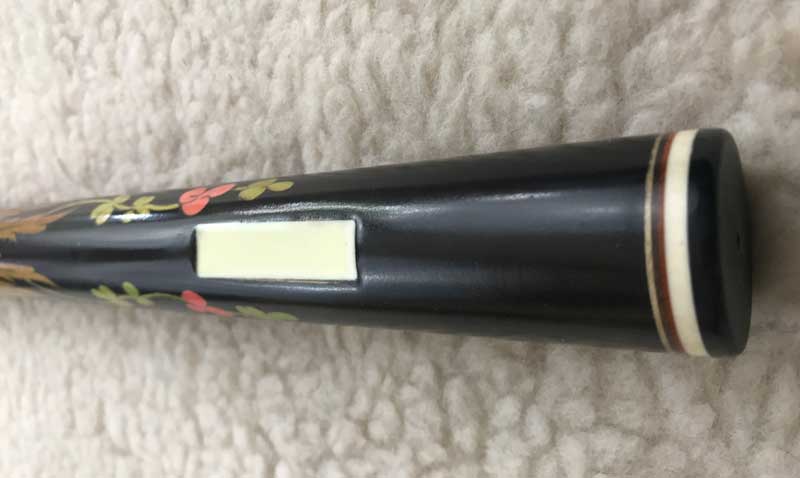
(Item 13) Antique Brunswick-Balke-Collender Co. #360 Pool Cue, c. 1900 This 56 1/2-inch two-piece cue is a premier example of the high-complexity "fancy" cues produced by the Brunswick-Balke-Collender Co. at the turn of the century. The #360 model is renowned among collectors for its sophisticated geometry and the labor-intensive hand-splicing required to achieve its signature aesthetic. Advanced Woodworking & Inlays The #360 is defined by a multi-layered construction that showcases the pinnacle of Edwardian-era billiard engineering. Triple Spliced Points & Reverse Butterflies: This cue features three distinct sets of hand-spliced points. The inclusion of "butterflies in reverse"—a decorative splicing technique where the wood veneers are flipped to create a winged pattern—marks this as a high-tier professional instrument. Ebony Spliced Shaft: Matching the density of the butt, the shaft features an ebony splice. This adds significant structural stiffness to the cue’s "hit" and creates a striking, continuous dark profile from the joint through the taper. Mother of Pearl (MOP) Inset Wedge: A luxurious Mother of Pearl wedge is set into the butt, framed by multiple colored veneers that provide a vibrant contrast against the dark wood grains. Two-Piece Ivory Joint: The cue utilizes a precision-machined ivory-to-ivory joint, the gold standard for providing the crisp, communicative feedback favored by master players of the 1900s. Historical Significance The #360 was one of Brunswick's most visually complex catalog offerings. The combination of triple-spliced points and reverse butterflies required a level of manual bench-work that is rarely replicated in modern production. Please email for price.
2026-03-29T15:42:12-05:00

Antique European Inlaid Pool Cue

(Item 11) Antique European Inlaid Pool Cue, c. 1900 This 55-inch two-piece cue is a remarkable example of Continental billiard artistry from the turn of the century. Combining intricate hand-carving with a sophisticated "dual-wedge" design, it represents the high-end custom craftsmanship typical of elite European workshops during the Belle Époque. Ornate Construction & Material Contrast The defining feature of this cue is its symmetrical yet contrasting inlay work, which provides a stunning visual profile from every angle. Carved Ebony Four-Point Butt: The handle is crafted from dense, jet-black ebony featuring hand-carved detailing. The four-point splice provides the structural foundation and the traditional forward-weighted balance preferred by master players. Dual-Wedge Inlays: In a rare display of craftsmanship, the butt features an ivory inset wedge on one side and a Brazilian rosewood inset wedge directly opposite. Both wedges are framed by vibrant colored veneers, creating a multi-layered, architectural depth. Mother of Pearl (MOP) Inset Plate: A polished MOP plate is precision-set into the ebony, adding a luminous focal point to the ornate handle. Ivory Joint & Butt Cap: The cue utilizes a precision-machined ivory-to-ivory joint, favored for its distinct acoustic feedback and "soft" hit, complemented by a matching ivory butt cap for a balanced finish. Ivory Ferrule: The assembly is completed with a traditional ivory ferrule at the tip, maintaining the high material standards found throughout the piece. Collector's Note The use of opposing wedges of different materials (Ivory vs. Brazilian Rosewood) within the same butt section is a technically demanding feat of joinery. This "mirrored contrast" is a hallmark of premium European custom cues from the 1900 era. Please email for price.

2026-03-29T15:43:15-05:00

Antique European Marquetry Cue

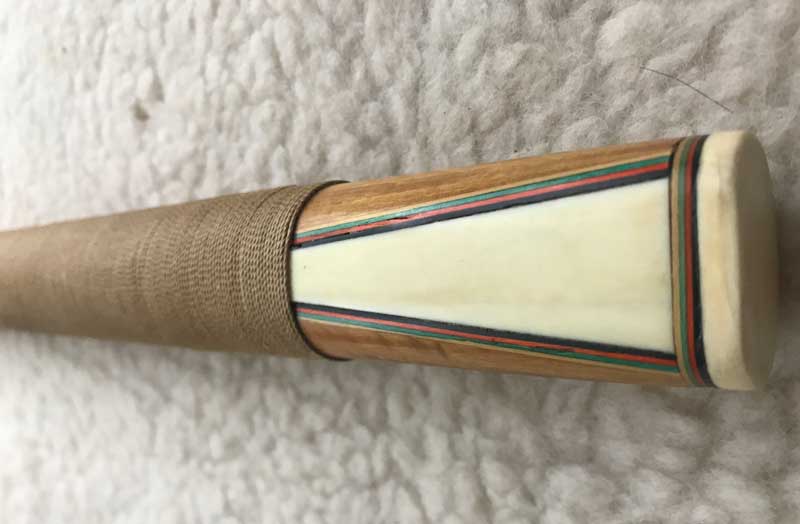
(Item 12) Antique European Marquetry Pool Cue This 55 1/2-inch four-piece cue is a stunning example of the intricate "ébénisterie" (fine cabinet-making) that defined high-end European billiard equipment. While most professional cues of the era focused on geometric splices, this piece utilizes marquetry—the art of inlaying different woods to create pictorial or decorative patterns—marking it as a luxury item intended for a private estate or a high-ranking billiard salon. Artistry & Rare Modular Construction The four-piece configuration is a particularly rare engineering choice for a marquetry cue, offering a unique blend of ornate beauty and advanced portability. Ebony Butt with Inlaid Marquetry: The dense, black ebony serves as a dramatic backdrop for hand-cut wood inlays. These intricate designs likely feature the floral, foliate, or scrollwork motifs characteristic of late 19th-century European decorative arts. Triple Ivory Joints: To accommodate the four-piece design, the cue features three precision-machined ivory joints. Beyond their aesthetic appeal, ivory joints were prized for providing a "softer" hit and more nuanced vibration feedback than wood or metal alternatives. Ivory Butt Cap & Ferrule: The cue is elegantly finished with an ivory butt cap to counterweight the handle and a traditional ivory ferrule at the tip, ensuring material consistency across all four sections. Historical Significance Four-piece cues from this era were often referred to as "traveler's cues," designed to be disassembled into small sections for discrete transport. Finding one with full marquetry rather than simple painted designs indicates a very high-status commission. Please email for price.
2026-03-29T15:44:34-05:00

Antique Brunswick Balke Collender Co Spliced Billiard Cue

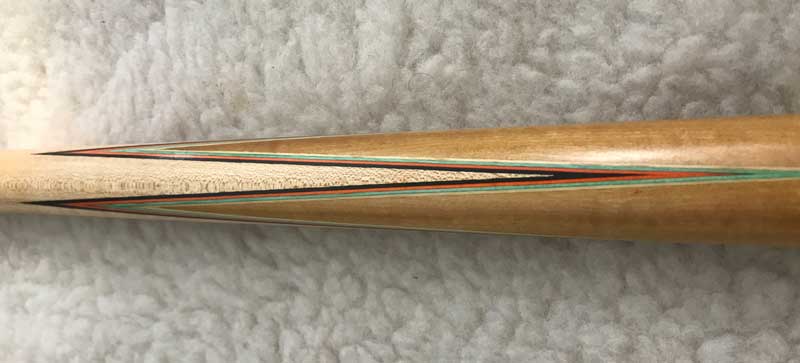
(Item 10) Antique Brunswick-Balke-Collender Co. Billiard Cue, c. 1915 This 57-inch two-piece cue is a premier example of the high-complexity "fancy" cues produced during Brunswick’s golden age. Dating to approximately 1915, it features the sophisticated "Butterfly" splice—a labor-intensive technique where thin layers of contrasting wood are sliced and rejoined to create a flared, wing-like effect. Construction & Ornamental Detail This model is defined by its architectural complexity and the use of ultra-dense ebony to provide a powerful, consistent hit. Multiple Spliced Butterflies: The butt section is adorned with multiple "butterfly" splices. Unlike standard straight points, these flared veneers require extreme precision to align, marking this as a high-tier professional instrument. Ebony Spliced Shaft: In a "full-ebony" configuration, the shaft features an ebony splice that matches the butt. This ensures a stiff, low-deflection feel and a striking, continuous aesthetic from the joint through the taper. Mother of Pearl (MOP) Inset & Colored Veneers: A brilliant Mother of Pearl inset serves as the focal point of the handle, framed by multiple layers of colored veneers that accentuate the natural dark grain of the ebony. Ivory Joint & Ferrule: The cue utilizes a precision-machined ivory-to-ivory joint, the preferred connection for early 20th-century masters seeking "soft" tactile feedback. It is finished with a traditional ivory ferrule at the tip. Collector's Perspective By 1915, Brunswick was perfecting the "professional" cue. The combination of multiple butterflies and an ebony-spliced shaft makes this one of the most technically formidable players' cues in the collection. Please email for price.
2026-03-29T15:45:41-05:00

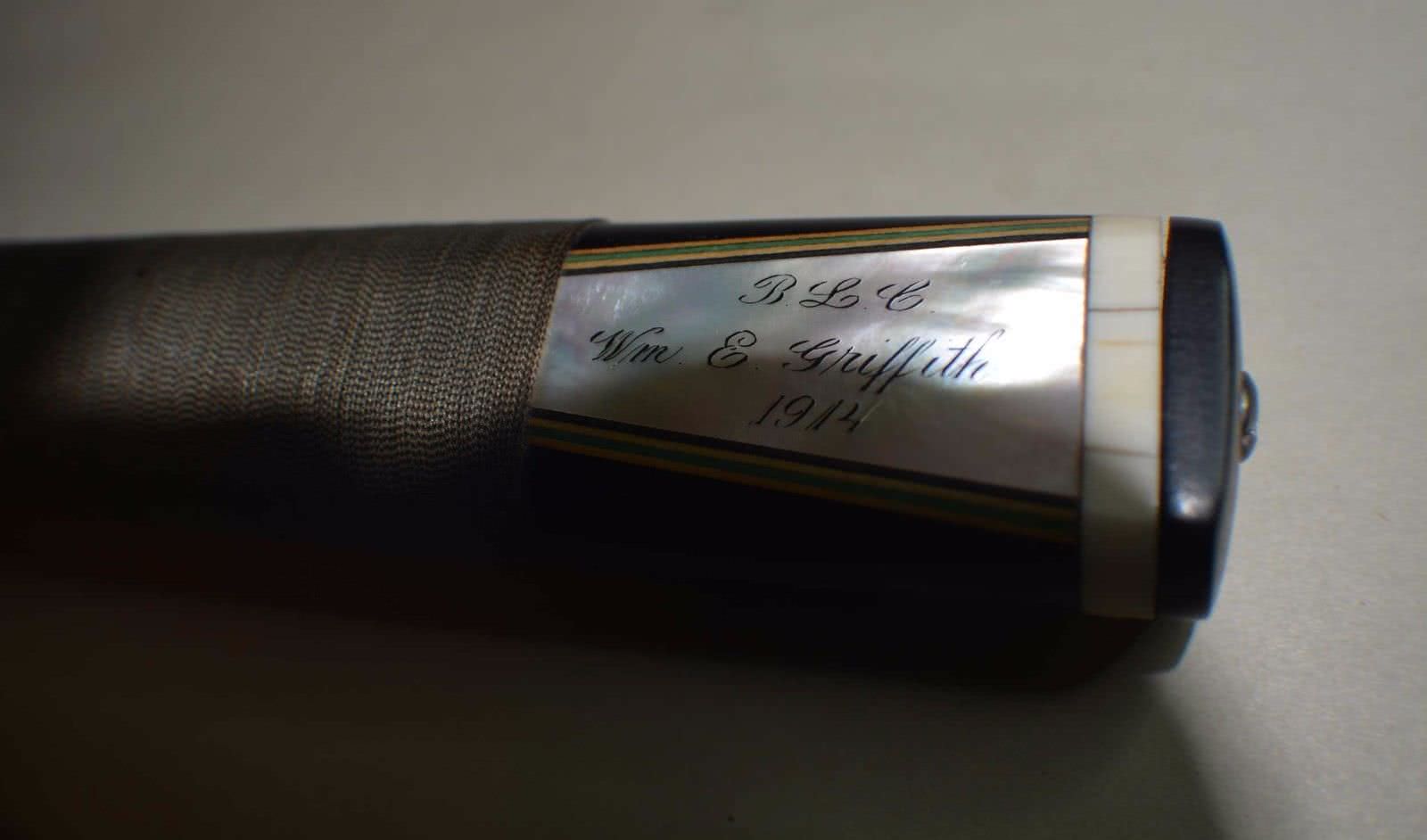
Museum-Grade 1914 W.H. Griffith Tournament Prize Billiard Cue | Rare Ebony & Ivory

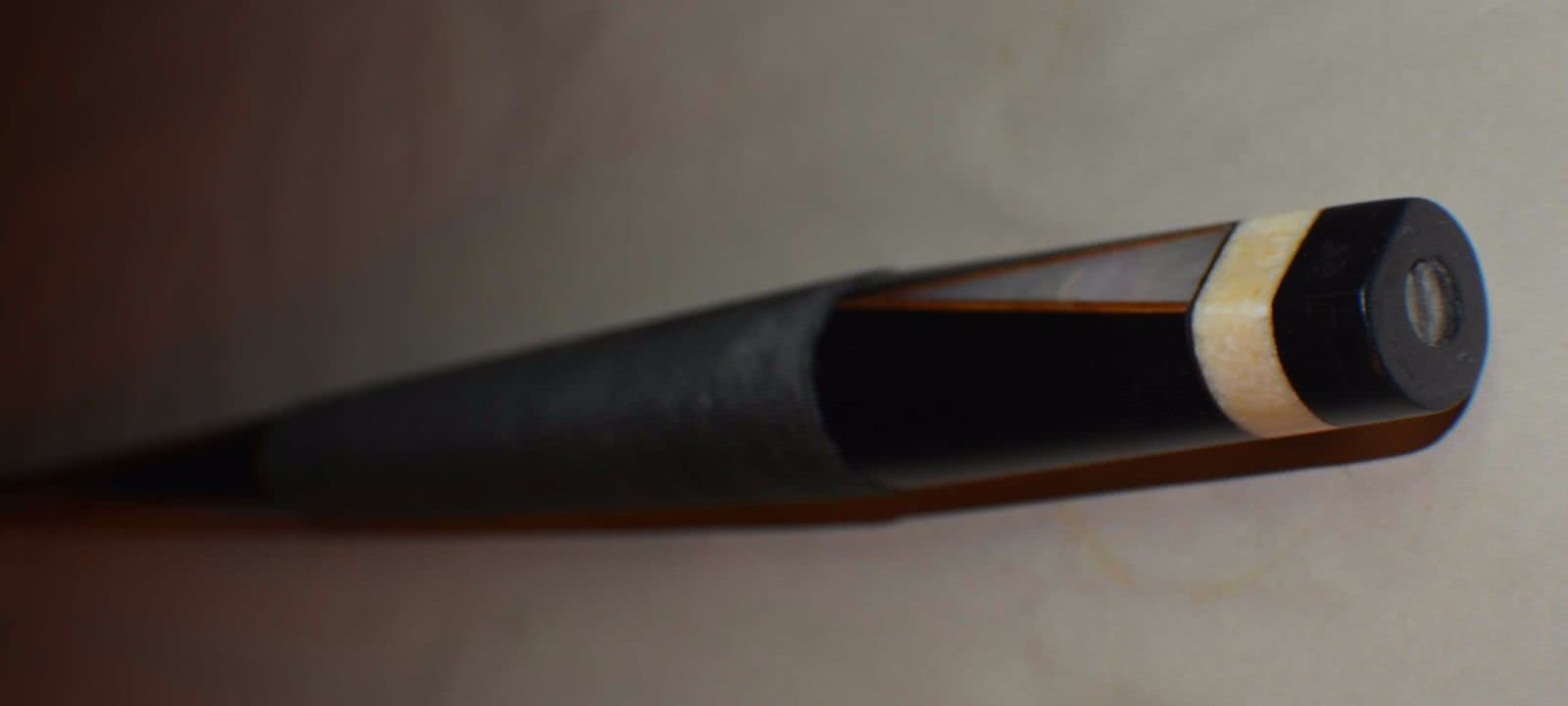
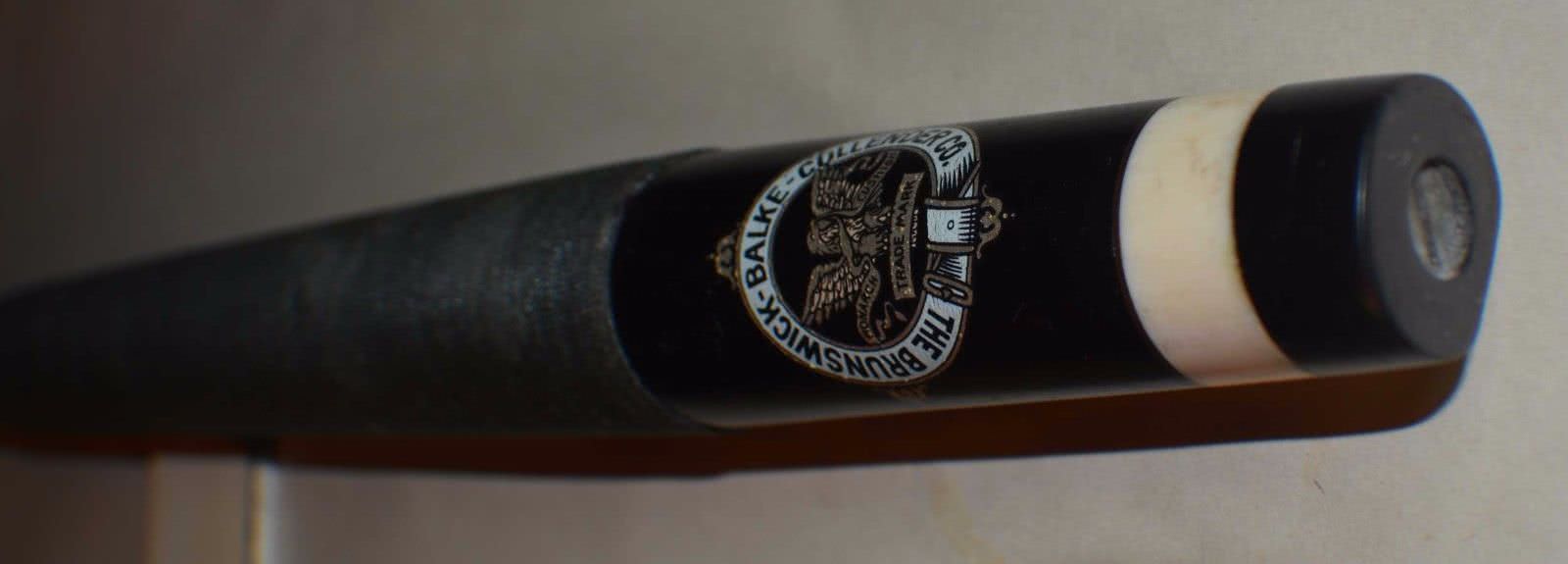
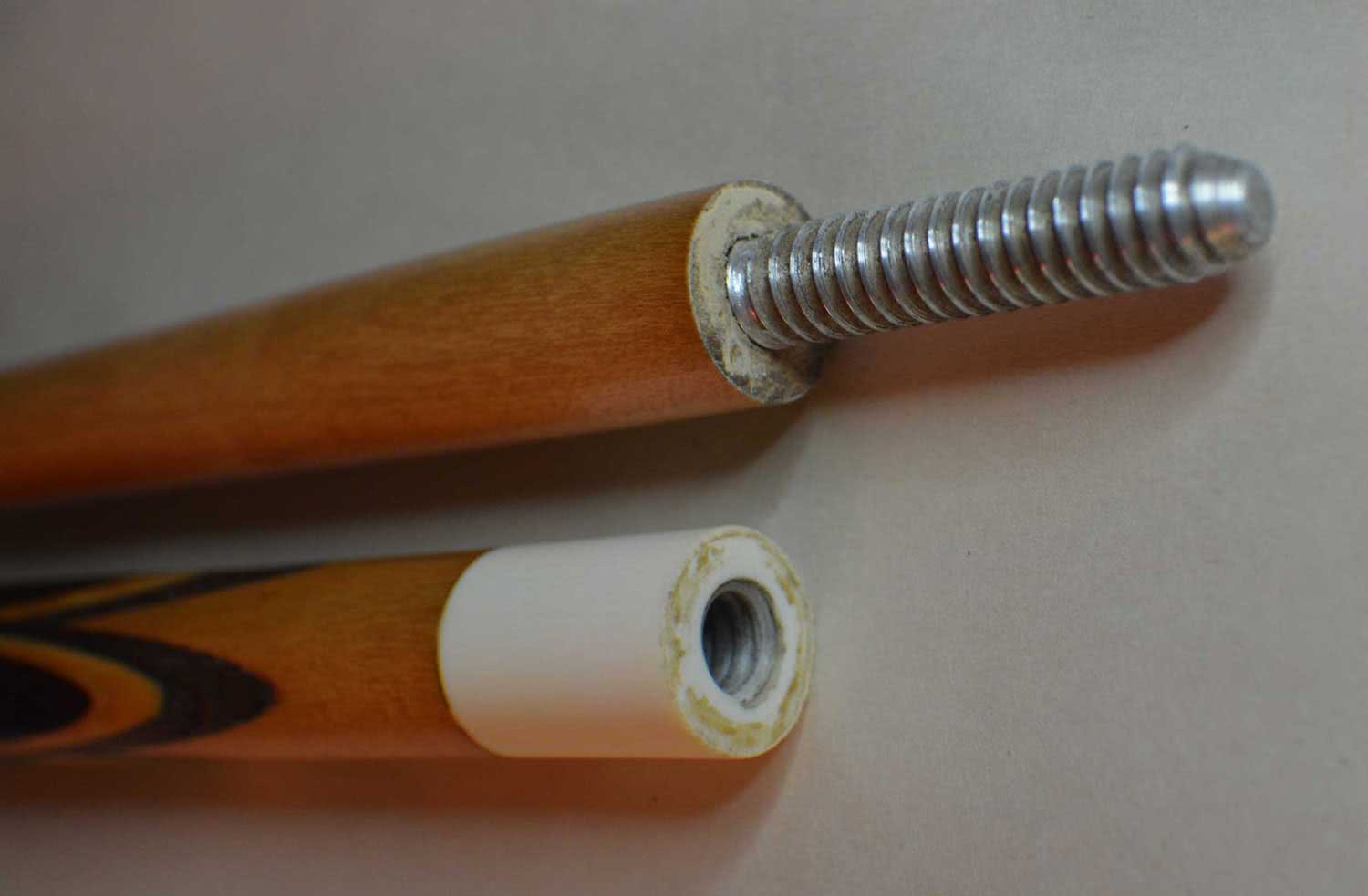
(Item 9) Own a legendary piece of competitive history with this W.H. Griffith N.Y. Tournament Prize Cue, circa 1914. W.H. Griffith was a premier New York maker known for elite craftsmanship, and this specific two-piece ebony cue was likely commissioned as a high-stakes trophy or a professional’s custom instrument. Featuring a sophisticated four-point construction and an exquisite Mother of Pearl (MOP) inset, this cue is a pinnacle of early 20th-century billiard artistry. Item Details: Maker: W.H. Griffith (New York) Era: Circa 1914 (Pre-WWI Tournament Era) Materials: Solid Ebony, Genuine Ivory, Mother of Pearl, and Colored Veneers Length: 57" Standard Tournament Length Special Features: Mother of Pearl Inset reading: “B. L. C. William E. Griffith c1914” Construction: Ebony spliced shaft, Linen wrap, Ivory joint, Ivory ferrule, and Ivory/Ebony butt cap The level of detail in this cue is extraordinary, from the vibrant colored veneers surrounding the custom inscription to the heavy use of ivory at the joint, ferrule, and butt cap. The ebony-to-ebony spliced shaft provides a stiff, professional hit that was the gold standard for tournament play in 1914. This is more than a cue; it is a documented historical artifact representing the peak of the New York billiard scene. Pricing & Inquiries: Please email.

2026-03-29T15:50:49-05:00

Antique Rieper Carved Butt Pool Cue

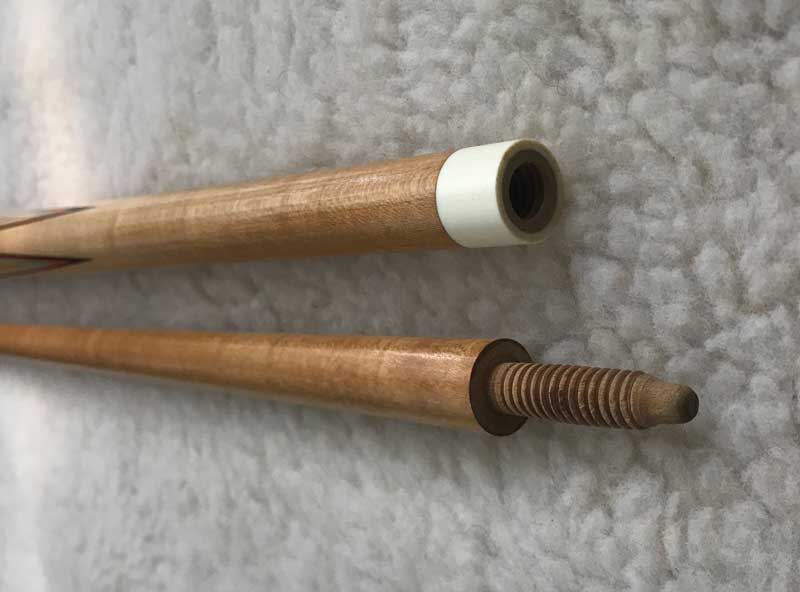
(Item 7) Antique Rieper N.Y. Carved Butt Pool Cue (c. 1900) This remarkable one-piece pool cue was produced by Rieper of New York around the turn of the century. Known for their distinctive craftsmanship, this specimen features an ebony four-point carved butt that showcases the artistry of the era. The highlight of this piece is a "second to none" carved butt featuring a unique and intricate dot pattern. This specific texture not only provides a striking visual aesthetic but also offers a superior tactile grip that feels exceptional during play. The cue is finished with an ivory ferrule, consistent with the high-quality materials used by Rieper at the height of their production. Specifications Maker: Rieper N.Y. Era: c. 1900 Construction: One-piece antique cue Materials: Ebony butt, ivory ferrule Design: Four-point carving with unique textured dot pattern Condition: Excellent vintage craftsmanship Please email for price.
2026-03-29T15:52:05-05:00

Antique Brunswick #220 Pool Cue

(Item 6) Antique Brunswick #220 "Fish Pole" Pool Cue (c. 1915) This exceptional one-piece pool cue is a classic Brunswick #220, commonly referred to as the "Fish Pole" model due to its elegant, tapered profile. Dating to approximately 1915, this cue represents the peak of pre-war craftsmanship, utilizing a sophisticated combination of exotic materials and intricate inlay work. The cue features a four-point ebony butt and is highly distinguished by its decorative Mother of Pearl (MOP) inset wedge, which is beautifully highlighted by a series of colored veneers. The design is further elevated by a specialized ebony and ivory butt cap and a linen wrap, providing a professional-grade grip and balance. Technical Specifications Model: Brunswick #220 "Fish Pole" Era: c. 1915 Length: 56 3/4" Construction: One-piece antique cue Materials: Ebony points, ivory ferrule, and ivory/ebony butt cap Inlays: Mother of Pearl (MOP) wedge with colored veneers Grip: Authentic linen wrap Collector's Note The "Fish Pole" series is highly sought after by Brunswick enthusiasts for its unique aesthetic and historical place in the evolution of the modern cue. To find an example featuring the original MOP wedge and colored veneer work in this condition is a significant opportunity for any serious collection. Please  email for price.

2026-03-29T15:54:00-05:00

Antique Brunswick Signed Billiard Cue

(Item 5) Antique Brunswick Personal Cue: Signed M.A. Vanderhloot (c. 1915) This is an extraordinarily rare and highly decorated two-piece Brunswick billiard cue, dating to approximately 1915. It is a premier collector’s piece, distinguished by the personal signature of M.A. Vanderhloot. The level of craftsmanship displayed in the woodwork represents the pinnacle of early 20th-century "splicing" techniques. The cue features an intricate array of two triple sets of spliced colored points, complemented by butterfly points in reverse—a technically demanding design rarely seen in standard production models. The rosewood shaft is also spliced, a hallmark of high-performance cues of this era. This masterpiece is currently being outfitted with a professional linen wrap on the handle to restore its original playing feel and aesthetic.   Technical Specifications & Artistry Signatory: M.A. Vanderhloot (Personalized Signature) Era: c. 1915 Length: 60 1/2" (Extended Length) Woodwork: Spliced Rosewood shaft, triple-spliced colored points, and reverse butterfly points Inlays: Mother of Pearl (MOP) inset surrounded by multi-colored veneers Fittings: * Ivory Butt Cap Ivory Joint Ivory Ferrule Grip: Pending New Linen Wrap Historical Significance Custom-signed Brunswick cues from this era were typically reserved for professional players, high-ranking company officials, or elite private commissions. The combination of the 60 1/2" length and the complex reverse butterfly splicing suggests this was a highly specialized tool for a master of the game. Please email for price.

2026-03-29T15:55:27-05:00

Antique Brunswick Hexagonal Pool Cue

(Item 4) Antique Brunswick #210 Hexagonal Pool Cue (c. 1915) This is a rare and highly sought-after two-piece Brunswick #210, distinguished by its unique hexagonal construction. Dating to approximately 1915, the #210 was part of Brunswick’s innovative line of geometrically shaped cues, designed to offer a distinct feel and to prevent the cue from rolling when placed on a flat surface. The craftsmanship is classic Brunswick excellence, featuring a four-point rosewood butt that provides a warm, rich aesthetic. This high-grade model is heavily appointed with ivory fittings, including an ivory butt cap, a two-piece ivory joint, and an ivory ferrule. At 56 3/4" long, it remains a balanced and formidable example of early 20th-century billiard engineering.   Technical Specifications Model: Brunswick #210 (Hexagonal) Era: c. 1915 Length: 56 3/4" Construction: Two-piece antique cue Handle/Butt: Four-point Rosewood Fittings: * Ivory Butt Cap Two-piece Ivory Joint Ivory Ferrule Grip: Authentic linen wrap Collector's Note The hexagonal series represents a fascinating era of Brunswick's experimentation with cue ergonomics. While most cues transitioned to purely round profiles, the #210 remains a favorite among collectors for its "flats," which provide a unique reference point for the player's bridge and stroke hand. Please email for price.

2026-03-29T15:57:56-05:00

Antique Brunswick #360 Tournament Prize Billiard Cue

(Item 3) Antique Brunswick #360 "Tournament Prize" Billiard Cue (c. 1906) This is a world-class historical artifact: a Brunswick #360 Tournament Prize cue, dating to 1906. Beyond its exquisite construction, this cue serves as a physical trophy of billiard history. It features a Mother of Pearl (MOP) inset inscribed with: "Won by H. J. MacPherson Champion." The craftsmanship of the #360 represents the absolute pinnacle of Brunswick’s artistic capabilities at the turn of the century. The design utilizes three triple sets of hand-spliced points and highly complex butterfly points in reverse. The architectural difficulty of executing reverse butterflies across multiple splice sets makes this one of the most technically advanced cues of the Edwardian era. Specifications & Artistry Model: Brunswick #360 (Tournament Prize Edition) Era: c. 1906 Provenance: Inscribed to Champion H. J. MacPherson Point Work: Three triple sets of hand-spliced points with reverse butterflies Inlays: Inscribed Mother of Pearl (MOP) surrounded by multi-colored veneers Fittings: * Two-piece ivory joint Ivory ferrule Historical Significance Tournament Prize cues were the "Formula 1" cars of the billiard world. They were not mass-produced but were specifically commissioned by Brunswick-Balke-Collender to be awarded to winners of major regional and national championships. The #360 is widely considered one of the most beautiful and collectible models ever featured in a Brunswick catalog. Please email for price.

2026-03-29T15:59:04-05:00

Antique Brunswick #360 Billiard Cue

(Item 2) Antique Brunswick #360 Billiard Cue, c.1900 This antique #360 billiard cue is a remarkable specimen of the elite craftsmanship offered by the Brunswick-Balke-Collender Company at the turn of the century. Measuring 57 inches and weighing 20 oz, this cue is expertly constructed from a sophisticated blend of Mahogany, Brazilian Rosewood, and Ebony, representing the finest materials available in the era. The cue features an extraordinary level of detail, including three sets of hand-spliced points and reverse butterflies. The butt is further distinguished by a Mother of Pearl (MOP) inset surrounded by intricate colored veneers. This professional-grade vintage cue is equipped with an authentic joint and ferrule, paired with a rare Ebony shaft that highlights the luxury status of the #360 model. Specifications: Model: #360 Materials: Mahogany, Brazilian Rosewood, and Ebony Features: Ebony shaft, hand-spliced points, reverse butterflies, and MOP inset with colored veneers Length: 57" Weight: 20 oz Please email for more information on this high-end Brunswick #360 cue.

2026-03-29T16:00:08-05:00

Antique Chas “Cowboy” Weston 1909 Worlds Pool Champion Billiard Cue

Antique World's Pool Champion Chas "Cowboy" Weston Presentation #360 billiard Cue & Case, Worlds Pool Champion - 1909 - From: Brunswick Balke Collender Company. Rare worlds pool champion pool cue surfaces after 110 years. It retains it's original patina. This is indeed a rare find for the serious billiard cue collector. This antique Brunswick Balke Collender Co manufactured early #360 cue features hand spliced butterflies and points throughout, two shafts with wooden dowel pins, ebony & ivory everywhere. The MOP inset reads: Presented To Chas "Cowboy" Weston - Worlds Pool Champion, April 1909 - From Brunswick Balke Collender Company. This cue is in amazing condition after 110 years. Both shafts are true.  Chas "Cowboy" Weston was known to dress in full cowboy gear when playing pool. Provenace: We recently purchased this cue from Mrs. Jack Grismer.  This cue was given to Jerome Grismer (His Father) by Chas "Cowboy" Weston in the 1930's.  Jerome was a pool shooting friend of Chas "Cowboy" Weston.
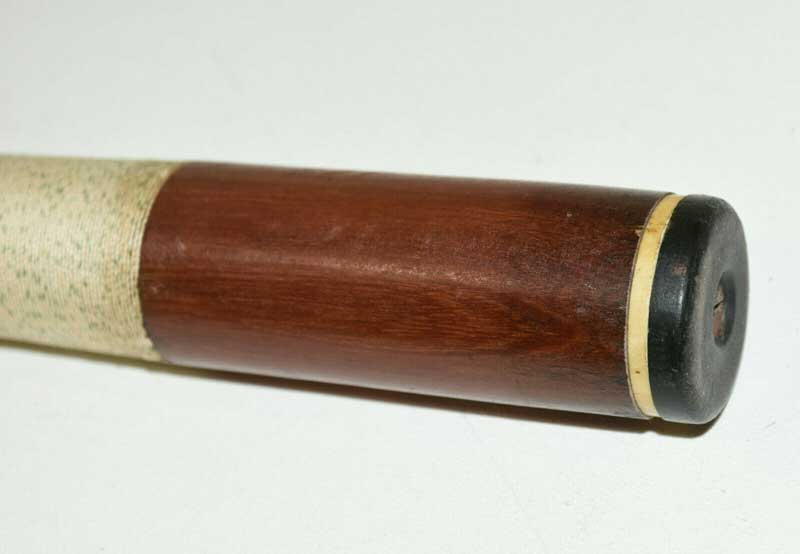
2020-12-13T20:25:00-06:00

Antique French Marquetry Billiard Cues Circa 1830’s

Antique French Marquetry Billiard Cues, c1830's. Set of #6. They were made for Royalty by old world craftsman inlaying different fruit woods, ivory and MOP into rosewood. It took hundreds of hours to create a single cue. Please call for more information.

2019-01-23T11:24:15-06:00

Antique Marquetry Billiard Cues

Antique Marquetry Billiard Cues, c1830's.  Made for royalty by old world craftsman taking hundreds of hours to create a single cue. The materials used were ebony & rosewood with  inlaid fruit woods, ivory and silver. Please call for more information.

2019-01-23T11:27:38-06:00

Antique Billiard Cues – Buying & Selling

We Buy & Sell Antique Billiard Cues - Brunswick models with hand spliced points & butterfly points in reverse, Brunswick Model #36, Brunswick Model #360, Brunswick Model #28, Brunswick Merry Widow, Brunswick Model #20, Brunswick Model Hub, Brunswick Model #30, Brunswick Model #210 Hexagonal, Brunswick Model #27 Chinese carved butt, Brunswick Model #220 Fish pole. Other US makers include: The Albert Pick Co, Rieper Manufacturing Co. Antique European billiard cues include: Antique French marquetry, Antique Henin Aine Co, B Finck Co. Please call for more information.

2019-01-23T13:23:12-06:00