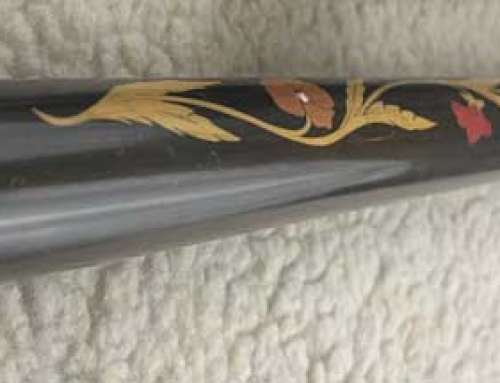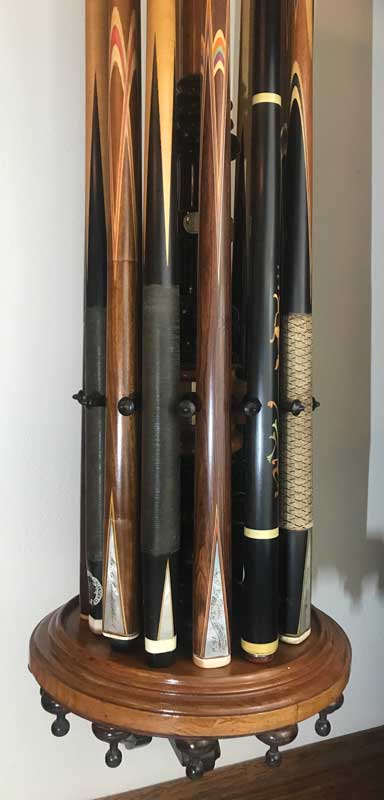


Anatomy of an Investment Cue.
(Item 63)
Blue Chip Asset. Here is how those specific details translate to the high-stakes market:
The Taper & Physics: Modern cues use mathematical constants, but these 19th-century masterpieces used “feel.” The specific stiffness was essential for the higher density of (Ivory Balls), which require more “hit” and less “squirt” (deflection) than modern phenolic resins.
The Patina of Ivory/Pearl: Collectors look for that “golden” hue. It’s the visual shorthand for authenticity. A “bright white” inlay on a 150-year-old cue is often a red flag; the aged patina on Item 62 confirms its survival through a century of climate changes.
The Soul of the Carve: You’re spot on about CNC machines. While a machine can be precise, it cannot vary the depth of a relief carve to account for the grain density of the wood—only a master cabinet maker can “read” the Brazilian Rosewood as they carve.