


(Item 22)
Antique French Marquetry Billiard Cue, c. 1830s
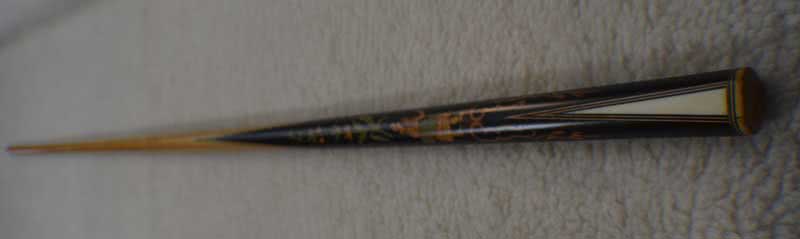
This extraordinary one-piece cue is a masterpiece of Romantic-era craftsmanship, predating the industrial boom of the billiard industry. Originating from France during the 1830s, it showcases the delicate “ébénisterie” (cabinet-making) techniques that made French cues the envy of European nobility.
Artistry & Inlay Work
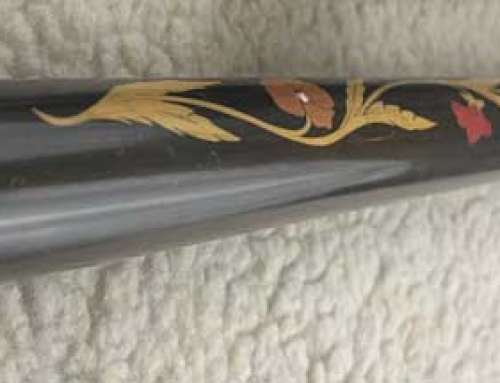
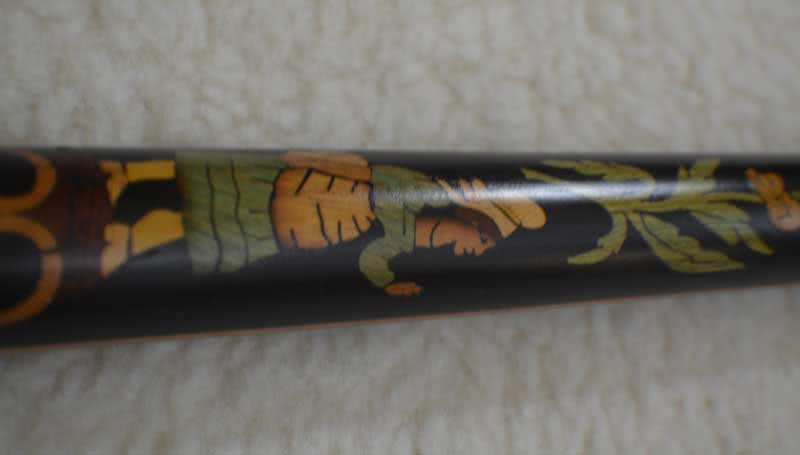
While later cues focused on power and mass production, this 55-inch piece is defined by its intricate marquetry, a technique of creating pictures or patterns by inserting thin layers of wood into a surface.
Ebony Butt with Fruitwood Inlays: The dense, black ebony provides a stark, dramatic canvas for the hand-cut fruitwood designs. These inlays likely feature floral or geometric motifs typical of the French Restoration period.
Ivory Inset Wedge & Colored Veneers: The ivory wedge is framed by vibrant colored veneers, a labor-intensive process that signifies a high-status custom commission.
Ivory Butt Cap & Ferrule: Consistent with the luxury materials of the early 19th century, the cue is capped in ivory at both the handle and the tip.
Historical Significance
At the time this cue was made, billiards was shifting from a game of “pushing” the ball to the modern “striking” game. A one-piece cue from the 1830s with this level of ornamentation is a rare survivor of the pre-mechanical age of cue making.
Please email for price.