
(Item 51)
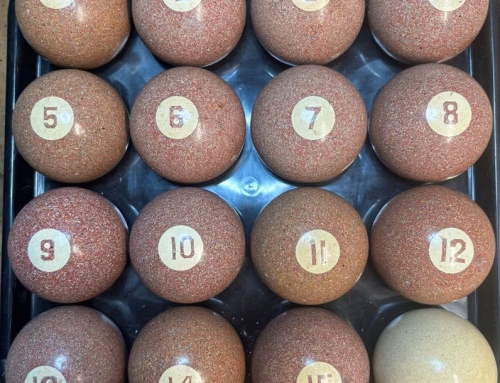
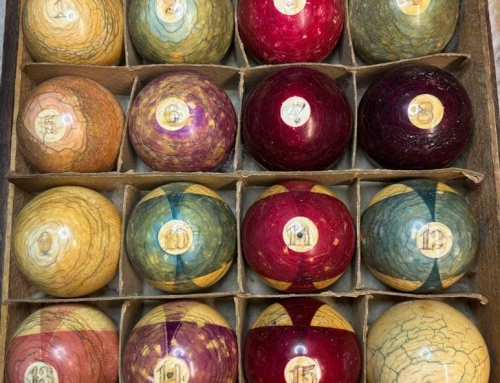
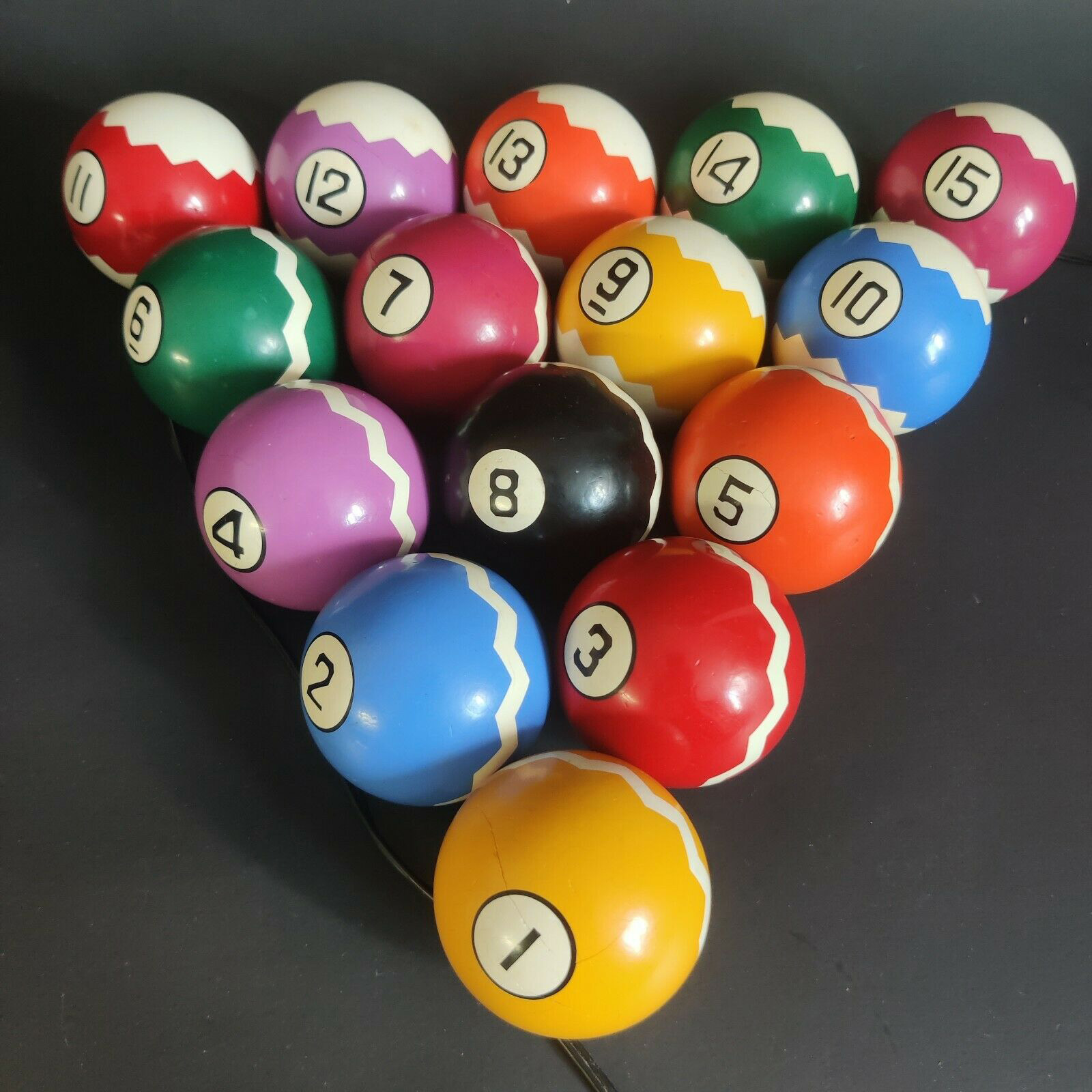
Zig Zag clay balls are the transition point between the era of ivory and the modern era of phenolic resins.
Why “Zig Zags” are Iconic
The “Zig Zag” pattern wasn’t just for aesthetics; it was a functional design. In the late 19th century, as manufacturers moved away from expensive ivory, they experimented with high-compression clay and silicate composites.
The Pattern: The zig-zag or “lightning bolt” inlay was a way to integrate the number into the ball during the molding process, ensuring the number wouldn’t just rub off with use.
The “Star” Cue Ball: These are highly sought after. The star was often the trademark for specific manufacturers (like Hyatt or Albany Billiard Ball Co.) and acted as a focal point for players to see the “spin” or “English” they put on the ball.
Condition Report: “Match Head Dings” and “Crazing”
For clay balls from this era (c. 1890s–1910s), the condition is actually excellent:
Light Crazing: This refers to the tiny, hair-like surface cracks. It’s a natural “aging” process of the composite material and is considered a sign of authenticity. As long as the crazing isn’t deep enough to catch a fingernail, it doesn’t hurt the value.
Match Head Dings: These small nicks are common in clay sets. Unlike modern resin, clay can chip if two balls collide at high velocity. “Match head” size is considered minor and “honest wear.”
Investment Advice
Clay balls are significantly more “fragile” than ivory or modern plastic. To keep these in “Investment Grade” condition:
Do Not Play With Them: Modern high-speed tables and hard-hitting cues will shatter 100-year-old clay balls. They are strictly display pieces now.
Climate Control: Clay is sensitive to extreme dry heat, which can turn “light crazing” into “deep cracking.”
A Quick History Fact
Did you know that John Wesley Hyatt invented the first successful composite ball because there was a $10,000 prize offered by a billiard company to find a replacement for ivory? Elephants were becoming scarce even in the 1860s!
Please email for price.