
(Item 56) Sold to DD
This Antique Brunswick 26 1/2 “Wedge” Cue is a legendary model from the height of Brunswick’s Golden Age. While the “26 1/2” refers to the model number in the classic Brunswick catalog, collectors often use the term “Wedge” to describe the specific, aggressive taper and weight distribution that made these cues the favorites of early 20th-century professionals.
At 57 1/2″, this cue is a masterpiece of early modern billiard engineering, transitioning from the ornate 18th-century styles we discussed into the high-performance “Pro” equipment of the 1910s.
The “Wedge” and Titlist Construction
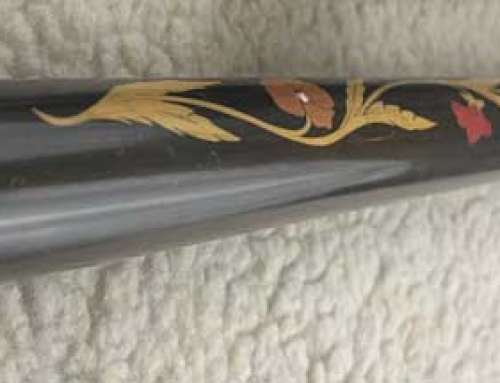
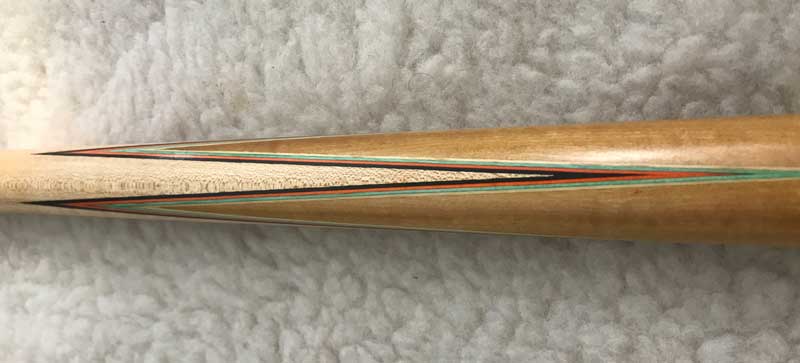
Four Sets of Colored Titlist Points: This is the visual and structural soul of the cue. “Titlist” points were created by a sophisticated veneering and splicing process where different colored woods (usually purple, teal, mahogany, and maple) were layered before being joined to the ebony or rosewood forearm.
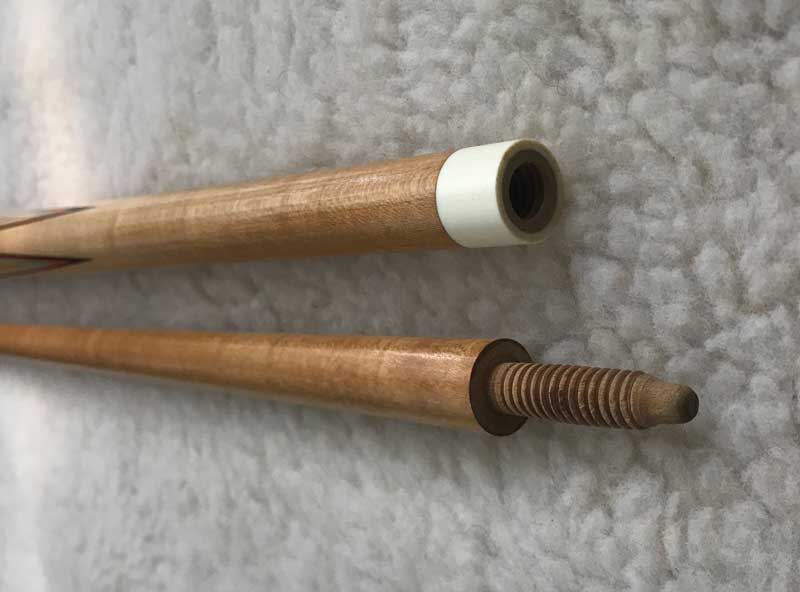
The Ivory Joint: An ivory-to-ivory joint in 1915 was the ultimate “feel” upgrade. It provided a softer, more melodic “hit” than brass joints, allowing the player to feel the vibration of the ball more accurately through the shaft.
The “Wedge” Profile: The 26 1/2 was designed with a specific weight forward of the wrap, giving the player more “natural follow” through the ball.
Premium Components
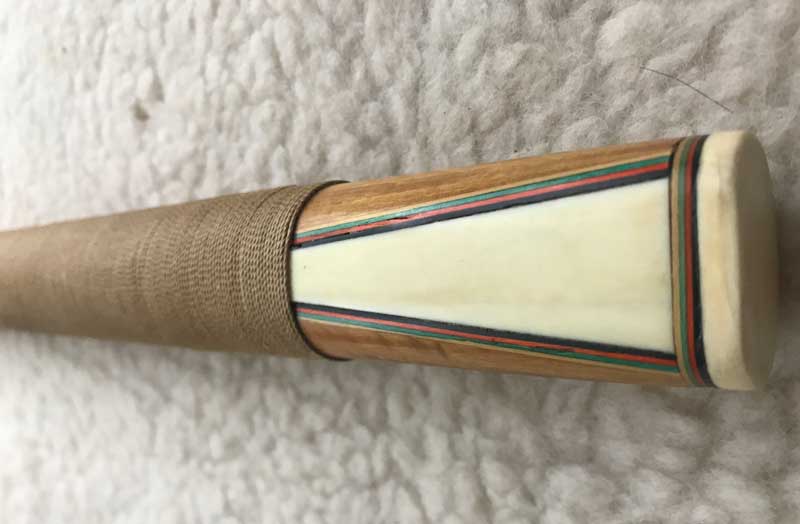
Ivory Name Plate: Usually located just above the wrap, this was often left blank or featured the “Brunswick-Balke-Collender” script. In 1915, a clean, uncracked ivory nameplate is a major indicator of a climate-controlled history.
Linen Wrap Handle: This was the era where “Irish Linen” became the standard. It served a functional purpose: absorbing moisture from the player’s hands to maintain a consistent grip during long matches.
Ivory Butt Cap & Ferrule: The matching ivory at both extreme ends of the cue provides the perfect counterbalance.
Technical Breakdown
| Feature | Significance |
| Model 26 1/2 | One of Brunswick’s most expensive catalog offerings in the 1910s. |
| Titlist Points | Four sets indicate the most complex “multi-veneer” version, highly prized for the “pop” of the colors. |
| Condition Note | At 57 1/2″, check the straightness of the joint. Ivory joints from 1915 can sometimes “drift” if the wood wasn’t perfectly seasoned; a straight one is a rare find. |
Collector’s Value: The 1915 Sweet Spot
1915 was a pivotal year. The industry was moving toward mass production, but the Model 26 1/2 was still being made with “Old World” attention to detail. It represents the pinnacle of what a professional would have used in a sanctioned championship match during the era of Willie Hoppe.
Preservation Tip
Because this cue features an Ivory Joint and a Linen Wrap, it has two different “breathing” rates.
The Wrap: If the linen feels “fuzzy,” do not sand it. A professional can “burnish” the linen with a piece of leather to lay the fibers back down without damaging the thread.
The Joint: Avoid using joint protectors that are too tight. The ivory threads need a tiny bit of room to move with seasonal humidity changes.
- Please email for price.