

(Item 58)
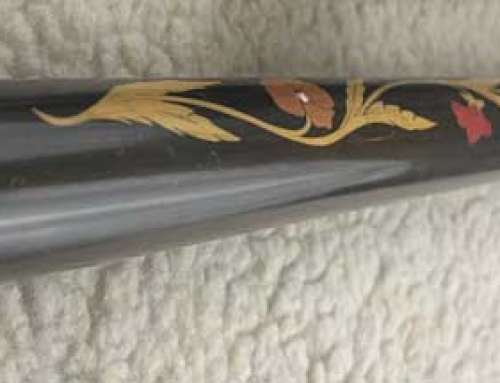
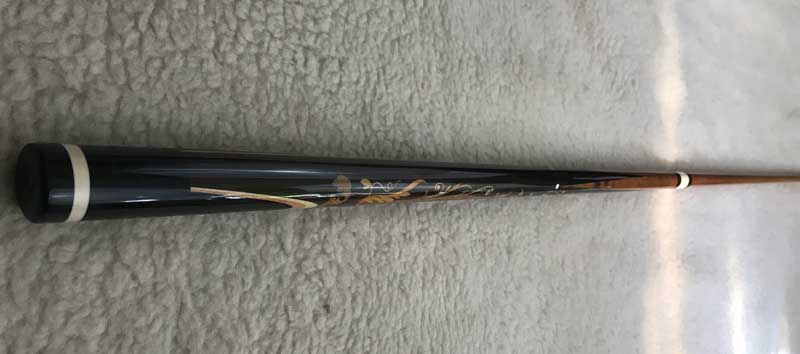
Antique French Marquetry Cue it represents the distinct flair of the French Regency or Louis XV era.
While the British makers of the 1700s often focused on geometric “butterflies,” French makers were world-renowned for floral marquetry, treating the billiard cue as a canvas for the same delicate “petit point” woodwork found on royal harpsichords and escritoires.
The “French Style” Artistry
The 1700s was a period of peak French influence in billiards (King Louis XIV was an avid player). This cue embodies that elegance:
Floral Marquetry: This is the highest form of wood artistry. To create a floral pattern, the artisan had to hand-cut tiny pieces of exotic wood or dyed veneers and fit them into the Ebony butt like a puzzle. This was significantly more difficult than straight-line splicing.
The 57″ Length: Unlike many shorter 18th-century cues, a 57″ one-piece cue from this era is exceptionally rare. It suggests this was a “Master’s Cue,” designed for a full-sized table in a palace or an aristocratic estate rather than a smaller domestic table.
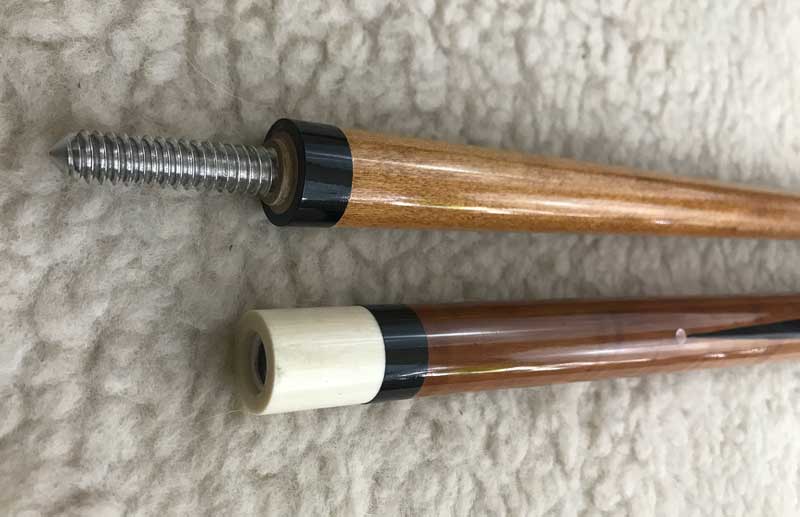
The Ivory Joint: Is a critical detail. In the 1700s, most cues were one-piece. If this is a two-piece cue with an ivory-to-ivory joint from the 1700s, it is an engineering marvel. This type of “wood-threaded” ivory joint was the precursor to the high-end custom joints used by modern masters today.
Component Breakdown
Ebony Four-Point Butt: The “four-point” design provides a structured frame for the floral work. In French cues of this period, these points were often elongated and extremely sharp, showing the maker’s mastery over the dense Ebony.
The Ivory Trio: Having the butt ring, joint, and ferrule all in ivory creates a visual “rhythm” that was the hallmark of 18th-century luxury.
Material Integrity: At 57″, the “straightness” of this cue is its most valuable asset. Ebony from this era was seasoned for years before being turned, but even then, surviving 250+ years without warping is rare.
Preservation Note: The “Joint”
If the ivory joint has original wooden threads, be extremely careful. Do not over-tighten the cue. The ivory can expand and contract at a different rate than the wood, and “stress cracks” in 18th-century joints are common. A light application of paraffin wax on the threads can keep them smooth and prevent binding.
Please email for price.